
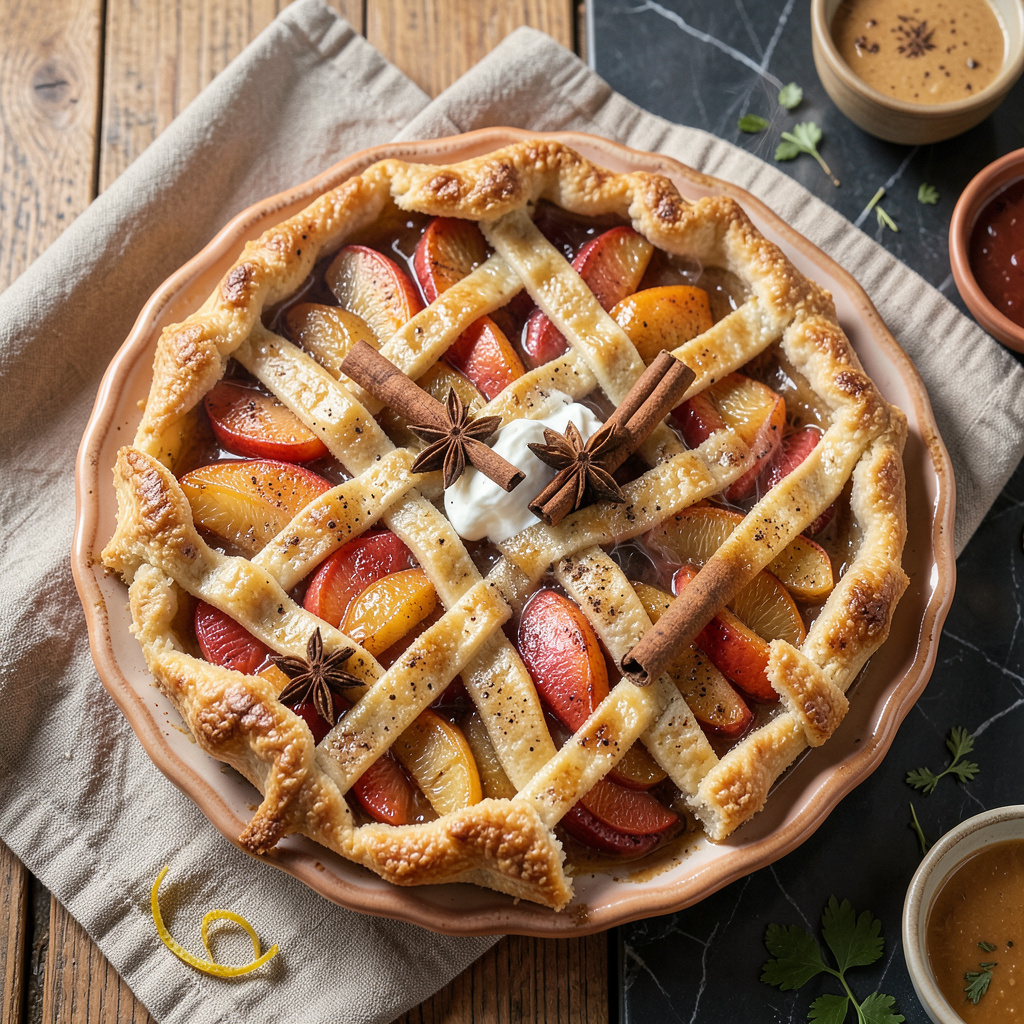
There’s a reason classic apple pie remains America’s favorite dessert—when done right, it’s the perfect balance of flaky crust, tender fruit, and warm spices. The secret ingredient that transforms good pie into extraordinary? Allspice. This single spice adds depth that cinnamon alone can’t achieve, creating a complex warmth that makes every bite memorable.
After years of testing pie recipes—including my fair share of soggy bottoms and over-spiced fillings—I’ve perfected this version that highlights allspice’s unique contribution. The spice’s peppery, clove-like notes complement the apples’ natural sweetness without overpowering it. Combined with cinnamon and nutmeg, it creates a spice blend that tastes both familiar and sophisticated.
The result is a pie with perfectly caramelized apples that hold their shape, a crust that stays flaky (thanks to my foolproof chilling technique), and a fragrance that fills your kitchen with autumnal warmth. This isn’t just another apple pie—it’s the version you’ll make every fall, the one that disappears first at gatherings.
Whether you’re a seasoned baker or attempting your first lattice top, this recipe delivers professional results. The allspice makes all the difference—subtle enough for traditionalists, interesting enough to impress food lovers. Let’s begin with the crust.
📚 In This Guide
- What You’ll Need
- Instructions
- Tips and Common Mistakes
What Youll Need
- ● For the pie crust (double-crust): 2 ½ cups all-purpose flour (plus extra for dusting) 🍚
- ● 1 tsp salt
- ● 1 tsp granulated sugar
- ● 1 cup (2 sticks) unsalted butter, chilled and cubed
- ● 6-8 tbsp ice water (as needed)
- ● For the apple filling: 6-7 medium apples (mix of Granny Smith + Honeycrisp for balance) 🍏🍎
- ● ¾ cup granulated sugar (adjust to taste)
- ● 2 tbsp all-purpose flour (or cornstarch for thicker filling)
- ● 1 ½ tsp ground allspice (key ingredient!)
- ● 1 tsp ground cinnamon
- ○ ¼ tsp ground nutmeg (optional, for depth)
- ● 1 tbsp lemon juice (freshly squeezed)
- ● 1 tsp vanilla extract
- ● 2 tbsp unsalted butter, diced (for dotting)
- ● Tools & equipment: 9-inch pie dish (glass or ceramic preferred)
- ● Rolling pin + pastry mat (or clean, floured surface)
- ● Pastry cutter (or fork for mixing dough)
- ● Paring knife + peeler (for apples)
- ● Mixing bowls (large + medium)
- ● Measuring cups/spoons
- ○ Pastry brush (for egg wash, optional)
- ○ Pie weights or dried beans (for blind baking, optional)
- ○ Optional but recommended: 1 egg (for egg wash shine)
- ● 1 tbsp coarse sugar (for crust sprinkling)
- ● Vanilla ice cream or whipped cream (for serving) 🍦
Instructions for Apple Pie with Allspice
Here’s how to weave allspice into your pie for that perfect warm, aromatic depth.
Prepare the Apple Filling Foundation
Begin by peeling, coring, and slicing your apples into uniform ¼-inch thick pieces. I prefer using a mix of Granny Smith and Honeycrisp for the ideal balance of tartness and sweetness. As you slice, transfer the apples to a large bowl and immediately toss them with 2 tablespoons lemon juice to prevent browning.
Add ½ cup granulated sugar and ¼ cup brown sugar to the apples, along with 1 teaspoon ground cinnamon. Toss everything together until the apples are evenly coated. This initial sugar application helps draw out moisture from the apples, which we’ll address in the next step to prevent a soggy crust.
Incorporate Allspice and Thicken the Filling
Now comes the flavor transformation. Add ½ teaspoon ground allspice to the apple mixture, along with ¼ teaspoon nutmeg and ¼ teaspoon salt. The allspice is what makes this pie special—it adds a complex warmth that’s subtly different from cinnamon alone, with hints of clove and nutmeg in one spice.
Let the mixture sit for 15 minutes, then drain off any accumulated liquid into a small saucepan. Add 2 tablespoons cornstarch to the apples and toss well. In the saucepan, bring the drained liquid to a boil and let it reduce by half—this concentrated syrup will intensify the spice flavors when returned to the filling.
Assemble the Pie with Careful Spice Distribution
Line your pie dish with one rolled-out pie crust, leaving a ½-inch overhang. Pour in the apple filling, mounding it slightly in the center. Before adding the top crust, sprinkle an additional ¼ teaspoon allspice lightly over the apples—this ensures the spice is distributed throughout every bite, not just concentrated in the filling.
Cover with the second pie crust, crimping the edges to seal. Cut four 2-inch slits in the top crust to allow steam to escape. Brush the top with 1 beaten egg mixed with 1 tablespoon water for a golden finish, then sprinkle with 1 tablespoon coarse sugar for crunch and sparkle.
Bake to Spiced Perfection
Place the pie on a parchment-lined baking sheet to catch any drips and bake at 375°F for 50-60 minutes. You’re looking for two visual cues: the crust should be deep golden brown, and you should see bubbling filling through the steam vents. The allspice will bloom during baking, filling your kitchen with its warm, comforting aroma.
If the crust browns too quickly, tent the pie loosely with foil after 30 minutes. Let the pie cool for at least 2 hours before slicing—this allows the filling to set properly and the spices to meld. The allspice will become more pronounced as the pie cools, creating that classic, nostalgic apple pie flavor with an elevated depth.
Tips and Common Mistakes for Perfect Allspice Apple Pie
After years of perfecting this recipe, I’ve learned these subtle techniques make all the difference between a good pie and an extraordinary one.
The Spice Distribution Secret: In Step 3, when you sprinkle that additional ¼ teaspoon allspice over the apples before adding the top crust, don’t just dust it randomly. Instead, create a light, even layer that covers the entire surface – this ensures every bite carries that warm, complex flavor. I use a fine-mesh sieve to achieve perfect distribution without clumps.
Moisture Control Technique: During the 15 minutes when the apple mixture sits in Step 2, don’t skip draining the liquid. This step is crucial for preventing a soggy crust. I’ve found that tilting the bowl slightly while it rests helps the liquid pool to one side, making it easier to pour off completely. The reduced syrup you’ll make from this liquid will intensify all those beautiful spice notes.
Baking Visual Cues: When baking at 375°F for 50-60 minutes, don’t rely solely on time. The pie is truly done when you see active bubbling through all four steam vents and the crust develops that deep golden brown color mentioned in Step 4. I check at the 50-minute mark by gently lifting the pie – it should feel firm when jiggled, not liquidy in the center.
Cooling Discipline: The 2 hours of cooling time isn’t just about setting the filling – it’s when the allspice really comes into its own. As the pie cools, the spices meld and bloom, creating that nostalgic depth we’re after. I place mine on a wire rack in a draft-free spot to ensure even cooling without condensation forming on the crust.
Pro Tips for Allspice In Apple Pie
- After years of perfecting this recipe, I’ve learned these subtle techniques make all the difference between a good pi…
- The Spice Distribution Secret: In Step 3, when you sprinkle that additional ¼ teaspoon allspice over the apples befor…
- Moisture Control Technique: During the 15 minutes when the apple mixture sits in Step 2, don’t skip draining the liqu…
Frequently Asked Questions
How much allspice should I use in apple pie?
For a standard 9-inch pie, use ½ to 1 teaspoon of ground allspice. Start with ½ teaspoon if you’re new to its bold flavor—it’s potent! Pair it with cinnamon (1 tsp) for balance. Too much can overpower the apples, so taste-test your filling before baking.
Can I substitute allspice if I don’t have any?
Yes! Mix ½ tsp cinnamon + ¼ tsp nutmeg + ¼ tsp cloves to mimic allspice’s warmth. Alternatively, use pumpkin pie spice (1:1 ratio), though it’s milder. Avoid skipping spices entirely—your pie may taste flat without that cozy depth.
When should I add allspice to my apple pie filling?
Stir ground allspice into the sugar-spice mix before tossing with apples. This ensures even distribution. If using whole allspice berries (rare for pies), grind them fresh or steep in warm liquid (like cider) for 10 minutes, then strain.
Why does my pie taste bitter after adding allspice?
Bitterness usually means too much allspice or it was old/stale. Check the expiration date—ground spices lose potency after 6 months. If over-spiced, balance with a pinch of salt or extra brown sugar. Next time, reduce by half!
Does allspice work in no-bake apple pies?
Since no-bake pies skip oven heat, toast the allspice in a dry pan for 30 seconds to wake up its flavors. Let it cool before mixing into the filling. This trick enhances warmth without baking.
Allspice isn’t just a spice—it’s the secret weapon that turns a good apple pie into an unforgettable one! 🍂 With its warm, complex notes of cinnamon, nutmeg, and clove, it adds depth that’ll have everyone asking for seconds. Whether you’re a baking newbie or a pie pro, this simple tweak makes all the difference.
Ready to impress? Grab your apron, preheat that oven, and give this spiced-up classic a try. Your taste buds (and your guests!) will thank you. Tag us in your pie pics—we’d love to see your delicious results! 🥧✨