
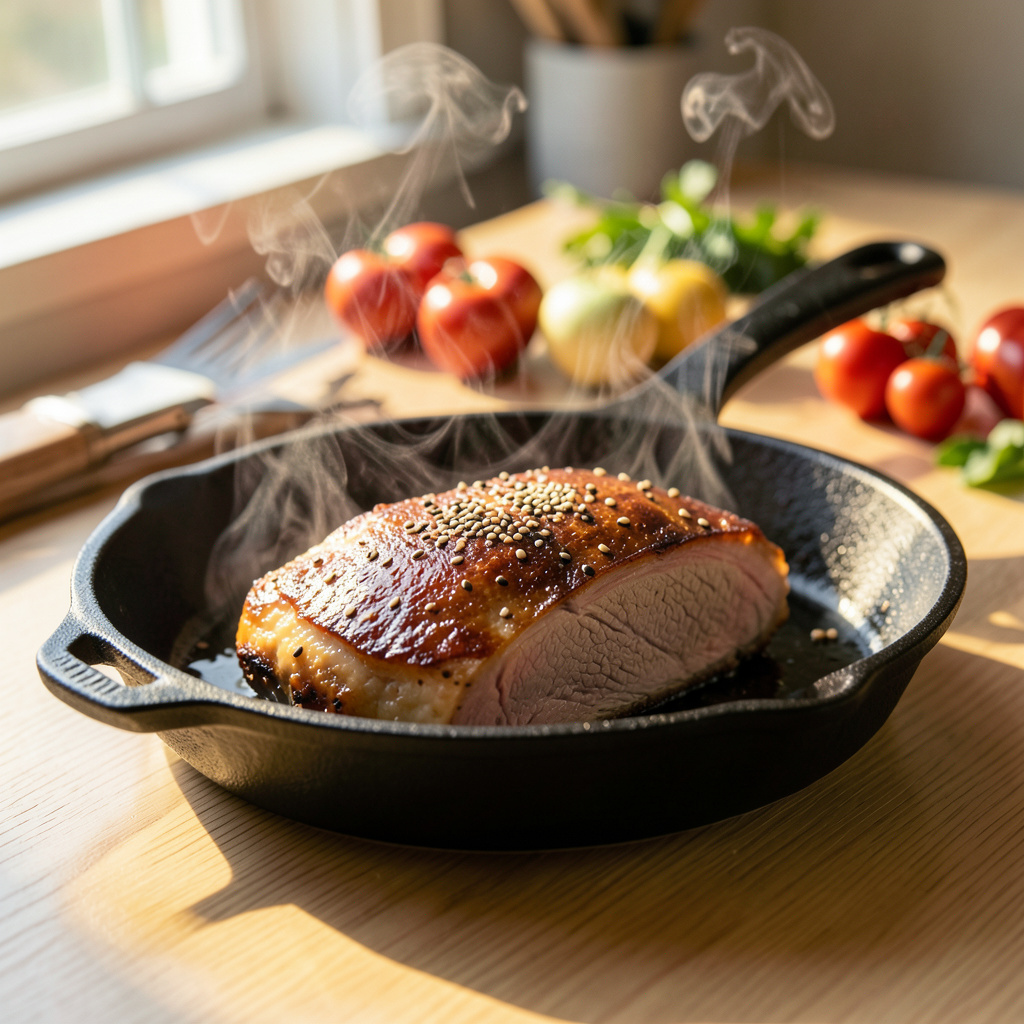
I’ve perfected a baked pork loin recipe that guarantees tender, juicy results every time. The secret lies in proper seasoning and precise temperature control. By following this method, you’ll achieve a perfectly cooked pork loin with a deliciously browned crust.
The key to this recipe is cooking the pork loin at a moderate temperature, allowing it to cook evenly throughout. I use a meat thermometer to ensure the internal temperature reaches the ideal range. This approach eliminates the guesswork, resulting in a consistently tender and juicy final product.
To complete the meal, consider serving the pork loin with roasted vegetables or a fresh salad. The mild flavor of the pork pairs well with a variety of sides, making it a versatile option for any occasion. Let’s get started with the recipe!
Ingredients for Baked Pork Loin
Here’s what you need to create this tender baked pork loin with perfect results.
| Ingredient | Amount | Notes |
|---|---|---|
| Pork Loin 🥩 | 1 ½ lb | Boneless, center-cut preferred |
| Olive Oil 🫒 | 2 tbsp | Extra-virgin for richness |
| Garlic Cloves 🧄 | 4 cloves | Minced, fresh preferred |
| Dried Thyme 🌿 | 1 tsp | High-quality, fragrant |
| Dried Rosemary 🌿 | 1 tsp | Freshly ground preferred |
| Salt 🧂 | 1 tsp | Kosher or sea salt |
| Black Pepper 🌶️ | ½ tsp | Freshly ground preferred |
| Paprika 🌶️ | ½ tsp | Smoked or sweet variety |
| Onion Powder 🧅 | ¼ tsp | Optional, for added depth |
| Meat Thermometer 📏 | 1 whole | For precise temperature control |
| Fresh Parsley 🌿 | ¼ cup | Chopped, for garnish |
For the best results, source high-quality pork loin from local butchers or premium grocery stores like Whole Foods. Look for center-cut, boneless loins with even thickness. For spices, Penzeys Spices offers excellent quality thyme and rosemary. When shopping for olive oil, choose extra-virgin for its rich flavor and high smoke point.
If you can't find fresh thyme or rosemary, dried herbs work well—just use one-third the amount called for. For a different flavor profile, try substituting the thyme and rosemary with Italian seasoning or herbs de Provence. Make sure your meat thermometer is calibrated correctly for precise temperature readings.
Store any leftover pork loin in an airtight container in the refrigerator for up to 3 days. When reheating, use low heat to maintain moisture. You can also freeze cooked pork loin for up to 2 months—wrap tightly in plastic wrap or aluminum foil before freezing.
Step-by-Step Instructions for Baked Pork Loin
Let’s walk through the process to achieve perfectly tender and juicy baked pork loin every time.
🔥 Step 1: Prepare the Pork Loin for Baking
Preheat your oven to 400°F. While it’s heating, pat the 1.5 lb pork loin dry with paper towels on all sides. This step is crucial as it helps the seasonings adhere and promotes even browning. In a small bowl, mix together 1 tsp dried thyme, 1 tsp dried rosemary, 1 tsp salt, 0.5 tsp black pepper, 0.5 tsp paprika, and 0.25 tsp onion powder. Rub this spice mixture all over the pork loin, making sure to coat it evenly.
Heat 2 tbsp olive oil in an oven-safe skillet over medium-high heat. Sear the pork loin on all sides until brown crust forms, about 2-3 minutes per side. This initial sear locks in juices and adds flavor. Remove the skillet from heat and set it aside.
🔥 Step 2: Bake the Pork Loin to Perfection
Place the skillet with the pork loin in the preheated oven. Bake for 20-25 minutes or until the internal temperature reaches 145°F when measured with a meat thermometer inserted into the thickest part of the loin. Avoid overcooking, as this can lead to dry meat. The pork will continue to cook slightly after being removed from the oven, so it’s better to err on the side of undercooking slightly.
Once the pork loin is done, remove it from the oven and transfer it to a cutting board. Tent it loosely with aluminum foil to retain heat. Let it rest for 5-10 minutes before slicing. This resting period allows the juices to redistribute throughout the meat, ensuring it stays juicy and tender.
🔪 Step 3: Slice and Serve
After the pork loin has rested, slice it against the grain into ½-inch thick slices. Use a sharp knife to ensure clean cuts and maintain the meat’s integrity. Arrange the slices on a serving platter or individual plates. Garnish with 0.25 cup chopped fresh parsley for a pop of color and freshness. Serve immediately while still warm, accompanied by your choice of sides.
Regional Styles of This Recipe
Texas Style: Central Texas focuses on simple salt-and-pepper rubs because it allows the natural flavor of the pork loin to shine through. The meat is often cooked low and slow at temperatures around 225°F, using post oak wood for a subtle smokiness. Barbecue sauces are typically served on the side, emphasizing the meat’s flavor. This style reflects Texas’s ranching heritage and a commitment to straightforward, robust flavors. 🗺️🔥
Carolina Style: In the Carolinas, pork loin is often marinated with vinegar-based sauces that include spices like cayenne and mustard. The cooking technique leans towards smoking at around 225°F using hickory or pecan wood, infusing a rich, nutty flavor. The regional preference for tangy sauces adds a unique twist, showcasing the South’s love for bold, zesty profiles. This style is deeply rooted in the barbecue traditions of the region. 🗺️🔥
Memphis Style: Memphis-style pork loin is known for its dry rubs made from a blend of spices including paprika, garlic powder, and brown sugar. The meat is smoked at a higher temperature of about 250°F, often using fruit woods like apple or cherry for sweetness. Memphis barbecue is famous for its pulled pork, but the loin is similarly enjoyed without sauce, allowing the rub’s flavor to take center stage while still offering a tangy sauce on the side. 🗺️🔥
Kansas City Style: Kansas City is famous for its thick, sweet barbecue sauce made with molasses and tomato, which pairs beautifully with smoked pork loin. Cooking occurs at a temperature of around 225°F to 250°F using a mix of hickory and fruit woods for a complex flavor profile. The Kansas City style embraces both dry rubs and saucing during cooking, reflecting the area’s diverse influences and love for rich, sweet flavors. 🗺️🔥