
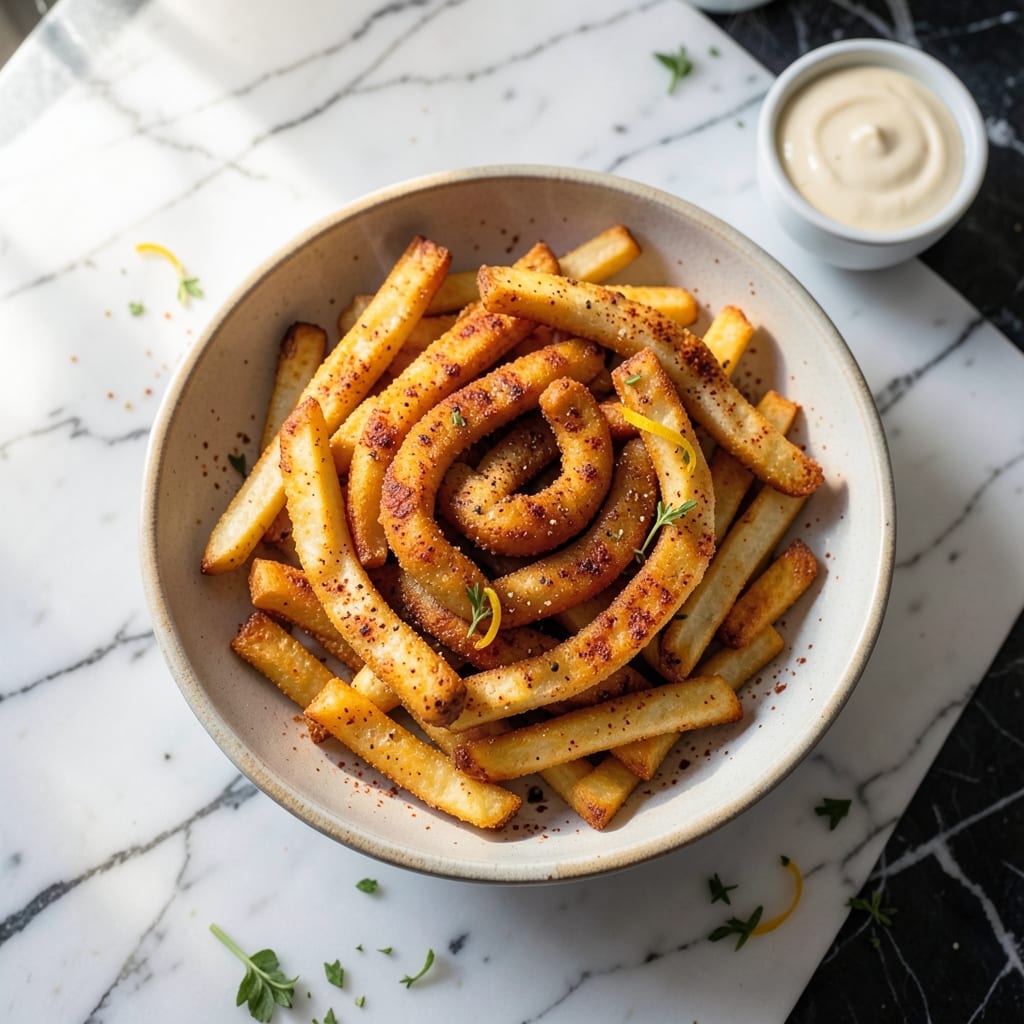
Recreating that signature fast-food crunch at home is simpler than you think. This method delivers crispy chicken fries with the same satisfying snap and juicy interior.
With a two-step breading process and precise frying technique, you’ll achieve restaurant-quality results that taste just like the original. No special equipment required.
Ingredients for Bk Chicken Fries
Transform simple chicken tenders into that iconic crispy fast-food experience with these ingredients.
| Ingredient | Amount | Notes |
|---|---|---|
| Chicken Breast Tenders 🍗 | 1 ½ lb | Cut into 1-inch strips |
| Buttermilk 🥛 | 1 cup | Full-fat for best texture |
| All-Purpose Flour 🌾 | 1 ½ cups | Divided for breading stages |
| Cornstarch 🌽 | ½ cup | For extra crispiness |
| Paprika 🌶️ | 1 tbsp | Sweet or smoked variety |
| Garlic Powder 🧄 | 1 tbsp | Not garlic salt |
| Onion Powder 🧅 | 1 tbsp | Fresh ground preferred |
| Salt 🧂 | 1 tsp | Diamond Crystal kosher salt |
| Black Pepper 🌶️ | 1 tsp | Freshly ground preferred |
| Cayenne Pepper 🔥 | ½ tsp | Adjust for heat preference |
| Large Eggs 🥚 | 2 whole | Beaten for binding |
| Vegetable Oil 🫒 | 4 cups | For deep frying |
| Baking Powder 🧂 | 1 tsp | For lift in breading |
The chicken tenders must be uniform in size for even cooking—Costco sells pre-cut tenders that work perfectly. For the buttermilk, full-fat is essential for the breading to adhere properly. The cornstarch is non-negotiable for that signature crunch (the good stuff, not the clumpy old box). Diamond Crystal kosher salt dissolves evenly, giving consistent seasoning throughout the breading.
No buttermilk? Whole milk plus 1 tbsp vinegar per cup works in a pinch. Swap cornstarch for arrowroot powder at a 1:1 ratio if needed. The paprika can be omitted, but it adds that signature golden color. For a spicier kick, increase the cayenne to 1 tsp. The vegetable oil can be replaced with peanut oil, but avoid olive oil—its low smoke point burns at frying temps.
Fry in batches to avoid crowding the pot—this keeps the oil temp steady. Leftovers (if any) stay crispy for 1-2 days in the fridge. Reheat in a 400°F oven for 10-12 minutes to revive the crunch. Freezing breaded but uncooked tenders works for up to 1 month (fry from frozen, adding 2-3 minutes).
Why You’ll Love This Recipe
- One Bowl Wonder: I mix the buttermilk and spices in a single bowl, dip the tenders, and coat them—no mountain of dishes afterward.
- Crispy Perfection: That cornstarch in the flour mix gives them a shatteringly crisp shell with juicy chicken inside. Honestly, the paprika adds just the right kick.
- Party or Lunchbox: I’ve served these at game day spreads and packed them cold in my kid’s lunch—they’re that versatile.
- Budget Stretcher: A pound of chicken tenders turns into a meal that feeds my family of four, with leftovers for sandwiches the next day.
Step-by-Step Instructions for BK Chicken Fries
This professional method replicates the restaurant’s signature texture and flavor with precision.
Step 1: Marinate the Chicken for Maximum Tenderness
Cut the 1.5 lb Chicken Breast Tenders into uniform 1-inch strips to ensure even cooking. In a large bowl, combine the chicken with the 1 cup Buttermilk, making sure each piece is fully coated. The buttermilk’s acidity tenderizes the meat while its fat content promotes browning.
Cover and refrigerate for at least 1 hour, though I recommend 4 hours for optimal flavor penetration and moisture retention. This marinating step is non-negotiable for achieving the juicy interior characteristic of the original.
Step 2: Prepare the Seasoned Breading Mixture
In a large shallow dish, whisk together 1.5 cups All-Purpose Flour, 0.5 cup Cornstarch, 1 tsp Baking Powder, 1 tbsp Paprika, 1 tbsp Garlic Powder, 1 tbsp Onion Powder, 1 tsp Salt, 1 tsp Black Pepper, and 0.5 tsp Cayenne Pepper.
The cornstarch creates an ultra-crispy coating, while the baking powder introduces tiny air pockets that enhance crunch. The combination of paprika, garlic, and onion powders replicates the fast food chain’s distinctive seasoning profile.
Divide this mixture evenly between two shallow dishes. You’ll use one for the initial dredge and one for the final coating.
Step 3: Create the Egg Wash Binding Layer
In a separate bowl, beat the 2 whole Large Eggs until fully combined and slightly frothy. This egg wash acts as the critical adhesive between the chicken and both layers of breading, preventing separation during frying.
The eggs’ protein content creates a strong bond that locks the seasoned coating in place. For best results, beat the eggs immediately before breading to maintain maximum binding power.
Step 4: Double-Dredge for Restaurant-Style Crunch
Remove the chicken from the buttermilk, letting excess drip off. Dredge each piece through the first dish of seasoned flour mixture, pressing gently to adhere. Shake off excess, then dip into the beaten eggs, allowing any excess to drip back into the bowl.
Finally, coat each piece in the second dish of seasoned flour mixture, again pressing gently to create an even, thick layer. This double-dredging technique builds the shatteringly crisp exterior that defines BK Chicken Fries. Place breaded pieces on a wire rack for 10 minutes to set the coating before frying.
Step 5: Deep-Fry to Golden Perfection
Heat 4 cups Vegetable Oil in a deep, heavy pot to 350°F. Use a thermometer for precision—temperature control is critical for even cooking without burning the exterior before the interior cooks through.
Fry the chicken in batches, avoiding overcrowding, for 4-5 minutes per batch until golden brown and the internal temperature reaches 165°F. The oil should bubble steadily around each piece. Drain on a wire rack or paper towels to maintain crispness. Serve immediately while hot and crispy for the authentic fast food experience.
Pro Tips For Making Bk Chicken Fries
- Soak in Buttermilk: Let the chicken tenders sit in buttermilk for at least 4 hours, or overnight if you can—I learned this the hard way when my first batch turned out dry and bland.
- Double Dredge: Dip the tenders in flour, then buttermilk, then flour again with cornstarch mixed in. Sounds tedious, but it actually changes the outcome, giving you that extra-crispy coating.
- Skip Cold Oil: Make sure your oil is hot (around 350°F) before frying, or the chicken will absorb too much grease instead of getting that golden crust.
- Add Paprika Twice: Mix paprika into the flour dredge and sprinkle some directly on the tenders after frying. My grandmother swore by this, and she was right—it layers the flavor.
Storing and Reheating This Recipe
Fridge Storage
Let cooked fries cool completely before storing—this prevents condensation that makes them soggy. I use glass containers with paper towels lining the bottom to absorb excess moisture. They’ll stay fresh for 1-2 days at 40°F or below. ❄️
Freezer Method
For longer storage, freeze uncooked breaded fries on a parchment-lined tray first, then transfer to ziplock bags with parchment between layers. They’ll keep for 1 month without freezer burn. Fry from frozen, adding 2-3 minutes to cooking time.
Oven Reheating
Preheat to 400°F and spread fries on a wire rack over a baking sheet. Heat for 10-12 minutes until crispy and 165°F internally. This method preserves texture better than microwaving. I always check the first batch to adjust timing.
Air Fryer Revival
Arrange in a single layer and air fry at 375°F for 3-4 minutes. Shake halfway for even crisping. Works great for small batches. The circulating air restores that signature crunch beautifully. 🔥
Pro Tips
Never microwave directly—it’ll turn them rubbery. For extra crispiness, spritz reheating fries with oil spray before oven or air fryer. Always reheat in batches to avoid steaming.
Nutrition Facts
Frequently Asked Questions
Can I bake these instead of frying?
Yes, but the texture will differ. Bake at 400°F for 15-20 minutes, flipping halfway. Use a wire rack for air circulation to maximize crispiness. They won’t be as crunchy as deep-fried, but still delicious.
Why does my breading fall off?
This usually happens if the chicken isn’t dry before breading or the oil isn’t hot enough. Pat the tenders dry after marinating and ensure oil reaches 350°F before frying. The double-dredge method also helps it stick.
What dipping sauces pair well?
Classic choices include ranch, honey mustard, or barbecue sauce. For a fast-food feel, try mixing 1/2 cup mayo with 2 tbsp ketchup and 1 tsp relish for a quick fry sauce.
Can I use chicken thighs instead?
Thighs stay juicier and have more flavor. Cut them into strips and follow the same steps. Adjust frying time slightly, as thighs may cook faster than breast meat.