
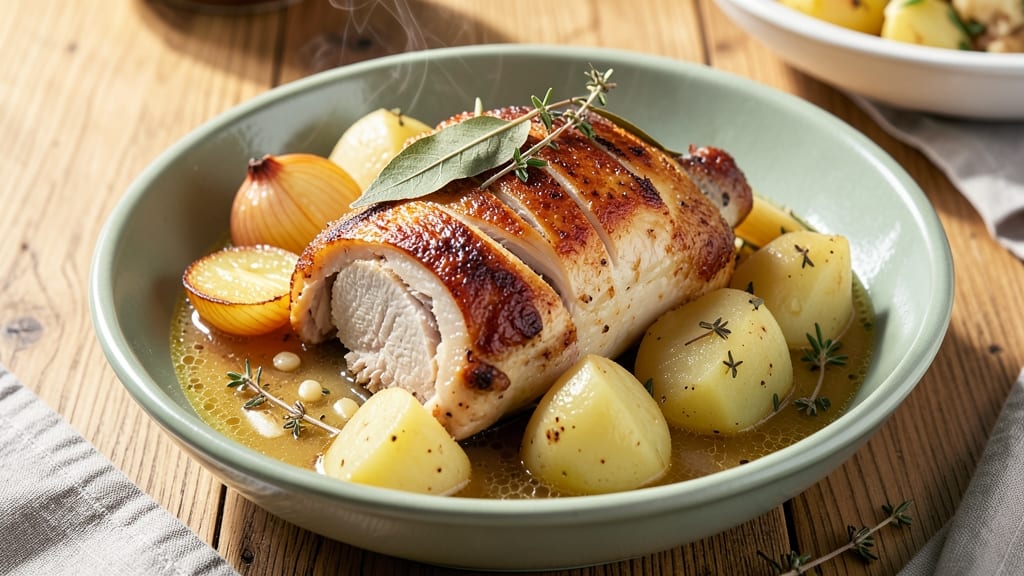
Boiled chicken and potatoes deliver comforting, hearty meals with minimal effort—one-pot simplicity that transforms basic ingredients into a flavorful, protein-rich dish. The secret lies in proper seasoning and timing: tender chicken with juicy potatoes simmered in aromatic broth, where every bite feels like a home-cooked embrace.
This method preserves nutrients while creating a dish that’s both nourishing and satisfying, perfect for weeknight dinners or meal prep.
What sets this recipe apart is its adaptability—whether you prefer skin-on potatoes for extra richness or skinless for a lighter texture, the technique remains the same.
A well-seasoned broth with bay leaves, garlic, and herbs infuses the chicken and potatoes with subtle depth, while monitoring the water-to-food ratio ensures even cooking. The result? A balanced meal where the chicken reaches 165°F internal temperature and the potatoes become fork-tender without falling apart.
By the time you’re done, you’ll have a pot of golden, tender chicken and potatoes swimming in savory broth—ready to be served as-is or paired with steamed greens, crusty bread, or a simple salad.
The beauty of this dish is its foolproof nature: no fancy equipment, no complicated steps, just a pot, water, and patience. It’s the kind of meal that feels indulgent yet effortless, proving that comfort food doesn’t require complexity.
The versatility doesn’t stop there. Use the leftover broth for gravy, or repurpose the chicken into salads or wraps. For extra flavor, add a splash of lemon juice or fresh herbs at the end.
This recipe is your go-to for quick, wholesome dinners that taste like they’ve been simmering all day—without the hours in the kitchen.
Ingredients for boiled chicken and potatoes
Basic pantry staples and a few fresh herbs create this comforting one-pot meal.
| Ingredient | Amount | Notes |
|---|---|---|
| Chicken Thighs, Bone-In 🍗 | 1 ½ lb | Skin-on for richer flavor |
| Yellow Onions 🧅 | 1 whole | Medium size, sliced into wedges |
| Garlic Cloves 🧄 | 4 cloves | Peeled, lightly smashed |
| Russet Potatoes 🥔 | 1 ½ lb | Medium size, halved |
| Bay Leaves 🌿 | 2 whole | Dried or fresh |
| Dried Thyme 🌿 | 1 tsp | Or 1 tbsp fresh thyme |
| Salt 🧂 | 1 ½ tsp | Kosher or sea salt |
| Black Peppercorns 🌶️ | ½ tsp | Freshly ground preferred |
| Lemon Juice 🍋 | 1 tbsp | Freshly squeezed |
| Fresh Parsley 🌿 | ¼ cup | Chopped, for garnish |
| Water 💧 | 4 cups | Enough to cover ingredients |
The chicken thighs are the star—bone-in, skin-on for maximum flavor. Look for thighs with good marbling at the grocery store, and if you can’t find bone-in, skinless thighs work too. The potatoes should be medium-sized russets—they hold their shape better than waxy varieties. For the broth, bay leaves and thyme are non-negotiable; they build the aromatic base. I always grab fresh thyme from the grocery store’s produce section if it’s available, but dried works just fine in a pinch. The key is to use enough water to cover everything by about an inch—this ensures even cooking without overcrowding.
No bay leaves? Substitute with a pinch of dried oregano, though it won’t be identical. Running short on thyme? Dried rosemary at half the amount adds a nice piney note. For a lighter broth, use skinless chicken thighs or breasts, but the skin adds richness that’s hard to beat. The potatoes can be swapped for red potatoes or sweet potatoes, though they’ll have different textures. If you’re short on time, pre-cut potatoes from the grocery store work perfectly—just rinse them well before adding to the pot. And if you’re feeling fancy, a splash of white wine or chicken broth instead of water adds depth.
This dish reheats beautifully—simmer for 5-10 minutes on the stove or microwave for 2-3 minutes with a splash of water. The broth keeps for 4-5 days in the fridge and freezes well for up to 3 months. I always make extra broth for gravy or soups. For meal prep, portion the chicken and potatoes into containers and store the broth separately—reheat everything together for a fresh-tasting meal. The potatoes will firm up slightly when reheated, so add a splash of water or broth to keep them moist.
Why You’ll Love This Recipe
- No-Chop Night: I swear by this—just drop in the whole onions and garlic cloves, peel the potatoes, and let the pot do the work. The onions caramelize right in the broth, and the garlic infuses without any fuss. Honestly, I’ve made this while scrolling through my phone.
- Rich, Deep Flavor: That bone-in chicken? It melts in your mouth but leaves behind a broth so flavorful, you’ll want to drink it. The bay leaves and onions build layers of warmth, while the crispy skin on the potatoes—thanks to the boiling process—adds a satisfying contrast. It’s the kind of taste that makes you pause mid-bite.
- Leftovers That Shine: This dish actually improves the next day. The chicken gets even more tender, and the potatoes soak up all that savory broth. I pack it for lunches or reheat it for dinner—no sad, dry leftovers here. (Yes, even on a Tuesday night.)
- Budget Hero: Bone-in thighs and russets are cheap, but they feel like a splurge. A few onions, a head of garlic, and bay leaves stretch this into four or five meals without breaking the bank. My wallet and my family thank me every time.
Step-by-step instructions for one-pot boiled chicken and potatoes
This simple method delivers tender chicken and potatoes in a single pot with rich, aromatic broth.
Prepare the Chicken and Potatoes
Pat the 1.5 lb chicken thighs, bone-in dry with paper towels to remove excess moisture. This ensures better browning and flavor development. Using a sharp knife, make a few shallow slashes on the skin side of each thigh—this helps render the fat more evenly during cooking.
Peel and halve the 1.5 lb russet potatoes (skin-on for texture) and slice the 1 whole yellow onions into wedges. Keep these separate from the chicken until ready to add. The potatoes should be cut evenly to ensure they cook at the same rate as the chicken. If any pieces are larger than others, cut them further to maintain consistency.
Build Flavor in the Pot
In a large, heavy-bottomed pot, combine the 4 cups water, 2 whole bay leaves, 1 tsp dried thyme, 1.5 tsp salt, and 0.5 tsp black peppercorns. Bring to a boil over medium-high heat until the water reaches a rolling simmer. This creates the flavorful base for your dish.
Once boiling, carefully add the 1.5 lb chicken thighs, bone-in, skin-side down. Reduce the heat to medium-low and let the chicken simmer for 10 minutes. This initial step allows the skin to render fat and begin browning slightly, which infuses the broth with rich flavor. Avoid stirring the chicken during this time to prevent breaking the skin.
Add Potatoes and Aromatics
After the chicken has simmered for 10 minutes, add the sliced yellow onions and 4 peeled garlic cloves (lightly smashed). Stir gently to distribute the aromatics evenly. Then, carefully add the halved russet potatoes around the chicken. The potatoes should be submerged beneath the water level—if not, add a splash of hot water from the pot to cover them completely.
Return the heat to medium and let the mixture simmer gently. The potatoes should cook for 15-20 minutes, or until they are fork-tender with a slight resistance in the center. The chicken is done when it reaches an internal temperature of 165°F, which typically takes 25-30 minutes total cooking time. Use a meat thermometer to check—this ensures the chicken is fully cooked without overcooking the potatoes.
Finish with Lemon and Rest
Once the chicken and potatoes are fully cooked, remove the pot from heat. Stir in the 1 tbsp lemon juice—this brightens the flavors and cuts through the richness of the chicken fat. Let the dish rest, covered, for 5 minutes. This allows the juices to redistribute, ensuring every bite is moist and flavorful.
Before serving, discard the bay leaves and thyme sprigs. Garnish each serving with 0.25 cup chopped fresh parsley for a pop of color and freshness. The broth should be rich and aromatic, with tender chicken and perfectly cooked potatoes ready to be enjoyed.
Pro Tips For Making Boiled Chicken And Potatoes
- START HOT, THEN SIMMER: Crank the heat to boil the broth vigorously for the first 5 minutes—this helps the potatoes cook evenly and the chicken render its juices. Once it’s rolling, reduce to a gentle simmer (tiny bubbles, not a frenzy) or the potatoes will turn mushy and the broth will cloud up.
- PEEL POTATOES LAST MINUTE: I used to peel them first and leave them sitting in water, but that leaches starch and makes them gummy. Instead, scrub them clean, make a few shallow cuts in larger potatoes (so they cook faster), and peel them right before adding to the pot—keeps them firm and fluffy.
- USE WHOLE ONIONS AND GARLIC: Slicing onions and mincing garlic releases too much bitterness into the broth. Toss in 1 whole onion, quartered, and 3-4 unpeeled garlic cloves (smashed with the side of your knife) with the chicken. Strain them out before serving—cleaner flavor, no extra work.
- SALT THE WATER LATE: Salting early dilutes the broth and makes the potatoes taste bland. Wait until the water’s boiling with the chicken in, then add 1-2 tablespoons of salt (more if using low-sodium broth). This guarantees the seasoning penetrates everything evenly without overpowering.
Storing and reheating this recipe
Refrigerator Storage
Let your boiled chicken and potatoes cool to room temperature for no more than 2 hours before storing. Transfer to an airtight container—I love using glass Pyrex with snap-on lids—and refrigerate at 40°F or below.
The chicken and potatoes stay fresh for 3-4 days, while the broth remains flavorful for up to 5 days. The potatoes may firm up slightly, so add a splash of water or broth when reheating. 🥣
Freezer-Friendly Tips
For long-term storage, freeze the chicken and potatoes separately from the broth. Portion into quart-sized freezer bags, leaving 1-inch headspace for expansion. The chicken freezes for 2-3 months while retaining moisture, and the potatoes hold up well for 1-2 months.
The broth freezes beautifully for up to 3 months—just thaw in the fridge overnight before reheating. 🧊
Stovetop Reheating
My go-to method is stovetop reheating, which keeps everything tender and flavorful. Place the chicken, potatoes, and a splash of broth in a pot over medium-low heat. Simmer for 8-10 minutes, stirring occasionally, until reaching 165°F internal temperature.
If the potatoes look dry, add 2-3 tablespoons of water or broth to restore moisture. This method preserves texture better than microwaving. 🔥
Microwave Shortcuts
For quick meals, use the microwave with care. Place the chicken and potatoes on a microwave-safe plate, cover loosely with a damp paper towel, and heat on 50% power for 2-3 minutes. Stir halfway, then continue heating in 30-second intervals until reaching 165°F.
Add a splash of water or broth to prevent drying out. This works best for individual servings rather than the whole pot. ⏰
Broth Repurposing
Don’t toss that flavorful broth! Strain and reduce it on the stovetop for a quick gravy—simmer until slightly thickened, then stir in 1 tbsp cornstarch mixed with 1 tbsp water for extra richness.
Use the broth to make soup by adding vegetables or beans, or freeze it for future use. Even the leftover chicken can be shredded for tacos, salads, or sandwiches—just reheat gently to avoid drying. 💡
Meal Prep Strategy
Plan ahead by prepping components separately. Cook the chicken and potatoes as directed, then store them in one container and the broth in another. When ready to eat, reheat everything together for a fresh-tasting meal.
For variety, serve the chicken over mashed potatoes or with steamed greens**—the broth can double as a sauce. This method saves time and keeps flavors vibrant for days. ✨
Nutrition facts
Frequently asked questions
Can I use chicken breasts instead of thighs?
Yes, but with adjustments! Chicken breasts cook faster and stay drier, so use bone-in, skin-on breasts and reduce simmering time to 15-18 minutes total. Add potatoes after 10 minutes of chicken cooking to prevent overcooking. For extra moisture, cover the pot with a lid during simmering.
Why did my potatoes turn mushy?
Mushy potatoes usually mean overcooking or cutting them too small. Use medium-sized russets (halved, not chopped) and simmer gently—they’re done when fork-tender with slight resistance. Avoid high heat, which breaks down starches faster. For extra structure, add potatoes 10 minutes before the chicken finishes.
How can I make the broth more flavorful?
Boost flavor by adding 1 tbsp chicken bouillon to the water or using chicken broth instead. For depth, toast 1 tsp whole peppercorns in a dry pan for 30 seconds before adding to the pot. A splash of white wine or apple cider vinegar (1 tbsp) also brightens the broth beautifully.
Can I cook this in an Instant Pot?
Sauté onions and garlic first, then add chicken, potatoes, and 2 cups water. Cook on High Pressure for 8 minutes, then quick-release. The chicken should reach 165°F—use a thermometer to check. For extra richness, add 1 tbsp butter during the quick-release step.
What’s the best way to serve this?
This dish pairs perfectly with steamed green beans, crusty bread, or a simple side salad**>. For a heartier meal, drizzle with pan gravy made from the broth. Serve family-style with extra potatoes on the side—it’s always a crowd-pleaser!