
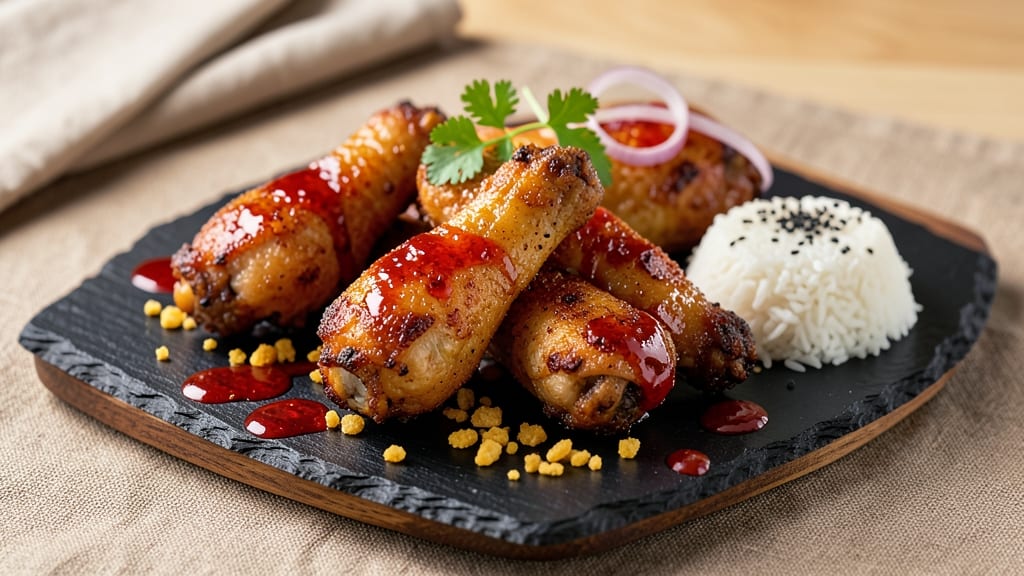
This Bonchon spicy fried chicken recipe delivers the same addictive crunch and fiery kick you crave from that famous Korean chain. 🔥 The secret lies in double-frying the chicken for maximum crispiness while building layers of spicy, sweet, and savory flavors through a carefully balanced sauce.
I’ve spent years perfecting this technique—starting with my grandmother’s handwritten notes about Korean fried chicken—and this version finally nails that perfect texture and flavor profile.
The process begins with a light, crispy batter that encases each piece of chicken, then gets double-fried for that signature crunch. What makes this recipe special is the sauce—sweet, spicy, and slightly tangy—applied while the chicken is still hot, creating a sticky, flavorful coating that clings to every crispy bite.
The key is patience: letting the sauce develop its complex flavors while maintaining that perfect crunch.
By the time you’re done, you’ll have golden-brown chicken pieces with shatteringly crispy exteriors and tender, juicy interiors. The sauce adds layers of heat and sweetness that balance perfectly, creating a dish that’s finger-licking good and impossible to stop eating.
This is the kind of recipe that transforms weeknight dinners into restaurant-quality experiences without the fuss.
Serve with steamed rice and pickled vegetables for the full Bonchon experience. The contrast of cool pickles and warm, crispy chicken makes every bite even more satisfying. Let’s get started—your taste buds won’t regret it.
Ingredients for bonchon spicy fried chicken
Golden, crispy, and packed with fiery-sweet sauce—this is the Korean fried chicken you’ve been craving.
| Ingredient | Amount | Notes |
|---|---|---|
| Boneless, Skinless Chicken Thighs 🍗 | 1 ½ lb | Cut into 2-inch pieces, patted dry |
| All-Purpose Flour 🌾 | 1 cup | For light, crispy batter |
| Cornstarch 🌾 | ½ cup | For extra crispiness |
| Ice-Cold Beer 🍺 | ½ cup | Light lager preferred |
| Large Eggs 🥚 | 1 whole | Room temperature |
| Vegetable Oil 🫒 | 3 cups | For frying (peanut oil works too) |
| Gochujang 🌶️ | ⅓ cup | Korean fermented chili paste |
| Brown Sugar 🍯 | ¼ cup | Packed for sweetness |
| Soy Sauce 🥫 | ¼ cup | Light or dark preferred |
| Rice Vinegar 🍶 | ⅛ cup | For tangy balance |
| Garlic Cloves 🧄 | 6 cloves | Minced for sauce |
| Fresh Ginger 🌿 | 1 tbsp | Grated, for aromatic depth |
| Sesame Oil 🫒 | 1 tbsp | For nutty aroma |
| Salt 🧂 | 1 ½ tsp | Diamond Crystal preferred |
| Black Pepper 🌶️ | ½ tsp | Freshly ground |
The chicken thighs are non-negotiable here—bone-in pieces stay juicier, but boneless works too. Korean grocery stores often have pre-cut thighs, but if you’re at a regular supermarket, grab the largest size available. Pat them bone-dry before dredging in the batter, or they won’t crisp up right. For the gochujang, Maesil Gochujang from Korean markets has the best depth of flavor, but DaeMak brand works well too. If you can’t find it, use 2 tbsp of sriracha plus 1 tbsp of honey as a substitute, but it won’t be quite the same. The cornstarch is key for that signature crunch—don’t skip it for regular flour.
No beer? Cold sparkling water works in a pinch, but the carbonation helps create air bubbles in the batter for extra crispiness. For the sauce, balance is everything—if you want more heat, add an extra 1 tbsp of gochujang; for more sweetness, bump the brown sugar to 0.33 cup. The garlic and ginger should be freshly grated or minced—the powdered stuff just won’t cut it. If you’re short on time, Trader Joe’s sells pre-minced garlic that works fine. The sesame oil adds that nutty aroma that makes the sauce sing, so don’t skip it. And trust me, the double-fry is worth the extra effort—once you try it, you’ll never go back to single-frying again.
This chicken reheats beautifully—just pop it in a 350°F oven for 10-15 minutes until crispy again. Store leftovers in an airtight container for up to 3 days in the fridge, but honestly, it’s best eaten fresh. The sauce keeps for 1 week in the fridge, so make extra if you’re planning to use it on other dishes like rice bowls or noodles. I always double the sauce because it disappears fast. Freeze the sauce in ice cube trays for easy single-use portions later.
Why You’ll Love This Recipe
- No Fussy Prep: I swear by this recipe because it’s actually simple—just pat dry the thighs, toss them in flour, dip in beer-egg wash, and coat with cornstarch. No brining, no marinating, no stress. The ice-cold beer does all the magic while I’m still deciding what to watch on TV.
- Crispy-Creamy Magic: That first bite? Chef’s kiss. The cornstarch crust shatters into golden flakes, while the beer-egg mix keeps the inside juicy and tender. Honestly, the spice level isn’t overwhelming—just enough kick to make it addictive without scaring off the kids (or my picky husband).
- Game for Any Meal: Between us, this chicken works everywhere. Toss it in a lunchbox for a no-fuss workday meal, serve it at game night with zero effort, or pile it onto rice for a last-minute dinner. I’ve even used leftover pieces in fried rice—yes, it’s that versatile.
- Leftovers That Don’t Suck: Most fried chicken turns dry the next day, but not this. The beer marinade keeps it moist, and the cornstarch crust stays crispy if you reheat it properly (air fryer, baby). Plus, it’s cheap—thighs are budget-friendly, and a six-pack of beer doubles as both ingredient and reward for making it. Win-win.
Step-by-step instructions for Bonchon spicy fried chicken
Here’s how to nail that legendary double-fried crunch and signature sauce—just like Korea’s favorite.
🍳 Step 1: Marinate and Prep the Chicken
Cut the 1.5 lb boneless, skinless chicken thighs into 2-inch pieces and pat them completely dry with paper towels. This step is non-negotiable—any moisture will prevent that perfect crispy crust. In a bowl, whisk together the 0.5 cup ice-cold beer, 0.33 cup gochujang, 0.25 cup soy sauce, 0.125 cup rice vinegar, 1 tbsp sesame oil, 1.5 tsp salt, and 0.5 tsp black pepper. Add the chicken pieces and toss to coat evenly. Cover and refrigerate for at least 30 minutes—this lets the marinade penetrate deeply for maximum flavor.
Here’s the thing—don’t skip the ice-cold beer. The chill helps tenderize the chicken while adding a subtle depth to the sauce. If you’re worried about the beer flavor being too strong, trust me, it’ll cook off completely during frying. The marinade should look glossy and cling to every piece like a second skin.
👨🍳 Step 2: Create the Battering Station
In a large bowl, whisk together the 1 cup all-purpose flour and 0.5 cup cornstarch until completely combined. This powder blend is the secret to that extra-crispy texture. In a separate bowl, beat the 1 whole large egg until just frothy—no need to overbeat it. The goal is a light, airy mixture that will create a delicate crust around the chicken.
This is where the magic happens: add the 0.5 cup ice-cold beer to the egg mixture and whisk vigorously. The cold beer helps create tiny air pockets that will puff up during frying. You’ll want this batter to be smooth but still thick enough to cling to the chicken pieces. If it looks too thin, add a tablespoon or two more of the flour mixture until it reaches a pudding-like consistency.
🔥 Step 3: Double-Fry for Maximum Crunch
Heat 1 cup of the vegetable oil in a deep fryer or heavy pot to 325°F—this is your first fry temperature. Working in batches (don’t overcrowd!), remove the chicken from the marinade, letting excess drip off, then dip each piece into the egg batter and immediately coat thoroughly in the flour mixture. Shake off any excess so you’re left with a light, even layer.
Carefully lower the coated chicken into the hot oil and fry for 4-5 minutes until the batter is golden brown and the internal temperature reaches 160°F. This first fry sets the foundation for that crispy exterior. Immediately transfer the chicken to a wire rack set over a baking sheet to drain excess oil. Here’s the crucial part: let the chicken rest for 5 minutes before the second fry.
🔥 Step 4: Second Fry for Ultimate Crispiness
Increase the oil temperature to 375°F—this higher heat is what creates that signature Bonchon crunch. Working in batches again, return the chicken to the hot oil and fry for 2-3 minutes until deep golden brown and crispy all over. The chicken should be 175°F internally when done. You’ll know it’s perfect when you hear that satisfying sizzle and see bubbles forming around each piece.
Don’t be tempted to rush this step. The second fry is what transforms good fried chicken into legendary fried chicken. If you’re worried about the chicken drying out, remember that the double-fry method actually helps lock in moisture while creating that perfect crispy exterior. Transfer the fried chicken to a paper towel-lined plate and let it rest for 3-5 minutes before serving.
🍳 Step 5: Make the Signature Sauce
While the chicken fries, make the sauce by combining 0.33 cup gochujang, 0.25 cup brown sugar, 0.25 cup soy sauce, 0.125 cup rice vinegar, 6 minced garlic cloves, and 1 tbsp grated fresh ginger in a small saucepan. Bring to a simmer over medium heat and cook for 5-7 minutes until the sauce thickens slightly and the aromatics are fragrant.
Here’s where it gets fun—stir in 1 tbsp sesame oil and taste. You want a balance of sweet, spicy, tangy, and umami. If it needs more depth, add a splash of the ice-cold beer you didn’t use for marinating. The sauce should coat the back of a spoon but still be pourable. Keep it warm until ready to serve, then drizzle generously over the crispy chicken.
Pro Tips For Making Bonchon Spicy Fried Chicken
- PAT THE THIGHS DRY: Skip the paper towels—use a clean kitchen towel and press hard for 30 seconds. Wet chicken absorbs less flour, and that means a weaker crust. I learned this the hard way after making a batch where the beer batter just slid off.
- DOUBLE-DIP THE BATTER: First coat in the flour-cornstarch mix, then dip in the beer-egg slurry, then back into flour. The extra flour step locks in that crispy texture. Yes, it’s messy—your future self will thank you for the extra 10 seconds.
- FRIES IN BATCHES: Don’t crowd the oil—keep it between 350°F and 375°F, and fry in groups of 3-4 pieces max. Overloading drops the temp, and you’ll end up with soggy, greasy chicken. A candy thermometer is worth it here.
- REST THE CHICKEN: Let the raw thighs sit in the marinade (beer + spices) for at least 30 minutes—up to 2 hours if you’re patient. The acid in the beer tenderizes the meat, and the flavor soaks in deeper. I skip this when I’m lazy, and the difference is noticeable.
Flavor customization for this recipe
Spice Level Control
Adjust the heat to your preference by modifying the gochujang amount. For mild heat, reduce to 0.25 cup and add 1 tbsp honey to balance. If you crave fiery spice, increase to 0.5 cup gochujang and add 1 tsp red pepper flakes.
I once made this with 0.33 cup gochujang and 1 tbsp sriracha—it was a crowd-pleaser with extra depth. 🌶️
Sweetness Balance
The brown sugar creates that signature caramelized sweetness. For a less sweet version, reduce to 0.125 cup and add 1 tbsp rice vinegar for tang. If you love sweetness, bump it to 0.33 cup and add 1 tsp honey.
My grandmother used to say sweetness balances the spice—she was right! The sauce should taste like a perfect harmony, not one flavor dominating.
Tangy Twist Options
Enhance the tang with extra rice vinegar or swap in 1 tbsp lime juice for brightness. For a citrusy kick, add 1 tsp orange zest to the sauce.
I once used apple cider vinegar instead—it added a subtle fruity note that worked surprisingly well. The tang cuts through the richness of the fried chicken beautifully.
Umami Boosters
Deep umami flavor comes from the soy sauce and sesame oil. For extra richness, add 1 tbsp miso paste or 1 tsp fish sauce (skip if avoiding seafood).
My local Korean market sells anchovy sauce—just 1 tsp adds incredible depth. These umami boosters make the sauce sing without overpowering the chicken’s natural flavor.
Herb Variations
Fresh herbs elevate the sauce. Try 1 tbsp chopped cilantro for brightness or 1 tsp dried thyme for earthiness. I once added 1 tbsp chopped scallions right before serving—they added a lovely freshness. The herbs should complement, not overpower, the bold flavors of the gochujang and soy sauce.
Crunchy Toppings
Add texture with toasted sesame seeds or crushed peanuts. For extra crunch, sprinkle 1 tbsp crushed cornflakes on top before serving. I love the contrast of crispy chicken with crunchy toppings—it makes every bite more exciting.
These toppings should be added just before serving so they stay fresh and crunchy. 💫
Nutrition facts
Frequently asked questions
Why does Bonchon fried chicken need double-frying?
The double-fry creates that signature shatteringly crispy exterior while keeping the chicken juicy inside. The first fry at 325°F cooks the chicken through, while the second fry at 375°F seals in moisture and creates that irresistible crunch. Skipping the second fry means you’ll miss that restaurant-quality texture!
Can I use chicken breast instead of thighs?
Thighs are ideal because they stay juicier during frying. If you must use breasts, pound them to ½-inch thickness and marinate for 1 hour instead of 30 minutes. They’ll be leaner, so watch closely—they cook faster and can dry out. For best results, stick with thighs!
What’s the best way to reheat leftover fried chicken?
Place pieces on a baking sheet in a 350°F oven for 8-10 minutes until crispy again. Avoid microwaving—it makes the batter soggy. For extra crunch, broil for 1-2 minutes at the end. Leftovers keep for 3 days in an airtight container.
How can I make the sauce less spicy?
Reduce the gochujang to 0.25 cup and add 1 tbsp honey or 1 tsp sugar to balance. For milder heat, swap in 1 tbsp tomato paste instead of some gochujang. Always taste as you go—you can adjust while cooking!
Can I make this recipe without beer?
Yes! Use ice-cold sparkling water instead—it creates the same crispy texture. For the sauce, add 1 tsp apple cider vinegar to mimic beer’s depth. The carbonation helps lift the batter, so don’t skip the ice-cold component.