
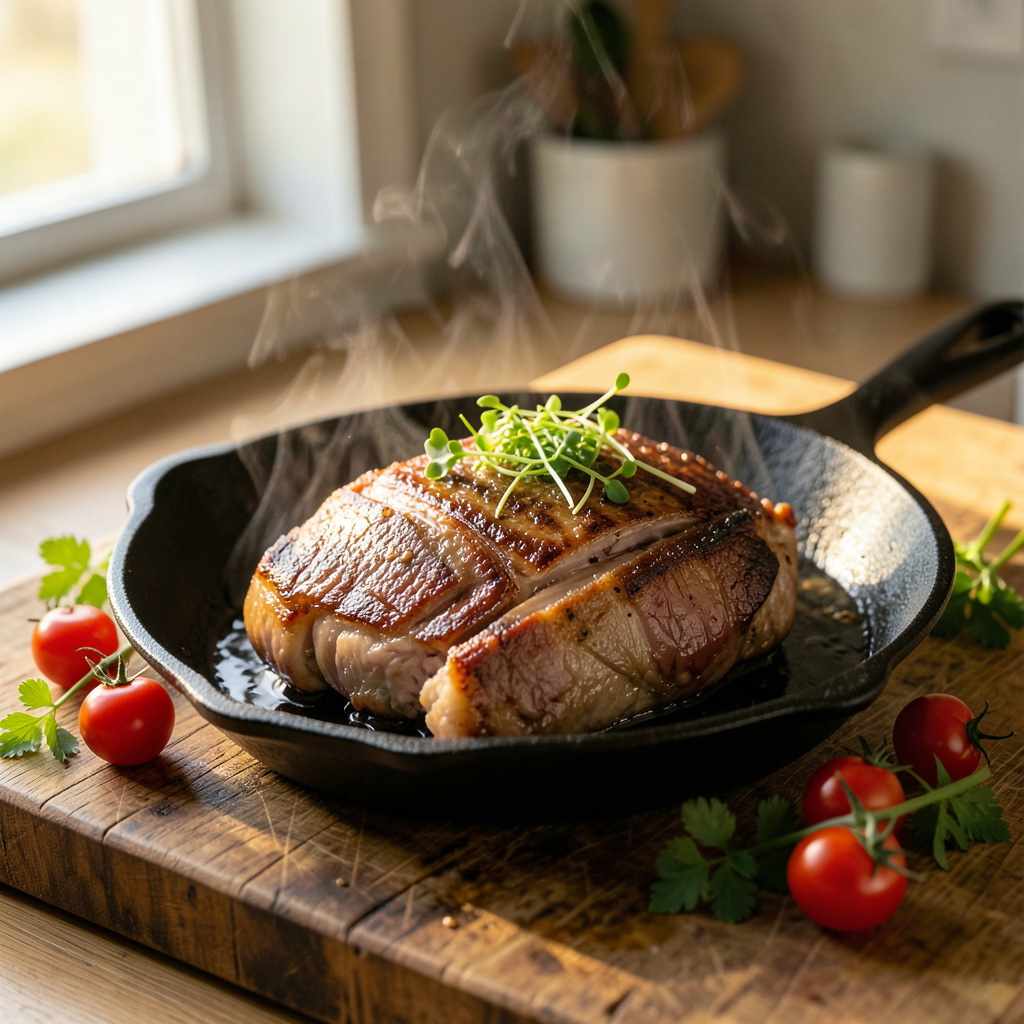
A perfectly cooked bone-in pork rib roast is a show-stopping centerpiece for any meal. I achieve fall-off-the-bone tenderness by combining low-and-slow roasting with precise temperature control, resulting in a juicy, flavorful roast that’s sure to impress.
The key to this recipe is a simple spice rub that enhances the natural flavors of the pork without overpowering it. By searing the roast first, we create a delicious crust that adds texture and flavor to each bite.
By cooking the pork rib roast at a consistent 325°F, we ensure that it reaches a tender, easily shredded texture. Letting it rest before slicing allows the juices to redistribute, making every bite succulent and full of flavor.
Serve this impressive roast with your favorite sides, such as roasted vegetables or creamy mashed potatoes, for a truly satisfying meal. The result is a perfectly cooked, tender pork rib roast that’s sure to become a family favorite.
Ingredients for Bone-in Pork Rib Roast
Here’s everything you need to create this perfectly tender bone-in pork rib roast recipe.
| Ingredient | Amount | Notes |
|---|---|---|
| Bone-In Pork Rib Roast 🐖 | 2 ½ lb | Center-cut, bone-in preferred for best flavor |
| Kosher Salt 🧂 | 2 tbsp | Diamond Crystal or similar flake salt |
| Black Pepper 🌶️ | 1 tbsp | Freshly ground black peppercorns |
| Garlic Powder 🧄 | 2 tsp | Not garlic salt, pure garlic powder |
| Paprika 🌿 | 1 tsp | Smoked or sweet paprika works well |
| Dried Thyme 🌿 | 1 tsp | Rubbed or crushed thyme leaves |
| Olive Oil 🫒 | 2 tbsp | Extra-virgin for best flavor and browning |
| Apple Cider Vinegar 🍎 | 1 tbsp | Optional, but adds depth to the roast |
| Onion 🧅 | 1 whole | Sliced into thick rings for roasting |
| Carrots 🥕 | 2 whole | Peeled and chopped for roasting |
| Fresh Rosemary 🌿 | 2 sprigs | Optional, for garnish and added flavor |
You can find bone-in pork rib roasts at most butcher counters or specialty meat markets. Look for center-cut roasts with good marbling for the best flavor. For spices, Penzeys Spices offers excellent quality paprika and thyme. When shopping for olive oil, choose a high-quality extra-virgin variety for the best browning and flavor.
If you can't find kosher salt, use half the amount of regular salt as a substitute. For garlic powder, you can toast whole garlic cloves and blend them into a powder for an extra depth of flavor. Smoked paprika adds a nice depth, but sweet paprika works too if that's what you have on hand. Fresh herbs like rosemary can be substituted with dried if needed, using one-third the amount.
Store any leftover pork rib roast in an airtight container in the refrigerator for up to 3 days. Reheat gently in the oven at 325°F until warmed through, adding a bit of liquid if needed to keep it moist. You can also freeze cooked roast for up to 3 months—just thaw overnight in the fridge before reheating.
Step-by-Step Instructions for Bone-In Pork Rib Roast
Follow these detailed steps to achieve perfect, fall-off-the-bone tender pork rib roast every time.
🔥 Step 1: Prep and Season the Pork Roast
Preheat your oven to 300°F. In a small bowl, mix together the 2 tbsp Kosher Salt, 1 tbsp Black Pepper, 2 tsp Garlic Powder, 1 tsp Paprika, and 1 tsp Dried Thyme. I like to use my fingers to mix the spices until they’re evenly distributed—this ensures consistent flavor throughout the roast.
Rub the spice mixture all over the 2.5 lb Bone-In Pork Rib Roast, making sure to coat it evenly. Don’t be shy with the seasoning—the slow cooking process will mellow out the flavors. Let the roast sit at room temperature for 30 minutes before roasting to help it cook more evenly.
🔥 Step 2: Sear the Roast and Prepare Vegetables
Heat 2 tbsp Olive Oil in a large oven-safe skillet or Dutch oven over high heat. Sear the pork roast on all sides until browned, about 2-3 minutes per side. This step creates a flavorful crust on the roast. Remove the roast from the pan and set it aside.
In the same pan, add sliced onion and chopped carrots. Cook for 5 minutes, stirring occasionally, until they begin to soften and caramelize. This step adds depth to the overall dish. If using 1 tbsp Apple Cider Vinegar, deglaze the pan by adding it now and scraping up any browned bits.
⏰ Step 3: Roast to Perfection
Return the pork roast to the pan, bone-side down if it has a bone. Transfer the pan to the preheated oven and roast for 2-2.5 hours, or until the internal temperature reaches 190-195°F. I use a meat thermometer to check for doneness—the temperature will rise slowly, and you want it to reach this range for tender, fall-off-the-bone meat.
After 1.5 hours, start checking the temperature every 15 minutes. When the roast is done, remove it from the oven and let it rest in the pan for 15-20 minutes. This resting period allows the juices to redistribute, making the meat even more tender.
🍽️ Step 4: Serve with Roasted Vegetables
Slice the rested pork roast against the grain into thick slices. Serve with the roasted onions and carrots from the pan. If desired, garnish with 2 sprigs Fresh Rosemary for added flavor and presentation. The result is a perfectly cooked, tender pork rib roast with deliciously caramelized vegetables.
Common Mistakes When Making Perfect Results
Mistake: Not allowing the bone-in pork rib roast to rest after cooking can lead to dry meat. When you cut into it right away, the juices escape, resulting in a less flavorful dish. ⚠️ Solution: After removing the roast from the oven, tent it loosely with aluminum foil and let it rest for at least 15-20 minutes. This allows the juices to redistribute throughout the meat, ensuring each slice is juicy and tender. ✅
Mistake: Skipping seasoning or not seasoning sufficiently can leave your roast bland. The seasoning is essential to enhance the flavors of the meat and create a delicious crust. ⚠️ Solution: Generously season the roast with salt and pepper at least an hour before cooking. For added flavor, consider using a marinade or rub that includes garlic, herbs, and spices. Let it sit to absorb those flavors for a more robust taste. ✅
Mistake: Cooking at too high of a temperature can result in a burnt exterior while leaving the inside undercooked. This often happens when trying to rush the cooking process. ⚠️ Solution: Start by searing the roast at a high temperature (around 450°F) for 15-20 minutes, then reduce to a lower temperature (about 325°F) for even cooking. Use a meat thermometer to ensure it reaches the perfect doneness (145°F for medium-rare). ✅
Mistake: Not using a meat thermometer can lead to overcooking or undercooking the roast, which affects texture and safety. ⚠️ Solution: Invest in a reliable meat thermometer to monitor the internal temperature as it cooks. Insert it into the thickest part of the meat, avoiding the bone. This ensures you achieve the desired doneness without guesswork. ✅
Mistake: Overcrowding the roasting pan can trap steam, preventing proper browning and creating a soggy roast. ⚠️ Solution: Use a roasting pan that allows enough space around the roast for hot air to circulate freely. If necessary, cook in batches or use a larger pan to ensure optimal roasting conditions for a beautiful crust and tender meat. ✅