
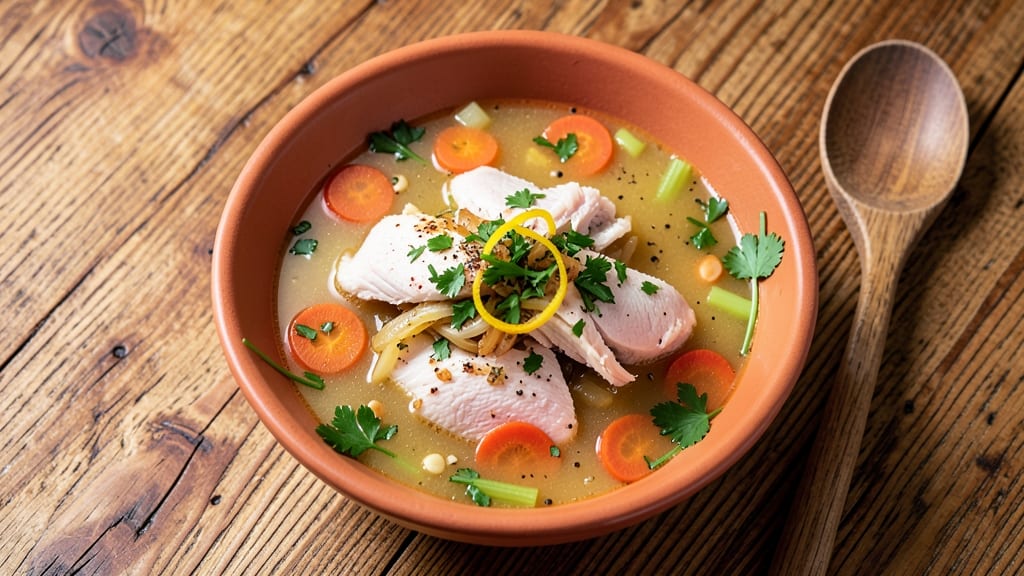
This boneless chicken soup recipe transforms simple ingredients into a velvety, aromatic broth with perfectly silky shredded chicken—ideal for comforting weeknight dinners or meal prep. The secret lies in slow-simmered aromatics and a blend of herbs that infuse every spoonful with deep, savory warmth without overpowering the tender chicken.
What sets this recipe apart is the two-stage cooking method: first simmering chicken and vegetables in water to extract maximum flavor, then straining and reducing the broth with fresh herbs for a concentrated, restaurant-quality depth.
No heavy cream or complicated techniques—just clean, bright flavors that shine through simple pantry staples and 30 minutes of hands-off time.
The result is a soup so smooth and satisfying that it feels like a hug in a bowl—golden broth with tender chicken that practically melts, vegetables that stay crisp-tender, and a whisper of herbal brightness that lingers.
Serve with crusty bread or a sprinkle of fresh parsley for the perfect balance of texture and aroma.
This recipe scales effortlessly for crowds or leftovers, making it the ultimate foolproof comfort dish that always delivers. Let’s get started with the step-by-step guide—where every detail ensures your soup turns out perfectly every time.
Ingredients for boneless chicken soup
Simple pantry staples meet aromatic herbs to create this velvety chicken soup with silky shreds.
| Ingredient | Amount | Notes |
|---|---|---|
| Boneless, Skinless Chicken Breast 🍗 | 1 ½ lb | Pounded to even thickness for even cooking |
| Yellow Onion 🧅 | 1 whole | Chopped into 1/4-inch pieces |
| Carrots 🥕 | 4 medium | Peeled and sliced into 1/4-inch rounds |
| Celery Stalks 🧅 | 3 whole | Trimmed and cut into 1/2-inch pieces |
| Garlic Cloves 🧄 | 4 cloves | Peeled and lightly smashed |
| Fresh Parsley 🌿 | ¼ cup | Chopped, stems removed |
| Fresh Thyme 🌿 | 1 tbsp | Leaves only, stems removed |
| Fresh Bay Leaves 🌿 | 2 whole | For deep aromatic flavor |
| Salt 🧂 | 1 ½ tsp | Diamond Crystal kosher preferred |
| Black Peppercorns 🌶️ | ½ tsp | Freshly cracked for best flavor |
| Chicken Vegetable Bouillon Cube 💧 | 1 cube | For added depth of flavor |
| Extra-Virgin Olive Oil 🫒 | 1 tbsp | For sautéing aromatics |
| Water 💧 | 6 cups | Filtered preferred for purity |
The chicken breast should be pounded to even thickness—this ensures it cooks through without drying out. Costco or Trader Joe’s often carry pre-cut boneless breasts, which saves time. Look for plump, firm carrots with vibrant orange color at the grocery store—avoid any with soft spots. Fresh herbs are non-negotiable here; the parsley and thyme should be bright green with no wilting. Whole Foods or local farmers markets are best for quality herbs, but the grocery store usually has decent parsley. The bay leaves add subtle depth, so don’t skip them—just remember to remove them before serving.
No fresh thyme? Dried thyme at one-third the amount works in a pinch, though fresh is preferred. Running out of chicken bouillon? Homemade vegetable broth with a pinch of chicken powder delivers similar results. The olive oil should be extra-virgin—it carries the aromatic flavors during the sautéing stage. For the carrots and celery, baby carrots and celery hearts can be used if you prefer convenience. The garlic cloves should be lightly smashed rather than minced—this prevents them from turning bitter during the long simmer.
This soup keeps beautifully for 4-5 days in the fridge—flavors actually deepen overnight. For freezing, portion into airtight containers with a thin layer of olive oil on top to preserve freshness. Reheat gently on the stove, adding a splash of water if needed. The broth reduces slightly when reheated, so it’s perfect for meal prep—just reheat and serve with crusty bread for maximum comfort. Fresh herbs can be added after reheating to maintain their vibrant flavor.
Why You’ll Love This Recipe
- No-Fuss Ingredients: I swear by this combo—just chicken, onions, carrots, and celery. No fancy prep, no hidden pantry staples. The onion and garlic alone build that rich base while you’re chopping.
- Savory Depth Fast: That carrot-celery base simmers into something almost sweet, then the garlic hits like a warm hug. Honestly, the first bite makes me pause mid-spoon.
- Weeknight to Meal Prep: I make a big batch on Sundays—it’s my go-to for lunches all week. The chicken stays tender, and the veggies hold up perfectly. (Yes, even on a Tuesday night.)
- Budget That Works: A single chicken breast stretches for four servings, and the veggies are cheap staples. Leftovers? Even better—they taste just as good reheated as they did fresh.
Step-by-step instructions for herbal broth magic with silky shreds
Transform simple ingredients into restaurant-quality soup with this refined technique.
Prepare the Chicken and Aromatics
Place the 1.5 lb boneless, skinless chicken breast between two sheets of plastic wrap and pound to an even ½-inch thickness using a meat mallet. This ensures even cooking and tender shreds. While you work, prepare the vegetables: chop the 1 whole yellow onion into ¼-inch pieces, peel and slice the 4 medium carrots into ¼-inch rounds, and trim the 3 whole celery stalks into ½-inch pieces. Peel and lightly smash the 4 cloves garlic.
For the herbs, remove stems from the 0.25 cup fresh parsley and 1 tbsp fresh thyme leaves. Keep the 2 whole fresh bay leaves whole for maximum flavor infusion. The precise prep here creates uniform cooking and balanced flavor extraction. Don’t skip this step—unevenly cut vegetables cook at different rates.
Build Flavor with the Aromatic Base
Heat the 1 tbsp extra-virgin olive oil in a large pot over medium heat. Add the chopped onion, carrots, and celery, cooking for 5-6 minutes until the vegetables soften and release their juices. Stir occasionally to prevent browning. Add the smashed garlic cloves and cook for 30 seconds until fragrant—this prevents bitter garlic flavors.
Add the 1 cube chicken vegetable bouillon cube, 1.5 tsp salt, and 0.5 tsp freshly cracked black peppercorns. Stir well to distribute the seasoning evenly. This step develops the foundational flavor profile that will carry through the entire soup. The bouillon cube adds depth while the salt and pepper create a balanced seasoning base.
Simmer the Chicken and Vegetables
Add the pounded chicken breast to the pot, along with the 6 cups water. Bring to a gentle boil, then immediately reduce heat to maintain a barely simmering state. Cover partially and cook for 12-15 minutes until the chicken reaches 165°F internally and is no longer pink in the center. The gentle simmer prevents tough meat while extracting maximum flavor.
During this time, add the 2 whole fresh bay leaves to the pot. They’ll infuse the broth with subtle, complex flavors without needing removal. After the chicken reaches temperature, use tongs to transfer it to a plate and let it rest for 5 minutes before shredding. This resting period ensures clean shreds and prevents the meat from falling apart in the broth.
Shred the Chicken and Finish the Broth
Using two forks, shred the chicken into silky strands that will dissolve beautifully in the broth. Return the shredded chicken to the pot. Add the 0.25 cup chopped fresh parsley and 1 tbsp fresh thyme leaves, stirring gently to combine. Simmer uncovered for additional 5 minutes to allow the herbs to release their bright, fresh flavors into the broth.
Taste the broth and adjust seasoning if needed—this is your final opportunity to balance the flavors. The soup should be rich from the chicken but not salty, with bright herbal notes from the fresh parsley and thyme. The carrots and celery should be tender but still hold their shape, contributing natural sweetness and texture.
Serve with Perfect Texture
Ladle the soup into bowls, ensuring each serving contains an even distribution of chicken, vegetables, and broth. Garnish with additional chopped parsley if desired. Serve immediately while hot, as the flavors continue to develop and meld together. The result should be a velvety broth with tender chicken shreds and perfectly cooked vegetables that complement rather than compete with the main ingredients.
This method creates a soup that’s both comforting and sophisticated—simple ingredients elevated through precise technique. The key lies in the gentle simmering that develops deep flavor without overcooking the vegetables, and the careful timing that ensures tender chicken without toughness.
Pro Tips For Making Boneless Chicken Soup
- Simmer Slow and Low: Chicken breast turns rubbery when rushed. Once it’s cooked through (165°F internal temp), reduce heat to a bare simmer—just enough to keep bubbles gentle. I learned this the hard way after serving soup that tasted like overcooked shoe leather.
- Dice Onions Like a Pro: Tiny, even pieces (1/4-inch) dissolve faster and sweeten the broth without leaving chunks. Skip the food processor—your knife skills matter more here. (Yes, even if you’re impatient like me.)
- Salt the Water Early: Add salt to the pot before the chicken goes in—it penetrates better and seasons the broth from the start. I used to wait, and the soup always tasted underseasoned. Don’t make that mistake.
- Sear the Chicken First: Brown the chicken breasts in batches over medium-high heat before adding broth. The crust adds depth, and it keeps the meat from falling apart later. (Your future self will thank you.)
Storing and reheating your boneless chicken soup
Refrigerator Storage
Let your soup cool completely before transferring to airtight glass containers—I love using Pyrex with snap-on lids for easy stacking. Store in the fridge at 40°F or below for up to 4-5 days. The flavors actually deepen overnight as the herbs meld into the broth.
Just before serving, give it a quick stir and taste—you might want to add a pinch of salt or a splash of water if the broth has reduced too much. 💪
Freezer-Friendly Tips
For long-term storage, portion the soup into quart-sized freezer bags or glass containers, leaving 1-inch headspace for expansion. Seal tightly to prevent freezer burn. Label with the date—this soup stays delicious for up to 3 months.
When ready to eat, thaw overnight in the fridge for even reheating. Never microwave directly from frozen; it creates uneven textures. ✨
Stovetop Reheating
My preferred method is gentle stovetop reheating. Transfer soup to a pot and heat over medium-low heat for 8-10 minutes, stirring occasionally. Add 2-3 tablespoons of water or broth if it looks too thick.
Bring to a gentle simmer (not boiling) to preserve the delicate flavors. Taste before serving—sometimes reheated soup needs a pinch of salt or a sprinkle of fresh herbs to revive its brightness. 🔥
Microwave Shortcuts
For quick meals, use the microwave on 50% power in 2-minute intervals, stirring between each interval. Cover loosely with a microwave-safe lid to prevent splattering. If the soup seems dry, add 1-2 tablespoons of water and stir well.
Fresh herbs like parsley or thyme should be added after reheating to maintain their vibrant flavor and aroma. This method works best for 1-2 servings at a time. 💫
Reviving Leftovers
If your soup tastes flat after reheating, don’t worry—it just needs a flavor boost. Stir in 1 teaspoon of lemon juice or 1 tablespoon of fresh parsley to brighten it up.
For extra richness, add a drizzle of olive oil or a splash of heavy cream (if you prefer a creamier texture). The key is to treat reheating as an opportunity to adjust seasoning, not just warm up the soup. 💡
Nutrition facts
Frequently asked questions
Why pound the chicken breast before cooking?
Pounding creates even thickness, ensuring the chicken cooks through completely without drying out. The ½-inch thickness guarantees tender, silky shreds that dissolve beautifully in the broth. This step is especially important for boneless chicken, which can become tough if overcooked.
Can I use chicken thighs instead of breasts?
Yes, but adjust the cooking time! Chicken thighs stay juicier and add richer flavor. Use 1.5 lbs thighs instead, simmer for 20-25 minutes until internal temp reaches 165°F. Skin-on thighs add extra depth—just remove before shredding.
How do I prevent the vegetables from getting mushy?
Keep the broth at a gentle simmer (tiny bubbles) and cook carrots/celery for only 12-15 minutes total. Add them later if needed, or use fresh baby carrots and celery hearts which stay crisp-tender longer. The key is timing—don’t overcook!
What if my broth tastes too bland?
Add 1 extra bay leaf or ½ tsp poultry seasoning while simmering. For depth, stir in 1 teaspoon soy sauce or ½ teaspoon fish sauce (just a whisper!). Taste as you go—broth flavors build gradually during simmering.
Can I make this soup in an Instant Pot?
Sauté aromatics for 3 minutes, then add all ingredients and pressure cook for 8 minutes (high pressure). Quick release, shred chicken, and finish with fresh herbs. The Instant Pot cuts cooking time to 20 minutes total while keeping flavors concentrated.