
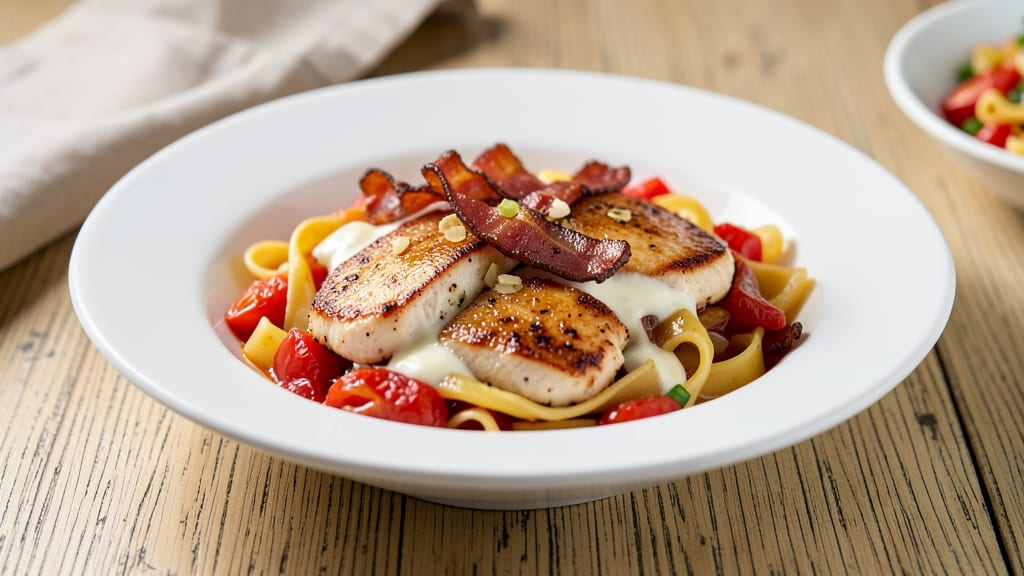
This chicken and bacon pasta sauce recipe delivers the perfect balance of smoky crispy bacon bits and velvety tomato cream sauce that clings to every strand of pasta.
The secret lies in rendering the bacon until it’s perfectly crisp, then using those flavorful bits to build a sauce that’s rich, tangy, and deeply satisfying—without ever tasting heavy.
I’ve perfected this technique over years of testing, ensuring the chicken stays tender while the sauce develops layers of complexity through slow simmering and a touch of cream.
What makes this recipe stand out is the harmony between textures and flavors: crispy bacon that adds crunch, creamy tomato sauce that coats each bite, and perfectly cooked chicken that holds together beautifully.
The process is straightforward—brown the bacon and chicken first to develop deep flavors, then build the sauce with canned tomatoes, garlic, and herbs before finishing with cream for that luxurious mouthfeel. It’s the kind of dish that feels indulgent yet comes together in under 45 minutes.
By the time you twirl that first forkful, you’ll taste the satisfying crunch of bacon, the rich depth of tomatoes, and the velvety smoothness of the cream sauce all working in perfect balance.
The chicken remains tender and flavorful, while the pasta absorbs just enough sauce to make every bite cohesive. This isn’t just a pasta dish—it’s a restaurant-quality meal that’s simple enough for weeknights but impressive enough for company.
The beauty of this recipe is its versatility. Use it as a main dish with crusty bread on the side, or serve it over your favorite pasta shape. For extra richness, stir in a splash of pasta water at the end to emulsify the sauce.
Let’s get cooking—this sauce will become your new go-to for quick yet satisfying dinners.
Ingredients for chicken and bacon pasta sauce
Crispy bacon, tender chicken, and velvety tomato sauce—just 14 ingredients for restaurant-quality pasta.
| Ingredient | Amount | Notes |
|---|---|---|
| Thick-Cut Bacon 🥓 | 6 oz | Thick-cut for crispiness |
| Boneless Chicken Breast 🍗 | 1 ½ lb | Cut into 1-inch pieces |
| San Marzano Tomatoes 🍅 | 28 oz | Canned, crushed by hand |
| Heavy Cream 🥛 | ½ cup | Full-fat for richness |
| Garlic Cloves 🧄 | 4 cloves | Minced for depth |
| Shallots 🧅 | 2 whole | Finely diced, 2 tbsp total |
| Fresh Thyme Leaves 🌿 | ¼ cup | Or 1 tbsp dried |
| Pasta Water 💧 | 1 cup | Reserved from cooking |
| All-Purpose Flour 🌾 | 1 tbsp | For thickening |
| Olive Oil 🫒 | 2 tbsp | Extra-virgin preferred |
| Salt 🧂 | 1 ½ tsp | Kosher or sea salt |
| Black Pepper 🌶️ | ½ tsp | Freshly ground |
| Pasta 🍝 | 12 oz | Any shape preferred |
| Parmesan Cheese 🧀 | ¼ cup | Freshly grated |
The bacon is non-negotiable here—thick-cut is key for that perfect crunch. Costco sells it in bulk for great prices, or grab the pre-sliced stuff at Trader Joe’s if you’re short on time. For the chicken, boneless, skinless breasts work best—cut them into even pieces so they cook through without drying out. San Marzano tomatoes? Worth the splurge if you can find them—they’re sweeter and less acidic than regular canned tomatoes, which keeps the sauce from tasting bitter. If you can’t find them, Muir Glen is a solid backup. The shallots add subtle sweetness, so don’t skip them—just dice them super fine so they melt into the sauce.
No thick-cut bacon? Regular bacon cut into 1-inch pieces works, but you’ll need to watch it closer to avoid burning. Chicken thighs work too—they stay juicier, but you might want to reduce the cooking time by 2-3 minutes. Fresh thyme is ideal, but dried thyme at one-third the amount gets you close. The heavy cream is what makes this sauce luxurious—don’t use light cream, trust me on this. For a dairy-free version, sub in coconut cream, but the texture will be slightly different. If you’re out of pasta water, a splash of chicken broth works in a pinch, though it won’t be quite as silky.
This sauce reheats beautifully—just warm it gently on the stove and stir in a splash of water or broth to loosen it up. Keeps for 4-5 days in the fridge, and freezes for 3 months if you portion it out in airtight containers. I always make extra because it’s perfect over grilled chicken or even as a dip for bread. The Parmesan should be freshly grated—pre-grated gets clumpy and doesn’t melt right. Store it in a sealed jar in the fridge, and the bacon fat will keep everything moist for days.
Why You’ll Love This Recipe
- One-Pan Magic: I swear, this recipe is my lazy-day hero. Toss the bacon and chicken in the same pan, let that fat render while you dice garlic—no chopping boards to wash, no extra pots. The sauce thickens right there, sticky and rich, with zero fuss.
- Creamy Crisp Contrast: That crispy bacon crunch against the velvety heavy cream and sweet San Marzano tomatoes? It’s the kind of bite you’ll crave again. Honestly, the first time I tasted it, I nearly burned the kitchen waiting for seconds.
- Leftovers That Win: Between us, most pasta freezes poorly—but not this one. The sauce clings to noodles like it’s meant to be reheated, and the bacon stays crispy even after microwaving. I make it on Sundays just so I can grab a jar for busy nights.
- Budget-Friendly Feast: Thick-cut bacon feels indulgent, but it stretches further than you’d think when you render it first. Chicken breast is cheap, and San Marzano cans last ages. It’s the kind of meal that makes grocery money go further without skimping on flavor.
Step-by-step instructions for smoky chicken and bacon pasta sauce
Here’s how to create that perfect balance of crispy bacon, tender chicken, and velvety tomato sauce.
Cook the Bacon Until Crispy
Cut the 6 oz thick-cut bacon into ½-inch pieces and place them in a large skillet over medium heat. Cook undisturbed for 5-6 minutes until the edges start to crisp and the fat begins to render out. Here’s the thing—don’t rush this step. You want those bacon pieces to get properly crispy before you move them. Once they’re golden brown and crispy all over, use a slotted spoon to transfer them to a paper towel-lined plate, leaving all that delicious bacon fat in the pan.
Real talk: This bacon fat is liquid gold for your sauce. It adds incredible depth of flavor and helps create that rich, smoky base. If you’re worried about excess fat, don’t drain it—just keep it in the pan for now. You’ll use it to cook your chicken next.
Sear the Chicken in Bacon Fat
Pat the 1.5 lb boneless chicken breast dry with paper towels and cut it into 1-inch pieces. Increase the heat to medium-high and add the chicken pieces to the skillet with the bacon fat. Cook for 4-5 minutes, stirring occasionally, until the chicken is cooked through and has developed a nice golden-brown crust. The chicken should reach an internal temperature of 165°F when checked with a meat thermometer.
I press down gently on the chicken pieces during the first minute to ensure even contact with the pan. This prevents them from curling and ensures they cook through properly. Once the chicken is cooked, remove it from the skillet and set it aside on a clean plate. You’ll be adding it back to the sauce later, but first, we need to build that flavorful tomato base.
Build the Tomato Sauce Base
Reduce the heat to medium and add 2 tablespoons of olive oil to the skillet. Toss in the 2 whole shallots that have been finely diced (about 2 tablespoons total) and the 4 cloves of minced garlic. Cook for 2-3 minutes until the shallots are softened and the garlic is fragrant—just until it starts to turn golden, but don’t let it burn.
Add the 28 oz canned San Marzano tomatoes (crushed by hand) and the 0.25 cup of fresh thyme leaves. Stir well to combine, then sprinkle in the 1.5 teaspoons of salt and 0.5 teaspoon of black pepper. Bring the mixture to a gentle simmer and let it cook uncovered for 10-12 minutes, stirring occasionally. This allows the flavors to meld together and the sauce to thicken slightly.
Thicken and Finish the Sauce
While the sauce simmers, cook the 12 oz pasta in salted boiling water until al dente, reserving 1 cup of pasta water before draining. Once the pasta is cooked, return it to the pot and add 1 tablespoon of all-purpose flour, tossing to coat the pasta evenly. This helps thicken the sauce when you combine everything.
Add the cooked pasta to the skillet with the tomato sauce along with the cooked chicken and crispy bacon. Stir everything together and let it simmer for an additional 3-4 minutes. If the sauce becomes too thick, add some of the reserved pasta water 1 tablespoon at a time until it reaches your desired consistency. The sauce should coat the back of a spoon but still be light enough to cling to the pasta.
Add Cream and Cheese for Creamy Finish
Reduce the heat to low and stir in the 0.5 cup of heavy cream and 0.25 cup of freshly grated Parmesan cheese. Let the sauce simmer gently for 2-3 minutes, stirring constantly, until it’s heated through and the cheese is completely melted. The sauce should now be rich, creamy, and perfectly balanced with the smoky bacon and tomato flavors.
Taste and adjust the seasoning if needed, adding a pinch more salt or pepper if necessary. Serve immediately while hot, garnished with extra grated Parmesan cheese if desired. Each bite should deliver that perfect harmony of crispy bacon, tender chicken, and creamy tomato sauce that clings beautifully to every strand of pasta.
Pro Tips For Making Chicken And Bacon Pasta Sauce
- CRISP THE BACON LOW: Cook thick-cut bacon at 275°F (135°C) for 20-25 minutes—it renders fat slower, keeps it crispier, and gives the sauce depth without burning. I used to rush this and ended up with greasy, limp bacon that drowned in its own fat.
- SLICE CHICKEN THIN: Cut boneless chicken breasts horizontally into ½-inch-thick cutlets before cooking—this guarantees even doneness and prevents dryness. Thicker slices? They’ll turn out tough no matter how long you simmer.
- SAVE THE BACON FAT: Strain the rendered bacon fat through a fine-mesh sieve after cooking to remove crisp bits, then use it to sauté garlic—it adds smoky richness without making the sauce greasy. (Yes, even the crispy bits are worth saving.)
- ACIDIFY THE CREAM: Stir in a splash (1-2 tablespoons) of lemon juice or pasta water to the heavy cream before adding it to the sauce—this prevents curdling when the hot sauce hits it. I learned this the hard way after a lumpy disaster.
Make-ahead tips for chicken and bacon pasta sauce
Sauce Prep Ahead
Make the sauce base up to 3 days in advance for maximum flavor development. After cooking the bacon and chicken, build the tomato sauce as directed but stop before adding the cream. Store it in an airtight container in the fridge—this lets the flavors meld beautifully.
When ready to serve, simply reheat the sauce with the chicken and bacon, then stir in the cream and Parmesan just before serving. 💫
Pasta Pre-Cooking
Cook your pasta 1 minute less than package instructions suggest, then shock it in ice water to stop cooking. Drain and toss with 1 tbsp olive oil to prevent sticking. Store in an airtight container in the fridge for up to 2 days.
When reheating, just toss with your pre-made sauce and finish with fresh Parmesan. This keeps the pasta perfectly al dente.
Bacon & Chicken Prep
Cook the bacon and chicken completely, then refrigerate them separately in airtight containers for up to 3 days. When ready to assemble, simply reheat the bacon in a skillet for 2-3 minutes until crispy again, and warm the chicken in the sauce.
This shortcut maintains perfect textures while saving you time on busy weeknights. 🔥
Freezer-Friendly Sauce
For longer storage, freeze the complete sauce (before adding cream) in quart-sized freezer bags, leaving 1-inch headspace for expansion. Thaw overnight in the fridge, then reheat gently on the stove.
To revive texture, add 1-2 tbsp water or broth while reheating. The sauce keeps its rich flavor for up to 3 months frozen.
Complete Meal Assembly
For ultimate convenience, store all components separately: sauce (without cream), cooked pasta, chicken, and bacon. When ready to serve, combine everything in a pot, add the cream and Parmesan, and heat through. This method ensures you can assemble the perfect meal in just 10 minutes with minimal effort. 💡
Portion Control
Divide the complete dish into individual serving containers before storing. Portion the pasta, sauce, chicken, and bacon separately in ramekins or small airtight containers. When reheating, combine components in a skillet and warm through—this keeps each serving perfectly portioned and ready to eat.
Ideal for meal prep lunches or quick dinners.
Nutrition facts
Frequently asked questions
Can I use ground chicken instead of boneless breast pieces?
Yes, but you’ll need to adjust cooking times. Ground chicken cooks much faster—just 3-4 minutes in the bacon fat until it reaches 165°F. The texture will be slightly different (more tender), but it works beautifully in this creamy sauce. Just make sure to break it up with a spoon while cooking to ensure even heating.
How do I prevent the sauce from being too heavy or greasy?
Use the reserved pasta water to adjust consistency—add it 1 tbsp at a time until the sauce is silky but not watery. Also, simmer the tomato base uncovered for the full 10-12 minutes to let excess moisture evaporate. For extra lightness, stir in 1 tbsp cornstarch mixed with 2 tbsp water instead of flour.
What’s the best pasta shape for this recipe?
Any shape works, but penne, fettuccine, or rigatoni are ideal—they hold the creamy sauce beautifully. For extra texture, try rotini or fusilli. Avoid delicate shapes like angel hair unless you prefer a lighter sauce consistency. The ridges help trap all those flavorful bits!
Can I make this recipe without heavy cream?
For a lighter version, substitute with ½ cup coconut milk (full-fat) or ½ cup Greek yogurt. The sauce will still be rich but with a slightly tangier profile. If using yogurt, add it at the very end and simmer for just 1 minute to prevent curdling. The texture will be creamier but less decadent.
Why did my chicken turn out dry?
This usually happens from overcooking or not using enough fat. Always cut chicken into 1-inch pieces and cook just until 165°F (about 4-5 minutes total). Use the bacon fat—it’s your secret weapon for keeping chicken moist. If cooking ahead, store chicken separately and reheat gently in the sauce rather than in a dry pan.