
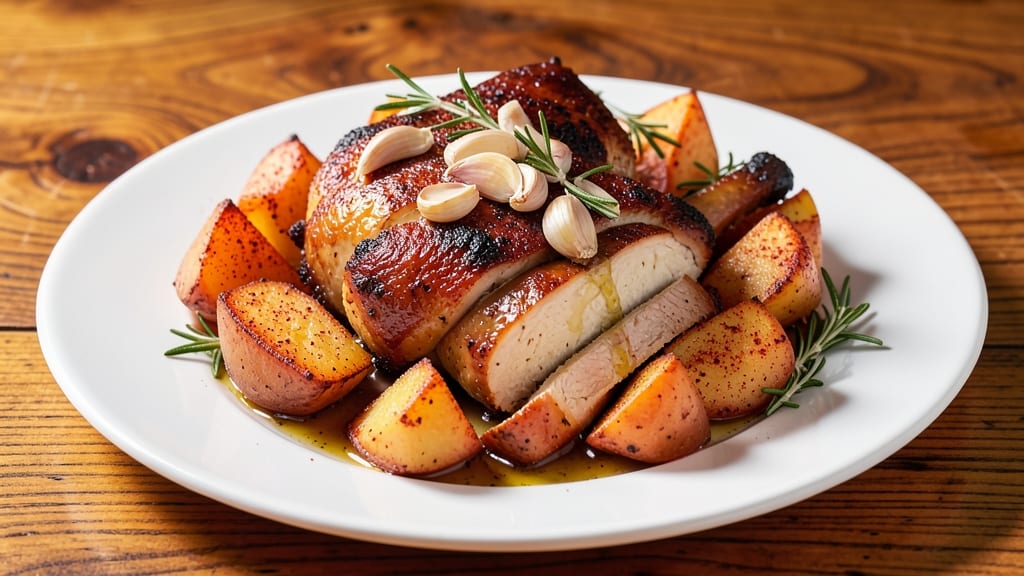
This chicken and russet potatoes recipe delivers crispy, golden roasted potatoes with juicy chicken bites—perfect for a weeknight dinner that wows with textures and flavor. 🔥 The secret?
High-heat roasting for fluffy spuds while keeping the chicken tender. and packed with flavor—something I perfected after years of testing in my Atlanta kitchen. The combination of crispy edges on the potatoes and juicy, seasoned chicken creates a dish that feels restaurant-quality but comes together in under an hour.
What sets this recipe apart is the foolproof technique that guarantees both components cook perfectly at the same time. I use a simple marinade for the chicken—garlic, paprika, and olive oil—that infuses deep flavor without overpowering the natural taste of the meat.
Meanwhile, the russet potatoes get tossed in a mix of olive oil, salt, and rosemary before roasting until they’re crispy on the outside and tender inside, with those coveted fluffy centers. The result is a dish that’s hearty enough for a main course but simple enough for a weeknight.
By the time you’re done, you’ll have a plate that’s visually stunning and packed with flavor—golden potatoes with crispy edges, juicy chicken bites that stay tender, and aromas that fill your kitchen with warmth. The best part?
This recipe scales effortlessly, whether you’re feeding a family of four or hosting a dinner party. The chicken stays moist thanks to a precise cooking time, while the potatoes achieve that perfect crispiness without burning.
Serve this dish with a side of garlic aioli or a simple green salad to round out the meal. The contrast between the crispy potatoes and tender chicken makes every bite satisfying, and the aromatics from the roasting process ensure your kitchen will smell as delicious as the final dish.
Let’s get cooking—this is one recipe that will quickly become a staple in your rotation.
Ingredients for chicken and russet potatoes
Crispy potatoes, juicy chicken—just 11 ingredients for a showstopping weeknight meal.
| Ingredient | Amount | Notes |
|---|---|---|
| Boneless, Skinless Chicken Thighs 🍗 | 1 ½ lb | Cut into 2-inch pieces |
| Russet Potatoes 🥔 | 2 lb | Cut into 2-inch chunks |
| Extra-Virgin Olive Oil 🫒 | ½ cup | For roasting potatoes |
| Dried Rosemary 🌿 | 1 tbsp | Crushed between fingers |
| Garlic Cloves 🧄 | 4 cloves | Minced for marinade |
| Smoked Paprika 🌶️ | 1 tbsp | For chicken marinade |
| Kosher Salt 🧂 | 2 tsp | For seasoning |
| Ground Black Pepper 🌶️ | 1 tsp | Freshly cracked |
| Fresh Rosemary 🌿 | ¼ cup | Chopped for garnish |
| Lemon Juice 🍋 | 1 tbsp | Brightens flavor |
| Honey 🍯 | 1 tbsp | For glaze (optional) |
The russet potatoes are the star here—Idaho-grown russets from Trader Joe’s or your local grocery store work best. Look for firm, blemish-free potatoes with a thick skin. I always cut them into even 2-inch chunks so they crisp up perfectly. Fresh rosemary is ideal, but dried works in a pinch (just use half the amount). For the chicken, thighs stay juicier than breasts—bone-in, skin-on if you can find them, but boneless works too. The secret to crispy potatoes? High heat and enough oil—don’t skimp on the olive oil here.
No smoked paprika? Regular paprika plus a pinch of cayenne gets you close. Fresh rosemary unavailable? Dried thyme at half the amount works surprisingly well. The honey glaze is optional but adds a beautiful caramelized finish—local raw honey if you want to splurge. For the chicken marinade, I like to let it sit for at least 30 minutes, but even 10 minutes makes a difference. The potatoes get tossed in oil and seasoning right before roasting—don’t wash them first (the dirt helps crispiness!).
This dish reheats beautifully—just pop it in the oven at 350°F for 10 minutes. Store leftovers in airtight containers for 3 days or freeze for up to 3 months. I always double the recipe for leftovers—crispy potatoes are even better the next day. For extra crispiness, broil the potatoes for 2-3 minutes at the end. Serve with a squeeze of lemon and extra fresh rosemary for that restaurant-quality touch.
Why You’ll Love This Recipe
- One-Pan Magic: I swear by this trick—just toss everything on a sheet pan, roast, and walk away. No pots, no pans, no stress. The potatoes get crispy in the same oven time the chicken browns, and honestly? That’s my kind of cooking.
- Garlic-Rosemary Crush: The moment those garlic cloves hit the oil and the rosemary starts to bloom, my kitchen smells like a French bistro. Juicy chicken thighs stay tender while the potatoes develop that perfect golden crust—crisp outside, fluffy inside. It’s the kind of flavor that makes you pause mid-bite.
- Weeknight to Weekend: Between us, this dish works for everything. Tired after work? Throw it together in 40 minutes. Hosting a game day? Double the batch and let everyone serve themselves. Even my picky teenager doesn’t complain—(yes, even on a Tuesday night).
- Budget Win: Chicken thighs are cheaper than breasts, and russets are the most affordable potato out there. A single pan means less waste, and leftovers reheat like a dream. I’ve fed four people for under $15 with this—no guilt, just good food.
Step-by-step instructions for crispy roasted potatoes with juicy chicken bites
Here’s how to achieve that perfect balance of crispy potatoes and juicy chicken every time.
🍳 Step 1: Marinate the Chicken for Maximum Flavor
In a bowl, combine the 1.5 lb boneless, skinless chicken thighs (cut into 2-inch pieces) with 1 tbsp smoked paprika, 1 tbsp dried rosemary (crushed between fingers), 2 tsp kosher salt, and 1 tsp ground black pepper. Mix until every piece is evenly coated. This isn’t just seasoning—it’s building flavor layers that will make your chicken irresistibly juicy.
Add 4 minced garlic cloves and 1 tbsp lemon juice to the bowl and toss everything together. Let the chicken marinate for at least 30 minutes (or up to 2 hours in the fridge for deeper flavor). This step transforms bland chicken into something rich and aromatic—don’t skip it! The acidity from the lemon juice also helps tenderize the meat.
🍳 Step 2: Roast the Potatoes to Crispy Perfection
Preheat your oven to 425°F—this high heat is key for getting those crispy edges on the potatoes. Toss the 2 lb russet potatoes (cut into 2-inch chunks) with 0.5 cup extra-virgin olive oil, 1 tbsp dried rosemary, 2 tsp kosher salt, and 1 tsp ground black pepper until every surface is coated. Spread them in a single layer on two large baking sheets.
Roast for 25 minutes, then flip each potato chunk with a spatula. Return to the oven for another 20-25 minutes until they’re deep golden brown and crispy on all sides. You want to see those edges turning almost caramelized—that’s your signal they’re ready. If they’re browning too quickly, move the racks to the middle position to prevent burning.
🔥 Step 3: Cook the Marinated Chicken
While the potatoes roast, heat a large oven-safe skillet over medium-high heat. Add the marinated chicken pieces in a single layer, leaving space between them. Cook for 4-5 minutes per side until the chicken is golden brown and cooked through to an internal temperature of 165°F (use a meat thermometer for accuracy).
Here’s the thing—don’t overcrowd the pan. You want that beautiful crust to form, not steam. If you need to cook in batches, that’s fine. Once the chicken reaches temperature, transfer it to a plate and tent loosely with foil to keep it warm while the potatoes finish roasting.
🥘 Step 4: Combine and Finish with Optional Glaze
Return the skillet with the chicken to the oven (if it’s oven-safe) or transfer the potatoes to the same skillet. Toss everything together gently, letting the potatoes soak up any remaining chicken juices. This creates a flavorful base that ties everything together.
For that extra touch, drizzle 1 tbsp honey over the top and toss again. The heat will cause it to caramelize slightly, adding a beautiful sheen and subtle sweetness that balances the savory flavors. Garnish with 0.25 cup chopped fresh rosemary right before serving—this adds a pop of color and fresh aroma that makes the dish look and smell even more inviting.
⏰ Step 5: Rest and Serve Immediately
Let the chicken and potatoes rest together for 5 minutes before serving. This short rest allows the juices to redistribute, ensuring every bite stays moist and flavorful. The contrast of crispy potatoes with juicy, tender chicken is what makes this dish so special.
Serve immediately while everything is hot and crispy. The potatoes should be firm yet tender with crispy edges, and the chicken should be juicy with a golden crust. Pair with a simple green salad and a glass of white wine for a complete meal that feels restaurant-worthy but is simple enough for weeknight dinners.
Pro Tips For Making Chicken And Russet Potatoes
- Preheat Pan Properly: I learned this the hard way—skipping the preheat means your chicken will steam instead of sear. Get that pan smoking hot (medium-high to high) for 3-4 minutes before adding oil, or your potatoes will turn out soggy and your chicken bland.
- Cut Potatoes Evenly: Uneven slices mean uneven cooking—some will burn while others stay raw. Use a mandoline or sharp knife to slice potatoes into ¼-inch rounds (yes, measure it). No mandoline? Stack them and cut in one motion for consistency.
- Don’t Overcrowd the Pan: I know, you’re impatient like me, but cramming too much chicken or potatoes into the pan drops the temperature and steams instead of browns. Work in batches—2-3 thighs max per pan—and give them space to crisp.
- Smash Garlic Cloves: Sounds weird, but it works: crush those garlic cloves with the flat side of your knife before adding them. This releases more flavor and prevents them from burning into bitter bits. Do it right as the chicken hits the pan—no waiting.
Common mistakes when making this recipe
Overcrowded Pan
I’ve seen this mistake more times than I can count—packing too many chicken pieces into the pan at once. This causes the chicken to steam instead of sear, resulting in soggy edges and uneven cooking. The fix? Cook in batches if needed, but never overcrowd.
Leave ½ inch of space between each piece so they develop that beautiful golden crust. I use a 12-inch cast iron skillet for this recipe, and it comfortably fits all the chicken pieces without crowding. 🔥
Skipping the Rest
One of the biggest rookie mistakes is serving the chicken immediately after cooking. That’s when all the juices rush to the surface, leaving you with dry meat. Always let the chicken rest for 5 minutes before serving—this allows the juices to redistribute evenly.
I learned this lesson the hard way during my first BBQ competition when my chicken came out dry and tough. Trust me, that 5-minute rest makes all the difference.
Uneven Potato Cuts
If your potatoes aren’t cooking evenly, it’s likely because they’re not cut uniformly. I can’t stress this enough—cut them into even 2-inch chunks so they all cook at the same rate. Uneven cuts mean some pieces will be undercooked while others burn.
Use a sharp chef’s knife or a mandoline slicer for precision. I always weigh my potatoes before cutting to ensure consistency.
Not Flipping Potatoes
Many home cooks forget to flip their potatoes halfway through roasting, which means one side gets overcooked while the other stays raw. Set a timer for 25 minutes, then flip each piece with a spatula before returning to the oven.
This ensures crispy edges on all sides. I use a spatula with a long handle to avoid burning my fingers on the hot baking sheet.
Using Low Heat for Chicken
Cooking chicken on low heat is a surefire way to end up with dry, rubbery meat. You need medium-high heat to create that golden crust while keeping the inside juicy. If your pan isn’t hot enough, the chicken will release its juices too slowly, leading to a tough texture.
I always test the heat by flicking a drop of water onto the pan—it should sizzle and evaporate instantly. 💫
Ignoring Internal Temp
Guessing when chicken is done is a recipe for disaster—literally. Always use a meat thermometer to check for an internal temperature of 165°F. Undercooked chicken is unsafe, and overcooked chicken is dry.
I keep a ThermoWorks Smoke thermometer on my counter for this exact purpose. It’s the only way to guarantee perfect results every time.
Nutrition facts
Frequently asked questions
Can I use chicken breasts instead of thighs?
While possible, thighs are ideal for this recipe because they stay juicier and more flavorful during high-heat cooking. If using breasts, cut them into ½-inch thick pieces and reduce cooking time to 3-4 minutes per side to prevent drying out. Pound them lightly before cooking to ensure even thickness.
How do I make the potatoes extra crispy?
For maximum crispiness, pat the potato chunks completely dry with paper towels before tossing in oil. Use a high smoke-point oil like avocado or grapeseed, and spread them in a single layer on the baking sheet. Roast at 450°F instead of 425°F for the final 10 minutes to get deeper browning.
Can I make this recipe in a slow cooker?
Not recommended for the potatoes—they’ll turn mushy. However, you can slow-cook the chicken separately: place marinated pieces in the slow cooker on low for 2 hours, then shred and serve over crispy roasted potatoes. The texture contrast remains, but the chicken will be more tender than seared.
What’s the best way to reheat leftovers?
Reheat in a 400°F oven for 10 minutes to restore crispiness. For chicken only, warm in a skillet over medium heat for 2-3 minutes with a splash of chicken broth. Avoid microwaving—it makes potatoes gummy. Store leftovers in airtight containers for 3 days or freeze for 3 months.
Can I substitute russet potatoes with another type?
Yukon Golds will work but won’t be as crispy—they’re waxier. For best results, stick with russets. If you must use another variety, cut them ½-inch smaller and roast at 400°F instead of 425°F to prevent burning. Sweet potatoes won’t crisp properly and have a different texture.