
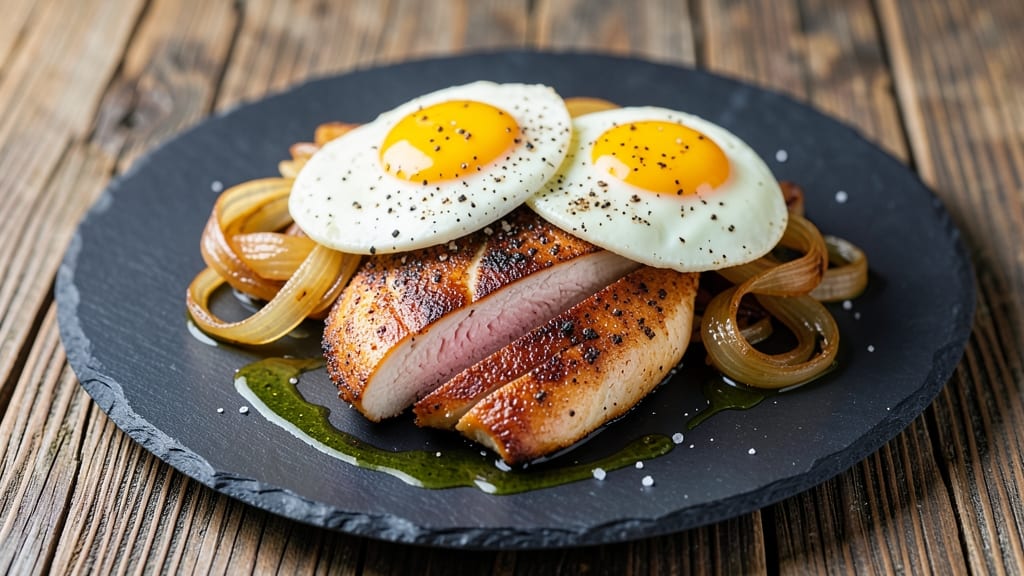
This chicken breast and eggs recipe delivers a protein-packed powerhouse that transforms breakfast into a complete meal—ready in just 15 minutes. I developed this one-skillet method after years of testing high-protein breakfasts that deliver restaurant-quality results without the fuss. The secret lies in perfectly timing the chicken and eggs to create a dish that’s equally satisfying for breakfast, lunch, or dinner.
What makes this recipe stand out is its simplicity combined with balanced nutrition. You’ll get tender, juicy chicken breast sliced thin for quick cooking, paired with eggs that cook directly in the same skillet—no separate pans, no extra cleanup.
The key technique involves searing the chicken first, then creating space for the eggs to sizzle in the residual heat, ensuring they cook perfectly without drying out the chicken.
By the time you’re done, you’ll have a plate of golden-brown eggs nestled alongside perfectly cooked chicken, all resting on a bed of crispy onions and herbs.
The dish is rich in protein, easy to customize with your favorite seasonings, and ready to be paired with toast, avocado, or fresh fruit. This is the kind of meal that keeps you full for hours while delivering serious flavor.
The beauty of this recipe lies in its versatility—it works equally well as a morning rush breakfast, a light lunch, or even a dinner option when you crave something quick but satisfying.
With just a few essential ingredients and one skillet, you’ll have a complete, balanced meal that’s both nutritious and delicious. Let’s get started!
Ingredients for chicken breast and eggs
Here’s everything you need for a restaurant-quality one-skillet breakfast that’s fast and packed with protein.
| Ingredient | Amount | Notes |
|---|---|---|
| Boneless, Skinless Chicken Breast 🍗 | 1 lb | Pounded to 1/4-inch thickness |
| Large Eggs 🥚 | 4 whole | Room temperature preferred |
| Yellow Onions 🧅 | 1 whole | Thinly sliced, white onion works too |
| Extra-Virgin Olive Oil 🫒 | 2 tbsp | High-quality, fruity variety |
| Diamond Crystal Kosher Salt 🧂 | 1 tsp | Fine grain preferred |
| Freshly Ground Black Pepper 🌶️ | ½ tsp | Freshly cracked preferred |
| Fresh Flat-Leaf Parsley 🌿 | ¼ cup | Chopped, for garnish |
| Garlic Cloves 🧄 | 2 cloves | Minced, for seasoning |
| Unsalted Butter 🧈 | 1 tbsp | For finishing |
| Fresh Thyme Leaves 🌿 | 0.1 cup | Or 1 tsp dried thyme |
| Red Bell Pepper 🍅 | ½ cup | Diced, optional for color |
| Avocado Oil Spray 🫒 | 1 tbsp | For skillet coating |
The chicken breast is the foundation here. Grab boneless, skinless from the meat counter—ask for a uniform cut if possible. Trader Joe’s and Whole Foods often have pre-sliced options that save time. Pounding it to 1/4-inch thickness ensures even cooking. I always buy organic if it’s in budget—less chance of bitterness. The eggs? Room temperature crack better, but don’t stress if they’re straight from the fridge. For the onions, yellow or white both work—just make sure they’re fresh with crisp layers. If you’re prepping ahead, store the sliced onions and seasoned chicken separately in airtight containers for up to 2 days.
No fresh thyme? Dried works at one-third the amount, but fresh has that bright aroma. The red bell pepper is optional but adds great color and crunch—substitute with any color you like or skip entirely. Running out of avocado oil? Olive oil or butter works too, though avocado has a higher smoke point. For the olive oil, California brands like Lucini or Otto add great flavor. The butter at the end? Don’t skip it—it adds richness and helps the eggs set beautifully. If you’re dairy-free, use vegan butter or extra olive oil instead. The parsley is just for garnish, so dried would work in a pinch, but fresh is prettier on the plate.
This recipe reheats surprisingly well—just add a splash of water to the skillet and cover for 2-3 minutes on medium heat. Store leftovers in the fridge for 3-4 days, though I find it’s best enjoyed fresh. For meal prep, cook the chicken completely, then refrigerate it separately. Reheat the chicken in the skillet first, then push it aside and cook the eggs fresh. The onions and herbs can be prepped ahead too, but add them fresh when reheating for best texture. Freezing isn’t recommended for this dish—eggs get rubbery when thawed.
Why You’ll Love This Recipe
- One-Pan Magic: I swear by this recipe when I’m too tired to scrub pots—just sear the chicken, crack eggs around it, and let the onions caramelize. The pan’s done cleaning itself by the time I’m forking into the first bite.
- Crispy-Creamy Contrast: That golden crust on the chicken? From a quick salt-and-oil sear before the eggs poach around it. The yolks melt into the onions, turning everything into a rich, savory hug—no fancy sauces needed.
- Lunchbox Hero: Between us, this is my go-to for meal prep. Slice the chicken, toss with eggs, and pack it with toasted bread—it’s hearty enough for lunch but still feels like a treat. My kids actually eat their veggies when this is in the bag.
- Budget Breakfast for Dinner: Honestly, I make this more than any other dish because it’s cheap but feels special. A whole chicken breast and a few eggs stretch for four servings, and the onions add depth without costing a fortune. Leftovers? Even better reheated with a sprinkle of salt.
Step-by-step instructions for chicken breast and eggs breakfast
This one-skillet method delivers a restaurant-quality breakfast in under 20 minutes.
Prep and Season the Chicken
Lay the 1 lb boneless, skinless chicken breast between two sheets of plastic wrap. Using a meat mallet or rolling pin, pound it to an even ¼-inch thickness throughout. This ensures even cooking and prevents dryness in the center.
Season both sides generously with the 1 tsp diamond crystal kosher salt and 0.5 tsp freshly ground black pepper. I press the seasoning into the meat so it adheres well. Let the seasoned chicken sit at room temperature for 10 minutes while you prepare the skillet.
Cook the Chicken and Vegetables
Spray a large skillet with the 1 tbsp avocado oil spray and heat over medium-high heat until shimmering. Add the 2 tbsp extra-virgin olive oil, then carefully place the chicken in the skillet. Cook for 4-5 minutes per side until the chicken reaches an internal temperature of 160°F and develops golden-brown crusts.
Remove the chicken and set aside. In the same skillet, add the 1 whole yellow onion and 0.5 cup red bell pepper. Cook for 3-4 minutes until softened but still vibrant. Add the 2 cloves minced garlic and 0.1 cup fresh thyme leaves, stirring for 30 seconds until fragrant.
Prepare the Egg Mixture
In a medium bowl, whisk together the 4 whole large eggs until the yolks and whites are fully combined. Add the 1 tbsp unsalted butter and whisk until melted and incorporated. Season with an additional pinch of salt and pepper if needed.
Return the cooked chicken to the skillet and pour the egg mixture evenly over the top. The residual heat will begin cooking the eggs immediately. Let it cook undisturbed for 1-2 minutes until the eggs start to set at the edges but remain slightly runny in the center.
Finish and Garnish
Carefully tilt the skillet to distribute the eggs evenly over the chicken and vegetables. Cook for another 2-3 minutes until the eggs are just set to your preferred doneness. For a firmer texture, cook slightly longer.
Remove from heat and let rest for 1 minute. Garnish with the 0.25 cup chopped fresh flat-leaf parsley just before serving. This dish serves 4 generously, with each portion delivering a perfect balance of protein and flavor.
Pro Tips For Making Chicken Breast And Eggs
- Pound Chicken Evenly: I learned this the hard way—uneven thickness means uneven cooking. Use a meat mallet or rolling pin to tap breasts to ¼-inch thickness (about 10-12 firm strikes). This guarantees the edges crisp while the center stays juicy, and no one’s left with rubbery bites.
- Salt Onions Wet: Slice onions, toss them in a bowl with ½ teaspoon kosher salt and 1 tablespoon olive oil, then let sit for 5 minutes. The salt draws out moisture, and the oil keeps them from sticking—no more burnt, bitter slices when searing.
- Don’t Rush the Eggs: After removing chicken, turn the heat to medium-low and let eggs cook undisturbed for 2 full minutes before flipping. The first side builds a proper crust, and the yolks stay runny (or set to your preference) without turning to scrambled bits.
- Sear Chicken in Batches: Crowding the pan drops the temperature fast, leading to steamed chicken instead of seared. Cook 2 breasts max per batch in ½ inch of hot oil, and resist the urge to move them until you see a deep golden crust—about 4-5 minutes per side. Your future self will thank you.
Troubleshooting perfect results
Chicken Too Dry?
Overcooking is the #1 reason chicken breast turns out dry. I’ve ruined more than a few batches by letting the skillet get too hot or cooking past 160°F internal temp. Use a meat thermometer—I swear by the ThermoWorks Dot—to monitor the chicken closely.
If your skillet isn’t hot enough, the chicken will steam instead of sear, leading to soggy results. 🌡️
Pro tip: Pound the chicken to an even ¼-inch thickness—any thicker, and the center won’t cook through before the edges dry out. Also, let the chicken rest for 2-3 minutes after removing from heat before adding eggs. This redistributes juices so every bite stays moist.
Eggs Overcooked?
Eggs are finicky in residual heat. If they turn rubbery instead of creamy, your skillet likely didn’t retain enough heat after removing the chicken. Keep the skillet on low heat while prepping the eggs, then return it to medium-low once the eggs are poured in.
Stirring too soon causes the eggs to break apart—let them set for 1-2 minutes undisturbed.
For runny yolks, cook just until the edges are set (2-3 minutes total). If you prefer firmer eggs, add a splash of cold water to the skillet before pouring in the eggs—it helps regulate the heat and prevents overcooking. 🍳
Skillet Sticking?
A cold skillet is the enemy of nonstick cooking. Always preheat your skillet for 2-3 minutes until it’s shimmering before adding oil. I use avocado oil spray first because it has a high smoke point, then add extra-virgin olive oil for flavor.
If your chicken sticks, it’s either too cold or the oil isn’t hot enough—give it another 30 seconds to heat up.
For stubborn sticking, use a spatula with a flexible edge (like the OXO Good Grips) to gently lift the chicken. Never force it—patience prevents tears.
If all else fails, a paper towel press (place a paper towel over the chicken and press gently) can help release it without breaking apart.
Onions Burning?
Onions caramelize quickly, and once they start burning, there’s no going back. Cook them on medium heat (not high) and stir every 30 seconds to prevent browning too fast. If they do burn, remove them immediately and replace with fresh—burnt onions add bitterness to the dish.
For extra flavor without burning, add the onions after removing the chicken. The residual heat will soften them gently while keeping their sweetness intact. A pinch of sugar (just ¼ tsp) can also help balance any bitterness if you’re worried about overcooking.
Nutrition facts
Frequently asked questions
Can I use this recipe for lunch or dinner instead of breakfast?
This dish works perfectly for any meal. For lunch, serve it with a side of quinoa or roasted vegetables. For dinner, pair it with crusty bread and a simple salad. The high-protein combination keeps you satisfied all day long.
How do I adjust this recipe for fewer/more servings?
For 2 servings, use ½ lb chicken breast and 2 eggs. For 6 servings, scale up to 1.5 lbs chicken and 6 eggs. Keep the thickness of the chicken at ¼-inch for even cooking. The cooking time remains similar as long as you maintain proper heat.
What’s the best way to reheat leftovers?
Reheat gently in the same skillet over low heat for 2-3 minutes with a splash of water. Cover to retain moisture. Never microwave—it makes the eggs rubbery. For best results, reheat only what you’ll eat immediately. Leftovers keep well in the fridge for 3-4 days.
Can I substitute chicken thighs for breasts?
Yes, but with adjustments. Use skinless, boneless thighs and cook them 2-3 minutes per side until they reach 165°F internal temp. Thighs stay juicier but have more fat—pat them dry before cooking. Reduce olive oil to 1 tbsp since thighs render their own fat.
What if I don’t have fresh herbs?
No problem! Use ½ tsp dried thyme (one-third the amount of fresh) or ½ tsp dried parsley. For extra flavor, add ½ tsp garlic powder** or a pinch of smoked paprika. The dish will still taste delicious—fresh herbs just add that final touch of brightness.