
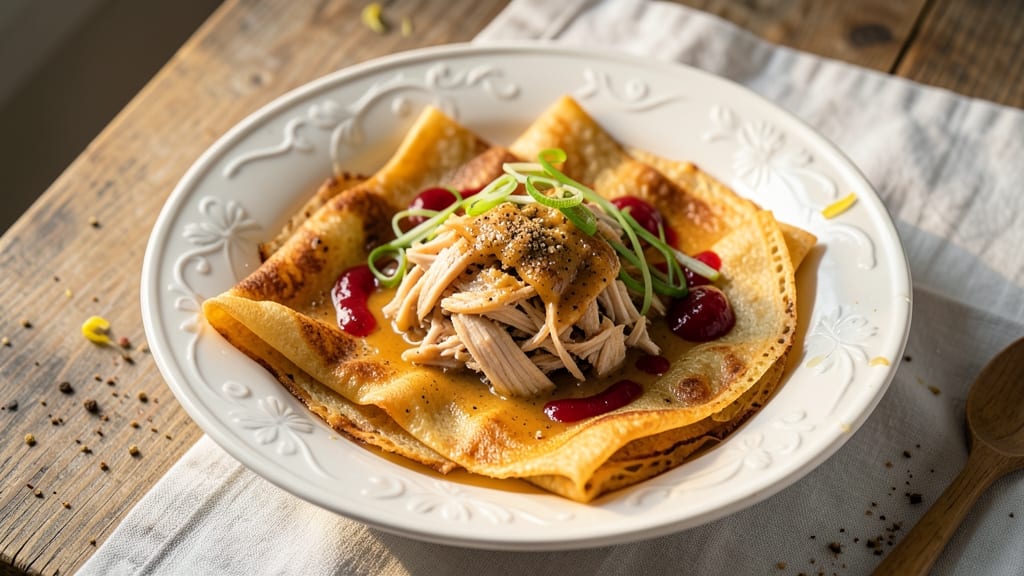
This French chicken crepes recipe delivers the perfect balance of delicate, flaky layers wrapped around a savory herbed chicken filling that tastes like a Parisian bistro.
The secret lies in thin, tender crepes that crisp just enough at the edges while remaining tender inside—each bite reveals the harmonious marriage of crispy crepe and rich, herbed chicken.
I’ve refined this technique over years of testing, ensuring the filling stays moist and flavorful while the crepes maintain their signature elegance.
The recipe begins with a simple yet precise crepe batter, requiring just a few ingredients and minimal effort. You’ll cook the chicken filling separately, seasoned with fresh herbs and a touch of Dijon mustard for depth, then carefully roll it into each crepe for a restaurant-quality presentation.
The key is working quickly once the crepes come off the pan—they’re best served fresh, with their golden edges still crisp.
What you’ll end up with is a dish that’s both impressive and approachable: golden, flaky crepes encasing tender chicken, herbs, and just the right amount of creaminess. The aroma alone—warm crepes mingling with garlic and thyme—will have everyone at the table anticipating the first bite.
This recipe is perfect for brunch, a light lunch, or even a sophisticated dinner when paired with a simple salad or roasted vegetables.
Don’t worry if you’ve never made crepes before—the technique is simpler than it looks, and I’ll walk you through every step to ensure flaky, even layers every time. The filling is equally forgiving, so even if you’re not a seasoned cook, you’ll achieve professional results.
Let’s get started on creating a dish that feels like a taste of France in your own kitchen.
Ingredients for chicken crepes recipe french
Golden crepes, herbed chicken, and a whisper of Dijon—just nine ingredients transform your kitchen into a Parisian bistro.
| Ingredient | Amount | Notes |
|---|---|---|
| All-Purpose Flour 🌾 | 1 ½ cups | Sifted for smooth batter |
| Large Eggs 🥚 | 3 whole | Room temperature preferred |
| Whole Milk 🥛 | 1 ½ cups | Cold for best texture |
| Unsalted Butter 🧈 | ½ cup | Melted and cooled slightly |
| Granulated Sugar 🍚 | ¼ cup | For subtle sweetness |
| Salt 🧂 | ½ tsp | Fine sea salt preferred |
| Boneless Skinless Chicken Breast 🍗 | 1 ½ lb | Pounded to even thickness |
| Fresh Thyme Leaves 🌿 | ¼ cup | Chopped finely |
| Fresh Parsley Leaves 🌿 | ¼ cup | Chopped finely |
| Garlic Cloves 🧄 | 4 cloves | Minced for filling |
| Dijon Mustard 🍯 | 1 tbsp | For depth of flavor |
| Heavy Cream 🥛 | ¼ cup | For creamy filling |
| Extra-Virgin Olive Oil 🫒 | 2 tbsp | For cooking crepes |
| Lemon Zest 🍋 | 1 tsp | Brightens the filling |
| Black Pepper 🌶️ | ½ tsp | Freshly cracked |
The flour is your secret weapon here. King Arthur or Gold Medal brands work best—they give that signature flaky texture. I always sift mine right into the bowl to avoid lumps, and trust me, room-temperature eggs make all the difference—no one likes cold, gloopy batter. The chicken breast should be pounded to about 1/4-inch thickness for even cooking. Look for the freshest herbs at the market—Trader Joe’s has the best thyme and parsley bundles. And don’t skip the lemon zest—it’s what makes the filling pop with that fresh, bright flavor that feels authentically French.
No fresh thyme? Dried works at half the amount, but fresh is ideal. Short on parsley? Fresh basil or cilantro can step in, though the flavor will shift slightly. The Dijon mustard is non-negotiable—it adds that tangy depth that jarred mustard can’t match. Want to make it ahead? Cook the filling first, then refrigerate it for up to 2 days. The crepes are best made fresh, but you can prep the batter ahead and refrigerate it overnight—just give it a whisk before using. For the chicken, if you can’t find boneless breasts, skinless thighs work too—they stay juicier during cooking.
Crepes keep for 3 days in the fridge, but honestly, they’re best eaten fresh. Wrap them in parchment paper and store in an airtight container to maintain that crisp edge. The filling can be prepped a day ahead and reheated gently—just add a splash of cream to keep it moist. Freezing? The filling freezes beautifully for 3 months, but the crepes are tricky—best made fresh. Pro tip: Double the batter and make extra crepes. They’re perfect for breakfast the next morning with just a little jam or powdered sugar.
Why You’ll Love This Recipe
- No-Fuss Batter: I swear, this crepe mix comes together faster than I can put on coffee. Just whisk the flour, eggs, milk, and a touch of sugar—no sifting, no waiting for dough to rise. The butter melts right into the mix while you cook, so you’re not stuck with a separate step.
- Buttery Crispy Magic: That first golden sizzle when the crepe hits the pan? Absolute perfection. The butter in the batter and the little pats of butter used to cook them make each one crisp at the edges but still tender enough to hold shredded chicken without falling apart.
- Breakfast or Dinner: Honestly, I make these for both—wrap them with chicken, cheese, and a drizzle of honey for a savory-sweet breakfast, or roll them up with spinach and a sprinkle of Parmesan for a light dinner. The same crepe batter adapts to whatever you’re craving.
- Budget-Friendly Leftovers: A single batch of batter makes six crepes, and they reheat beautifully in the toaster or a dry pan. I’ve packed these for lunches, frozen extras for lazy mornings, and even turned them into a quick frittata when I forgot to eat them all. Zero waste, all flavor.
Step-by-step instructions for French chicken crepes
Here’s how to create delicate crepes with a perfectly herbed chicken filling—crisp edges and tender layers every time.
Make the Light, Fluffy Crepe Batter
Whisk together the 1.5 cups all-purpose flour, 0.25 cup granulated sugar, and 0.5 teaspoon salt in a large bowl until completely smooth. This prevents lumps that ruin crepe texture. In a separate bowl, beat the 3 whole eggs until frothy, then gradually whisk in the 1.5 cups cold whole milk while continuously stirring.
Slowly fold the wet ingredients into the dry mixture, alternating between adding the liquid and the flour to create a velvety batter. Finally, melt the 0.5 cup unsalted butter and cool it slightly before stirring it into the batter. The butter adds richness that keeps the crepes tender. Let the batter rest for 30 minutes at room temperature—this relaxation period ensures perfectly smooth crepes without tearing.
Cook the Perfect Chicken Filling
Season the 1.5 lb boneless skinless chicken breast with 0.5 teaspoon black pepper and cook it in a skillet with 2 tablespoons extra-virgin olive oil over medium heat for 5-6 minutes per side until fully done and juicy. Let it rest for 10 minutes before shredding it into fine strips using two forks.
In the same skillet, sauté the 4 minced garlic cloves for 30 seconds until fragrant, then add the 0.25 cup chopped fresh thyme leaves and 0.25 cup chopped fresh parsley leaves. Stir in 1 tablespoon Dijon mustard, 0.25 cup heavy cream, and 1 teaspoon lemon zest. Mix well and let the mixture simmer for 2 minutes until the flavors meld together beautifully. This herbed filling is the heart of your crepes.
Create Thin, Even Crepes
Heat an 8-inch nonstick skillet over medium-high heat and lightly coat it with a thin layer of extra-virgin olive oil. Quickly pour ¼ cup of the crepe batter into the center of the skillet, immediately tilting and rotating it to spread the batter into a thin, even circle. Cook for 1-2 minutes until the edges lift and the bottom is lightly golden.
Flip the crepe using a spatula and cook the other side for another 30 seconds until just set. Transfer to a clean towel to keep them warm and prevent sticking. Repeat with the remaining batter, stacking the finished crepes as you go. The key here is speed—don’t overcook, or they’ll turn tough instead of delicate.
Assemble and Serve the Crepes
Spread 1-2 tablespoons of the herbed chicken filling onto one-third of a crepe, then fold it into a neat triangle by bringing the sides in and rolling it up tightly. You can serve them immediately or lightly pan-sear the folded crepes in a buttered skillet for 30 seconds per side to add a golden finish.
Arrange the crepes on a warm platter and garnish with extra chopped parsley and a sprinkle of lemon zest. Serve them right away while the crepes are still warm and the filling is at its most flavorful. The contrast between the crisp edges of the crepes and the tender, herbed chicken filling is what makes this dish truly special.
Pro Tips For Making Chicken Crepes Recipe French
- Whisk Like You Mean It: Don’t just stir the batter—whisk the eggs and milk vigorously for 2 full minutes until it’s thick and frothy. I used to skip this, and my crepes turned out thin and chewy; now they’re light and tender every time.
- Melt Butter Slowly: Warm the butter in the pan over medium-low heat until it foams but doesn’t brown—about 30 seconds. Too hot, and the butter burns; too cool, and the crepes stick. Find that sweet spot, or you’ll be scraping batter off the pan.
- Don’t Overfill the Pan: Use ¼ cup batter per crepe, max. I learned this after making one giant, lumpy mess that split apart. Thin, even layers cook faster and roll up neatly—no one wants a crepe that looks like a failed soufflé.
- Rest the Batter: Let the batter sit for 10 minutes after mixing. The flour absorbs the liquid, and the texture becomes smoother. I was skeptical until I tried it—now my crepes hold their shape and don’t crack when rolling. (Yes, even if you’re impatient like me.)
Serving suggestions for this chicken crepes recipe french
Classic French Garnishes
Freshly chopped parsley and lemon zest are my go-to garnishes—they brighten the dish and add a pop of color that feels authentically French. Sprinkle them lightly over each crepe just before serving to maintain that restaurant-quality presentation.
For an extra touch, I sometimes add a drizzle of balsamic glaze or a few thinly sliced almonds for crunch. 🌿
Light Salad Pairing
A crisp mixed greens salad with a light vinaigrette cuts through the richness of the crepes beautifully. Toss 4 cups baby spinach and 2 cups arugula with 2 tablespoons olive oil, 1 tablespoon red wine vinegar, and a pinch of sea salt.
Top with 1/4 cup shaved Parmesan for a perfect balance of textures. This keeps the meal light yet satisfying.
Warm Bread Option
Serve with a warm baguette or crusty sourdough on the side for soaking up any extra filling. I like to lightly toast the bread and brush it with garlic butter—just 2 tablespoons softened butter mixed with 1 minced garlic clove.
This adds another layer of flavor that complements the crepes perfectly. 🥖
Dipping Sauce Ideas
For an interactive touch, offer two dipping sauces on the side. A creamy tarragon sauce made with 1/4 cup sour cream, 1 tablespoon chopped tarragon, and a squeeze of lemon juice pairs wonderfully.
Alternatively, a spicy aioli with 2 tablespoons mayonnaise, 1 teaspoon Dijon mustard, and a pinch of cayenne pepper adds a kick for those who love heat.
Dessert to Follow
End the meal with something light like crème brûlée or fruit tartlets. The creamy, caramelized dessert balances the savory flavors of the crepes beautifully. If you want to keep it simple, a vanilla bean ice cream with a sprinkle of toasted nuts works perfectly too. 🍮
Wine Pairing
A crisp Sauvignon Blanc from the Loire Valley is my top choice—its citrus notes complement the lemon zest in the filling. For red wine lovers, a light Pinot Noir from Burgundy adds a subtle earthiness that pairs wonderfully with the herbed chicken.
Avoid heavy, oaky whites or bold reds that could overpower the delicate flavors. 🍷
Nutrition facts
Frequently asked questions
Can I use chicken thighs instead of breasts for this recipe?
Yes, you can substitute 1.5 lb boneless, skinless chicken thighs for breasts, but there are a few adjustments. Chicken thighs stay juicier, so you may want to reduce the cooking time by 1-2 minutes per side to avoid overcooking. The flavor will be richer and more robust, which pairs beautifully with the herbed filling. Just be sure to pat them dry before cooking to ensure a good sear.
How do I prevent my crepes from tearing when rolling?
Work quickly and keep your crepes warm while assembling. Spread the filling on the crepe, then fold it into a triangle by bringing the sides in gently. If the crepe resists, use a spatula to help guide it. The key is to fold while the crepe is still warm and pliable. For extra security, lightly brush the edges with melted butter before rolling to help seal them.
Can I make the crepes ahead of time?
Crepes are best served fresh, but you can prep them ahead with a few tricks. Cook the crepes and stack them between layers of parchment paper to keep them from sticking. Store them in an airtight container at room temperature for up to 3 days. When ready to serve, reheat them briefly in a dry skillet over medium heat for 10-15 seconds per side to restore crispness. The filling should be made fresh or reheated gently to avoid drying out.
What’s the secret to getting thin, even crepes?
The batter needs to be thin and smooth, and your pan must be hot. Use an 8-inch nonstick skillet heated over medium-high heat and lightly coated with oil. Pour ¼ cup of batter into the center, then immediately tilt and rotate the pan to spread it evenly. Cook until the edges lift and the bottom is lightly golden—usually 1-2 minutes. The batter should be thin enough to pour like heavy cream, not pudding.
Can I make these crepes gluten-free?
Yes, but you’ll need a gluten-free flour blend. Replace the all-purpose flour with a 1:1 gluten-free baking flour (like Bob’s Red Mill or King Arthur). Add ½ teaspoon xanthan gum to help bind the batter. The texture will be slightly different—gluten-free crepes tend to be more delicate—but they’ll still work beautifully. You may need to adjust the batter consistency slightly, adding a splash of milk if it’s too thick.