
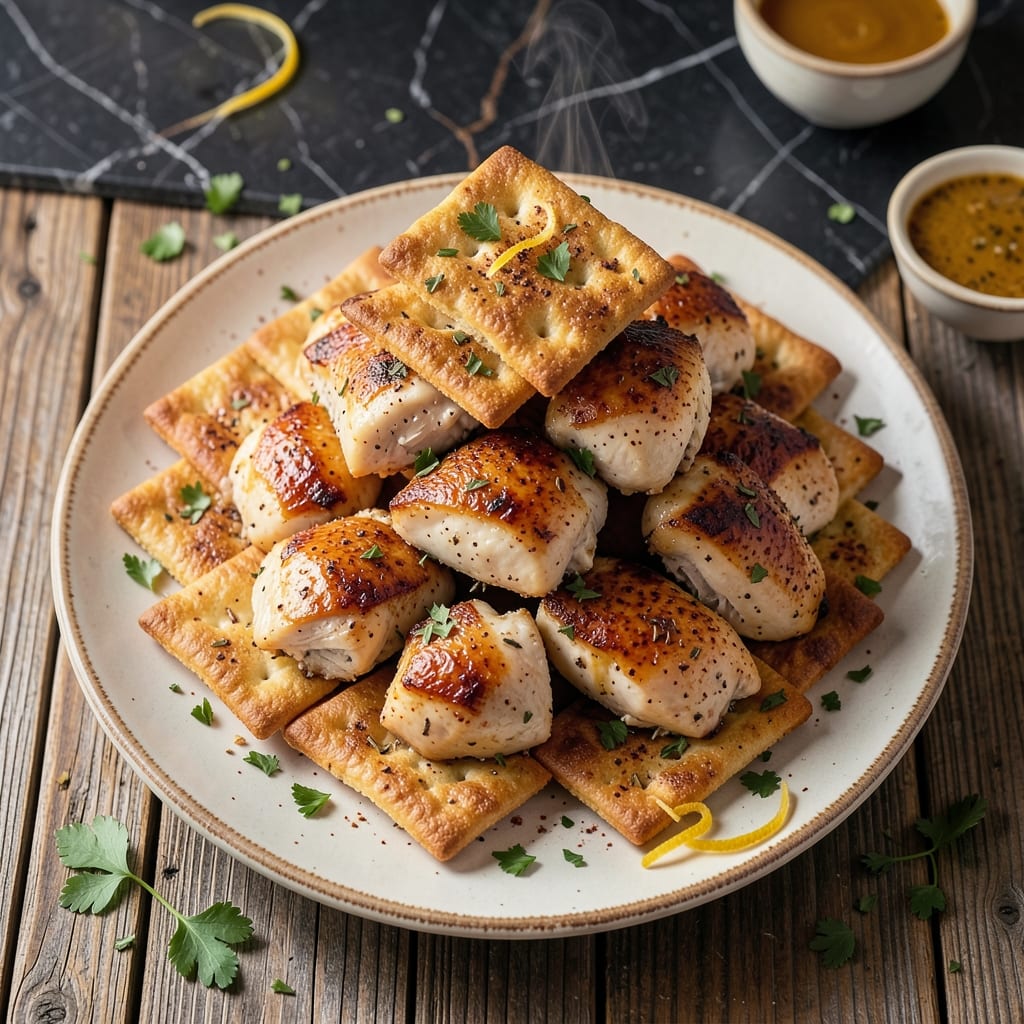
This recipe transforms a beloved snack into a homemade treat with buttery layers and nostalgic flavor. I’ve perfected the method to capture the classic taste while keeping it simple.
With just a few ingredients and minimal effort, you’ll create a snack that’s even better than the original. The key is patience—letting the dough rest ensures the perfect texture.
Ingredients for Chicken in a Biskit Crackers
Buttery layers and nostalgic flavor come from these simple, quality ingredients.
| Ingredient | Amount | Notes |
|---|---|---|
| All-Purpose Flour 🌾 | 2 ½ cups | Sifted for even texture |
| Unsalted Butter 🧈 | 1 cup | Cold, cubed for flakiness |
| Salt 🧂 | 1 tsp | Fine sea salt preferred |
| Ice Water 💧 | ¼ cup | Chilled for dough cohesion |
| Granulated Sugar 🍚 | 1 tsp | Optional for subtle sweetness |
| Baking Powder 🧂 | ½ tsp | For lift and airiness |
| Dried Thyme 🌿 | ½ tsp | Optional for herbal depth |
| Dried Parsley 🍃 | ½ tsp | For color and freshness |
| Garlic Powder 🧄 | ½ tsp | Enhances savory notes |
| Onion Powder 🧅 | ½ tsp | Balances flavor profile |
| Paprika 🌶️ | ¼ tsp | For subtle warmth |
The butter is critical here. Use high-quality unsalted butter like Plugrá or Kerrygold—the fat content directly impacts flakiness. Most grocery stores carry these in the dairy section. If you’re making a large batch, Costco’s Kirkland brand offers excellent butter at a bulk price. Cold butter is non-negotiable; it must be cubed and chilled to ensure proper layering.
No unsalted butter? Salted works in a pinch—just reduce the added salt. All-purpose flour is standard, but White Lily or King Arthur brands yield particularly tender results. For a richer flavor, substitute 1/4 cup of flour with fine cornmeal. Ice water must be truly cold to prevent premature melting of the butter layers.
The dough rests best when wrapped tightly in plastic and chilled for 1 hour. Finished crackers stay fresh in an airtight container at room temperature for 5 days. For longer storage, freeze the dough balls (unbaked) for up to 3 months (thaw before rolling).
Why You’ll Love This Recipe
- Five Ingredient Magic: I love that this comes together with just flour, butter, salt, sugar, and ice water—no fancy pantry hunting required.
- Buttery Crisp: The unsalted butter makes these crackers flaky and rich, with just a hint of sugar for that perfect sweet-savory balance.
- Party Snack MVP: I pack these for picnics, lunches, or game day—they’re the first thing to disappear.
- Pocketbook Friendly: Flour and butter stretch far, so I get dozens of crackers for pennies compared to store-bought.
Step-by-Step Instructions for Chicken in a Biskit Crackers
Master the technique for flaky, buttery layers with these precise, professional steps.
Step 1: Combine Dry Ingredients for Even Distribution
In a large mixing bowl, whisk together the 2.5 cups All-Purpose Flour, 1 tsp Salt, 1 tsp Granulated Sugar, 0.5 tsp Baking Powder, 0.5 tsp Dried Thyme, 0.5 tsp Dried Parsley, 0.5 tsp Garlic Powder, 0.5 tsp Onion Powder, and 0.25 tsp Paprika until fully incorporated. This ensures every bite carries consistent seasoning and texture.
The dry ingredients must be uniformly blended before introducing the fat—this prevents pockets of concentrated flavor that could overpower the delicate buttery profile of the finished crackers.
Step 2: Cut in Cold Butter for Flaky Layers
Add the 1 cup Unsalted Butter, cubed and kept ice-cold, to the dry mixture. Using a pastry cutter or your fingertips, work the butter into the flour until the texture resembles coarse crumbs with pea-sized butter pieces visible. This step creates the layered structure that defines these crackers.
Keep the butter as cold as possible throughout this process. If it begins to soften or melt, chill the entire mixture in the refrigerator for 10-15 minutes before proceeding. Cold butter is essential for achieving the signature flakiness.
Step 3: Bind the Dough with Minimal Liquid
Create a well in the center of the butter-flour mixture. Gradually add the 0.25 cup Ice Water, one tablespoon at a time, using a fork to gently incorporate. The dough should just begin to hold together when pressed—overworking or adding excess water develops gluten, resulting in tough crackers.
You may not need the full 0.25 cup; stop adding water as soon as the dough starts to coalesce. The mixture will look slightly shaggy, but it will come together during chilling. This restrained approach guarantees a tender, crumbly texture.
Step 4: Chill and Rest the Dough
Shape the dough into a disk, wrap it tightly in plastic wrap, and refrigerate for at least 1 hour or up to 24 hours. This resting period allows the gluten to relax and the butter to re-solidify, making the dough easier to roll out and preventing shrinkage during baking.
During this time, the flour fully hydrates, and the flavors begin to meld. The longer the dough rests, the more pronounced the savory, buttery notes will be in the final product. This step is non-negotiable for achieving the ideal texture.
Step 5: Roll, Cut, and Bake to Golden Perfection
On a lightly floured surface, roll the chilled dough to ⅛-inch thickness. Use a sharp knife or pizza cutter to cut into small squares or rectangles, then transfer to a parchment-lined baking sheet. Prick each piece with a fork to prevent puffing during baking.
Bake in a preheated 375°F oven for 12-15 minutes or until the edges are just beginning to turn golden brown. Rotate the baking sheet halfway through for even cooking. The crackers should be crisp and light, with a delicate, buttery aroma.
Pro Tips For Making Chicken In A Biskit Crackers
- Chill the Dough: After mixing, wrap the dough in plastic and refrigerate for at least 30 minutes—I learned this the hard way when my first batch spread into flat, sad discs.
- Use Cold Butter: Cut the unsalted butter into small cubes and keep it ice-cold until mixing; this guarantees flaky layers in your crackers.
- Roll It Thin: Aim for 1/8-inch thickness when rolling out the dough—any thicker and your crackers won’t get that crisp, light texture.
- Dock the Dough: Poke holes all over the rolled dough with a fork to prevent air pockets, or you’ll end up with puffy, uneven crackers instead of the classic flat, crispy ones.
Serving Suggestions for Leftovers
Cheese Pairings
Serve these buttery crackers with sharp cheddar slices for a classic Southern pairing. The saltiness of the cheese enhances the crackers’ savory notes beautifully. I always keep Cabot Vermont Sharp Cheddar on hand for this exact reason. 🧀
Dip Options
A creamy ranch dip or pimento cheese spread makes these crackers irresistible. For a lighter option, try hummus with a drizzle of olive oil. I love serving them with my grandma’s pimento cheese recipe at family gatherings.
Charcuterie Board
Arrange these crackers on a board with prosciutto, salami, and cornichons for an elegant appetizer. The combination of textures and flavors creates a perfect balance. I often add honey or fig jam for a touch of sweetness. ✨
Soup Companion
Pair with tomato soup or chicken noodle for a comforting meal. The crackers add a satisfying crunch that complements the smooth soup. I always crumble a few directly into my bowl for extra texture.
Breakfast Treat
Serve with scrambled eggs and bacon for a hearty breakfast. The buttery flavor of the crackers works wonderfully with morning dishes. I often pack them for quick breakfasts during busy weeks at the restaurant.
Party Platter
Create a snack mix with nuts, dried fruit, and these crackers for an easy party treat. The combination of sweet and savory keeps guests coming back for more. I use pecans and dried cranberries for a Southern twist. 💛
Nutrition Facts
Frequently Asked Questions
Can I use salted butter instead?
Yes, but reduce the added salt by half. Salted butter works in a pinch, but unsalted gives you better control over the seasoning. The flavor difference is noticeable in such a simple recipe.
How thin should I roll the dough?
Roll to ⅛-inch thickness for classic crispness. Use a ruler or dowel for consistency. Thinner dough bakes faster but may burn, while thicker pieces stay soft.
Why did my crackers spread while baking?
This happens if the dough is too warm or overworked. Chill the dough 1 hour before rolling, and avoid adding excess water. Proper chilling prevents butter from melting prematurely.
How do I store leftovers?
Keep in an airtight container at room temperature for up to 5 days. For longer storage, freeze the unbaked dough balls for up to 3 months.