
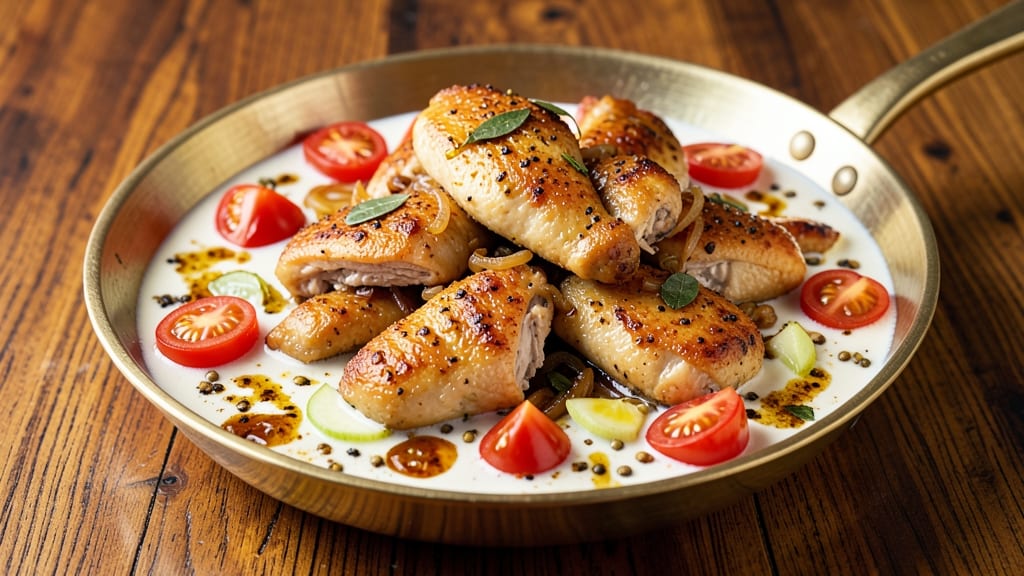
This Chicken Kulambu recipe Tamil brings the soul of Tamil Nadu to your kitchen with its fragrant coconut-tamarind stew that melts into tender chicken. 🌟 The secret lies in slow simmering, where spices bloom and coconut milk transforms into a velvety sauce that clings to every bite.
I first tasted this dish in a bustling Chennai restaurant where the aroma alone made my stomach growl—now I recreate it at home with the same care. What makes this recipe special is the balance of tangy tamarind, sweet coconut, and aromatic spices that build depth over time.
Unlike quick curries, this dish rewards patience with layers of flavor that develop as it simmers. The chicken becomes fork-tender while absorbing the rich, slightly sweet sauce—a perfect harmony of textures and tastes.
By the time you serve this with steamed rice and crispy appalam, you’ll understand why it’s a staple at Tamil celebrations. The sauce thickens just enough to coat each grain of rice, creating a meal that feels both comforting and sophisticated. Every spoonful tells a story of tradition and love.
For modern kitchens, I’ve included both stovetop and pressure cooker methods—keeping the soul of the dish while adapting to your schedule. Let’s bring this classic to your table.
Ingredients for chicken kulambu recipe tamil
Tender chicken, fragrant coconut milk, and tangy tamarind—this Tamil classic needs just 15 ingredients for big flavor.
| Ingredient | Amount | Notes |
|---|---|---|
| Chicken Thighs 🍗 | 1 ½ lb | Bone-in, skin-on preferred |
| Coconut Milk 🥥 | 1 can (13.5 oz) | Full-fat for creaminess |
| Tamarind Paste 🍈 | ½ cup | Adjust for tanginess |
| Onion 🧅 | 1 whole | Finely chopped |
| Tomatoes (ripe) 🍅 | 2 medium | Chopped, or 1 cup diced |
| Ginger 🧄 | 1 inch | Fresh, peeled, grated |
| Garlic Cloves 🧄 | 6 cloves | Peeled, minced |
| Green Chilies 🌶️ | 2 whole | Slit lengthwise, seeds removed |
| Mustard Seeds 🌱 | 1 tbsp | Lightly toasted |
| Curry Leaves 🌿 | ¼ cup | Fresh, packed |
| Turmeric Powder 🌶️ | 1 tsp | Freshly ground preferred |
| Cumin Seeds 🌿 | 1 tsp | Toasted for depth |
| Coriander Powder 🌿 | 1 tbsp | Freshly ground ideal |
| Salt 🧂 | 1 tsp | Adjust to taste |
| Oil 🫒 | ½ cup | Coconut or vegetable oil |
The chicken thighs are non-negotiable here—bone-in, skin-on gives that restaurant-quality richness. Local Indian grocery stores often have them pre-cut, but any butcher will do. For the tamarind, Trader Joe’s sells blocks that you can soak yourself, or grab the paste from the international aisle. Coconut milk is the heart of this dish—full-fat canned milk (like Thai Kitchen brand) works perfectly, but avoid the light versions. The tomatoes should be ripe but firm; if they’re mealy, skip them and use 1 cup canned crushed tomatoes instead. Fresh ginger and garlic? Peel and grate the ginger while the garlic sits in a bowl of water to remove any dirt—trust me, it makes a difference.
No tamarind paste? Lemon juice plus a pinch of sugar gets you close, but you’ll lose that signature depth. Short on curry leaves? Fresh bay leaves at double the amount work in a pinch, though the flavor won’t be identical. The green chilies can be swapped for red chili powder (½ tsp), but fresh is ideal. For the spices, toast the mustard and cumin seeds in the oil first—this releases their aroma and makes the whole dish sing. If you’re using pre-ground spices, check the date; Penzeys or Spicewalla brands stay potent longer. The oil matters too—coconut oil adds authentic flavor, but any neutral oil works in a bind.
This sauce gets better the next day—make extra if you can. Store leftovers in airtight containers for 4-5 days in the fridge, or freeze for 3 months. For modern kitchens, prep the sauce ahead and freeze it in portions. When ready to serve, just thaw and simmer with the chicken. The rice? Jasmine rice is traditional, but basmati works too. Serve with crispy appalam or papadums for that complete Tamil meal experience.
Why You’ll Love This Recipe
- One-Pot Magic: I swear by this—just toss in chicken thighs, onions, and tamarind, then let the coconut milk do the heavy lifting. No separate pans, no messy sauces to strain. Honestly, the only thing I measure is the water.
- Tamarind Tang Kick: That tamarind paste isn’t just sour—it’s balanced. The first time I skipped it, I nearly cried (okay, maybe just groaned loudly). It cuts through the richness of the coconut milk like a citrusy whisper, leaving you with layers of flavor that stick around.
- Leftover Hero: This dish begs to be made extra. The flavors deepen overnight, and reheating it? Just add a splash of water, stir, and boom—still restaurant-quality. My lunchbox’s best friend, no question.
- Budget Crowd-Pleaser: Chicken thighs are forgiving, coconut milk stretches far, and onions/tomatoes won’t break the bank. Feed four for the price of two takeout orders, and everyone—even picky eaters—will ask for seconds. (Yes, even on a Tuesday night.)
Step-by-step instructions for chicken kulambu
Here’s how to create this fragrant Tamil classic with perfectly tender chicken and rich coconut-tamarind flavors.
🍳 Step 1: Prepare the Chicken and Spice Base
Heat the 0.5 cup oil in a heavy-bottomed pot over medium heat. Add the 1 tbsp mustard seeds and let them splutter for 30 seconds until they begin popping. This is your signal to add the 0.25 cup curry leaves and 1 tsp cumin seeds—they’ll sizzle and release their aromatic oils.
Next, add the 1 whole finely chopped onion and cook for 3-4 minutes until soft and translucent. Stir in the 1 inch grated ginger, 6 cloves minced garlic, 2 slit green chilies, 1 tsp turmeric powder, and 1 tbsp coriander powder. Cook for another 2 minutes until the raw aroma disappears and the spices release their fragrance.
🍳 Step 2: Cook the Chicken and Tomatoes
Add the 1.5 lb chicken thighs to the pot and cook for 5-6 minutes, stirring occasionally, until the chicken turns opaque and begins to release its juices. This step is crucial—it helps seal in the flavors before we add the liquid ingredients.
Now add the 2 medium chopped tomatoes and cook for 3-4 minutes until they soften and blend with the other ingredients. The mixture should look like a thick, vibrant paste. Here’s the thing—if your tomatoes are very watery, you might want to drain them slightly first to prevent a watery final dish.
🍳 Step 3: Build the Tangy Coconut-Tamarind Sauce
Pour in the 0.5 cup tamarind paste and mix well to dissolve completely. The tamarind will give that signature tangy flavor that balances the richness. Then add 1 tsp salt and let everything cook together for 5 minutes on medium-low heat.
Gradually pour in the 1 can (13.5 oz) coconut milk while stirring continuously to prevent curdling. The sauce should begin to thicken as it simmers. If it gets too thick too quickly, you can add ¼ cup water to maintain the right consistency. This is where the magic happens—the coconut milk and tamarind create that perfect balance of creamy and tangy.
⏰ Step 4: Simmer to Perfection
Bring the mixture to a gentle simmer and cover with a lid. Let it cook for 25-30 minutes on low heat, stirring occasionally to prevent sticking. The chicken should be fork-tender and easily pull apart at the bone. You’ll know it’s ready when the sauce has reduced slightly and coats the back of a spoon smoothly.
For the best results, I like to let the kulambu sit off the heat for 5 minutes before serving. This resting period allows the flavors to meld together completely. The dish should have a rich, fragrant aroma that makes your kitchen smell like a Tamil home kitchen—warm, spicy, and inviting.
🍽️ Step 5: Serve with Traditional Accompaniments
Garnish with fresh curry leaves and serve hot with steamed rice and a side of appalam or papad. The tender chicken should fall apart easily, and the sauce should be thick enough to coat each bite but still have a silky texture. If you’ve made this correctly, every spoonful should deliver that perfect balance of coconut creaminess, tamarind tang, and spiced chicken flavor.
Real talk: the first time I made this, I rushed the simmering time and ended up with a slightly watery sauce. Don’t make that mistake—patience is key here. The longer it simmers gently, the more the flavors develop and the better the texture becomes.
Pro Tips For Making Chicken Kulambu Recipe Tamil
- Blister Onions First: Cook the onions in oil until they’re deep golden and slightly charred—almost to the point of sticking. This caramelizes their sugars and builds a richer base for the tamarind and tomatoes. I used to stop at soft, and the flavor was always flat.
- Use Bone-In Thighs: Skip the boneless thighs—the bones add depth to the broth and stay tender even after long simmering. If you’re set on boneless, at least leave the skin on for extra flavor, but trim it off before serving.
- Simmer, Don’t Boil: Once the coconut milk and chicken are in the pot, keep the heat low enough that tiny bubbles just break the surface—no rolling boil. Too much heat curdles the coconut milk, and the chicken turns rubbery. Patience here makes all the difference.
- Soak Tamarind 10 Mins: Dump the tamarind paste into warm water for 10 minutes before using—it dissolves smoothly and doesn’t clump. I learned this the hard way after scraping gummy bits off my teeth for days. A fine strainer afterward removes any lingering grit.
Common mistakes when making perfect results
Rushing the Simmer
The biggest mistake I see is skipping the 25-30 minute simmer on low heat. I learned this the hard way—my first attempt had a watery, underdeveloped sauce because I rushed it.
The tamarind needs time to mellow and the coconut milk to properly thicken. Low and slow is non-negotiable for that restaurant-quality texture. 🔥
Skipping the Tempering
Never skip the mustard seed tempering! Those popping seeds release essential aromatics that form the dish’s foundation. I once made kulambu without toasting the spices, and while it was edible, it lacked that signature depth. 30 seconds of spluttering makes all the difference—it’s the secret to that authentic aroma. 🌱
Using Wrong Tomatoes
Watery tomatoes can turn your rich sauce into a thin stew. I recommend using firm, ripe tomatoes or canned crushed tomatoes for consistency. If your tomatoes release too much liquid, drain them slightly before adding. The sauce should coat the back of a spoon, not float like soup. 🍅
Adding Coconut Milk Too Fast
Pouring coconut milk all at once can cause curdling. I learned this when my first batch separated unpleasantly. Instead, add it gradually while stirring continuously. This gentle incorporation creates that silky texture we all crave. 🥥
Overcooking the Chicken
While simmering, check the chicken’s doneness at 25 minutes. If it’s not tender, you’ve likely overcooked it—this makes the meat dry and tough. The sauce should be thick enough to coat the chicken, not pool separately. Use a meat thermometer for precision: 165°F internal temperature is perfect. 🍗
Ignoring the Resting Time
Letting the kulambu rest for 5 minutes off heat before serving allows flavors to meld completely. I skipped this once and served it immediately—while still good, it lacked that final layer of complexity. This resting period is your secret weapon for restaurant-quality results. ✨
Nutrition facts
Frequently asked questions about chicken kulambu
Can I make chicken kulambu with chicken breast instead of thighs?
While possible, chicken thighs are ideal because they stay tender during the long simmering process. Chicken breast can dry out—if you must use it, marinate the pieces for 30 minutes in yogurt with a pinch of salt before cooking, and reduce the simmering time to 15 minutes after adding coconut milk. The skin-on thighs add richness that breast pieces can’t match.
What can I substitute if I don’t have tamarind paste?
For the tangy element, mix 2 tablespoons lemon juice with 1 teaspoon sugar to mimic tamarind’s balance of sour and sweet. For a closer approximation, use 1 tablespoon amchur (dry mango powder)**—it adds complexity but requires adjusting salt to taste. Never skip the acidity—it’s crucial for the sauce’s depth.
How do I make this recipe in a pressure cooker?
Follow the same steps until adding coconut milk, then pressure cook for 8-10 minutes on high heat. Let the pressure release naturally for 10 minutes before opening. The chicken will be tender, but the sauce may need 5 extra minutes of stovetop simmering to thicken properly. This method cuts cooking time by nearly half!
Why does my kulambu sauce turn out too thin?
This usually happens from watery tomatoes or insufficient simmering. For future batches, drain excess moisture from tomatoes and simmer uncovered for 5 extra minutes after adding coconut milk. If needed, mix 1 teaspoon cornstarch with 2 tablespoons water and stir in at the end to thicken.
Can I prepare chicken kulambu ahead of time?
The flavors actually improve overnight. Let the kulambu cool completely, then refrigerate in an airtight container for up to 4 days. Reheat gently on low heat, adding 2 tablespoons water if the sauce thickens too much. For parties, freeze portions—thaw overnight in the fridge and reheat with care.