
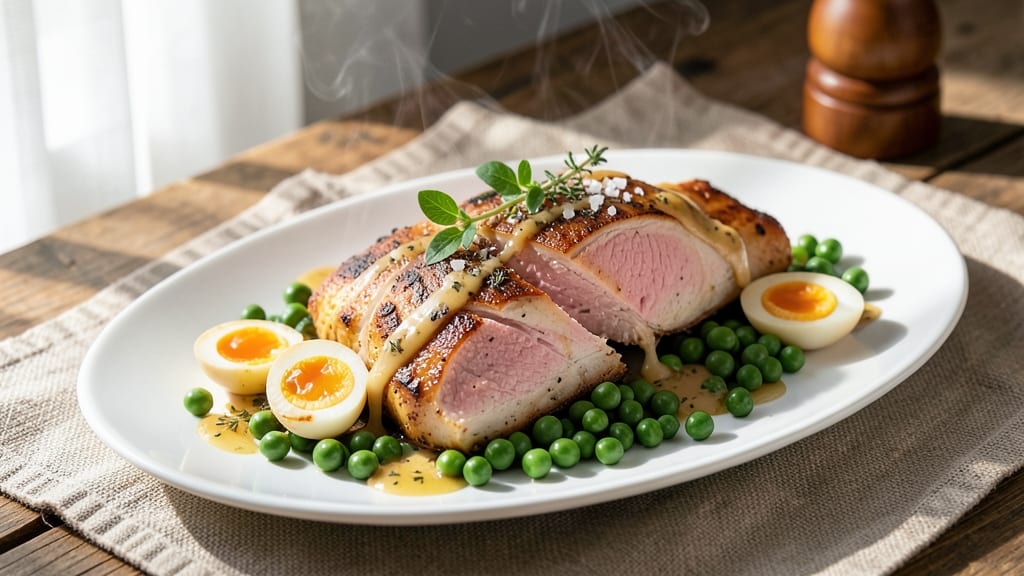
This chicken with green peas and quail eggs recipe transforms a simple spring plate into a restaurant-worthy dish with crunchy egg whites and tender chicken. The secret lies in balancing textures—pan-seared chicken stays juicy while soft-boiled quail eggs add delicate crunch, and sautéed peas bring vibrant sweetness.
I developed this after realizing how often brunch dishes miss the mark by overcooking eggs or underseasoning proteins.
The technique is straightforward but precise: 15-minute pan-seared chicken with a light herb crust, 3-minute soft-boiled quail eggs for perfect whites, and 5-minute peas sautéed with garlic and lemon. The dish comes together in under 30 minutes, making it ideal for weekend brunches or elegant weeknight dinners.
The quail eggs are the star—crisp whites contrast beautifully with the creamy yolks, while the peas add a fresh, bright element that cuts through the richness of the chicken.
What makes this recipe stand out is the harmony of textures and flavors—tender chicken, crisp egg whites, sweet peas, and a touch of lemon zest to tie everything together. The dish is light yet satisfying, perfect for spring when you crave fresh, bright flavors without heavy sauces.
Serve with crusty bread to soak up any juices, or pair with a simple arugula salad for a complete meal.
For an extra touch of sophistication, garnish with fresh mint or parsley and a sprinkle of flaky sea salt. The quail eggs can be adjusted to your preference—6 minutes for runny yolks or 7 minutes for firmer centers.
This dish proves that spring cooking doesn’t have to be complicated—just thoughtful and precise. Let’s bring this bright, elegant plate to your table.
Ingredients for chicken with green peas and quail eggs
Bright spring flavors start with these fresh ingredients—juicy chicken, crisp quail eggs, and sweet peas.
| Ingredient | Amount | Notes |
|---|---|---|
| Boneless, Skinless Chicken Breast 🍗 | 1 ½ lb | Pounded to even thickness |
| Fresh Green Peas 🌱 | 1 ½ cups | Shelling optional, fresh or frozen |
| Quail Eggs 🥚 | 8 whole | Room temperature for even cooking |
| Extra-Virgin Olive Oil 🫒 | ½ cup | Lightly flavored for balance |
| Unsalted Butter 🧈 | 2 tbsp | Cold, for pan-searing |
| Garlic Cloves 🧄 | 4 cloves | Minced, fresh preferred |
| Fresh Lemon 🍋 | 1 whole | Zest and juice, organic preferred |
| Fresh Parsley 🌿 | ¼ cup | Chopped, for garnish |
| Fresh Mint 🍃 | ⅛ cup | Chopped, optional garnish |
| Flaky Sea Salt 🧂 | 1 tsp | For finishing |
| Ground Black Pepper 🌶️ | ½ tsp | Freshly cracked |
| Dried Thyme 🌿 | ½ tsp | Or 1 tbsp fresh thyme |
| Diamond Crystal Kosher Salt 🧂 | 1 tsp | For seasoning chicken |
The quail eggs are the star, so pick the freshest you can find—look for plump, unbroken eggs at specialty stores or high-end grocers like Whole Foods or Trader Joe’s. Their delicate whites need perfect timing, so don’t skip the ice bath trick (shock them in cold water for 30 seconds after cooking). For the chicken, boneless, skinless breasts work best—they stay juicy when seared. Pound them to an even 1/4-inch thickness so they cook uniformly. Fresh green peas? Frozen works just as well—thaw and drain before using, but don’t skip the quick sauté with garlic and lemon to bring out their natural sweetness.
No quail eggs? Substitute with 4 large duck eggs—they’re bigger but cook similarly. Short on fresh herbs? Dried thyme at half the amount works in a pinch, but fresh parsley and mint add that bright spring note. The olive oil matters here—avoid strong, peppery varieties that’ll overpower the delicate flavors. For the peas, if you can’t find fresh or frozen, young sugar snap peas trimmed into bite-sized pieces are a great stand-in. And if you’re worried about the chicken drying out, brine it for 30 minutes first—simple saltwater bath keeps it juicy.
Quail eggs keep best at room temperature for up to 2 days—store them in their original carton away from heat. The chicken should be used within 2 days of purchase, and peas freeze beautifully for up to 12 months if blanched first. I always prep the peas and herbs first—they’re the quickest components. The chicken and eggs can be cooked ahead (up to 1 day) and reheated gently. For the perfect spring plate, assemble everything just before serving so the egg whites stay crisp and the peas retain their vibrant color.
Why You’ll Love This Recipe
- One-Pan Magic: I swear by this dish when I’m too tired to scrub pots—just sear the chicken in olive oil, toss in the peas and quail eggs at the end, and let the butter melt into everything. Minimal cleanup, maximum satisfaction.
- Butter-Peas Perfection: That moment when the peas blister just enough to pop under your fork, while the quail eggs nestle into the chicken like tiny golden surprises? The butter ties it all together—creamy, rich, and impossible to resist.
- Lunchbox Hero: Between us, this keeps perfectly for days. Pack the leftovers with crusty bread for a lunch that feels fancy but costs pennies—my kids devour it cold or reheated, no complaints.
- Budget Luxury: Fresh peas might seem pricey, but a single bag stretches across two meals, and quail eggs add drama without breaking the bank. It’s the kind of dish that makes simple ingredients feel like a splurge.
Step-by-step instructions for chicken with green peas and quail eggs
Here’s how to create a vibrant spring dish with perfectly seared chicken and delicate quail eggs.
Prepare the Chicken and Seasoning
Begin by pounding the 1.5 lb boneless, skinless chicken breast between two sheets of plastic wrap to an even ½-inch thickness. This ensures even cooking and prevents dryness. Season both sides generously with 1 tsp Diamond Crystal kosher salt, 0.5 tsp ground black pepper, and 0.5 tsp dried thyme, pressing the spices into the meat so they adhere well.
Let the seasoned chicken rest at room temperature for 15 minutes while you prep the rest of the ingredients. This step is crucial—it allows the chicken to cook more evenly and develop that beautiful golden crust we’re after. Meanwhile, zest the whole fresh lemon and set aside the zest for later use.
Sear the Chicken and Cook the Peas
Heat 0.5 cup extra-virgin olive oil and 2 tbsp unsalted butter in a large skillet over medium-high heat until the butter foams but doesn’t brown. Add the chicken and cook for 4-5 minutes per side until the exterior is golden brown and the internal temperature reaches 155°F (use a meat thermometer for accuracy). The chicken should release easily from the pan—if it sticks, let it cook another minute.
Remove the chicken from the pan and set it aside to rest. Reduce heat to medium, add the 1.5 cups fresh green peas, and cook for 3-4 minutes, stirring occasionally, until they’re bright green and just tender. Add the 4 minced garlic cloves and cook for 30 seconds until fragrant. Remove from heat and stir in the lemon zest and juice of half the lemon. Cover to keep warm.
Poach the Quail Eggs
Fill a small saucepan with 2 inches of water and bring to a gentle simmer over medium-low heat. Crack the 8 whole quail eggs into a small bowl (one at a time if needed). Using a slotted spoon, carefully lower each egg into the simmering water. Poach for 2-3 minutes until the whites are set but still slightly translucent and the yolks remain runny. Remove with a slotted spoon and drain on paper towels.
Here’s the thing—quail eggs cook faster than chicken eggs, so don’t overpoach. You want that signature crunchy egg white that’s just set around the edges. The yolks should stay vibrant and liquid—this is what makes this dish special. Keep the poached eggs warm in a bowl of warm water while you finish the chicken.
Finish the Dish with Fresh Herbs
Return the chicken to the skillet with the peas and warm through for 1-2 minutes. The residual heat will finish cooking the chicken to 165°F internally. Gently fold in the 0.25 cup chopped fresh parsley and 0.125 cup chopped fresh mint, reserving a small amount for garnish. Taste and adjust seasoning with additional flaky sea salt if needed.
To plate, divide the chicken and pea mixture among four plates. Arrange 2 quail eggs on each plate, then drizzle with any pan juices from the skillet. Sprinkle with the reserved chopped herbs and a pinch of flaky sea salt. The contrast of the crunchy egg whites with the tender chicken and bright peas makes this dish truly special.
Pro Tips For Making Chicken With Green Peas And Quail Eggs
- Sear Chicken First: Hit the chicken breast with a quick sear in olive oil over high heat before adding anything else—this locks in juices and builds flavor. I used to skip this and ended up with bland, rubbery chicken that needed extra sauce to save it.
- Blanch Peas Early: Shock fresh peas in boiling water for 1 minute, then ice bath to stop cooking—this keeps them vibrant and crisp-tender when they rejoin the dish later. Frozen peas? Skip this and just toss them in raw at the end.
- Don’t Overcrowd Pan: Cook the chicken in batches if needed—crowding steams the meat instead of searing it, and you’ll end up with uneven doneness. A single layer in the pan is worth the extra 2 minutes.
- Poach Quail Eggs: Simmer quail eggs in lightly salted water for 3 minutes before adding them to the dish—this ensures they’re fully cooked and the whites stay intact. Cracking them raw into the pan risks breaking yolks or undercooking.
Dietary considerations for this recipe
Gluten-Free Adaptations
This recipe is naturally gluten-free, but watch for hidden sources in ingredients like flaky sea salt or dried thyme—some brands use wheat-based anti-caking agents. I always check labels on spices and use Diamond Crystal kosher salt (certified gluten-free) to be safe.
The quail eggs and chicken are inherently gluten-free, and the peas require no modifications. 🌱
Dairy-Free Options
For a dairy-free version, simply omit the 2 tbsp unsalted butter used for searing the chicken. Replace it with an extra 1 tbsp olive oil—the dish remains rich and flavorful without dairy.
The peas still get their bright flavor from garlic and lemon, and the quail eggs poach beautifully in plain water. No one will miss the butter!
Egg Allergy Substitutes
If quail eggs are a concern, substitute with 4 large duck eggs (they cook similarly) or 8 large chicken eggs poached for 4-5 minutes instead. For a completely egg-free option, replace the eggs with 1 cup marinated white beans (like cannellini) tossed with lemon zest and herbs.
The texture won’t be identical, but it adds protein and a creamy element.
Vegetarian Adaptation
Swap the chicken for 1.5 lb extra-firm tofu, pressed and sliced into cutlets. Marinate the tofu in 2 tbsp olive oil, 1 tbsp soy sauce, 1 tsp garlic powder, and ½ tsp thyme for 30 minutes before pan-searing.
Cook for 4-5 minutes per side until golden. The peas and quail eggs (or substitutes) remain the same, creating a balanced vegetarian plate.
Protein Adjustments
For a higher-protein version, add ½ cup cooked quinoa to each serving—it absorbs the pan juices beautifully. For a lower-protein option, reduce the chicken to 1 lb and increase the peas to 2 cups**.
The dish remains satisfying with the quail eggs and bright herbs as the focal points. The key is balancing textures, so adjust proteins while keeping the egg and pea proportions intact. 💪
Nutrition facts
Frequently asked questions
Can I use chicken thighs instead of breasts for this recipe?
Chicken thighs add richer flavor and stay juicier. Use 1.5 lb bone-in, skin-on thighs and adjust cooking time to 6-7 minutes per side until golden and 165°F internal temp. The skin will crisp beautifully—just remove it before serving if preferred. Skip pounding since thighs cook more evenly.
How do I get perfectly crunchy quail egg whites every time?
The secret is gentle simmering water and precise timing. Use a small saucepan with just 2 inches of water (not boiling) and poach for exactly 2-3 minutes. Immediately transfer to an ice bath for 30 seconds to stop cooking. Overcooking by even 10 seconds turns whites rubbery.
What if I can’t find fresh green peas?
Frozen peas work perfectly—just thaw and drain well before sautéing. For extra freshness, try young sugar snap peas trimmed into bite-sized pieces. Both options need only 3-4 minutes of cooking to stay vibrant. Avoid canned peas—they’re mushy and lack the bright flavor.
Can I make this dish ahead of time?
Yes, but with smart timing. Cook the chicken and peas 1 day ahead, cool completely, then refrigerate. Reheat gently in a skillet with 1 tbsp olive oil until warm. Poach eggs fresh—they lose their crunch when reheated. Assemble plates just before serving to maintain perfect textures.
What’s the best way to store leftover quail eggs?
Store uncooked quail eggs at room temperature for up to 2 days in their original carton. For cooked eggs, keep them in an airtight container in the fridge for 1 day maximum—they’re best eaten fresh. Never refrigerate uncooked eggs in plastic bags (condensation ruins them).