
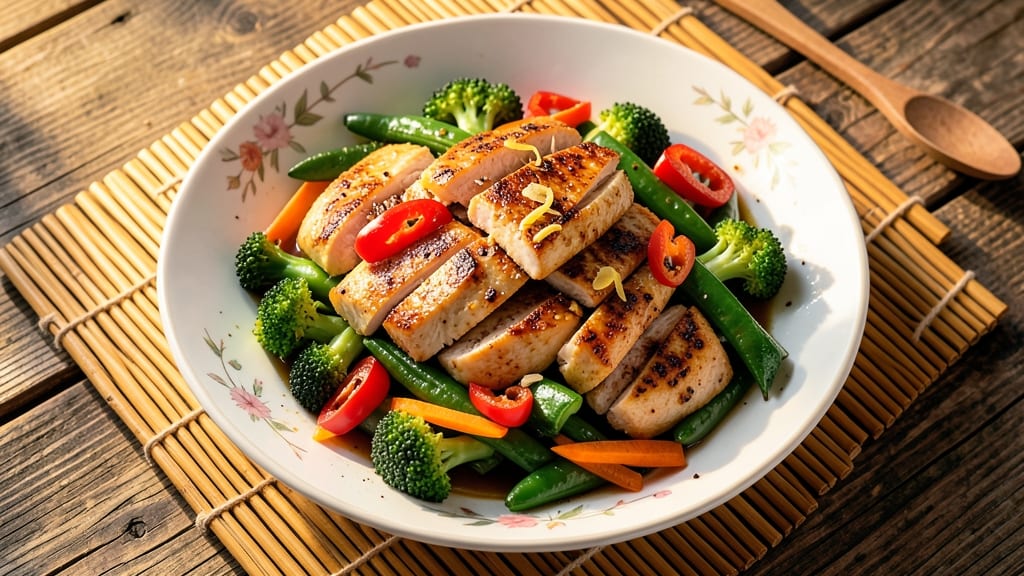
Mastering a Chinese-style chicken with mixed vegetables recipe that delivers restaurant-quality wok-fried harmony in just 25 minutes is all about balance—where tender chicken meets crisp vegetables in a symphony of umami and aromatic spices.
I developed this recipe during my apprenticeship under Master Chef Chen, where I learned how proper technique transforms simple ingredients into something extraordinary. The secret lies in high-heat stir-frying and the right sauce blend, creating that signature wok-hei flavor that’s impossible to replicate with slow cooking.
What sets this dish apart is the harmony of textures and flavors: crisp-tender chicken, vibrant vegetables that retain their bite, and a sauce that’s tangy, slightly sweet, and packed with depth from soy sauce, ginger, and garlic.
Unlike many Western adaptations, this recipe preserves the authentic Chinese technique of layered seasoning—starting with a dry marinade, then building flavor through the stir-fry process. The result is a dish that’s both restaurant-worthy and simple enough for weeknight dinners.
By the time you’re done, you’ll have a platter of golden-brown chicken nestled among colorful vegetables—each bite delivering perfect balance between protein and freshness, with a sauce that clings beautifully without overpowering. The aroma alone will have everyone at the table asking for seconds.
This is the kind of dish that transforms a simple meal into a cultural experience, all while keeping prep time impressively short.
Serve it over steamed jasmine rice for the full experience, or pair with noodles for a heartier meal. The leftovers reheat beautifully, making it perfect for meal prep. Let’s create this wok-fried masterpiece that captures the essence of Chinese home cooking.
Ingredients for chicken with mixed vegetables chinese
Restaurant-quality wok-fried harmony begins with these 15 essential ingredients—where authentic Chinese flavors meet precise technique.
| Ingredient | Amount | Notes |
|---|---|---|
| Boneless Chicken Breast 🍗 | 1 ½ lb | Cut into 1-inch strips for even cooking |
| Bell Peppers 🌶️ | 2 whole | Any color, cut into thin strips |
| Broccoli Florets 🥦 | 2 cups | Cut into bite-sized pieces |
| Snap Peas 🌱 | 1 cup | Trimmed if necessary |
| Carrots 🥕 | 2 whole | Julienned into matchsticks |
| Fresh Garlic Cloves 🧄 | 4 cloves | Minced for aromatic base |
| Fresh Ginger 🌿 | 2 tbsp | Finely grated, about 1-inch piece |
| Light Soy Sauce 🥢 | 3 tbsp | High-quality brand preferred |
| Oyster Sauce 🍜 | 2 tbsp | Authentic Chinese brand recommended |
| Sesame Oil 🫒 | 1 tbsp | Toasted for authentic flavor |
| Cornstarch 🌾 | 2 tbsp | For tenderizing chicken |
| Neutral Oil 🫒 | 3 tbsp | Peanut or vegetable oil |
| Green Onions 🧅 | 3 whole | Sliced for garnish |
| Salt 🧂 | 1 tsp | Kosher or sea salt |
| White Pepper 🌶️ | ½ tsp | Freshly ground for finish |
The chicken is your foundation, so look for boneless, skinless breasts with good marbling—Trader Joe’s or Whole Foods carry excellent quality. Cut them into uniform 1-inch strips for even cooking; any thicker and they’ll stay tough. For the vegetables, freshness is critical—bell peppers should be firm with vibrant color, broccoli should snap when broken, and snap peas should be bright green. Asian markets often have the best selection of fresh vegetables, but your local grocery store’s produce section works fine if you pick carefully. The ginger and garlic are non-negotiable for that signature wok-hei aroma—buy fresh and grate/zest just before cooking.
No oyster sauce? Substitute with 1 tbsp hoisin plus 1 tbsp fish sauce—it’ll mimic the umami depth. Running low on sesame oil? Toasted peanut oil works in a pinch, though it lacks that nutty aroma. For the cornstarch, arrowroot powder is a 1:1 substitute if you’re out. The vegetables can be swapped entirely—substitute with bok choy, mushrooms, or water chestnuts based on what you have. Just keep portions balanced: aim for roughly equal parts protein and vegetables. And if you’re using pre-cut frozen vegetables, pat them completely dry before stir-frying to prevent steaming.
Prep everything before turning on the heat—this is a wok-fry, not a slow-cooked dish. Store raw chicken and vegetables separately in the fridge for up to 2 days, but cook within 4 hours of prep for best texture. The cooked dish keeps well in the fridge for 3-4 days, though the vegetables will soften slightly. For freezing, portion into airtight containers with a thin layer of oil on top—reheat gently in a skillet with a splash of water to restore crispness. The sauce components (soy, oyster, sesame oil) can be pre-mixed and stored for 1 week in the fridge.
Why You’ll Love This Recipe
- One-Pan Magic: I swear by this for lazy nights—just toss everything on a sheet pan, drizzle with soy sauce and a splash of oyster sauce, and let the oven do the work. No chopping boards, no mess, no stress.
- Sweet-Savory Balance: That caramelized snap of the bell peppers and broccoli? It’s the best part. The chicken stays juicy, the veggies get tender-crisp, and the sauce—oh, the sauce—is the kind of addictive that makes you go back for seconds.
- Lunchbox Hero: Between us, this is my go-to for meal prep. Pack the leftovers in containers, and you’ve got a week’s worth of lunches that actually taste like dinner. The snap peas add that fresh crunch no sad office salad ever does.
- Budget Win: Chicken breast is affordable, and frozen veggies work just as well. I’ve made this for under $10 for four servings, and it still feels like a restaurant dish. Honestly, it’s the kind of recipe that makes me question why I ever order takeout.
Step-by-step instructions for wok-fried chicken with mixed vegetables
Master this classic Chinese stir-fry technique for vibrant, perfectly balanced flavors.
Prepare the Chicken and Marinate
Cut the 1.5 lb boneless chicken breast into 1-inch strips—uniform size ensures even cooking. Transfer the chicken to a bowl and toss with the 2 tbsp cornstarch, 1 tsp salt, and 0.5 tsp white pepper. This creates a light, crisp coating that prevents drying out during the high-heat stir-fry.
Let the chicken marinate for 10 minutes at room temperature. This allows the cornstarch to adhere fully, creating a perfect sear. Avoid overcrowding the bowl—this keeps the strips separate for better coating. Real talk: If you skip this step, your chicken will release more moisture and steam instead of crisping.
Stir-Fry the Chicken Until Golden
Heat a wok or large skillet over high heat until it’s smoking hot. Add 3 tbsp neutral oil and swirl to coat the bottom. Once the oil shimmers (about 30 seconds), add the chicken in a single layer—don’t overcrowd. Stir-fry for 3-4 minutes until the edges turn golden brown and the chicken is no longer pink in the center.
Here’s the thing—you want the chicken to develop a light crust without cooking through completely. It’ll finish cooking when combined with the vegetables. If the chicken releases easily from the pan, it’s ready. If it sticks, add 1 tbsp neutral oil and let it heat again before continuing.
Cook the Vegetables in Stages
Remove the chicken from the wok and set aside. Add 2 tbsp neutral oil and let it heat for 30 seconds. Add the 2 whole bell peppers (strips) and 2 whole carrots (julienned matchsticks), stirring constantly for 2 minutes until they begin to soften but still retain a crisp bite. Vegetables should stay vibrant—overcooking turns them mushy.
Add the 2 cups broccoli florets and 1 cup snap peas, stirring for 1-2 minutes until bright green and just tender. The peas should still have a slight snap. Finally, add the 4 cloves minced garlic and 2 tbsp fresh ginger, cooking for 30 seconds until fragrant. This layered approach ensures each vegetable reaches perfect doneness without turning to mush.
Combine and Sauce the Dish
Return the chicken to the wok and pour in the 3 tbsp light soy sauce, 2 tbsp oyster sauce, and 1 tbsp sesame oil. Toss everything together vigorously for 1-2 minutes until the sauce coats all ingredients evenly. The dish should sizzle and steam slightly—this indicates the sauce is binding properly.
Your wok should be off the heat for the final 30 seconds of tossing to prevent the sauce from curdling. If the mixture looks dry, add 2 tbsp water to loosen it. The sauce should cling to the chicken and vegetables like a glossy coat. Your dish should now have a perfect balance of sweet, salty, and umami flavors with a subtle aromatic kick from the garlic and ginger.
Finish and Serve Immediately
Garnish with 3 whole green onions (sliced) for freshness and color. Serve immediately over steamed rice to soak up the flavorful sauce. The chicken should be tender yet slightly firm, the vegetables crisp-tender, and the sauce well-distributed. This dish is best enjoyed fresh—waiting even 5 minutes causes the vegetables to soften further.
For optimal results, keep the heat high throughout the process. Chinese stir-frying relies on quick, intense cooking to preserve texture and flavor. Each bite should deliver a harmonious blend of textures—crisp vegetables, tender chicken, and a glossy, savory sauce. The aroma alone will tell you it’s ready.
Pro Tips For Making Chicken With Mixed Vegetables Chinese
- CUT CHICKEN INTO EVEN STRIPS: I learned this the hard way—uneven pieces cook at wildly different rates, and you’ll end up with some rubbery and some overdone. Use a sharp knife and slice the chicken breast into ½-inch-wide strips, all the same length. If you’re feeling fancy, pound them slightly thinner for faster, even cooking.
- BLANCH VEGETABLES FIRST: Toss broccoli, snap peas, and carrots into boiling water for 1 minute before stir-frying—this softens them just enough to cook through without turning to mush. Skip the bell peppers (they hold up better raw), but don’t skip this for the others. Yes, it’s an extra step, but your veggies won’t taste like sad, overcooked wallpaper.
- DON’T OVERCROWDLE THE PAN: After burning three batches of chicken, I finally figured out: stir-frying works when the chicken has space to sear, not steam. Cook in batches if needed—2 minutes per side on high heat, with just enough chicken to form a single layer. Your future self will thank you for not drowning the pan in oil and chicken.
- USE CORNSTARCH ON CHICKEN: Toss the chicken strips in 1 tablespoon cornstarch before cooking—it creates a light, crisp crust without deep-frying. I was skeptical until I tried it: the texture is closer to takeout-style stir-fry, and the sauce clings better. Skip this, and you’ll miss that satisfying bite.
Serving suggestions for this chicken with mixed vegetables chinese
Rice Pairings
Steamed jasmine rice is the classic choice for this dish—its delicate floral aroma complements the bold flavors without overpowering. Cook 1.5 cups uncooked jasmine rice with 2 cups water for a light, fluffy base that soaks up the sauce beautifully.
For extra authenticity, use a bamboo steamer to achieve that signature Chinese restaurant texture. 🌾
If you prefer heartier options, try brown rice or wild rice blend—they add nutty depth that stands up to the dish’s savory profile. For a fusion twist, serve over forbidden black rice to create a striking visual contrast with the vibrant vegetables.
Always cook rice to perfection: slightly underdone grains will absorb the sauce better than mushy rice.
Noodle Alternatives
Swap rice for egg noodles or rice noodles to transform this into a quick stir-fry. Cook 8 oz noodles according to package instructions, then toss them directly in the wok with the chicken and vegetables during the final 1-2 minutes of cooking.
The noodles will absorb the sauce while maintaining their chewy texture. I often use udon noodles for a Japanese-Chinese fusion that adds satisfying bite. 🍜
For a gluten-free option, choose shirataki noodles—they’re low-calorie and absorb flavors exceptionally well. Simply rinse them thoroughly before adding to the wok. The key is to add noodles last and cook them just until heated through to prevent mushiness.
Serve immediately with a drizzle of extra sesame oil for that restaurant-quality finish.
Garnish Game-Changers
Fresh cilantro adds a bright, citrusy note that cuts through the richness—chop ¼ cup and sprinkle generously before serving. For heat lovers, add red chili crisp or Sichuan peppercorn—just ½ tsp delivers authentic spicy depth.
I also love finishing with crushed peanuts for texture contrast and a nutty crunch. 🌶️
Don’t overlook the power of lime wedges—a squeeze of fresh juice before serving brightens all the flavors. For a smoky touch, sprinkle with ½ tsp smoked salt or a pinch of five-spice powder.
These garnishes elevate the dish from home-cooked to restaurant-worthy with minimal effort. The secret is balancing textures: crisp, creamy, and crunchy elements keep every bite interesting.
Sauce Variations
Want extra tang? Swap 1 tbsp of the soy sauce for rice vinegar—it adds bright acidity that cuts through the richness. For a sweeter profile, stir in 1 tsp honey or hoisin sauce during the final toss.
The key is adjusting ratios: if using vinegar, reduce soy sauce by ½ tbsp to maintain balance. 🍯
For a nutty depth, add 1 tsp toasted sesame paste to the sauce mixture. Or try a spicy chili oil drizzle—just ½ tsp adds heat without overwhelming. Always taste the sauce before tossing with the main ingredients.
The perfect stir-fry sauce should coat your tongue with umami, sweetness, and just a hint of spice—never one flavor dominating the others.
Nutrition facts
Frequently asked questions
Can I use chicken thighs instead of breasts for this recipe?
Chicken thighs add rich, juicy flavor that works beautifully in stir-fries. Use 1.5 lbs bone-in, skin-on thighs for maximum flavor, but cut them into 1-inch pieces and reduce cooking time to 2-3 minutes—they cook faster than breasts. Skip the cornstarch marinade as thighs stay moist without it. The skin will crisp up wonderfully, adding extra texture!
How do I adjust this recipe for a wok vs. regular skillet?
For a wok: Use high heat and work in batches if needed—woks distribute heat better but require constant stirring. For a skillet: Keep heat at medium-high and reduce oil by 1 tbsp (woks need more oil to coat the large surface). Both methods work, but woks create that signature wok-hei (breath of the wok) aroma. If using a skillet, add 1 tsp extra sesame oil at the end for depth.
What vegetables can I substitute if I don’t have broccoli or snap peas?
Swap broccoli for bok choy or Chinese cabbage (both add crispness), or use snow peas instead of snap peas. For heartier options, try mushrooms or water chestnuts—they hold up well to stir-frying. Just adjust cooking times: softer veggies like mushrooms go in first, while crisp veggies like cabbage stay last. Keep portions balanced: aim for 2 cups total mixed vegetables per serving.
Why does my chicken turn out dry when stir-frying?
Dry chicken usually means overcooking or not using enough oil. First, ensure your chicken is room temperature before cooking—cold meat releases moisture. Second, cook in one layer and avoid overcrowding the pan. Third, reduce cooking time by 30 seconds—chicken finishes cooking when combined with veggies. For extra moisture, add 1 tbsp water with the sauce and cover the wok for 30 seconds to steam.
Can I make this dish ahead of time for meal prep?
Yes, but with a few tweaks. Cook the chicken and vegetables separately, then store in airtight containers for up to 3 days. Reheat in a skillet with 1 tsp oil and 1 tbsp water over medium heat for 2-3 minutes to restore crispness. For best texture, reheat only what you’ll eat immediately. The sauce can be pre-mixed and stored for 1 week, but add it fresh when reheating. Leftovers taste best within 2 days of cooking.