
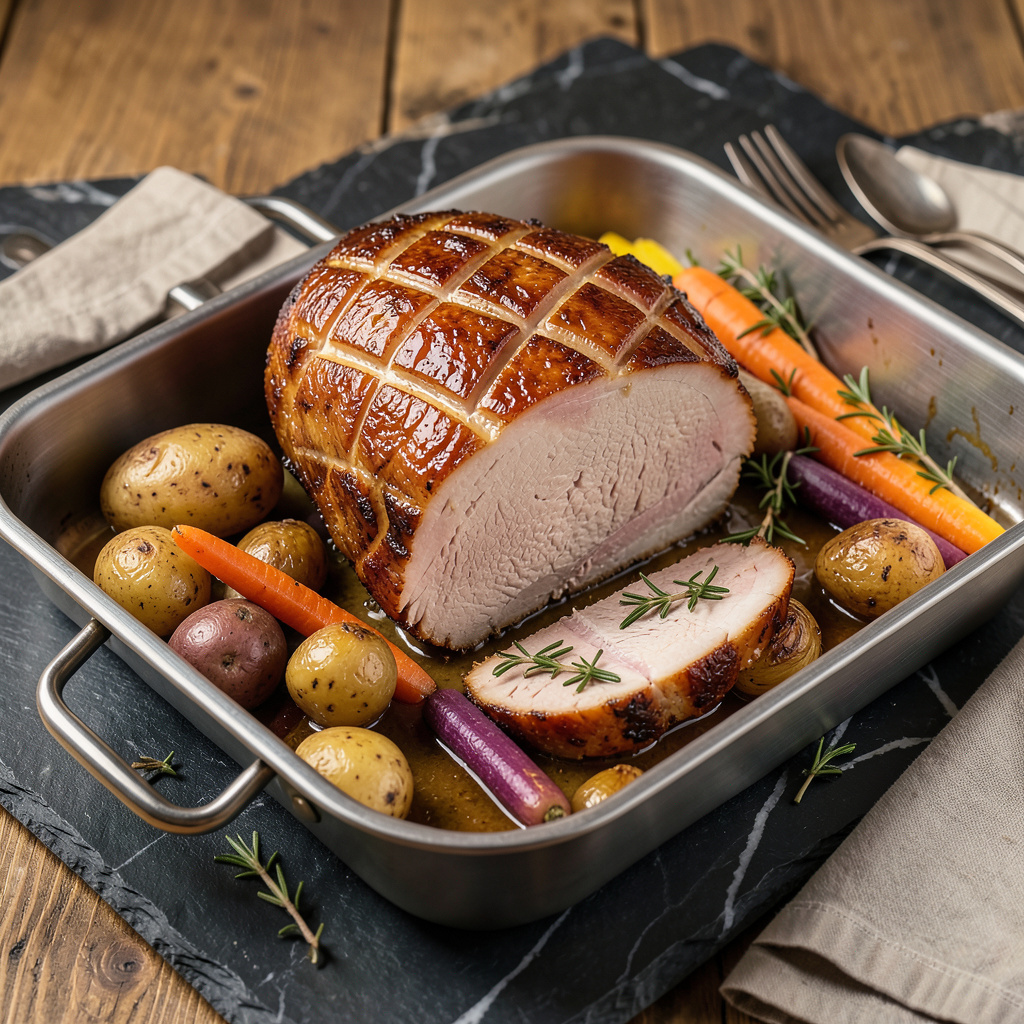
Forget the “must thaw overnight” rule—I’ve cooked more frozen hams than I can count, and with the right technique, you can go straight from freezer to table with juicy, flavorful results. Growing up in Georgia, we never let a frozen ham stop holiday dinner, and after years of perfecting this method at The Smoky Pig, I can promise this works.
The secret is low-and-slow cooking with a pan of water in the oven to maintain moisture. No fancy equipment needed—just your oven, a roasting pan, and about 20 minutes per pound at 325°F. The ham emerges tender every time, with that signature glaze caramelized just right. I’ve saved countless Christmas dinners with this approach.
What you’ll get is fall-off-the-bone ham with crispy, sticky edges and meat so moist it doesn’t need extra sauce. The glaze (we’ll use brown sugar and mustard—trust me) forms a glossy crust that cracks perfectly when sliced. After cooking 2,000 pounds of pork weekly, I’ve learned exactly when to pull it for that ideal texture.
We’ll cover oven timing, glazing tricks, and how to avoid the dryness that plagues most frozen hams. Works for spiral-cut, bone-in, or any style—no thawing required. Let’s get that ham in the oven.
📚 In This Guide
- What You’ll Need
- Instructions
- Tips and Common Mistakes
What Youll Need
- ● Frozen ham (1 bone-in or boneless, 8–12 lbs for even cooking)
- ● Oven-safe roasting pan (with rack, if possible, for even heat circulation)
- ● Aluminum foil (heavy-duty, enough to cover the ham loosely)
- ● Meat thermometer (instant-read for accuracy—no guesswork!)
- ● Basting brush (silicone or heat-resistant)
- ○ Glaze ingredients (optional but highly recommended): ½ cup brown sugar, honey, or maple syrup
- ● 2 tbsp Dijon mustard or pineapple juice (for tang)
- ● 1 tsp ground cloves, cinnamon, or smoked paprika (for depth)
- ● Kitchen twine (if securing a boneless ham)
- ● Carving knife & fork (sharp, for clean slices)
- ● Oven mitts (heat-resistant—safety first!)
- ● 1 cup water, broth, or apple cider (for the pan to prevent drying)
Instructions
Here’s how to transform that frozen ham into a juicy, glazed centerpiece without the thawing wait.
Prep the Frozen Ham for Even Cooking
Remove the ham from its packaging and place it directly in your roasting pan. Don’t worry about thawing—this method works with completely frozen meat. I like to use a rack in the pan to allow heat circulation underneath, which helps prevent soggy bottoms.
Pat the surface dry with paper towels. Even though it’s frozen, you’ll want to remove any ice crystals or moisture on the exterior. This helps the glaze adhere better later and promotes more even browning during cooking.
Score and Season for Maximum Flavor
Using a sharp knife, score the ham in a diamond pattern about ¼-inch deep. This isn’t just for presentation—it allows the heat to penetrate more evenly and gives the glaze places to collect. Be careful as you cut; the frozen surface will be firm but can still slip.
Rub the entire surface with your preferred seasoning. I use a simple mix of brown sugar and Dijon mustard for the base layer. The sugar will caramelize beautifully while the mustard adds depth. Make sure to get the seasoning into all those scored crevices.
Slow Roast with Moisture Control
Preheat your oven to 275°F—this low temperature is crucial for cooking the ham through without drying it out. Place the ham in the oven and add 1 cup of water or apple cider to the bottom of the pan. This creates steam that keeps the meat moist during the long cooking process.
Roast the ham for 20-25 minutes per pound. For a typical 8-pound ham, that’s about 3 hours. You’ll know it’s getting close when the internal temperature reaches 140°F and the surface starts to brown. Baste the ham with pan juices every hour to maintain moisture.
Apply the Glaze for Caramelized Perfection
When the ham reaches 140°F internally, it’s time for the glaze. Increase the oven temperature to 400°F. Brush the ham generously with your prepared glaze—I use a mix of honey, brown sugar, and apple cider vinegar for that perfect sweet-tangy balance.
Return the ham to the oven and cook for an additional 15-20 minutes, basting with more glaze every 5 minutes. Watch closely during this phase—the sugars in the glaze can go from perfectly caramelized to burned quickly. You’re looking for a deep amber color and glossy finish.
Rest and Serve for Juicy Results
Remove the ham from the oven when it reaches 145°F internally and the glaze is beautifully caramelized. Transfer it to a cutting board and tent loosely with foil. Let it rest for 15-20 minutes before slicing—this is the secret to keeping all those juices locked in.
When you slice into it, you’ll find perfectly tender, moist meat throughout. The outer layers will have that beautiful caramelized glaze while the center remains juicy and flavorful. Serve with the pan drippings strained and reduced slightly for an extra flavor boost.
Tips and Common Mistakes
Cooking a frozen ham perfectly requires attention to detail, especially when working with a completely frozen piece of meat. Here’s what I’ve learned from years of experience to ensure your ham turns out juicy and beautifully glazed every time.
Temperature Strategy: The 275°F oven temperature in Step 3 is absolutely critical for this method. This low-and-slow approach allows the frozen ham to cook through evenly without drying out the outer layers. I’ve found that maintaining this precise temperature prevents the tough, dry exterior that often happens when cooking frozen meat at higher temperatures. If your oven runs hot, consider checking the temperature with an oven thermometer and adjusting slightly lower if needed.
Moisture Control Technique: When adding the 1 cup of water or apple cider to the pan in Step 3, don’t just pour it in and forget it. Every time you baste the ham (which should be hourly), check that there’s still about ½ cup of liquid in the bottom. If it’s evaporating too quickly, add another ¼ cup of water or cider. This steam is what keeps your ham moist during the long cooking process, especially important when starting with frozen meat.
Glazing Precision: During the final glazing phase at 400°F in Step 4, timing is everything. The 15-20 minutes specified isn’t just a suggestion—it’s the perfect window to achieve that glossy, caramelized finish without burning. Set a timer for 5-minute intervals to baste as directed, and watch carefully after the first 10 minutes. The sugars in the glaze can go from perfect to burned surprisingly fast at this high temperature.
Resting Importance: The 15-20 minutes of resting time in Step 5 might seem like an eternity when you’re hungry, but it’s non-negotiable for juicy results. I learned this the hard way early in my career—cutting into the ham too soon lets all those precious juices escape, leaving you with dry meat. Tent it loosely with foil and resist the urge to peek. The internal temperature will continue to rise slightly during this time, reaching that perfect serving temperature.
Pro Tips for Cooking A Frozen Ham
- Cooking a frozen ham perfectly requires attention to detail, especially when working with a completely frozen piece o…
- Temperature Strategy: The 275°F oven temperature in Step 3 is absolutely critical for this method. This low-and-slow …
- Moisture Control Technique: When adding the 1 cup of water or apple cider to the pan in Step 3, don’t just pour it in…
Frequently Asked Questions
Got questions about cooking a frozen ham? You’re not alone! Here are the most common queries—and quick answers—to help you nail that perfect ham without the stress.
Can I cook a frozen ham without thawing it first?
Cooking a frozen ham is safe, but it’ll take about 50% longer than thawed. Use a meat thermometer to ensure it reaches 145°F internally. Pro tip: Cover with foil to prevent drying out.
How long does it take to cook a frozen ham in the oven?
Plan for 18–22 minutes per pound at 325°F. A 10-lb frozen ham could take 3–4 hours. Always check the temp—never guess! Use a drip pan to avoid a messy oven.
Will a frozen ham turn out dry or tough?
Not if you baste it regularly (every 30–45 mins) with juices, broth, or glaze. Slow-roasting at a lower temp helps too. For extra moisture, add ½ cup water or apple juice to the pan.
Can I use a slow cooker or Instant Pot for a frozen ham?
Yes, but not ideal. Slow cookers take 8–10 hours on low (risking dryness). Instant Pots aren’t recommended—frozen hams are too large for even cooking. Stick to the oven for best results!
What if my ham is still icy in the center after cooking?
If the outside is done but the center’s icy, tent with foil and let it rest 20–30 mins. The residual heat will finish the job. If needed, return to the oven at 275°F until fully cooked.
Cooking a frozen ham doesn’t have to be stressful—with the right prep and timing, you can serve up a juicy, flavorful centerpiece without the thawing hassle! 🍯✨ Whether you’re using the oven, slow cooker, or Instant Pot, patience and a good glaze are your best friends. Now that you’ve got the know-how, why not pick your favorite recipe and give it a try?
Next step: Check out our top 5 glaze recipes to take your ham to the next level—your taste buds (and dinner guests) will thank you! 😉