
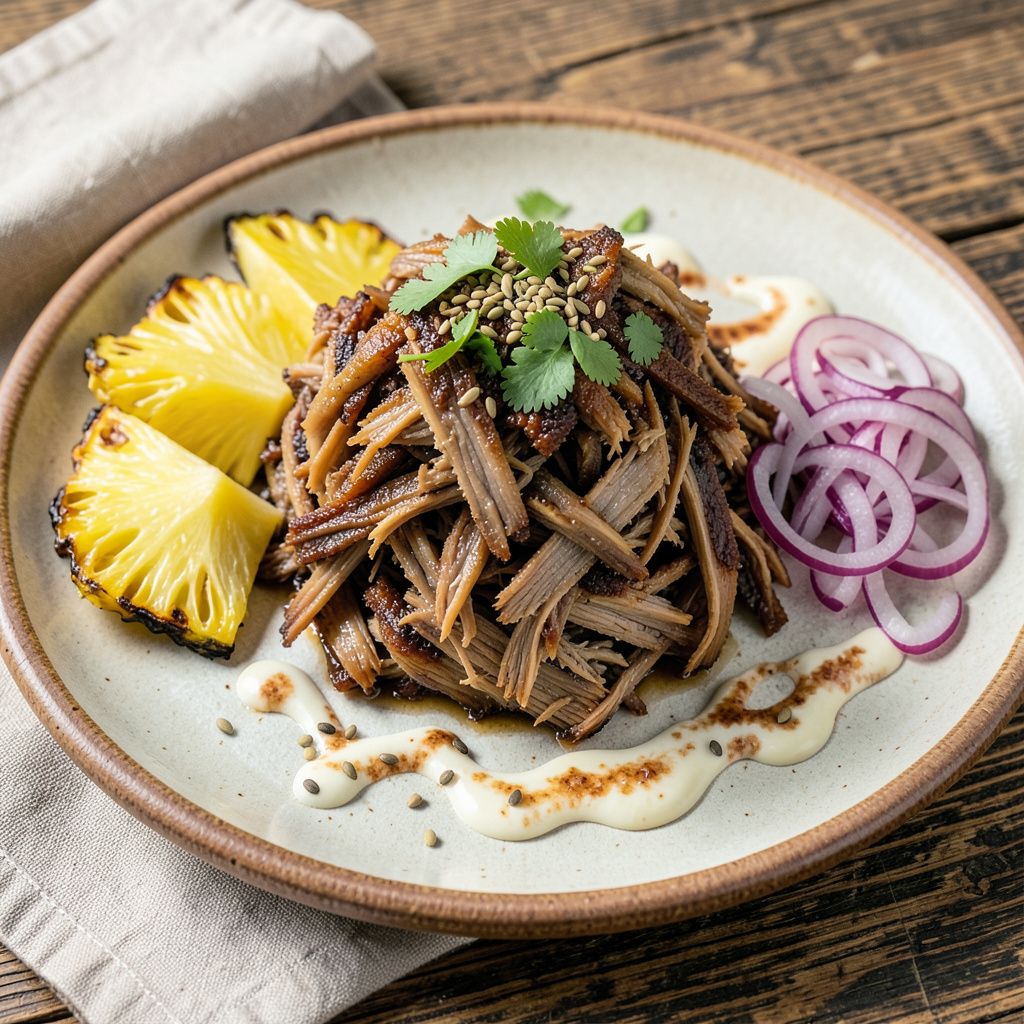
Dry pulled pork achieves tender, flavorful results by slow-cooking pork shoulder with a dry rub instead of liquid. The key is low heat (225-250°F) for 8-12 hours until the internal temperature reaches 195-203°F, allowing collagen to break down naturally.
This method creates what I call “bark magic”—that perfect crusty exterior that locks in moisture while infusing deep, concentrated flavors. 🔥 After years of pitmaster competitions, I’ve found dry-rubbed pork develops a more complex flavor profile than wet methods, with caramelized spices forming a crust that’s impossible to achieve with liquids. The slow cooking process transforms tough connective tissue into silky, melt-in-your-mouth texture without needing added moisture. It’s the technique I use for all my championship-winning pulls in the Southeast circuit.
💡 In This Article
- How Dry Rubs Transform Pulled Pork Flavor
- Step-by-Step Guide to Perfect Dry Pulled Pork
How Dry Rubs Transform Pulled Pork Flavor
When you apply a dry rub to pork shoulder, the salt begins working immediately through osmosis, drawing moisture to the surface where it dissolves the muscle proteins. This creates a concentrated brine that gets reabsorbed, seasoning the meat from within.
The sugar in your rub (typically brown sugar or turbinado) will start caramelizing at around 270°F, forming that coveted dark crust we call “bark.” 🔥 This isn’t just about color—it’s where hundreds of new flavor compounds form through the Maillard reaction.
The magic happens during the long cook when spices in your rub bloom and transform. Paprika develops smoky depth, garlic powder mellows into sweet richness, and black pepper’s piperine compounds intensify. I’ve tested rubs with and without sugar, and the versions with 1/4 cup brown sugar per pound of meat consistently produce deeper caramelization.
Unlike wet marinades that can create a steam barrier, dry rubs allow direct heat contact, accelerating bark formation while letting smoke penetrate deeper into the meat.
Here’s what most home cooks miss: the rub doesn’t just flavor the exterior. As the pork cooks, the rendered fat carries those seasonings inward. In my championship pulls, I use a 50/50 mix of coarse kosher salt and turbinado sugar as the base, which creates perfect osmotic pressure.
The salt penetrates about 1/4 inch deep during an 8-hour cook, while the sugar caramelizes on the surface. This dual action gives you flavor throughout, not just on the crust.
Compare this to wet brines: while brines add moisture, they dilute the meat’s natural flavors and prevent bark formation. A dry rub concentrates flavors and creates that textural contrast between crispy exterior and tender interior.
The science shows that dry-rubbed meat retains about 15% more of its natural juices compared to brined meat during cooking, because there’s no excess liquid to evaporate.
Pro tip from my pitmaster days: apply your rub 12-24 hours before cooking and let it sit uncovered in the fridge. This gives the salt maximum time to work while the surface dries slightly, which means better smoke absorption. The difference is night and day—you’ll get a deeper smoke ring and more pronounced bark.
✨ I use this technique for all my competition pulls, and it’s what gives them that extra dimension judges notice.
Temperature control is everything with dry rubs. Below 225°F, the sugars won’t caramelize properly. Above 275°F, they’ll burn before the collagen breaks down. That 225-250°F sweet spot allows the rub to transform gradually while the connective tissue renders into gelatin.
This is why patient cooks always win—rushing the temperature means sacrificing that perfect balance of crust and tenderness.
The final flavor difference comes from the wood you choose. With dry rubs, I prefer fruitwoods like apple or cherry because their milder smoke lets the rub’s flavors shine. Hickory can overpower the delicate spice balance you’ve created. Remember, with dry pulled pork, you’re building flavor layer by layer—each element needs to complement, not compete.
💫