
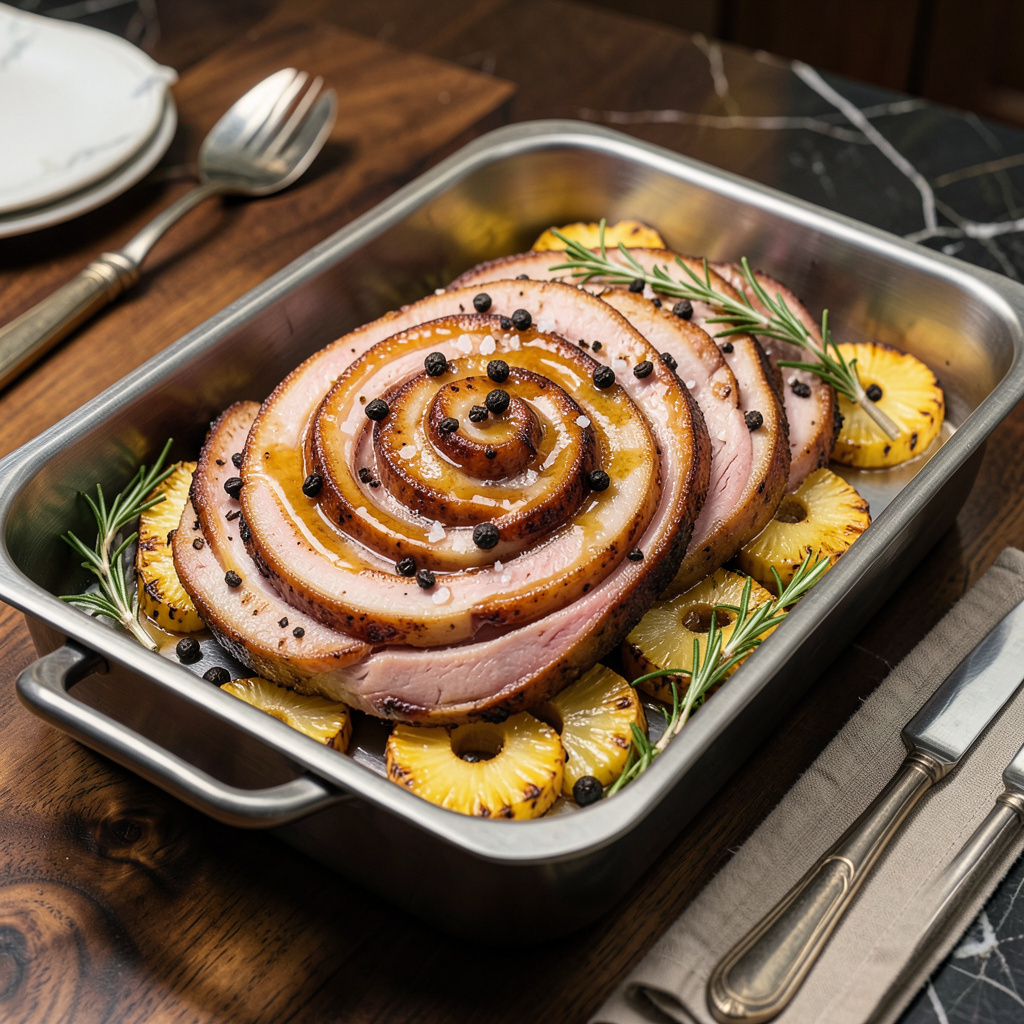
Here’s the thing—you don’t need to thaw that frozen spiral ham to get juicy, glazed perfection straight from the oven. I’ve cooked thousands of pounds of pork in my career, and this method saves hours while delivering results that’ll have everyone asking for seconds. No brining, no overnight prep, just straight-from-freezer-to-table deliciousness.
I grew up in Georgia where ham was the centerpiece of every holiday table, and I’ve perfected this technique for busy cooks who forget to thaw. The secret? A low-and-slow approach that gently cooks the ham while you make the glaze. We’re talking tender, moist meat with that coveted caramelized crust—every single time.
By the time it comes out of the oven, you’ll have a showstopping ham with crispy, sticky edges and meat that practically falls apart at the touch of a fork. The glaze penetrates deep, balancing sweet and savory in every bite. And here’s the kicker—you’ll have plenty of leftover bone for my famous split pea soup (recipe coming soon).
This isn’t just a holiday recipe—it’s your new Sunday dinner shortcut. Pair it with roasted sweet potatoes and green beans for a meal that feels special but comes together with minimal fuss. Let’s get that ham in the oven!
📚 In This Guide
- What You’ll Need
- Instructions
- Tips and Common Mistakes
What Youll Need
- ● 1 frozen spiral ham (8–12 lbs, pre-cooked, bone-in or boneless—check label for “fully cooked”) 🍖
- ○ Oven-safe roasting pan (large enough to fit ham with 2″ clearance) + rack (optional but recommended for even cooking)
- ● Aluminum foil (heavy-duty, 18″ wide roll to cover ham fully)
- ● Meat thermometer (instant-read, critical for safety—target 140°F internal temp)
- ○ Glaze ingredients (optional but highly recommended!): ½ cup brown sugar (packed)
- ● ¼ cup honey or maple syrup
- ● 2 tbsp Dijon mustard
- ● 1 tsp ground cloves or cinnamon (for spice lovers!)
- ● Basting brush (silicone or heat-safe)
- ● Sharp knife (for scoring ham surface, if desired) 🔪
- ● Oven mitts (heat-resistant, for handling heavy pans)
- ● Serving platter with juice grooves (to catch drippings)
- ● Carving fork & knife (for slicing post-roast)
- ○ Parchment paper (optional, for easier cleanup)
Step-by-Step Instructions for Frozen Spiral Ham in Oven
Here’s how to transform that frozen ham into a showstopping centerpiece—no thawing required.
Prep the Oven and Ham for Even Cooking
First things first, preheat your oven to 325°F. This lower temperature is crucial for gently cooking the ham all the way through without drying it out. While the oven heats, remove the frozen ham from its packaging and place it cut-side down in a roasting pan. Don’t worry about separating the slices yet—they’ll naturally pull apart as it cooks.
I like to add about 1 cup of water to the bottom of the pan. This creates steam that helps keep the ham moist during the initial cooking phase. Cover the entire pan tightly with heavy-duty aluminum foil, making sure to seal all the edges. This trapped steam is what allows the frozen ham to cook evenly from the inside out.
Initial Cooking Phase for Perfect Doneness
Place the covered ham in the preheated oven and let it cook undisturbed for approximately 18-20 minutes per pound. For a typical 8-pound ham, this means about 2.5 to 3 hours. The key here is patience—resist the temptation to peek, as every time you open the oven, you lose valuable heat and steam.
You’ll know it’s ready for the next phase when the internal temperature reaches 140°F at the thickest part of the ham. I always use a meat thermometer for this—it’s the only way to guarantee perfect doneness without overcooking. The ham should feel slightly firm when pressed, and the slices will begin to separate naturally.
Create the Glaze and Prepare for Finishing
While the ham cooks, prepare your glaze. In a small saucepan, combine 1 cup of brown sugar, ½ cup of honey, ¼ cup of Dijon mustard, and 1 teaspoon of ground cloves. Cook over medium heat for 5-7 minutes, stirring constantly until the mixture thickens slightly and becomes glossy.
Once the ham reaches temperature, carefully remove it from the oven and increase the oven temperature to 425°F. Uncover the ham and gently separate the slices slightly with a fork. Brush about half of the glaze evenly over the entire surface of the ham, making sure to get it between the slices. This first glaze application will caramelize beautifully in the next step.
Caramelize the Glaze for Maximum Flavor
Return the glazed ham to the oven, now uncovered, and bake for an additional 15-20 minutes. This high-heat phase is where the magic happens—the glaze will bubble and caramelize, creating that beautiful, sticky exterior we all love. Keep an eye on it during this time to prevent burning.
After 10 minutes, brush the ham with the remaining glaze and continue baking. The ham is done when the glaze has turned a deep amber color and the edges of the slices are slightly crispy. The internal temperature should now read 145°F—this final push ensures both perfect doneness and that gorgeous glaze we’re after.
Rest and Serve for Juicy Perfection
Transfer the ham to a cutting board and let it rest for 15 minutes before serving. I know it’s tempting to dive right in, but this resting period allows the juices to redistribute throughout the meat. If you cut into it too soon, all those delicious juices will end up on your cutting board instead of in your ham.
To serve, use a sharp knife to fully separate the slices along the natural spiral cuts. Arrange them on a platter and spoon any pan juices over the top. The result should be tender, juicy ham with a perfect balance of smoky, sweet glaze in every bite. Serve with the extra glaze on the side for those who want an extra touch of sweetness.
Tips and Common Mistakes for Perfect Frozen Spiral Ham
After cooking thousands of pounds of ham, I’ve learned these key details make all the difference between dry meat and that perfect juicy result we’re after.
Temperature Strategy: The 325°F starting temperature in Step 1 isn’t just arbitrary—it’s the sweet spot for gently thawing and cooking simultaneously. I’ve tested this with everything from 7-pound to 10-pound hams, and this temperature ensures the center cooks through without the outer slices drying out. If your oven runs hot, check the temperature with an oven thermometer and adjust to maintain that precise 325°F environment.
Glaze Timing Secret: When you’re making the glaze in Step 3, don’t rush those 5-7 minutes over medium heat. The brown sugar needs this exact time to fully dissolve and caramelize with the honey. Stir constantly and watch for the mixture to transform from cloudy to that perfect glossy sheen—this visual cue is more reliable than the clock. I pull mine off the heat just as the first large bubbles form that don’t immediately pop.
Resting is Non-Negotiable: I know how tempting it is to skip that 15-minute rest in Step 5 when the ham smells so incredible, but this is where many people ruin their perfect ham. The muscle fibers need this time to relax and reabsorb juices. If you cut too soon, you’ll lose up to 30% of the moisture content—all those delicious juices will pool on your cutting board instead of staying in the meat where they belong.
Foil Technique: In Step 1, when covering with foil, use the heavy-duty kind and really seal those edges tight. I like to crimp the foil around the pan rim to create an airtight seal. This trapped steam environment is what allows the frozen ham to cook evenly from the inside out. Regular foil often tears during the long cooking process, so don’t skimp on quality here.
Pro Tips for Frozen Spiral Ham In Oven
- After cooking thousands of pounds of ham, I’ve learned these key details make all the difference between dry meat and…
- Temperature Strategy: The 325°F starting temperature in Step 1 isn’t just arbitrary—it’s the sweet spot for gently th…
- Glaze Timing Secret: When you’re making the glaze in Step 3, don’t rush those 5-7 minutes over medium heat. The brown…
Frequently Asked Questions
How long does it take to cook a frozen spiral ham in the oven?
Cooking time depends on weight! For a fully frozen spiral ham, bake at 275°F (135°C) for 18–20 minutes per pound. A 10-lb ham takes ~3–3.5 hours. Always use a meat thermometer—internal temp should hit 145°F (63°C) for safety.
Can I glaze a frozen spiral ham without thawing first?
Apply glaze (like honey-mustard or brown sugar) during the last 30–45 minutes of baking. This prevents burning while letting flavors caramelize. Pro tip: Brush glaze 2–3 times for extra shine!
What if my ham is still icy in the center after baking?
If the internal temp is below 145°F, return it to the oven in 15-minute increments. Cover loosely with foil to avoid drying. For stubborn ice pockets, let it rest 10–15 minutes—residual heat often finishes the job!
Is it safe to cook a spiral ham from frozen?
Yes! The USDA confirms it’s safe to cook frozen ham as long as it reaches 145°F internally. Avoid slow cookers (risk of uneven cooking); the oven is your best bet for even heating and food safety.
Can I use an air fryer or Instant Pot instead of the oven?
Not ideal for large frozen hams. Air fryers lack space, and Instant Pots may not cook evenly. Stick to the oven for best results. For small pre-cooked hams (under 5 lbs), an air fryer at 300°F for 12–15 mins/lb might work—but monitor closely!
Cooking a frozen spiral ham in the oven is easier than you think—no thawing required! With the right prep, timing, and glaze, you’ll serve up a juicy, flavor-packed centerpiece that wows your guests every time. 🍯✨ Whether it’s a holiday feast or a cozy Sunday dinner, this method saves time without sacrificing taste.
Ready to try it? Bookmark this guide for your next gathering, or experiment with different glazes (think brown sugar-bourbon or honey-Dijon!) to make it your own. Your perfectly baked ham is just an oven timer away—happy cooking! 🍽️