
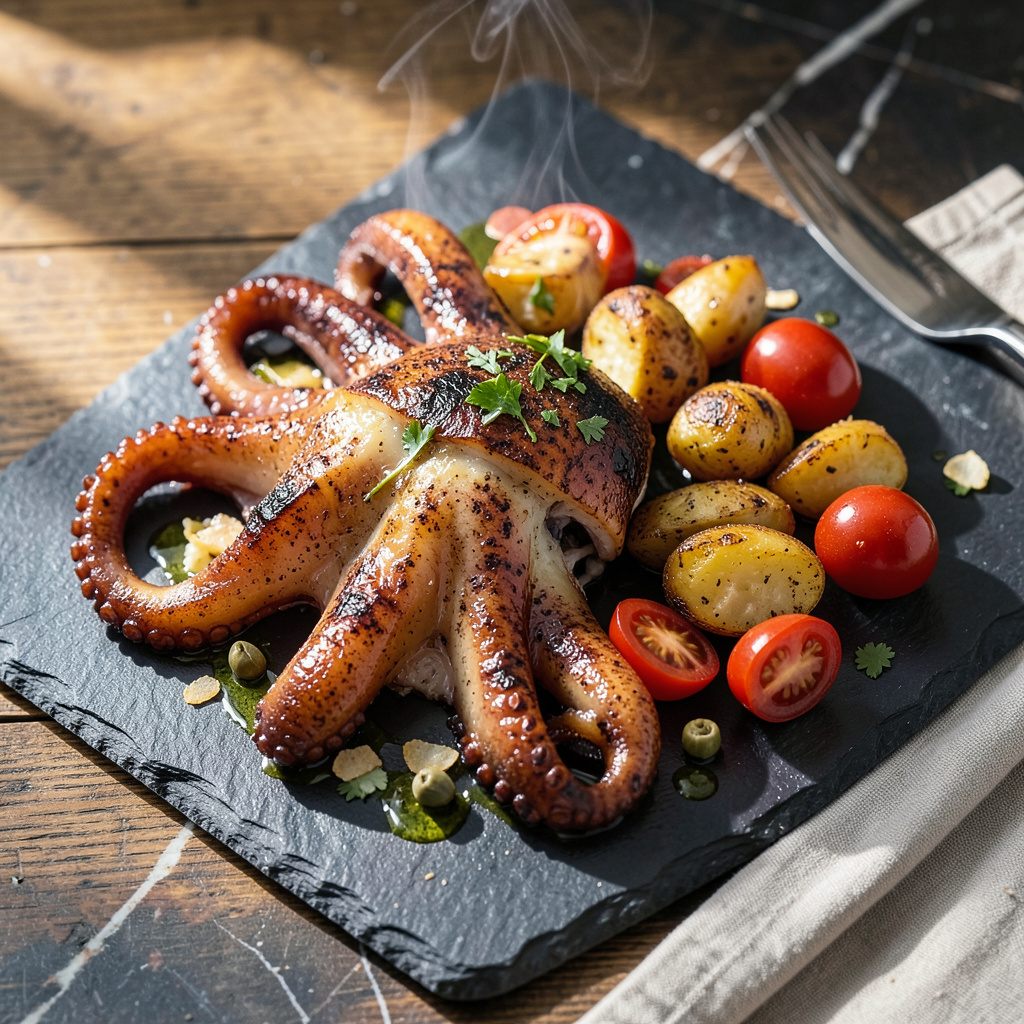
I’ll be real with you—cooking octopus at home used to intimidate me until I discovered this foolproof pan-searing method. That rubbery, chewy texture everyone fears? Completely avoidable with one simple prep trick I learned from a Greek fisherman in Charleston. The key is starting with properly tenderized octopus before it ever hits the pan.
Here’s where it gets interesting: after a quick boil (or even freezing, which naturally breaks down the fibers), the octopus transforms into something buttery and tender. In a screaming hot pan with just olive oil, salt, and lemon, those tentacles develop a crispy charred crust in minutes while staying juicy inside. I’ve made this for skeptical friends who now request it weekly.
What you’ll end up with is octopus that’s tender enough to cut with a fork but with those gorgeous caramelized edges that make it restaurant-worthy. The lemon brightens the rich meat, while the high heat creates that perfect smoky char. Serve it with crusty bread to soak up the pan juices or over a simple arugula salad for contrast.
Fair warning: this cooks faster than you’d expect. Keep the heat high, resist the urge to overcrowd the pan, and pull it just when the edges start curling. That’s when you know it’s perfectly done—no rubbery surprises, just melt-in-your-mouth seafood that’ll make you wonder why you ever hesitated to try cooking octopus at home.
📚 In This Guide
- What You’ll Need
- Instructions
- Tips and Common Mistakes
What Youll Need
- ● 1 medium octopus (2–3 lbs / 1–1.5 kg) – Fresh or thawed if frozen. Look for bright eyes and firm, glossy skin. 🐙
- ● 1 large heavy-bottomed pan – Cast iron or stainless steel (12-inch preferred) for even heat.
- ● 2 tbsp olive oil – Extra virgin for rich flavor. Avoid smoke-prone oils like butter.
- ● 1 lemon – Cut into wedges for serving (plus zest if you love tang!).
- ● 3 garlic cloves – Minced or smashed for aromatic depth.
- ○ 1 tsp smoked paprika – Optional but highly recommended for a smoky kick.
- ● Salt & black pepper – Kosher salt for seasoning; freshly cracked pepper to taste.
- ○ 1/2 tsp red pepper flakes – Adjust for spice preference (optional).
- ● 1/4 cup white wine or broth – Deglazing liquid (dry white wine like Sauvignon Blanc works best).
- ○ Tongs & sharp knife – For flipping and prepping. A meat mallet (optional) helps tenderize thicker tentacles.
- ● Paper towels – To pat the octopus very dry before cooking (key for crispiness!).
- ○ Fresh parsley – Chopped, for garnish (optional but pretty!).
Step-by-Step Instructions for Pan-Seared Octopus
This method delivers perfectly tender octopus with crispy edges—quick, foolproof, and restaurant-worthy.
Prepare the Octopus for Cooking
Begin by rinsing the octopus under cold water to remove any residual salt or debris. Pat it completely dry with paper towels—this is crucial for achieving that perfect sear later. I like to use a clean kitchen towel for the final drying to ensure every surface is moisture-free.
If your octopus is whole, separate the tentacles from the head by cutting just below the eyes. Then cut the tentacles into manageable clusters, leaving the suction cups intact for presentation. For pre-cleaned tentacles, simply trim any remaining membrane at the base where they were attached to the head.
Tenderize with a Quick Blanch
Bring a large pot of water to a rolling boil—you want enough water to fully submerge the octopus. The key here is to blanch the octopus just until the tentacles curl dramatically, which happens in about 30-45 seconds. This brief cooking time relaxes the fibers without toughening them.
Immediately transfer the blanched octopus to an ice bath to stop the cooking process. This shock treatment preserves the tender texture you just created. Drain well and pat dry again—you’ll notice the tentacles are now more pliable and ready for their final sear.
Achieve the Perfect Sear
Heat a heavy skillet (cast iron works beautifully) over medium-high heat until it’s screaming hot. Add just enough olive oil to lightly coat the bottom—about 2 tablespoons. The oil should shimmer but not smoke when you add the octopus.
Arrange the octopus pieces in a single layer, making sure not to overcrowd the pan. Let them sear undisturbed for 2-3 minutes per side until you develop a deep golden-brown crust. You’ll know it’s ready to flip when the edges release easily from the pan and develop that characteristic char.
Finish with Flavor
Once both sides are beautifully caramelized, reduce the heat to medium and add your aromatics—garlic, red pepper flakes, and lemon zest work wonderfully. Toss everything together for about 1 minute until the garlic becomes fragrant but hasn’t browned.
Finish with a squeeze of fresh lemon juice and a drizzle of good-quality olive oil. The acidity brightens the rich octopus flavor while the oil adds a silky finish. Taste and adjust the seasoning with flaky sea salt if needed—remember, octopus benefits from assertive seasoning.
Rest and Serve Immediately
Transfer the octopus to a warm platter and let it rest for 2-3 minutes before serving. This brief rest allows the juices to redistribute throughout the meat, ensuring each bite is succulent and tender. The tentacles should offer just the right amount of resistance when bitten—firm but yielding.
Serve immediately while still warm, accompanied by crusty bread to soak up the garlicky oil. The contrast between the crispy charred exterior and the silky interior is what makes this dish so special. For an extra touch, garnish with fresh parsley and additional lemon wedges.
Tips and Common Mistakes for Perfect Pan-Seared Octopus
After years of working with seafood in professional kitchens, I’ve learned that octopus requires both precision and intuition. Here’s what makes the difference between good and extraordinary results.
The Blanch Technique: In Step 2, those 30-45 seconds of blanching are everything. Watch for the tentacles to curl dramatically – this visual cue is more reliable than any timer. The ice bath afterward is non-negotiable; it stops the cooking instantly and preserves that tender texture we’re after. I’ve seen chefs skip this step and end up with rubbery octopus every time.
Heat Control for Searing: When you move to Step 3, your pan needs to be screaming hot at medium-high heat before adding the octopus. The 2 tablespoons of olive oil should shimmer but not smoke – if it’s smoking, your pan is too hot and you’ll burn the exterior before the interior warms through. Cast iron is ideal here because it maintains consistent heat during the 2-3 minutes per side searing time.
Resting Matters: That 2-3 minutes of resting in Step 5 isn’t just downtime – it’s when the octopus reabsorbs its juices. Cut into it immediately and you’ll lose all that beautiful moisture to your cutting board. The tentacles should feel firm but yield slightly when pressed after resting, like a perfectly cooked steak.
Seasoning Strategy: Octopus needs assertive seasoning to stand up to its rich flavor. Don’t be shy with the flaky sea salt at the end – I typically use about ½ teaspoon per pound of octopus. The lemon juice isn’t just for brightness; its acidity actually helps tenderize the surface fibers during those final moments in the pan.
Pro Tips for Cook Octopus In A Pan
- After years of working with seafood in professional kitchens, I’ve learned that octopus requires both precision and i…
- The Blanch Technique: In Step 2, those 30-45 seconds of blanching are everything. Watch for the tentacles to curl dra…
- Heat Control for Searing: When you move to Step 3, your pan needs to be screaming hot at medium-high heat before addi…
Frequently Asked Questions
How long does it take to cook octopus in a pan?
Cooking octopus in a pan takes about 10–15 minutes after pre-boiling (if needed). For fresh, pre-cooked octopus, sear it 2–3 minutes per side on high heat for a crispy exterior. Pro tip: Pat it very dry first to avoid steaming!
Can I cook octopus in a pan without boiling it first?
Yes, but it’s tricky! Raw octopus is tough—simmer it in water (or court bouillon) for 45–60 minutes until fork-tender before pan-searing. Skipping this step risks chewy, rubbery results. For convenience, buy pre-cooked octopus!
What’s the best oil for pan-searing octopus?
Use oils with a high smoke point like avocado, grapeseed, or refined olive oil. Extra-virgin olive oil works too but may smoke—save it for finishing with garlic, lemon, or herbs. Avoid butter (it burns easily).
Why is my pan-seared octopus rubbery?
Rubbery octopus usually means undercooking or overcrowding the pan. Fix it by:
- Boiling it longer (until a knife slides in easily).
- Searing in small batches on ripping-hot heat.
- Avoiding moving it too soon—let it crisp!
What can I use instead of octopus in this recipe?
For similar texture, try squid (calamari) or cuttlefish—sear them 1–2 minutes max (they cook faster!). For flavor, scallops or firm tofu (marinated) work as veggie alternatives. Adjust cook times accordingly.
Cooking octopus in a pan doesn’t have to be intimidating—with the right technique, you can achieve tender, flavorful results in just 15 minutes! 🍽️ Remember: patience with pre-cooking and a hot pan are your best tools for that perfect charred finish.
Now that you’ve mastered the basics, why not experiment? Try pairing your octopus with a zesty lemon-garlic sauce or a smoky paprika rub for extra flair. Ready to impress? Jump to serving ideas and make your next meal unforgettable!