I’ll be real with you—pan-frying gyoza at home used to intimidate me until I cracked the code for that perfect crispy-bottomed finish. The first time I got it right, those golden, lacy edges with juicy filling inside changed everything. Now it’s my go-to when I need restaurant-quality results in under 20 minutes.
Here’s the thing—most home cooks either undercook the bottom or steam them into sogginess. The secret is that initial high-heat sear in just enough oil to create a shatteringly crisp crust, then adding water to steam the tops while preserving that crunch. I’ve burned through batches learning this balance, but now it’s foolproof every time.
What you’ll end up with is dumplings that have that signature “skirt” of crispy lace around the edges, tender wrappers, and perfectly cooked filling. The contrast between textures is what makes gyoza so addictive. I serve them with a quick soy-vinegar dipping sauce that cuts through the richness.
Between you and me, these disappear faster than I can make them. Whether you’re using store-bought wrappers or making your own, this method guarantees perfect results. Let’s get that pan hot and start folding—it’s easier than you think.
📚 In This Guide
- What You’ll Need
- Instructions
- Tips and Common Mistakes
What Youll Need
- ● Gyoza (dumplings): 12–16 frozen or fresh (store-bought or homemade). Pro tip: Thaw frozen gyoza for 10 minutes before cooking for even browning.
- ● Oil: 1–2 tbsp neutral oil (vegetable, canola, or peanut). Avoid olive oil—it burns at high heat!
- ● Water: ¼ cup (for steaming).
- ● Pan: 1 non-stick or cast-iron skillet (9–10 inches wide) with a tight-fitting lid.
- ● Tools: Tongs or a thin spatula (to flip without tearing).
- ● Plate + paper towels (for draining excess oil).
- ○ Optional but handy: Chili oil, soy sauce, or rice vinegar (for dipping).
- ● Green onions or sesame seeds (garnish).
- ● Meat thermometer (if using homemade pork filling—ensure 160°F internal temp).
Instructions
Here’s my foolproof method for achieving golden, crispy-bottomed gyoza with juicy fillings every time.
Prepare Your Workstation and Ingredients
Before heating your pan, arrange all components within arm’s reach. You’ll need your frozen or fresh gyoza, a non-stick skillet with lid, neutral oil (like vegetable or canola), and water for steaming. I always keep a small bowl of water nearby for quick lid rinsing between batches.
The key to perfect gyoza starts with organization. Have your tongs and spatula ready – you’ll need to work quickly once cooking begins. If using frozen gyoza, don’t thaw them; they’ll release too much moisture and prevent proper browning. Fresh gyoza should be chilled but not frozen solid.
Create the Perfect Crispy Base
Heat your skillet over medium-high heat until a drop of water sizzles and evaporates immediately. Add 1-2 tablespoons of oil – enough to coat the bottom but not so much that the gyoza will swim. Swirl to distribute evenly and wait until the oil shimmers but doesn’t smoke.
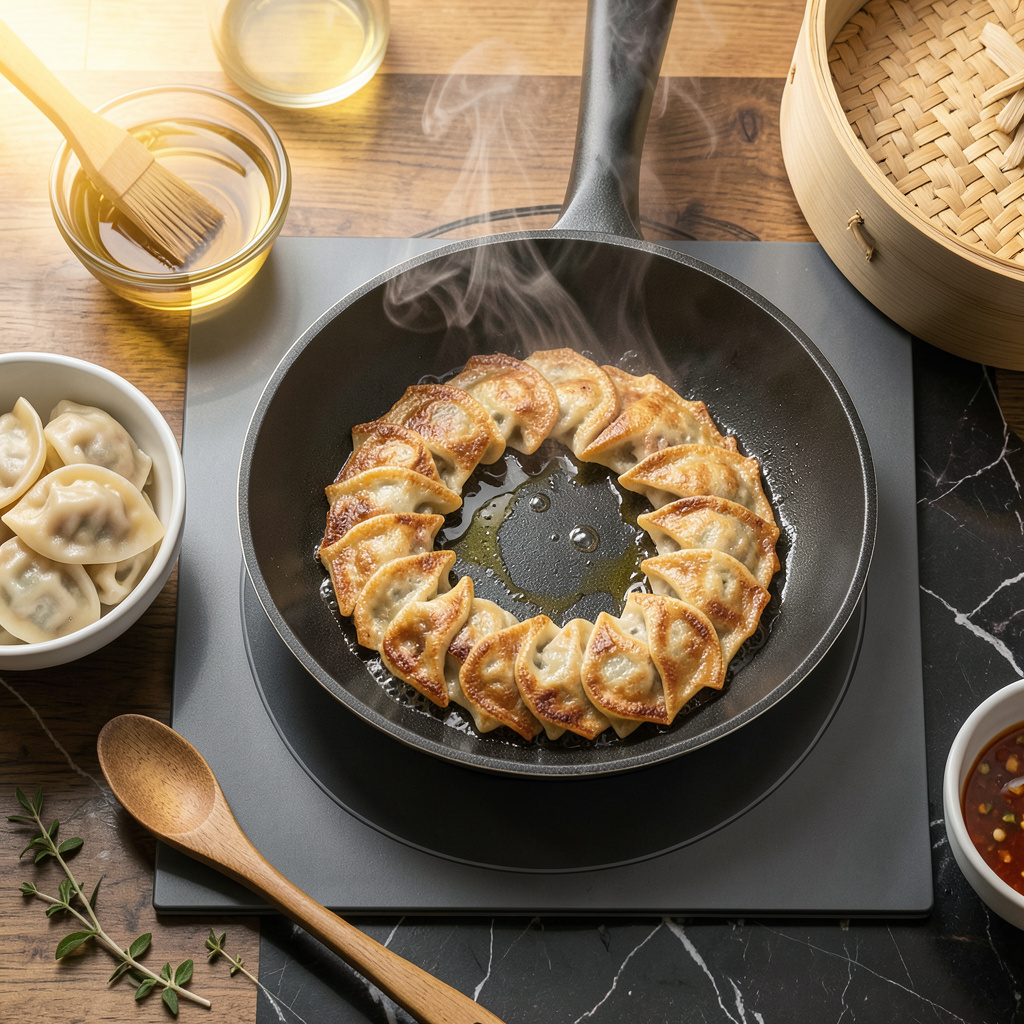
Arrange the gyoza in a single layer, flat-side down, leaving about ½ inch between each. Don’t overcrowd the pan – this causes steam buildup that prevents crisping. Press down gently on each gyoza with your spatula to ensure full contact with the pan. You should hear an immediate sizzle. Let them cook undisturbed for 2-3 minutes until the bottoms turn deep golden brown.
Steam for Juicy Interiors
Once the bottoms are crispy, carefully add ¼ cup of water to the pan – it will sputter violently, so stand back slightly. Immediately cover with a tight-fitting lid to trap the steam. Reduce heat to medium-low and let steam for 5-6 minutes.
Listen for the sizzling to subside – this indicates the water has mostly evaporated. Resist the temptation to peek during steaming; the trapped steam is what cooks the filling through while keeping it moist. After 5 minutes, remove the lid and let any remaining water cook off. The gyoza should now have crispy bottoms and tender, cooked-through tops.
Finish with Extra Crisp and Serve
Return the heat to medium-high and let the gyoza cook uncovered for an additional 1-2 minutes. This final crisping step ensures that perfect contrast between the crunchy bottom and soft wrapper. You’ll see the edges become extra golden and hear a gentle crackling sound.
Transfer the gyoza to a plate using your spatula, being careful not to scrape off the crispy bottoms. Serve immediately with your favorite dipping sauce. The ideal gyoza should have a crispy, lace-like bottom that shatters slightly when bitten, revealing a juicy, flavorful filling. Work in batches if needed, adding a bit more oil between each, to maintain consistent results.
Tips and Common Mistakes
Perfecting pan-fried gyoza is all about mastering the balance between crispy and tender—here’s what I’ve learned from years of making them.
Heat Control: The initial 2-3 minutes at medium-high heat in Step 2 is critical. If your oil isn’t hot enough, the gyoza will absorb it instead of crisping. Test your pan by flicking a drop of water—it should dance and evaporate instantly. Don’t walk away during this stage; the moment you see that deep golden brown color developing around the edges, you’re ready for the next step.
Steaming Technique: When adding the ¼ cup of water in Step 3, pour it along the edge of the pan, not directly onto the gyoza. This prevents temperature shock that could make the wrappers soggy. The 5-6 minutes of steaming at medium-low should be completely hands-off—no peeking! The steam needs to circulate evenly to cook the filling through while preserving the crispy bottom you worked so hard to create.
Final Crisp Strategy: That last 1-2 minutes at medium-high in Step 4 makes all the difference. Listen for a subtle crackling sound—this tells you the bottoms are reaching that perfect lace-like crispness. If you’re working in batches, wipe the pan with a paper towel between rounds to remove any residual moisture that could prevent proper browning in the next batch.
Equipment Wisdom: A well-seasoned cast iron skillet gives the best crust, but any heavy-bottomed non-stick pan will work. The key is even heat distribution. If using frozen gyoza, don’t thaw them first—they’ll release too much moisture and steam instead of crisp. Fresh gyoza should be cold but not frozen solid when they hit the pan.
Pro Tips for Pan Fry Gyoza
- Perfecting pan-fried gyoza is all about mastering the balance between crispy and tender—here’s what I’ve learned from…
- Heat Control: The initial 2-3 minutes at medium-high heat in Step 2 is critical. If your oil isn’t hot enough, the gy…
- Steaming Technique: When adding the ¼ cup of water in Step 3, pour it along the edge of the pan, not directly onto th…
Frequently Asked Questions
Can I use a nonstick pan instead of cast iron or stainless steel?
A nonstick pan works great for beginners—it prevents sticking and makes flipping easier. Just skip the extra oil (use 1 tsp max) and avoid metal utensils to protect the coating. For extra crispiness, preheat the pan 1-2 minutes longer. Note: Nonstick pans brown less aggressively, so don’t expect ultra-dark crusts.
How do I know when gyoza are fully cooked inside?
Check for two signs: 1) The wrappers turn translucent (not doughy) at the edges, and 2) internal temp hits 165°F (74°C) (use a meat thermometer for pork/chicken fillings). If unsure, fry 1-2 minutes longer after adding water—steam ensures even cooking. Pro tip: Cut one open to test!
What if my gyoza stick to the pan and tear?
Don’t panic! If they stick, let them cook undisturbed 30 seconds longer—the crust will release naturally. For stubborn spots, gently slide a thin spatula (or chopsticks!) under the edges while adding a splash of water to loosen. Next time, ensure your pan is hot enough before adding oil.
Can I air-fry or bake gyoza instead of pan-frying?
Yes, but texture differs! Air-fryer: Brush with oil, cook at 375°F (190°C) for 6-8 minutes, shaking halfway. Oven: Bake at 400°F (200°C) for 12-15 minutes on parchment. Both methods skip the crispy bottom but are hands-off. For hybrid crispiness, pan-fry first, then finish in the oven!
Why did my gyoza turn soggy instead of crispy?
Three common culprits: 1) Too much water in the pan (use just ¼ cup), 2) crowding the pan (leave ½-inch gaps), or 3) not evaporating all liquid before the final fry. Fix it: Uncover the pan early, tilt to drain excess water, then crisp 1-2 minutes longer on medium-high heat. Crunch guaranteed!
Now you’ve got the secret to golden, crispy gyoza with juicy fillings every time! 🎉 Whether you’re whipping up a quick snack or impressing guests, pan-frying is the easiest way to nail that perfect crunch. Don’t stop here—experiment with fillings like shrimp or spicy pork, or pair your gyoza with a homemade dipping sauce for extra flair.
Ready to level up? Try steaming a batch next or mastering the folding technique for restaurant-worthy results. Happy frying! 🍳