
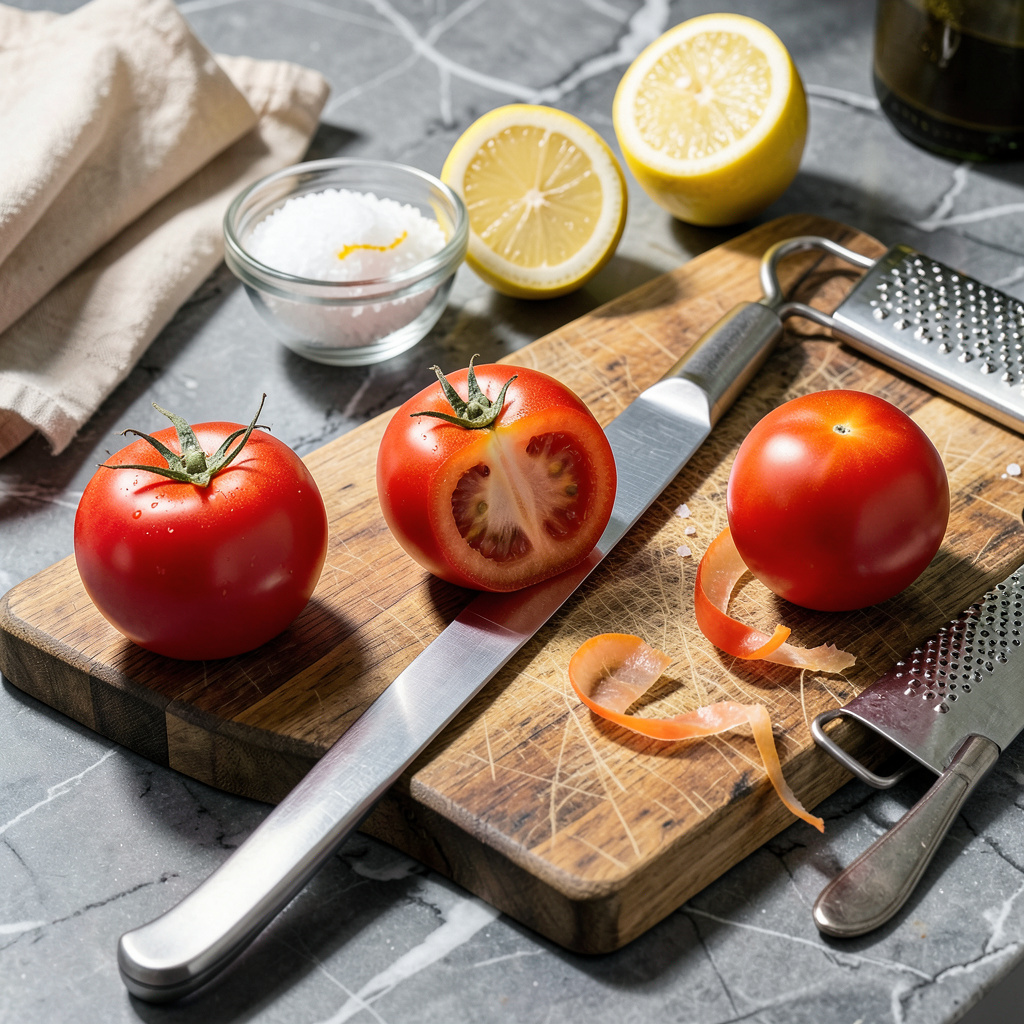
I’ll be real with you—blanching tomatoes to peel them always felt like unnecessary work to me. After years of prepping thousands of pounds of produce in professional kitchens, I discovered this game-changing fork trick that saves time and preserves more flavor. No boiling water, no ice baths, just perfectly peeled tomatoes in seconds.
This method works because ripe tomatoes have a natural separation layer between skin and flesh. By scoring the skin and using a fork to grip and pull, you remove the peel cleanly without losing juice or texture. I’ve used this technique for everything from fresh salsa to tomato sauce, and it consistently delivers better results than blanching.
The best part? You only need a fork and a ripe tomato—no special tools or complicated setups. I’ve taught this to line cooks who were skeptical at first, but after seeing how much faster it is than traditional methods, they never went back. The tomatoes stay firmer too, which matters when you’re making dishes where texture is everything.
Whether you’re prepping for canning, making fresh marinara, or just want perfectly peeled tomatoes for salads, this technique will change how you work with tomatoes. No more wasted time or mushy results—just clean, intact tomatoes ready for whatever you’re cooking.
📚 In This Guide
- What You’ll Need
- Instructions
- Tips and Common Mistakes
What Youll Need
- ● Fresh tomatoes – Any quantity (firm, ripe ones work best—avoid overripe or mushy tomatoes).
- ● 1 fork – A standard dinner fork (tines should be sharp but not serrated).
- ○ 1 paring knife or chef’s knife – For scoring the tomato skin (optional if your fork is sharp enough).
- ● Cutting board – Any size, but a small or medium works best for stability.
- ○ Bowl or plate – To collect peels (optional but handy for less mess).
- ○ Paper towels or clean kitchen towel – For wiping off excess juice (optional).
- ● Vegetable peeler – Only if you prefer a backup tool for stubborn spots (not needed for the fork trick!).
Instructions
This method is so simple you’ll wonder why you ever bothered with boiling water. Here’s exactly how to do it.
Wash and Dry the Tomatoes
Start by rinsing your tomatoes under cool running water. I like to use a gentle stream to remove any dirt or residue from the skin. Pat them completely dry with a clean kitchen towel or paper towels. This drying step is crucial because excess moisture will make the tomatoes slippery and harder to handle.
Choose tomatoes that are firm but ripe. Overly soft tomatoes won’t hold up well to this method, while underripe ones might be too difficult to peel. I’ve found that medium-sized tomatoes (about the size of a baseball) work best for this technique.
Insert the Fork at the Stem End
Hold a tomato firmly in your non-dominant hand. Take a regular dinner fork in your dominant hand and insert the tines into the tomato at the stem end, about ½ inch deep. You want to pierce through the skin and into the flesh, but not all the way through to the bottom.
The key here is to angle the fork slightly downward, almost parallel to the tomato’s surface. This positioning allows the tines to separate the skin from the flesh as you twist. Don’t worry about being too precise—you’ll feel when you’ve got the right depth and angle.
Twist and Pull in One Smooth Motion
Here’s where the magic happens. With the fork inserted, give it a quick quarter turn (about 90 degrees) in either direction. You’ll feel the skin starting to separate from the flesh. Immediately after twisting, pull the fork straight out while maintaining slight upward pressure.
What you’ll see is remarkable: the skin will peel away in a neat strip, often coming off in one piece. For larger tomatoes, you might need to repeat this process 2-3 times around the tomato to remove all the skin. The entire process should take no more than 10 seconds per tomato once you get the hang of it.
Remove Any Remaining Skin
After your initial peeling, you might notice small patches of skin still clinging to the tomato. Simply use the fork to gently scrape these off, or use your fingers to pinch and pull them away. The remaining skin should come off easily since you’ve already broken the connection between the skin and flesh.
For any stubborn spots, you can make a small nick with the fork tines and peel from that point. I’ve found that the area near the blossom end (opposite the stem) sometimes needs this extra attention. The goal is to have a completely smooth, skin-free tomato ready for your recipe.
Use or Store Your Peeled Tomatoes
Once peeled, your tomatoes are ready to use immediately in sauces, salads, or any recipe calling for peeled tomatoes. If you’re not using them right away, store them in an airtight container in the refrigerator for up to 3 days. The exposed flesh will soften slightly over time, so it’s best to use them as soon as possible.
You’ll notice that tomatoes peeled this way maintain more of their shape and texture compared to blanched tomatoes. This makes them particularly good for fresh applications like salsas or caprese salads where you want the tomatoes to hold their form. Plus, you’ve saved all that nutrient-rich tomato water that would have been lost in the blanching process.
Tips and Common Mistakes
This fork method is surprisingly simple once you get the hang of it, but a few key details make all the difference between frustration and perfect peeling.
Tomato Selection: Firm but ripe tomatoes work best for this technique. I’ve found that medium-sized tomatoes (about baseball-sized) give you the perfect balance between easy handling and clean peeling. Overly soft tomatoes tend to collapse when you apply pressure with the fork, while underripe ones resist the skin separation. Look for tomatoes that yield slightly when pressed but still hold their shape.
Fork Technique: In Step 2, when inserting the fork, the angle makes all the difference. You want to position the tines almost parallel to the tomato’s surface, angled just slightly downward. This allows the tines to slide between the skin and flesh rather than just piercing through. I like to use a standard dinner fork with four tines – the wider surface area helps grab more skin in that initial twist.
The Twist Motion: That quarter turn in Step 3 is where the magic happens, but timing matters. You want to make that 90-degree turn quickly and decisively – hesitation can cause the skin to tear rather than peel cleanly. As you pull the fork out, maintain that slight upward pressure to help the skin strip away. With practice, you’ll develop a rhythm where each tomato takes no more than those 10 seconds mentioned in the instructions.
Stubborn Skin Solution: For those last bits of skin that refuse to budge in Step 4, don’t force it. Instead, make a tiny nick with the fork tines at the edge of the stubborn patch, then use your fingernail to gently lift and peel from that starting point. The blossom end often needs this extra attention since the skin tends to cling more tightly there.
Pro Tips for Peel Tomatoes Without Blanching
- This fork method is surprisingly simple once you get the hang of it, but a few key details make all the difference be…
- Tomato Selection: Firm but ripe tomatoes work best for this technique. I’ve found that medium-sized tomatoes (about b…
- Fork Technique: In Step 2, when inserting the fork, the angle makes all the difference. You want to position the tine…
Frequently Asked Questions
Can I use this method for any type of tomato?
Yes! This fork trick works for most varieties—beefsteak, Roma, cherry, or heirloom—as long as they’re ripe. Softer tomatoes (like vine-ripened) peel easier, while firmer ones (like green tomatoes) may need a little extra pressure. Overripe tomatoes might get mushy, so handle them gently!
How long does it take to peel a batch of tomatoes this way?
Each tomato takes about 10-15 seconds once you get the hang of it! For a pound of tomatoes (4-5 medium), budget 2-3 minutes total. It’s way faster than blanching—no waiting for water to boil or ice baths. Pro tip: Work near a trash bowl to toss peels as you go!
What if the skin doesn’t come off cleanly?
If the peel sticks, your tomato might not be ripe enough or the fork tines aren’t sharp. Try these fixes:
- Roll the tomato slightly as you scrape.
- Use a serrated knife to score the skin first (lightly!).
- Microwave the tomato for 10-15 seconds to loosen the skin.
Is there a tool that makes this even easier?
A tomato shark (a serrated peeler) or a Y-peeler can speed things up. For large batches, a mandoline with a julienne blade works too—just slice off the skin in strips. Avoid dull tools; they crush the flesh instead of peeling cleanly.
Does peeling tomatoes this way affect their flavor or texture?
Not at all! Unlike blanching (which can waterlog tomatoes), this method keeps the flesh firm and flavorful. The only difference? You’ll lose a tiny bit of juice with the peel, but it’s negligible. Perfect for sauces, salsas, or salads where texture matters!
Peeling tomatoes doesn’t have to be a hassle—the fork trick saves time, skips the boiling water, and keeps flavors fresh! 🍅✨ Whether you’re prepping for salsa, sauce, or a salad, this method gives you smooth, ready-to-use tomatoes in seconds. Now that you’ve mastered the technique, put it to the test with your next recipe. Try it on heirloom varieties or experiment with peeling for sun-dried snacks—the possibilities are endless!