
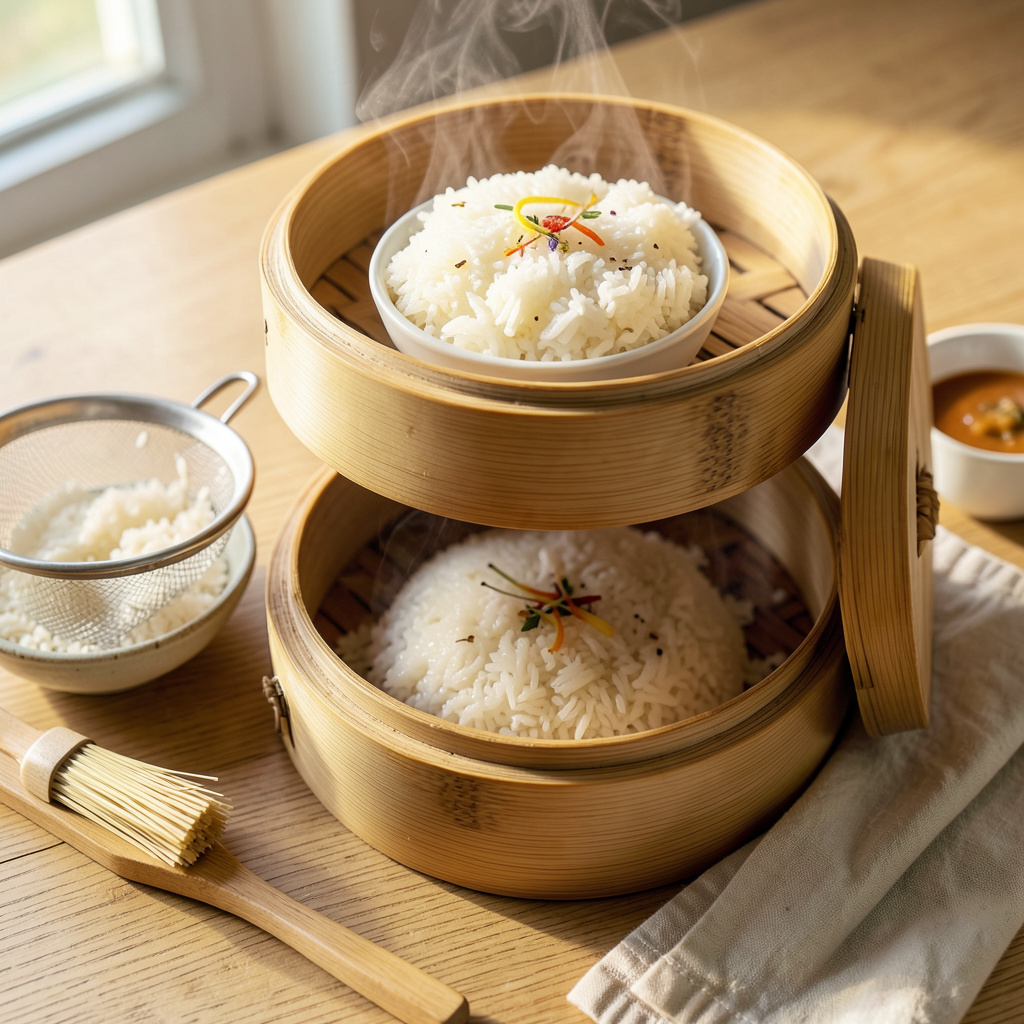
I’ll be real with you—nothing beats the texture of rice steamed in a bamboo steamer. That delicate, slightly sticky yet perfectly separate grain quality you get from takeout? This method nails it every time. I first learned this technique during my Charleston apprenticeship, where we’d steam hundreds of pounds of jasmine rice daily for family-style meals.
The beauty here is simplicity: just rice, water, and the right setup. No fancy gadgets required. I use a standard 10-inch bamboo steamer lined with parchment (never plastic—it melts at high heat). The steam circulates evenly, cooking each grain to fluffy perfection without that gummy bottom layer you sometimes get from rice cookers.
What you’ll end up with is rice that’s aromatic, with just the right bite—never mushy or dry. The bamboo imparts a subtle earthy note that electric steamers can’t replicate. I’ve tested this with white, jasmine, and even brown rice, adjusting times slightly for each. Once you try this, you’ll never go back to other methods.
Fair warning: your first attempt might need tweaking based on your stove’s heat. But after one or two tries, you’ll have restaurant-quality rice at home. Here’s exactly how to do it right.
📚 In This Guide
- What You’ll Need
- Instructions
- Tips and Common Mistakes
What Youll Need
- ● Bamboo steamer (10–12 inches wide, with lid)
- ● Rice (1 cup uncooked white rice, like jasmine or long-grain; adjust for servings)
- ● Water (1.5 cups for rinsing + 2–3 cups for boiling in the pot)
- ● Large pot or wok (wide enough to fit the steamer, with a lid)
- ○ Cheesecloth or parchment paper (optional, to line the steamer and prevent sticking)
- ○ Steamer liner leaves (optional, like banana or lotus leaves for extra aroma)
- ● Tongs or heat-resistant gloves (for safe handling)
- ● Timer (to track steaming time—20–25 minutes for white rice)
- ● Fine-mesh strainer (for rinsing rice thoroughly)
- ● Wooden spoon or rice paddle (to fluff rice after steaming)
Instructions
Steaming rice in a bamboo steamer is simpler than you think—just follow these steps for perfect results.
Rinse and Soak the Rice
Start by placing your rice in a fine-mesh strainer and rinsing it under cold running water. I like to swirl the rice with my fingers while rinsing to remove excess starch. You’ll notice the water turning cloudy at first—keep rinsing until it runs almost clear.
After rinsing, transfer the rice to a bowl and cover it with fresh water. Let it soak for at least 20 minutes (I prefer 30 minutes for best texture). This soaking time allows the grains to absorb moisture evenly, preventing uneven cooking and ensuring fluffy results.
Prepare the Bamboo Steamer
While the rice soaks, prepare your bamboo steamer. Make sure it’s clean and dry before use. Line the steamer basket with cheesecloth or parchment paper with holes poked in it—this prevents the rice from sticking to the bamboo.
Fill a pot or wok with 2-3 inches of water and bring it to a rolling boil. The water level should be high enough to create steam but not so high that it touches the steamer when placed on top. I like to use a wide pot that matches the diameter of my steamer for even heat distribution.
Drain and Transfer the Rice
After soaking, drain the rice thoroughly in a fine-mesh strainer. Give it a gentle shake to remove excess water—you want the grains damp but not dripping. The rice should feel slightly tacky when you touch it, which is perfect for steaming.
Transfer the drained rice to the prepared steamer basket, spreading it out in an even layer. Don’t pack it down or overfill the basket—leave about 1 inch of space at the top to allow steam to circulate properly. I find that gently leveling the rice with the back of a spoon works best.
Steam the Rice to Perfection
Place the steamer basket in the pot over boiling water. Cover with the bamboo lid and steam over medium-high heat for 20-25 minutes. The exact time depends on your rice type—white rice typically takes about 20 minutes, while brown rice may need 30-35 minutes.
Resist the temptation to peek during steaming—every time you lift the lid, you lose valuable steam and heat. You’ll know it’s done when the rice is tender and the grains separate easily. If you’re unsure, taste a few grains—they should be soft with no hard center.
Rest and Fluff Before Serving
Once the rice is cooked, turn off the heat but leave the steamer covered for an additional 5 minutes. This resting time allows the grains to firm up slightly and absorb any remaining steam, resulting in perfectly fluffy rice.
After resting, transfer the rice to a serving bowl. Use a rice paddle or fork to gently fluff the grains, separating any that might have stuck together. The rice should be light, separate, and slightly glossy. Serve immediately while hot for the best texture and flavor.
Tips and Common Mistakes
Mastering the bamboo steamer takes practice, but these insights will help you avoid the pitfalls I encountered when perfecting my technique.
Soaking Strategy: The 20-30 minute soaking time in Step 1 makes all the difference. I learned the hard way that skipping this step results in unevenly cooked rice with hard centers. For white rice, 20 minutes is sufficient, but I always prefer 30 minutes for that ideal fluffy texture. The rice should feel slightly plump when you drain it, not hard or brittle.
Steamer Preparation: In Step 2, don’t overlook lining your steamer basket. I ruined my first few batches by skipping this, and the rice stuck terribly to the bamboo. Cheesecloth works best—just dampen it slightly before lining to prevent shifting. Also, check that your water level stays between 2-3 inches throughout cooking; I keep a kettle of hot water nearby to top up if needed during the 20-25 minute steaming time.
Steam Management: During the 20-25 minutes of steaming in Step 4, resist the urge to check on the rice. Every time you lift that lid, you lose precious steam and add 2-3 minutes to your cooking time. I set a timer and walk away. The rice is done when it’s tender throughout with no chalky center—taste test a few grains from different spots in the basket since steam distributes unevenly.
Resting Period: That 5-minute rest in Step 5 isn’t optional. I used to skip this until I noticed my rice was gummy. This brief rest allows the grains to absorb any remaining moisture evenly. You’ll see the difference when you fluff—each grain will be distinct and glossy rather than clumping together.
Pro Tips for Steam Rice In A Bamboo Steamer
- Mastering the bamboo steamer takes practice, but these insights will help you avoid the pitfalls I encountered when p…
- Soaking Strategy: The 20-30 minute soaking time in Step 1 makes all the difference. I learned the hard way that skipp…
- Steamer Preparation: In Step 2, don’t overlook lining your steamer basket. I ruined my first few batches by skipping …
Frequently Asked Questions
Do I need to soak the rice before steaming in a bamboo steamer?
Yes! Soaking rice for 20–30 minutes (or up to 2 hours for brown rice) ensures even cooking and fluffier results. Skip this step, and you risk undercooked or crunchy grains. Drain well before steaming to avoid excess moisture.
How long does it take to steam rice in a bamboo steamer?
White rice typically takes 15–20 minutes over medium-high heat, while brown rice needs 30–40 minutes. Check water levels halfway—add more hot water if the pot runs dry to prevent burning.
Can I use a metal steamer instead of bamboo?
A metal steamer works similarly, but bamboo absorbs excess moisture, yielding slightly fluffier rice. If using metal, line it with parchment paper (poke holes!) to prevent sticking and mimic bamboo’s breathability.
Why is my steamed rice mushy or sticky?
Overcrowding the steamer or using too much water is usually the culprit. Spread rice in a thin, even layer (max 1 inch thick) and avoid peeking—steam escape disrupts cooking. Rinse rice before soaking to remove excess starch.
What’s the best rice-to-water ratio for steaming?
For white rice, use a 1:1.25 ratio (1 cup rice to 1.25 cups water). Brown rice needs 1:1.5. Unlike boiling, steaming requires less water since the rice isn’t submerged. Adjust slightly based on your steamer’s size and humidity.
Steaming rice in a bamboo steamer is simpler than you think—just soak, prep, and let the steam work its magic! 🌾 With the right technique, you’ll get perfectly fluffy, aromatic rice every time, whether it’s jasmine, basmati, or sticky rice. Now that you’ve mastered the basics, why not experiment with flavors? Try adding a pandan leaf, a splash of coconut milk, or even a sprinkle of furikake for an extra twist. Grab your steamer, pick your favorite rice, and start cooking—your next delicious meal is just a steam away!