
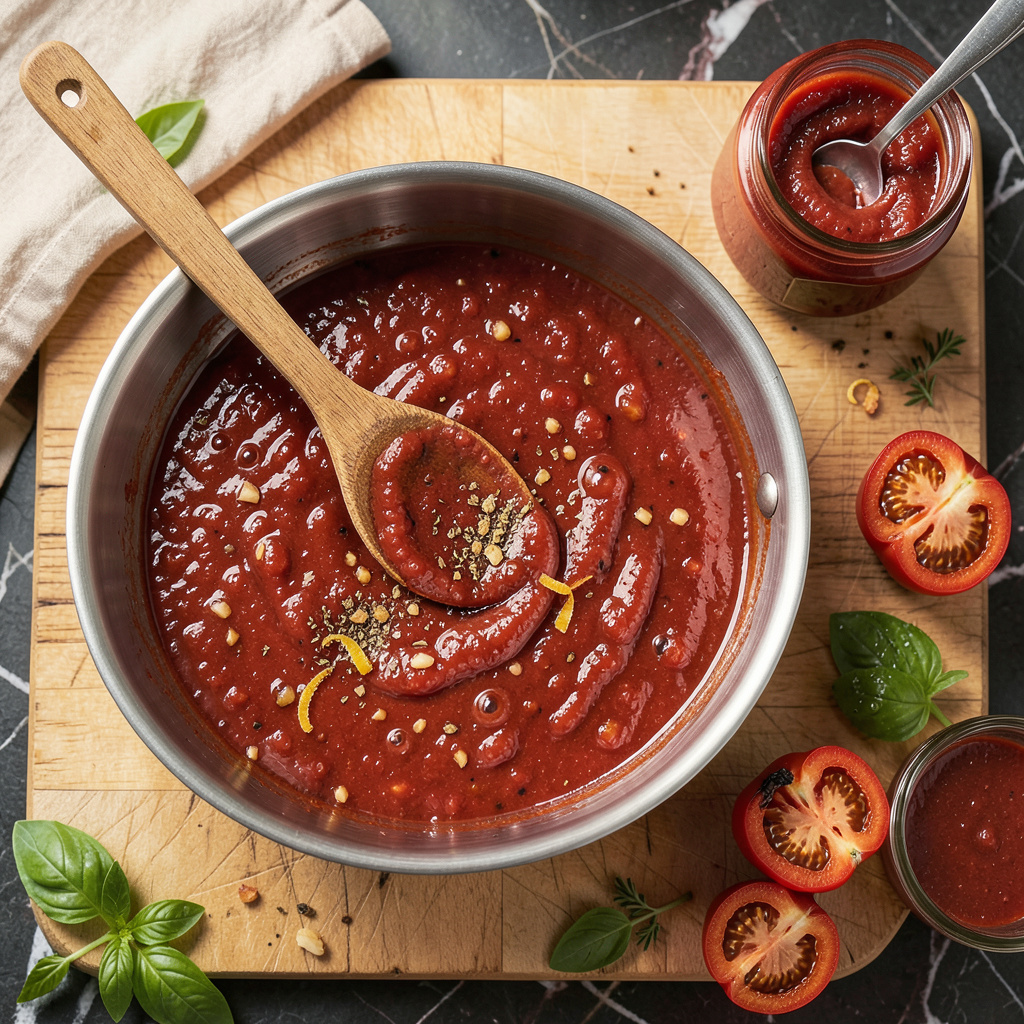
Nothing ruins a great pizza faster than sauce that slides right off the crust. After years of perfecting pies at The Smoky Pig, I’ve learned that thick, rich sauce is the secret to toppings that actually stay put. The difference between a soggy mess and restaurant-quality pizza often comes down to just 10 extra minutes of sauce prep.
Most home cooks don’t realize how easy it is to transform watery tomato sauce into something with body and cling. I’ve tested every method—from simple reduction to cornstarch slurries—and found the foolproof techniques that work every time. No fancy equipment needed, just a saucepan and a little patience while the flavors concentrate.
The payoff is huge: sauce that coats your crust evenly, holds toppings in place, and delivers that perfect balance of tangy tomato flavor without making your pizza soggy. Whether you’re working with store-bought sauce or homemade, these methods will give you professional results. The best part? You can adjust the thickness exactly to your preference.
Here’s the thing—once you master sauce consistency, you’ll never go back to thin, runny toppings. Let me show you how to get it right, with methods that work for any pizza style from Neapolitan to deep dish.
📚 In This Guide
- What You’ll Need
- Instructions
- Tips and Common Mistakes
What Youll Need
- ● Pizza sauce (homemade or store-bought): 1–2 cups (adjust based on pizza quantity). Opt for low-moisture varieties if buying pre-made.
- ● Tomato paste: 2–4 tbsp (the secret weapon for instant thickness! 🍅).
- ● Simmering pot or saucepan: Medium-sized (1–2 quarts) with a heavy bottom to prevent burning.
- ● Wooden spoon or silicone spatula: For stirring without scratching.
- ○ Optional thickeners: Cornstarch (1–2 tsp mixed with water).
- ● Ground flaxseed (1 tbsp for a gluten-free boost).
- ● Grated Parmesan (¼ cup for cheesy richness).
- ● Stovetop or heat source: Low-to-medium heat for gentle reduction.
- ● Timer: To track simmering (10–20 mins for best results ⏰).
- ○ Blender or immersion blender (optional): For a smooth texture if using fresh tomatoes.
- ● Tasting spoon: Because flavor checks are a must! 😋
Step-by-Step Instructions for Thickening Pizza Sauce
Here’s the method I’ve perfected for transforming runny sauce into rich, velvety perfection.
Simmer the Sauce to Reduce Excess Moisture
Pour your pizza sauce into a wide, heavy-bottomed saucepan. I prefer using a wide pan because it allows for faster evaporation. Turn the heat to medium-low and bring the sauce to a gentle simmer.
Let it cook uncovered for 15-20 minutes, stirring occasionally with a wooden spoon. You’ll notice the sauce gradually darkening in color and developing a deeper aroma. This slow reduction concentrates the flavors while removing excess water content.
The sauce is ready for the next step when it coats the back of your spoon and leaves a clear trail when you run your finger through it. Don’t rush this process—patience here means better texture and flavor in your final pizza.
Add Tomato Paste for Body and Richness
Once your sauce has reduced slightly, stir in 2-3 tablespoons of tomato paste for every 2 cups of sauce. I like to add the paste to a small bowl first and mix it with a ladle of the hot sauce to temper it before incorporating it back into the main pot.
This prevents the paste from clumping and ensures even distribution. Cook the mixture for another 5-7 minutes on low heat, stirring constantly. You’ll see the sauce transform before your eyes, becoming thicker and more velvety.
The tomato paste not only thickens but also intensifies the tomato flavor and adds a beautiful deep red color. Watch for the sauce to develop a glossy sheen—that’s your visual cue that the paste has fully incorporated.
Incorporate a Cornstarch Slurry for Perfect Consistency
In a small bowl, whisk together 1 tablespoon of cornstarch with 2 tablespoons of cold water until completely smooth. This creates a slurry that will thicken your sauce without adding any flavor or changing its color.
Slowly pour the slurry into your simmering sauce while stirring constantly with a whisk. Continue cooking for 2-3 minutes until the sauce thickens noticeably. You’ll feel the resistance increase as you stir, and the bubbles will become slower and more viscous.
Be careful not to over-thicken at this stage—remember the sauce will continue to thicken slightly as it cools. The perfect consistency should coat your spoon thickly but still drip slowly in a steady stream.
Finish with Olive Oil for Silky Texture
Remove the sauce from heat and stir in 1-2 tablespoons of extra virgin olive oil. This final step adds a luxurious silkiness to your sauce and helps it cling beautifully to your pizza dough.
The oil also creates a slight sheen on the surface, making your pizza look as good as it tastes. Let the sauce cool for 10-15 minutes before using—this allows it to reach the ideal spreading consistency.
Taste and adjust the seasoning if needed, though be cautious with salt as the flavors will continue to develop. Your sauce should now be thick enough to stay put when you tilt your spoon, yet still spread easily on your pizza crust.
Test and Adjust for Perfect Application
To test your sauce’s consistency, spread a spoonful on a small piece of pizza dough. It should hold its shape without running, but still allow you to spread it evenly with the back of your spoon.
If it’s still too thin, return it to the heat and simmer for another 5 minutes, then test again. If it’s too thick, thin it with a tablespoon of water at a time until you reach the perfect balance.
Remember that the sauce will thicken slightly more when baked on your pizza. The ideal pre-baked consistency should be similar to thick ketchup—able to hold its shape but still spreadable with minimal effort.
Tips and Common Mistakes for Perfectly Thickened Pizza Sauce
Here’s what I’ve learned from years of perfecting pizza sauce—small details that make a huge difference in texture and flavor.
Heat Control: The medium-low heat in Step 1 is crucial for gradual reduction without scorching. I’ve found that a wide, heavy-bottomed pan distributes heat evenly, preventing hot spots that can burn the sauce. Stir occasionally but not constantly—this allows the sauce to develop that deep, concentrated flavor during the 15-20 minutes of simmering.
Tomato Paste Technique: When adding the 2-3 tablespoons of tomato paste in Step 2, don’t just dump it in. Mix it first with a ladle of hot sauce to prevent clumping. The 5-7 minutes of cooking on low heat is when the magic happens—the paste caramelizes slightly, deepening both color and flavor.
Slurry Success: For the cornstarch slurry in Step 3, make sure the water is ice cold when mixing with the 1 tablespoon of cornstarch. This prevents premature activation. During the 2-3 minutes of cooking, watch for the sauce to transform from liquid to a slow, viscous bubble—this visual cue means you’re at the perfect consistency.
Final Texture Test: The 10-15 minutes of cooling in Step 4 isn’t just waiting time—it’s when the sauce reaches its ideal spreading consistency. I always do the spoon test: tilt it sideways, and the sauce should move slowly like thick ketchup, not run off completely.
Pro Tips for Thicken Pizza Sauce
- Here’s what I’ve learned from years of perfecting pizza sauce—small details that make a huge difference in texture an…
- Heat Control: The medium-low heat in Step 1 is crucial for gradual reduction without scorching. I’ve found that a wid…
- Tomato Paste Technique: When adding the 2-3 tablespoons of tomato paste in Step 2, don’t just dump it in. Mix it firs…
Frequently Asked Questions
Can I thicken pizza sauce without cooking it?
Yes! For a no-cook method, stir in 1-2 tbsp of tomato paste per cup of sauce or blend in 1 tsp cornstarch slurry (mix cornstarch with cold water first). Let it sit for 10 minutes to thicken. Avoid adding too much—start small to prevent a gummy texture.
How long does it take to reduce pizza sauce on the stove?
Typically 10-20 minutes on medium-low heat, stirring occasionally. The time depends on your sauce’s initial consistency and desired thickness. Simmer uncovered—evaporation is key! Pro tip: Taste as you go to avoid over-reducing.
What’s the best thickener for pizza sauce if I don’t have tomato paste?
Try these pantry staples:
- Cornstarch or arrowroot powder (mix 1 tsp with cold water first)
- Mashed potatoes or instant potato flakes (adds creaminess too!)
- Breadcrumbs (for a rustic texture—blend in 1 tbsp at a time)
Why does my pizza sauce get watery after baking?
This happens if the sauce has excess moisture or veggies (like fresh tomatoes) release water. Fix it by: pre-cooking the sauce longer, draining canned tomatoes well, or adding a thin layer of olive oil on top before baking to seal in moisture.
Can I thicken pizza sauce in a slow cooker?
Cook on low for 2-3 hours with the lid off to let steam escape. Stir occasionally and check consistency. Bonus: Slow cooking deepens flavors! Just avoid overcrowding—fill the cooker no more than halfway for best results.
Now you’ve got all the tools to turn that runny sauce into a thick, flavor-packed masterpiece that clings to every bite! 🍕 Whether you simmer it low and slow, stir in a roux, or blend in veggie purees, the key is patience and a little creativity. Don’t be afraid to tweak the texture until it’s just right for your crust.
Ready to put your new skills to the test? Grab your favorite pizza dough and start saucing—your best homemade pie is just a thickened sauce away! 🔥