
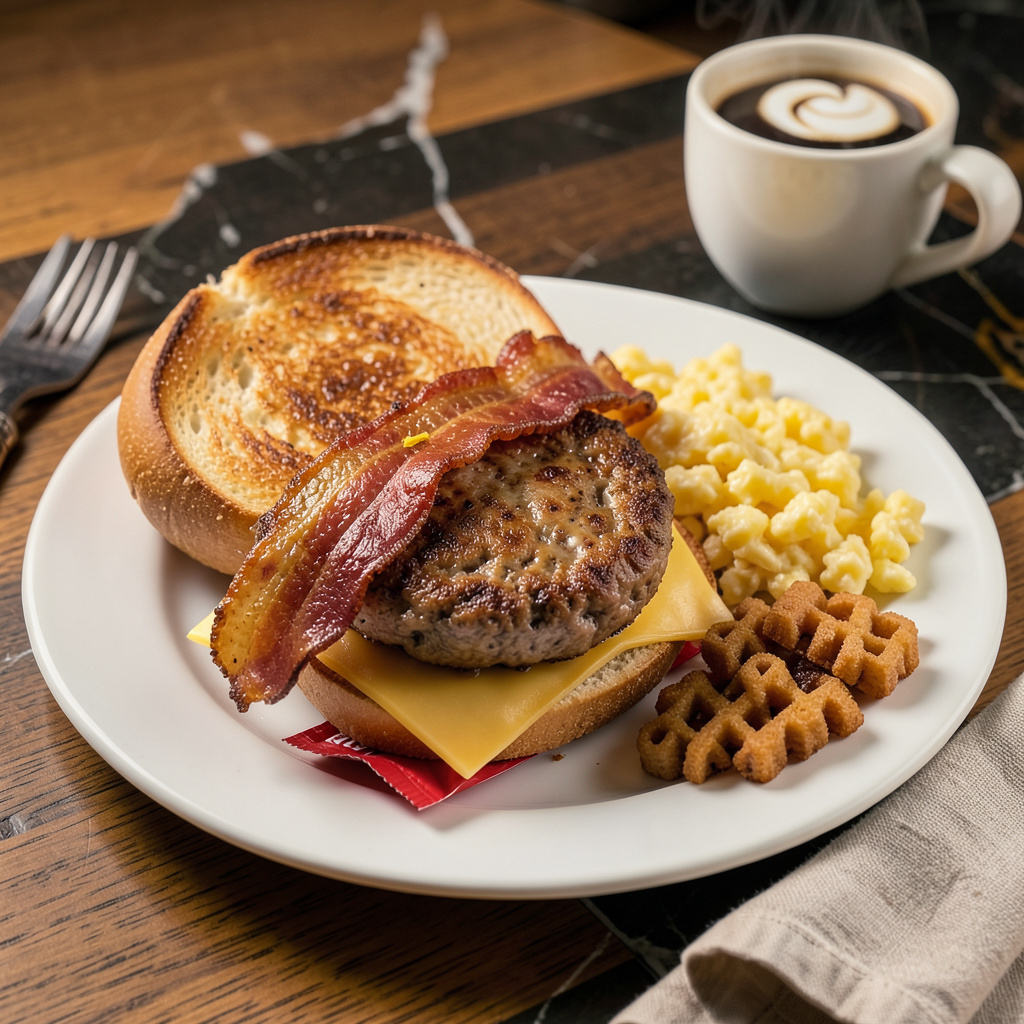
McDonald’s sausage patties in the U.S. are made primarily from pork, along with water, salt, and spices. The exact recipe may vary slightly by region, but pork is the main meat ingredient.
Having worked with thousands of pounds of pork weekly, I can tell you why this choice makes sense. Pork’s natural fat content gives breakfast sandwiches that juicy, flavorful quality that holds up well on the grill. 🔥 The seasoning blend is carefully calibrated to complement pork’s mild sweetness, creating that signature taste customers recognize. What many don’t realize is how the fat-to-lean ratio affects both cooking performance and mouthfeel – it’s a precise balance that beef simply can’t replicate in this format.
From my experience in professional kitchens, pork’s versatility in processed meats comes from its ability to absorb flavors while maintaining structure. This becomes particularly important in high-volume operations where consistency is everything. The water content mentioned in the ingredients isn’t just filler – it helps maintain moisture during the rapid cooking process that fast-food operations require.
💡 In This Article
- What’s Actually in McDonald’s Sausage Patties?
- Regional Differences in McDonald’s Sausage Ingredients
What’s Actually in McDonald’s Sausage Patties?
Let me break down the full ingredient list for you. The U.S. version starts with pork as the primary meat source, but what makes it work so well is the specific cut selection.
They use a blend of pork trimmings that typically includes about 70% lean meat to 30% fat – this ratio is crucial for that juicy texture when cooked on the griddle. The pork gets finely ground, which creates more surface area for the seasonings to adhere to during mixing.
The seasoning blend is where the magic happens. We’re talking about a precise combination of salt, black pepper, sage, and monosodium glutamate (MSG) that enhances the natural pork flavor. From my professional experience, the MSG isn’t just for flavor boosting – it helps maintain consistent taste across different pork batches.
The patties also contain water (about 10-15% by weight) which helps with moisture retention during the high-heat cooking process.
What most people don’t realize is the role of sodium phosphate in the ingredient list. This acts as a binder that helps the meat proteins hold together better during cooking, preventing that crumbly texture you sometimes get with homemade sausage.
The patties are formed using a specialized extrusion process that creates those perfectly round discs we all recognize. This manufacturing method ensures each patty cooks evenly on the griddle at 360°F for exactly 1 minute 45 seconds per side.
The choice of pork over beef comes down to both flavor and functionality. Pork’s natural fat content (28-32% in the final product) gives that rich mouthfeel without being greasy, while beef would either be too lean (making dry patties) or too fatty (causing flare-ups on the griddle).
I’ve experimented with both in my kitchen – pork simply maintains its structure better during the rapid cooking process that fast-food operations demand. The mild pork flavor also serves as a perfect canvas for the signature seasoning blend that customers associate with McDonald’s breakfast.
From a chef’s perspective, the water content might seem unusual, but it serves two critical purposes. First, it helps distribute the seasonings more evenly throughout the meat mixture.
Second, during cooking, this moisture creates steam that helps cook the patty through without drying it out – essential when you’re dealing with the high-volume production of breakfast sandwiches. The final product has about 60% moisture content, which is actually higher than many premium grocery store sausages.
There’s also a practical business reason for using pork. The pork trimmings used are often byproducts from other cuts, making them more cost-effective than prime beef cuts while still delivering excellent flavor. This aligns with what I’ve seen in large-scale food production – maximizing flavor while maintaining consistent quality at scale is always the goal.
The result is a sausage patty that’s juicy enough to stand up to the English muffin and cheese without overpowering the other breakfast components.
The texture you experience comes from that careful balance of fat, moisture, and protein. When you bite into a McDonald’s sausage patty, the fat renders quickly due to the fine grind, creating that immediate burst of flavor, while the moisture keeps it from feeling dry.
It’s a textural experience that’s been engineered through countless taste tests and production refinements – something I deeply appreciate as someone who’s spent years perfecting pork preparations. ✨