
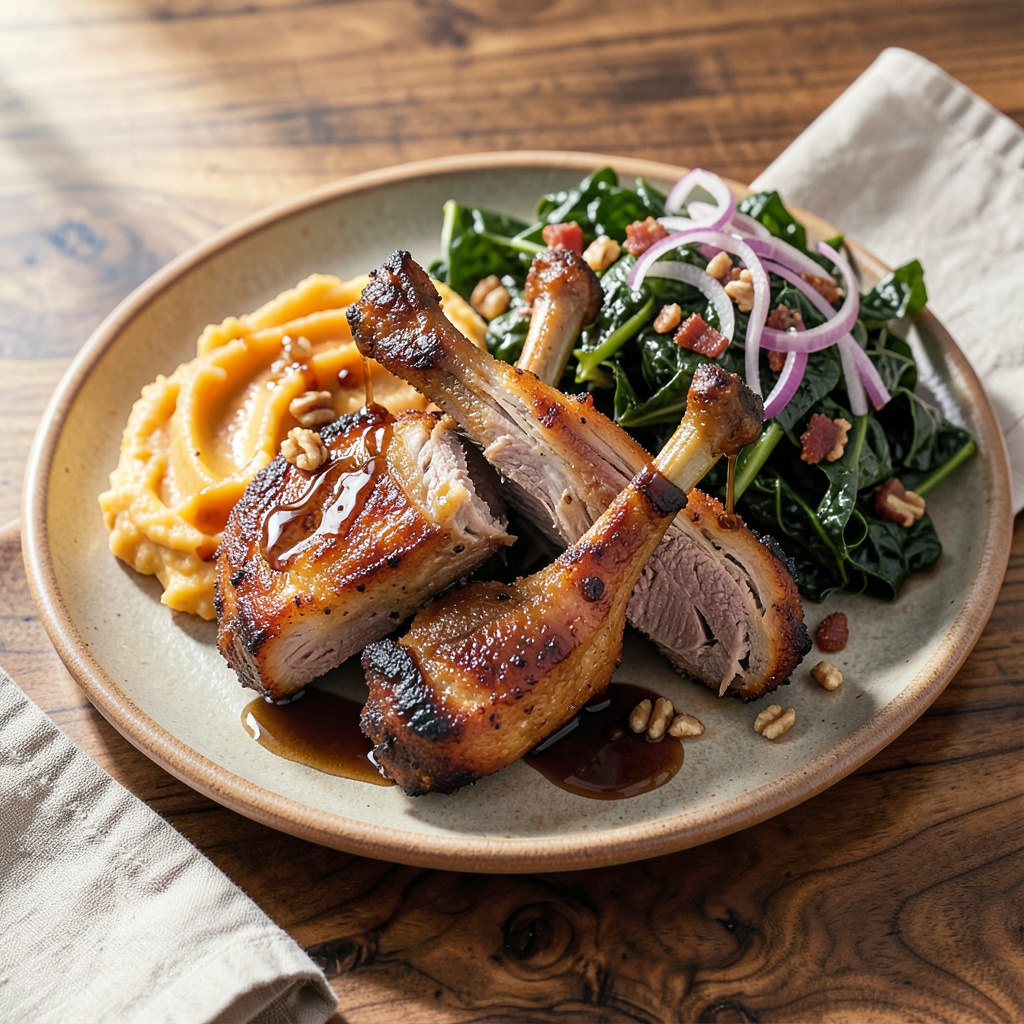
Neckbone refers to the meaty section of a pig’s cervical vertebrae, making it a pork cut prized for its rich, collagen-heavy flavor that becomes tender when slow-cooked. It’s commonly used in Southern and soul food dishes.
This cut comes from the upper part of the pig’s neck, where the vertebrae connect to the skull. 🔥 What sets it apart is the perfect balance of meat, connective tissue, and bone—ideal for creating deeply flavorful broths and stews. I’ve found that the collagen breaks down beautifully during long cooking, giving dishes like neckbone soup or braised greens that signature velvety texture. It’s a budget-friendly cut that delivers restaurant-quality richness when prepared properly.
💡 In This Article
- Anatomy of Pork Neckbones: Cut Location and Characteristics
- Best Cooking Methods for Pork Neckbones: From Braising to Soups
Anatomy of Pork Neckbones: Cut Location and Characteristics
Neckbones come from the pig’s cervical spine—the seven vertebrae connecting the skull to the shoulder. This area contains about 30-40% meat by weight, with the rest being bones, cartilage, and connective tissue. What makes this cut special is the high concentration of collagen in the ligaments and tendons surrounding each vertebra.
When cooked slowly, this collagen melts into gelatin, creating that unmistakable silky mouthfeel in broths and stews. 🔥
The muscle fibers here are relatively short compared to cuts like pork shoulder, which means they break down faster during cooking. A single neckbone segment typically weighs 4-6 ounces and contains about 1.5-2 ounces of usable meat after cooking. The bones themselves are porous, which allows them to absorb and redistribute flavors throughout the dish.
This porosity is why neckbone broth develops such depth—it’s like nature’s flavor infuser working overtime.
Unlike rib cuts where meat dominates, neckbones have a 1:1 meat-to-bone ratio, making them ideal for dishes where you want both substance and broth enhancement. The vertebrae act as natural portion control—each segment provides just enough meat for a satisfying bite while the bones contribute to the liquid gold.
I’ve found that 3-4 pounds of neckbones yields enough meat for 6 servings plus 2 quarts of rich stock—that’s efficiency you won’t get from pricier cuts.
The connective tissue in neckbones contains about 20% more collagen than pork shoulder, which is why it creates such luxurious body in sauces. When simmered at 190-205°F for 2-3 hours, this collagen converts to gelatin at a near-perfect rate, giving that classic “coats the back of a spoon” consistency.
The marrow in the vertebrae also renders out, adding another layer of unctuousness that cheaper bones simply can’t match.
What surprises many cooks is how the flavor profile changes based on the pig’s age. Younger pigs (under 6 months) yield neckbones with milder, almost sweet notes, while mature hogs (18+ months) develop deeper, more mineral-rich flavors.
This age-related difference is why heritage breed neckbones—like those from my Gloucestershire Old Spots—have such complex, almost nutty undertones that commercial pork can’t replicate. ✨
From a butcher’s perspective, neckbones are classified as pork because they come from Sus scrofa domesticus—the domestic pig. The USDA officially categorizes them under “pork variety meats” alongside feet, tails, and hocks. This classification isn’t about the bone content but rather the species of origin.
It’s the same reason why beef short ribs are still called beef despite being bony—the animal source defines the category, not the meat-to-bone ratio.
The cervical vertebrae’s unique shape—with their transverse processes and spinous projections—creates nooks that trap seasonings during cooking. This is why neckbones excel in highly spiced dishes like Caribbean pepper pot or Creole gumbo. The bones act like little flavor reservoirs, releasing their payload gradually as the meat cooks.
It’s this structural advantage that makes them irreplaceable in traditional recipes where every bite should carry maximum impact. 💫