
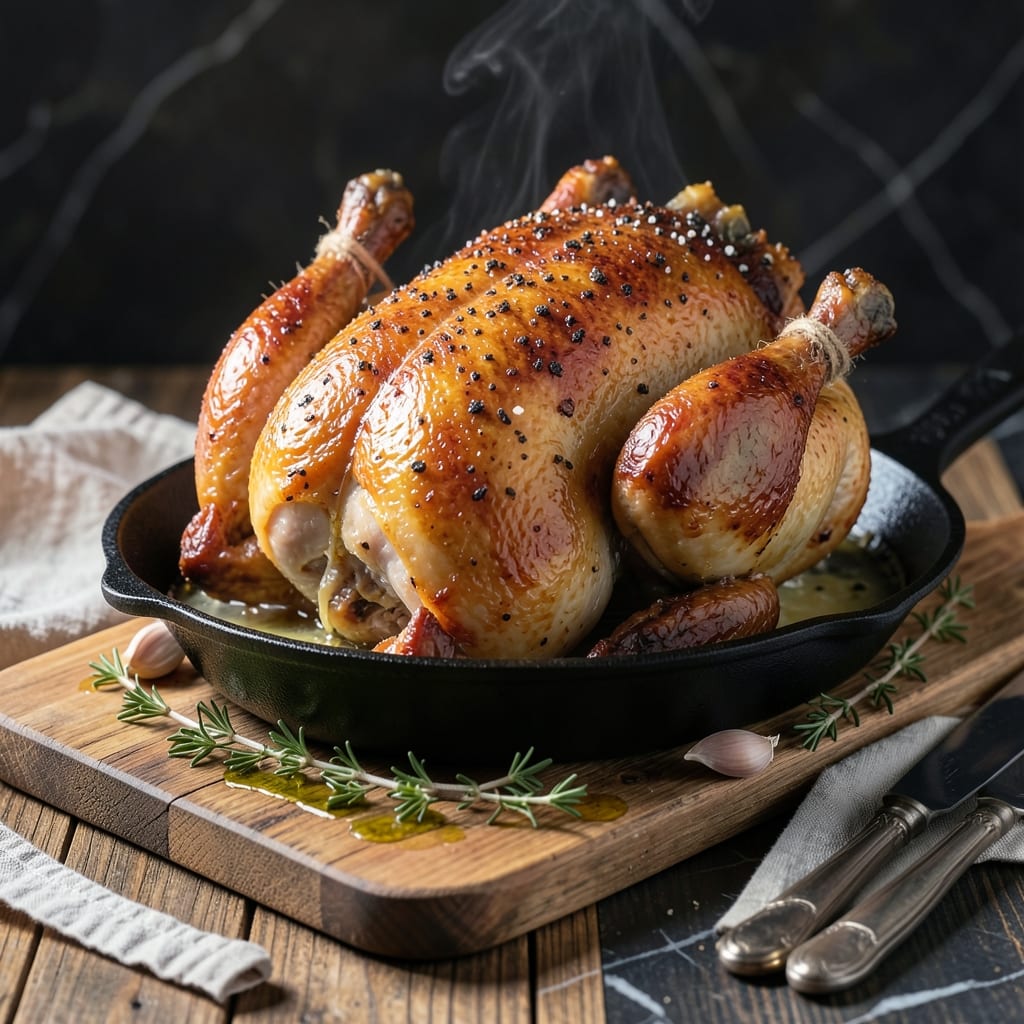
Achieving juicy meat and golden skin on a whole chicken is a test of proper technique, not luck. I’ve roasted countless birds in my cast iron, and the difference comes down to temperature control and timing.
Start with a dry bird, season it generously, and let it rest at room temperature before roasting. This ensures even cooking and that coveted moist texture throughout. A hot oven and strategic basting create the perfect crisp skin.
The result is tender, flavorful meat under a mahogany crust that crackles with every cut. This method works every time—no fancy equipment required, just patience and precision.
Let the chicken rest before carving to lock in its natural juices. The wait is worth it for meat that stays succulent from first bite to last.
Ingredients for Juicy Oven Roasted Whole Chicken
A dry bird, generous seasoning, and proper technique create this perfect roast chicken.
| Ingredient | Amount | Notes |
|---|---|---|
| Whole Chicken 🍗 | 4 lb | Giblets removed, patted dry |
| Unsalted Butter 🧈 | ½ cup | Softened for basting |
| Kosher Salt 🧂 | 1 ½ tbsp | Diamond Crystal preferred |
| Freshly Ground Black Pepper 🌶️ | 1 tsp | Coarse grind preferred |
| Garlic Cloves 🧄 | 6 cloves | Smashed, unpeeled |
| Fresh Thyme Sprigs 🌿 | 4 sprigs | Plus extra for garnish |
| Fresh Rosemary Sprigs 🍃 | 2 sprigs | Woody stems removed |
| Lemon 🍋 | 1 whole | Halved for cavity |
| Yellow Onion 🧅 | 1 whole | Quartered for cavity |
| Carrots 🥕 | 3 whole | Peeled, cut into chunks |
| Celery Stalks 🥬 | 3 stalks | Cut into chunks |
| Dry White Wine 🍷 | ½ cup | For pan deglazing |
| Chicken Stock 💧 | 1 cup | Low-sodium preferred |
The chicken quality is paramount. Seek out a fresh, never-frozen bird from a reputable butcher or Whole Foods. Look for smooth, unblemished skin and a pleasant smell—any off odors mean it’s past its prime. I prefer birds in the 3.5-4.5 lb range for even cooking. Pat it thoroughly dry inside and out; moisture is the enemy of crisp skin.
No fresh herbs? Dried at one-third the amount works, though fresh delivers superior aroma. White wine can be swapped for apple cider vinegar plus water. The vegetables can be any sturdy root type—fennel or parsnips add nice variation. If you can’t find kosher salt, use half the amount of table salt by volume.
The cooked chicken keeps 3-4 days refrigerated, though it’s best the day it’s made. Carve and store pieces separately for easier reheating. Leftovers make excellent soup, tacos, or sandwiches. The pan juices can be strained and frozen for up to 3 months.
Why You’ll Love This Recipe
- Set It and Forget It: I rub the chicken with butter, salt, and garlic, pop it in the oven, and walk away—no babysitting required.
- That Garlic Butter Magic: The butter and garlic melt into every bite, making the skin crispy and the meat ridiculously juicy.
- Sunday Dinner, Tuesday Leftovers: This one chicken feeds my family for a night, then turns into sandwiches, tacos, or soup the next day.
- Budget Hero: A whole chicken costs less than individual parts, and honestly, it tastes better too.
Step-by-Step Instructions for Oven Roasted Whole Chicken
This method guarantees crisp golden skin and fork-tender meat with every roast.
Step 1: Season and Prepare the Chicken
Begin by patting the 4 lb whole chicken completely dry with paper towels, both inside and out. This step is crucial for achieving that coveted crispy skin. I always take extra time with this to ensure no moisture remains in the cavity or under the wings.
Season the chicken generously inside and out with the 1.5 tbsp kosher salt and 1 tsp freshly ground black pepper. The salt should create a visible crust on the skin. Stuff the cavity with the halved lemon, quartered yellow onion, 6 cloves garlic cloves, 4 sprigs fresh thyme sprigs, and 2 sprigs fresh rosemary sprigs.
Step 2: Truss and Set Up the Roasting Environment
Tuck the wings under the body and tie the legs together with kitchen twine. This compact shape ensures even cooking and prevents the tips of the wings and legs from burning. Place the chicken breast-side up on a roasting rack set in a rimmed baking sheet.
Let the chicken sit at room temperature for 30 minutes while you preheat the oven to 425°F. This step is essential for even cooking. Rub the 0.5 cup unsalted butter all over the skin just before roasting—it should be softened but not melted.
Step 3: Roast to Golden Perfection
Roast the chicken in the preheated oven for 15 minutes at 425°F, then reduce the heat to 375°F and continue roasting. Baste the chicken with the pan juices every 20 minutes to ensure the skin browns evenly and stays moist.
After about 1 hour and 15 minutes total, start checking for doneness. The chicken is ready when the internal temperature reaches 165°F in the thickest part of the thigh and the juices run clear. The skin should be deep golden brown and crisp to the touch.
Step 4: Rest and Prepare the Pan Sauce
Transfer the chicken to a cutting board and tent loosely with foil. Let it rest for 15 minutes—this allows the juices to redistribute, ensuring moist meat. Pour the pan drippings into a measuring cup and skim off the excess fat, leaving about 2 tablespoons.
Place the roasting pan on the stovetop over medium heat. Add the 0.5 cup dry white wine and deglaze the pan, scraping up all the browned bits. Reduce by half, then add the 1 cup chicken stock and the carrots and celery stalks from the cavity. Simmer for 5 minutes until slightly thickened.
Step 5: Carve and Serve
Remove the trussing and discard the cavity aromatics. Carve the chicken into pieces, arranging them on a platter. Pour the pan sauce over the top or serve it on the side for dipping. The meat should be juicy and tender, with a perfectly crisp, golden skin.
Serve immediately with the roasted carrots and celery stalks from the pan sauce. This method ensures every bite delivers on the promise of juicy, flavorful meat with that irresistible crispy skin we all love.
Pro Tips For Making Juicy Oven Roasted Whole Chicken
- Dry the Skin: Pat the chicken completely dry with paper towels before seasoning—this guarantees crispy skin and even browning. I learned this the hard way after pulling out a pale, soggy bird more than once.
- Salt Generously: Use about 1 tablespoon of kosher salt for a 4-pound chicken, inside and out. Sounds like a lot, but it’s the thing that matters most for juicy, flavorful meat.
- Start Hot: Roast at 425°F for the first 20 minutes, then drop to 375°F. This sears the skin fast while keeping the inside tender—no dry chicken here.
- Rest Before Carving: Let it rest 15 minutes under foil after roasting. Skipping this means all the juices will end up on your cutting board, not in the meat.
Serving Suggestions for This Dish
Family-Style Platter
Arrange the carved chicken on a large wooden board or platter, with pieces fanned out for visual appeal. I scatter the roasted carrots and celery stalks around the edges and drizzle the pan sauce generously over everything. The natural juices soak into the vegetables beautifully. 💛
Sunday Supper Setup
For a classic Georgia dinner, serve with buttery mashed potatoes and green beans. The pan sauce becomes a rich gravy when poured over the potatoes. I always make extra sauce—it’s too good to waste.
Light and Fresh
In warmer months, pair with a crisp arugula salad tossed with lemon vinaigrette. The peppery greens cut through the richness of the chicken. A simple 4-cup salad with 1 tbsp olive oil balances the meal perfectly.
Bread for Soaking
Warm crusty bread is a must for soaking up the pan juices. I use a baguette from my local Charleston bakery, sliced and lightly toasted. The combination of crisp skin and soft bread is irresistible.
Wine Pairing
A light-bodied Chardonnay or crisp Sauvignon Blanc complements the herbal notes. For red lovers, a Pinot Noir works beautifully without overpowering the dish. 🍷
Garnish for Impact
Finish with fresh thyme sprigs and a sprinkle of flaky sea salt. The vibrant green pops against the golden skin, making the dish look as good as it tastes.
Nutrition Facts
Frequently Asked Questions
How do I know when it’s fully cooked?
Use a meat thermometer to check the thickest part of the thigh. It’s done at 165°F with clear juices. The skin should be deep golden brown and crisp.
Should I cover it while roasting?
No, leave it uncovered to achieve crispy skin. Covering traps steam, which makes the skin soggy instead of golden and crisp. Baste occasionally for even browning.
Can I use a frozen chicken?
Thaw it completely in the fridge first (about 24 hours). Roasting from frozen leads to uneven cooking. Pat it very dry before seasoning.
What if the skin isn’t browning?
Increase oven temp to 450°F for the last 10 minutes. Ensure the bird isn’t crowded in the pan, which can steam rather than brown it.