
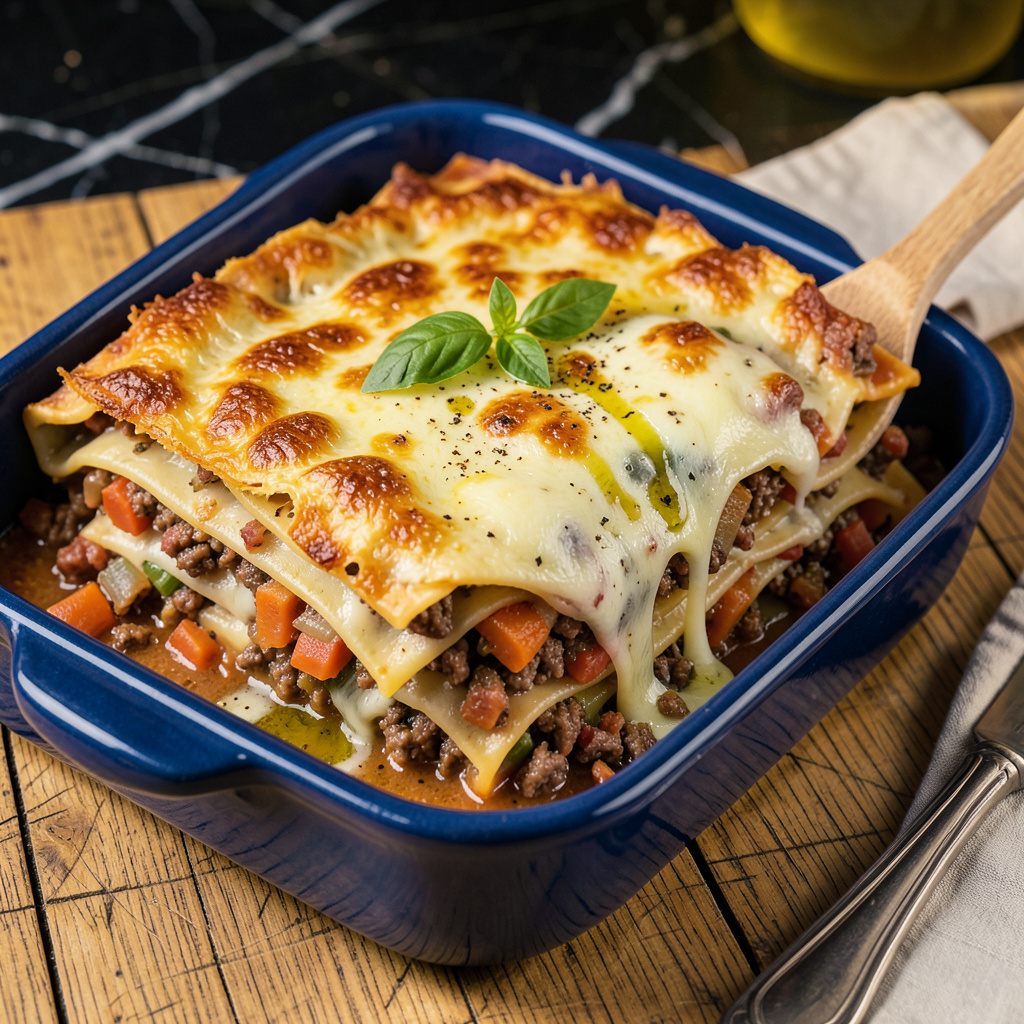
Lasagna done right transforms a simple pasta dish into an architectural masterpiece of flavors and textures. After years of perfecting layered pasta dishes—including my signature pork ragu lasagna served at The Smoky Pig—I’ve adapted Gordon Ramsay’s precise techniques for home cooks. The difference lies in the details: properly browned meat foundation, silky béchamel with just the right consistency, and pasta cooked al dente before assembly.
This recipe demands patience but rewards with restaurant-quality results. Each component—rich bolognese simmered for depth, velvety béchamel made with whole milk and nutmeg, and perfectly cooked pasta sheets—plays a crucial role. The assembly process follows Ramsay’s methodical layering: meat sauce first to prevent sogginess, then pasta, béchamel, and cheese in precise ratios. These techniques ensure structural integrity and balanced flavors in every bite.
What emerges from the oven is lasagna with distinct layers that hold their shape when served, not a mushy casserole. The top develops a golden crust while the interior remains creamy and rich. I’ve included professional tips like par-cooking the pasta sheets and using freshly grated Parmigiano-Reggiano that make all the difference. The final product delivers the perfect harmony of textures—tender pasta, hearty meat sauce, and luscious béchamel.
Serve this lasagna as the centerpiece of a Sunday supper with garlic bread and a crisp green salad. The recipe scales beautifully for gatherings, and leftovers reheat exceptionally well. While the process requires attention to detail, the results justify every minute spent—this is lasagna that would make any Italian nonna proud.
Ingredients for Lasagna Recipe Gordon Ramsay
This architectural masterpiece requires precise ingredients: rich meats for bolognese, whole milk for velvety béchamel, and authentic Parmigiano-Reggiano for finishing.
| Ingredient | Amount | Notes |
|---|---|---|
| Ground Beef 🥩 | 1 ½ lb | 80/20 fat ratio preferred |
| Ground Pork 🥩 | ½ lb | For balanced richness |
| Pancetta 🥓 | 4 oz | Diced, or substitute bacon |
| Yellow Onion 🧅 | 1 whole | Finely diced, about 1.5 cups |
| Carrots 🥕 | 2 whole | Finely diced, about 1 cup |
| Celery Stalks 🌿 | 2 whole | Finely diced, about 1 cup |
| Garlic Cloves 🧄 | 6 cloves | Minced to paste consistency |
| San Marzano Canned Tomatoes 🍅 | 2 cans | 28 oz each, whole peeled |
| Tomato Paste 🍅 | 3 tbsp | Double-concentrated preferred |
| Dry Red Wine 🍷 | 1 ½ cups | Cabernet Sauvignon recommended |
| Whole Milk 🥛 | 4 cups | Full-fat for silky béchamel |
| Unsalted Butter 🧈 | ½ cup | European-style preferred |
| All-Purpose Flour 🌾 | ½ cup | For roux base |
| Freshly Grated Nutmeg 🌰 | ¼ tsp | Whole nutmeg, microplaned |
| Parmigiano-Reggiano Cheese 🧀 | 2 cups | Freshly grated from wedge |
| Dry Lasagna Sheets 🍝 | 16 sheets | No-boil variety preferred |
| Kosher Salt 🧂 | 2 tbsp | Diamond Crystal preferred |
| Freshly Ground Black Pepper 🌶️ | 1 tsp | Medium-coarse grind |
| Dried Bay Leaves 🌿 | 2 whole | For bolognese simmering |
| Fresh Thyme Sprigs 🌿 | 4 sprigs | Tied with kitchen twine |
The meat foundation demands quality. 80/20 ground beef provides essential fat for flavor development, while ground pork adds richness without heaviness. Pancetta (available at Whole Foods or Italian specialty markets) is non-negotiable for authentic depth—substitute thick-cut bacon only if absolutely necessary. For the tomatoes, San Marzano DOP (imported from Italy) creates the proper sweet-acid balance; Century or Stanislaus brands are acceptable domestic alternatives. The Parmigiano-Reggiano must be aged 24+ months—BelGioioso or Locatelli are reliable supermarket options.
Wine substitutions require careful consideration. A bold Cabernet Sauvignon provides the necessary tannic structure, but Chianti or Barbera work in a pinch. For the béchamel, whole milk is mandatory—reduced-fat versions compromise texture. Nutmeg should be freshly grated from whole; pre-ground loses volatility within weeks. Lasagna sheets must be dry (not fresh)—De Cecco or Barilla brands maintain structural integrity during baking. If using fresh pasta, par-boil for exactly 2 minutes less than package instructions.
Component preparation timing is critical. The bolognese can be refrigerated for up to 3 days or frozen for 3 months—both improve flavor through maturation. Béchamel should be made fresh but can hold at room temperature for 2 hours before assembly. Assemble the lasagna immediately before baking; prolonged resting causes sogginess. Leftover baked lasagna maintains quality for 5 days refrigerated or 2 months frozen—reheat covered at 325°F until internal temperature reaches 165°F.
Why You’ll Love This Recipe
- Unfussy Prep: I brown the beef, pork, and pancetta together—one pan, one step—while the onions and carrots soften right alongside. No juggling three skillets or babysitting separate components.
- Meat Lovers’ Dream: That combo of ground beef, pork, and pancetta? It’s rich but not heavy, with the pancetta adding this salty, almost buttery depth. Honestly, I’ve never had a lasagna this savory without feeling like it’s trying too hard.
- Makes Two Meals: Between us, I always bake it in two smaller dishes—one for tonight, one for the freezer. That second pan reheats like it was just made, and the flavors actually get better after a day or two.
- No Boil, No Fuss: Ramsay’s trick of soaking the lasagna sheets in hot water instead of boiling them saves me 10 minutes and a pot to scrub. The texture? Spot-on every time, even when I’m rushing.
Step-by-Step Instructions for Gordon Ramsay’s Lasagna
This method delivers perfectly balanced layers with rich bolognese and velvety béchamel.
Step 1: Develop the Bolognese Base
In a large Dutch oven over medium heat, render the 4 oz pancetta until crispy and the fat has fully rendered, about 5-6 minutes. Add the 1.5 lb ground beef and 0.5 lb ground pork, breaking it apart with a wooden spoon. Cook until the meat loses its raw color and develops a light crust, approximately 8-10 minutes.
The key here is patience—allow the meat to brown properly before moving to the next step. This Maillard reaction builds the deep, meaty foundation for your bolognese. Once browned, transfer the meat to a bowl and set aside, leaving the rendered fat in the pot.
Step 2: Build the Sofrito and Simmer
In the same pot with the rendered fat, add the finely diced 1 whole yellow onion, 2 carrots, and 2 celery stalks. Cook over medium-low heat for 8-10 minutes until the vegetables soften and become translucent. Add the 6 cloves garlic cloves (minced to a paste) and cook for 1 additional minute until fragrant.
Return the browned meat to the pot. Stir in the 3 tbsp tomato paste and cook for 2-3 minutes to caramelize. Add the 1.5 cups dry red wine and reduce by half, about 5 minutes. Then add the 2 cans San Marzano canned tomatoes, 2 tbsp kosher salt, 1 tsp freshly ground black pepper, 2 whole dried bay leaves, and 4 sprigs fresh thyme sprigs. Simmer uncovered for 1.5-2 hours, stirring occasionally, until the sauce reduces by one-third and develops a rich, concentrated flavor.
Step 3: Prepare the Béchamel Sauce
In a separate saucepan, melt the 0.5 cup unsalted butter over medium heat. Whisk in the 0.5 cup all-purpose flour to form a roux, cooking for 2-3 minutes until golden and nutty. Gradually whisk in the 4 cups whole milk, ensuring no lumps form. Cook for 8-10 minutes until the sauce thickens enough to coat the back of a spoon.
Remove from heat and stir in the 0.25 tsp freshly grated nutmeg and 1 cup of the Parmigiano-Reggiano cheese. The sauce should be smooth, velvety, and just thick enough to hold its shape when layered. Season with additional kosher salt if needed, but remember the cheese adds saltiness.
Step 4: Assemble and Bake the Lasagna
Preheat the oven to 375°F. Spread a thin layer of bolognese in the bottom of a 9×13-inch baking dish. Add a layer of dry lasagna sheets (4 sheets), followed by one-third of the remaining bolognese, one-third of the béchamel, and ¼ cup Parmigiano-Reggiano cheese. Repeat this layering process two more times, finishing with a final layer of dry lasagna sheets, the remaining béchamel, and the last ½ cup Parmigiano-Reggiano cheese.
Bake uncovered for 30-35 minutes until the top is golden brown and bubbling. Let it rest for 15 minutes before slicing—this allows the layers to set and makes for cleaner portions. The lasagna should have distinct layers with the bolognese rich and thick, the béchamel creamy, and the pasta perfectly tender.
Pro Tips For Making Lasagna Recipe Gordon Ramsay
- Brown the Pancetta First: Before adding the onions and carrots, cook the pancetta on medium-low until crisp—about 8-10 minutes. This renders fat that’ll carry flavor through the entire ragù, and you won’t end up with chewy bits in the final dish.
- Grate the Carrots Fine: I learned this the hard way—chopped carrots stay too firm in the sauce. Use the small holes on a box grater (or pulse in a food processor) so they melt into the ragù, sweetening it without texture.
- Skip the Pre-Boiled Noodles: Ramsay’s recipe uses no-boil lasagna sheets for a reason: they absorb the ragù’s moisture perfectly. Just layer them dry—no extra work, and you avoid gummy, overcooked pasta.
- Rest Before Cutting: Give the lasagna a full 20 minutes out of the oven before slicing. I used to rush this and get a sloppy mess—now I know the layers set up cleanly if you wait (yes, even if you’re starving).
Essential Equipment for lasagna recipe gordon ramsay
Heavy-Duty Dutch Oven
A quality 5-7 quart Dutch oven is non-negotiable for developing the bolognese properly. I swear by my Le Creuset Signature (the 6.75-quart round is perfect) because its even heat distribution prevents hot spots when browning meat. The enameled cast iron retains heat beautifully for the 2-hour simmer, and the wide surface area allows proper reduction. If you’re on a budget, Lodge’s enameled cast iron delivers similar performance for half the price. 💪
High-Quality Chef’s Knife
You’ll be dicing 3 cups of mirepoix (onions, carrots, celery) and mincing 6 garlic cloves—this requires a razor-sharp 8-inch chef’s knife. My go-to is the Wüsthof Ikon for its perfect balance and durability. A dull knife makes prep dangerous and inconsistent. I sharpen mine before every lasagna session using a 1000/6000 grit whetstone—it takes 5 minutes and changes everything.
Microplane for Nutmeg
Freshly grated nutmeg transforms the béchamel from good to extraordinary. I use a Microplane Premium Zester to grate ¼ tsp whole nutmeg directly into the sauce. The difference between this and pre-ground is night and day—fresh nutmeg has bright, citrusy notes that pre-ground lacks. Store whole nutmeg in an airtight container away from light; it keeps for years. This tiny detail is what separates restaurant-quality lasagna from home-cooked versions.
Lasagna Pan Essentials
A 9×13-inch baking dish is standard, but material matters. I prefer Emile Henry’s ceramic lasagna dish because it distributes heat evenly and develops a perfect golden crust. Glass dishes (like Pyrex) work too, but require 25°F higher temperature to achieve the same browning. Avoid metal pans—they can cause the edges to overcook. Whatever you choose, grease it lightly with butter to prevent sticking during that crucial 15-minute rest after baking. 🧈
Precision Thermometer
Don’t guess when your lasagna is done—a Thermapen ONE instant-read thermometer ensures perfection. The center should reach 165°F before resting. This prevents undercooked pasta or overdone edges. I also use it to check the béchamel temperature (180°F) to ensure proper thickening. The $99 investment pays for itself in prevented disasters. For a budget option, the ThermoWorks ThermoPop works nearly as well for $34.
Box Grater for Cheese
Pre-shredded cheese contains anti-caking agents that prevent proper melting. I use a Cuisipro box grater to freshly grate the 2 cups Parmigiano-Reggiano—the fine, even shreds melt uniformly for that perfect golden crust. For the béchamel layer, I switch to the medium-hole side for slightly thicker shreds that create beautiful texture. Cleanup tip: Spritz the grater with nonstick spray before using; the cheese slides right off after grating. ✨
Nutrition Facts
Frequently Asked Questions
Why does the bolognese need to simmer for 2 hours?
The extended simmer develops deep, concentrated flavors through reduction. This process allows the meat to become incredibly tender while the tomatoes caramelize slightly. The result is a rich, complex sauce that forms the backbone of your lasagna.
Can I use no-boil lasagna noodles?
In fact, they’re preferred for this recipe. The moisture from the sauces during baking perfectly cooks the noodles. Just ensure you have enough liquid in your bolognese and béchamel to prevent dryness.
What’s the secret to preventing a soggy bottom?
Start with a thin layer of bolognese in the bottom of your dish before adding noodles. This creates a barrier that prevents the pasta from absorbing too much moisture. Also, don’t over-sauce each layer—stick to the recommended amounts.
How do I know when it’s properly baked?
The top should be golden brown with bubbling edges. For absolute certainty, use a thermometer—the center should reach 165°F. The 15-minute rest after baking is crucial for clean slicing.
Can I make this ahead of time?
Yes! Assemble completely, cover tightly with foil, and refrigerate for up to 24 hours. When ready to bake, add 10 minutes to the cooking time. This actually improves flavor as the components meld together.