
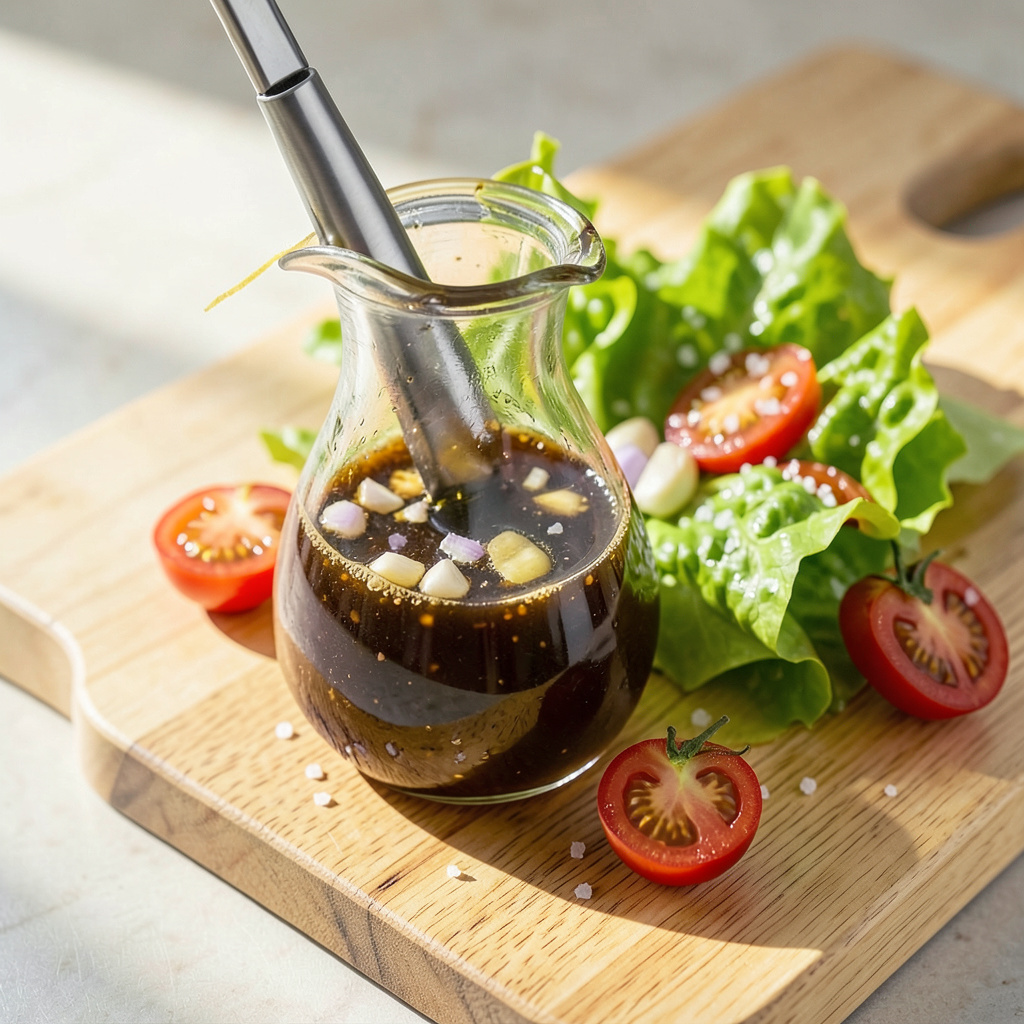
Recreating Longhorn’s signature white balsamic vinaigrette at home delivers that perfect balance of tangy acidity and subtle sweetness that makes their salads unforgettable. This professional-grade dressing captures the steakhouse’s distinctive flavor profile with just the right proportion of premium white balsamic vinegar and quality oil, elevated by carefully measured sweeteners and emulsifiers.
The foundation of this vinaigrette lies in its precise ratio of ingredients. White balsamic vinegar provides a milder, slightly fruitier acidity compared to traditional balsamic, while the emulsification process ensures the dressing maintains its perfect consistency. A touch of sweetness rounds out the sharpness, creating that signature Longhorn balance that pairs equally well with crisp greens or grilled proteins.
What sets this version apart is its versatility and shelf stability. When properly stored in an airtight container, this vinaigrette maintains its fresh, vibrant flavor for up to two weeks in the refrigerator. The natural separation that occurs is easily remedied with a quick shake before use, ensuring restaurant-quality results every time you reach for the bottle.
Beyond salads, this dressing excels as a marinade for chicken or shrimp, a finishing drizzle for grilled vegetables, or even as a dipping sauce for crusty bread. The professional formulation guarantees consistent performance across all applications, making it a staple for any home cook’s repertoire.
Ingredients for Longhorn White Balsamic Vinaigrette
Nine premium ingredients combine to replicate Longhorn’s signature vinaigrette with professional-grade precision and steakhouse authenticity.
| Ingredient | Amount | Notes |
|---|---|---|
| Premium white balsamic vinegar 🍷 | ½ cup | Milder, fruitier than traditional balsamic |
| Extra-virgin olive oil 🫒 | ¾ cup | High-quality, fruity profile preferred |
| Dijon mustard 🧉 | 1 tbsp | Acts as emulsifier and flavor enhancer |
| Pure maple syrup 🍁 | 1 ½ tbsp | Grade A dark amber for depth |
| Garlic cloves 🧄 | 2 cloves | Freshly minced for optimal flavor |
| Fine sea salt 🧂 | ½ tsp | Diamond Crystal preferred for precision |
| Freshly ground black pepper 🌶️ | ¼ tsp | Medium-coarse grind recommended |
| Dried oregano 🌿 | ½ tsp | Mediterranean variety for authenticity |
| Shallot 🧅 | 1 tbsp | Finely minced for subtle allium note |
The white balsamic vinegar is non-negotiable for authentic flavor. Napa Valley Naturals or Colavita brands offer the ideal balance of acidity and fruitiness required for this formulation. For the olive oil, California Olive Ranch or Lucini provide the necessary quality without overpowering grassiness. The Dijon mustard serves a dual purpose as both emulsifier and flavor enhancer—Maille or Grey Poupon deliver consistent results. Fresh garlic and shallots must be used; pre-minced versions lack the necessary aromatic potency for proper flavor development.
For dietary modifications, agave nectar can substitute for maple syrup at a 1:1 ratio, though the flavor profile will shift slightly. If avoiding mustard, 1 teaspoon of vegan mayo can provide emulsification, though the tanginess will differ. The oregano can be replaced with ¼ teaspoon of dried thyme plus ¼ teaspoon dried basil for a more complex herbal note. When scaling the recipe, maintain the exact 2:3 vinegar-to-oil ratio—this is critical for proper emulsification and flavor balance. The salt quantity may require adjustment based on the specific vinegar brand’s inherent sodium content.
Proper storage is essential for maintaining professional-grade quality. Transfer to a glass bottle with airtight seal and refrigerate immediately. The vinaigrette will maintain optimal flavor for 10-14 days with proper refrigeration. Natural separation will occur; vigorous shaking for 15-20 seconds fully restores emulsion. For extended storage, freeze in ice cube trays for up to 3 months—thaw individual cubes as needed while maintaining flavor integrity.
Why You’ll Love This Recipe
- Five-Minute Magic: I’ve made this vinaigrette while unloading groceries—literally. Just whisk the white balsamic, olive oil, and Dijon in a jar (no chopping if you use pre-minced garlic), and you’re done before the salad greens wilt.
- Sweet-Tangy Obsession: That first bite where the maple syrup’s warmth hits the vinegar’s bright zip? I’ve caught my husband sneaking spoonfuls straight from the jar. The garlic mellows overnight, so leftovers taste even better.
- Salad’s Best Friend (and More): Honestly, I’ve drizzled this on everything—grilled chicken, roasted Brussels sprouts, even as a marinade for pork tenderloin. It’s my Tuesday night shortcut and my dinner party secret in one bottle.
- Fridge Staple Savior: Between us, I double the batch weekly. It keeps for 10 days (if it lasts that long), and at $0.50 per serving with pantry staples, it’s cheaper than any store-bought dressing with half the junk.
Step-by-Step Instructions for White Balsamic Vinaigrette
This professional method ensures perfect emulsification and balanced flavor in every batch.
Step 1: Prepare the Aromatic Base
Finely mince the 2 cloves garlic cloves and 1 tbsp shallot until you achieve a uniform texture with no large pieces. This fine mince ensures even distribution throughout the dressing and prevents overpowering bites of raw garlic or shallot.
Combine the minced aromatics in a medium bowl with the 0.5 tsp fine sea salt, 0.25 tsp freshly ground black pepper, and 0.5 tsp dried oregano. Use the back of a spoon to press the mixture against the bowl sides, creating a paste-like consistency that will better infuse into the liquid components.
Step 2: Create the Acid-Sweet Foundation
Add the 0.5 cup premium white balsamic vinegar and 1.5 tbsp pure maple syrup to the aromatic paste. Whisk vigorously for 30 seconds until the mixture becomes completely homogeneous. The vinegar should appear slightly thickened from the syrup incorporation.
Stir in the 1 tbsp Dijon mustard, which serves as both emulsifier and flavor enhancer. Whisk for an additional 20 seconds until no mustard streaks remain and the mixture develops a pale golden hue. This step creates the flavor backbone of your vinaigrette.
Step 3: Emulsify with Olive Oil
Begin adding the 0.75 cup extra-virgin olive oil in a very slow, thin stream while whisking constantly. The mixture should gradually thicken and lighten in color as the oil incorporates. After adding about half the oil, the dressing will begin to form a stable emulsion.
Continue whisking while drizzling the remaining oil, maintaining the thin stream. The finished vinaigrette should coat the back of a spoon and hold its shape briefly when you run a finger through it. This indicates proper emulsification that will hold for several hours.
Step 4: Rest and Adjust Seasoning
Allow the dressing to rest at room temperature for 10 minutes. This resting period lets the flavors meld completely. The shallot and garlic flavors will mellow slightly while the oregano fully hydrates.
Taste and adjust seasoning if needed, though the initial measurements should provide perfect balance. The ideal flavor profile delivers bright acidity from the vinegar, subtle sweetness from the maple syrup, and a lingering herbal note from the oregano. Transfer to a glass jar for storage.
Pro Tips For Making Longhorn White Balsamic Vinaigrette
- Whisk Like You Mean It: Don’t just stir—whisk vigorously for a full 30 seconds until the Dijon mustard fully emulsifies with the oil. I learned this the hard way when my first batch separated into a sad, oily puddle after five minutes.
- Mince Garlic Super Fine: Crush the garlic to a near-paste before adding it (a microplane works wonders). Raw garlic chunks can overpower the delicate white balsamic, but finely minced cloves blend smoothly and mellow faster.
- Skip the Cheap Vinegar: That bargain-bin white balsamic tastes harsh and thin. After ruining two batches, I finally splurged on a good aged one—it’s smoother, sweeter, and actually balances the maple syrup instead of fighting it.
- Let It Sit 10 Minutes: Resist the urge to use it immediately. Giving the flavors time to meld (especially the garlic and mustard) makes the difference between a sharp dressing and one that tastes rich and cohesive. (Yes, even if you’re starving.)
Wine and Beer Pairings for This Dish
Crisp White Wines
The bright acidity and subtle sweetness in this vinaigrette pair beautifully with crisp white wines. I love a Sauvignon Blanc from New Zealand—its citrus notes and mineral backbone cut through the dressing’s richness while complementing the white balsamic’s fruitiness. For something local, try a Texas Viognier which offers stone fruit aromas that echo the maple syrup’s sweetness. 🍷
Light-Bodied Reds
When serving this dressing with grilled meats, a light red wine works surprisingly well. My go-to is Pinot Noir from Oregon’s Willamette Valley—its earthy notes and bright acidity mirror the vinaigrette’s complexity. The subtle tannins won’t overpower the salad while the red fruit flavors harmonize with the balsamic’s natural sweetness.
Craft Beer Options
A crisp Belgian-style witbier like Allagash White offers the perfect beer pairing. The citrus and coriander notes in the beer complement the vinaigrette’s tangy-sweet profile, while the effervescence cleanses your palate between bites. For something hoppier, a pilsner with its clean finish works beautifully with the dressing’s acidity.
Sparkling Wines
For special occasions, I reach for a dry Prosecco or Cava. The bubbles and bright acidity make each bite of salad feel refreshing. The slight sweetness in these sparkling wines enhances the maple syrup notes in the dressing without making the pairing cloying. This is my secret weapon for summer lunches on the patio. ✨
Non-Alcoholic Pairings
A sparkling water with a squeeze of lemon or lime provides the perfect alcohol-free match. The carbonation mimics the effervescence of wine while the citrus accentuates the vinaigrette’s bright flavors. For something more substantial, try a hibiscus iced tea—its tartness complements the balsamic beautifully.
Dessert Wine Contrast
Here’s an unexpected pairing: serve this vinaigrette with a Moscato d’Asti as your dessert wine. The dressing’s acidity cuts through the wine’s sweetness, creating a delightful contrast that prepares your palate for the next course. I discovered this combination at a Charleston wine dinner that completely changed how I think about pairing dressings with wines.
Nutrition Facts
Frequently Asked Questions
Can I substitute regular balsamic vinegar?
White balsamic is essential for authentic flavor—it’s milder and fruitier than traditional balsamic. Regular balsamic will overpower the dressing with its stronger, more caramelized taste. If you must substitute, use half the amount and add a splash of white wine vinegar to balance.
How long does this vinaigrette last?
Stored in an airtight container in the fridge, it maintains peak flavor for 10-14 days. The oil may solidify slightly—just let it sit at room temperature for 10 minutes before shaking vigorously to re-emulsify.
Why did my dressing separate?
Natural separation occurs over time, especially with temperature changes. Simply shake the bottle for 15-20 seconds before each use. For longer stability, whisk in ½ tsp xanthan gum (available at health stores) when making the dressing.
Can I make this without mustard?
Dijon is key for both flavor and emulsification. For a substitute, use 1 tsp vegan mayo or ½ tsp ground flaxseed mixed with 1 tsp water. Note that the tangy depth will differ slightly from the original recipe.
What’s the best way to scale this recipe?
Maintain the exact 2:3 vinegar-to-oil ratio when doubling or halving. For large batches, use a blender instead of whisking—pulse while slowly drizzling the oil for perfect emulsification every time.