
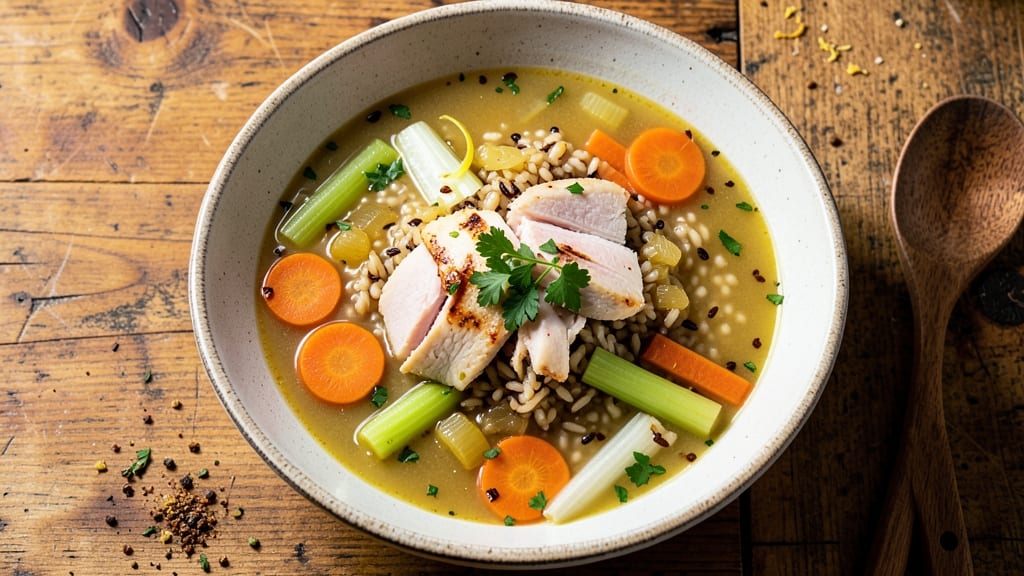
This low sodium chicken wild rice soup delivers heart-healthy comfort without sacrificing flavor—perfect for cozy evenings when you crave warmth but need to watch your sodium intake. The secret lies in balancing herbs, citrus, and quality ingredients to create depth while keeping the dish light and nourishing.
I developed this recipe after realizing how easy it is to make restaurant-quality soup at home without relying on salt.
The foundation starts with low-sodium chicken broth and wild rice, which adds natural chewiness and earthy flavor. Tender chicken breast provides lean protein, while fresh herbs like thyme and parsley elevate the broth without added salt.
A splash of lemon juice brightens the dish, cutting through richness while enhancing the natural taste of the ingredients.
What you’ll end up with is a hearty yet healthy soup that’s packed with protein, fiber, and flavor—ideal for meal prep or a quick weeknight dinner. The wild rice soaks up the aromatic broth, creating a satisfying texture, while the chicken stays tender and juicy.
Every spoonful delivers comfort without the guilt, making it a staple for anyone watching their sodium intake.
This recipe scales beautifully for leftovers, and the flavors only deepen over time. Whether you’re serving a family or meal prepping for the week, you’ll have a nourishing, flavorful soup that feels like a warm hug in a bowl.
Let’s get started with the ingredients—simple yet powerful for creating this heart-healthy masterpiece.
Ingredients for low sodium chicken wild rice soup
Wild rice, tender chicken, and aromatic herbs—this heart-healthy soup keeps flavor bold while keeping sodium in check.
| Ingredient | Amount | Notes |
|---|---|---|
| Low-Sodium Chicken Broth 🍲 | 4 cups | Homemade or quality low-sodium brand |
| Wild Rice Blend 🌾 | ½ cup | Uncooked, rinsed well |
| Boneless, Skinless Chicken Breast 🍗 | 1 ½ lb | Cut into bite-sized pieces |
| Medium Carrots 🥕 | 3 whole | Peeled, sliced into rounds |
| Celery Stalks 🧅 | 3 whole | Trimmed, cut into 1-inch pieces |
| Yellow Onion 🧅 | 1 whole | Medium, diced |
| Fresh Thyme Leaves 🌿 | ¼ cup | Or 1 tbsp dried thyme |
| Fresh Parsley Leaves 🌿 | ¼ cup | Chopped, for garnish |
| Fresh Lemon Juice 🍋 | 2 tbsp | Brightens flavor naturally |
| Extra-Virgin Olive Oil 🫒 | 1 tbsp | For sautéing vegetables |
| Garlic Cloves 🧄 | 3 cloves | Minced, for depth |
| Low-Sodium Vegetable Broth 🍲 | 1 cup | For extra flavor boost |
| Black Peppercorns 🌶️ | ½ tsp | Freshly ground for heat |
| Kosher Salt 🧂 | ¼ tsp | Sparingly, to taste only |
The wild rice blend is a game-changer here—it’s got that nutty, earthy punch that stands up to the herbs. Bob’s Red Mill or Lundberg are my go-tos, but any quality blend works. For the chicken, boneless, skinless breasts stay juicy, but thighs work too if you prefer. Look for fresh herbs at the grocery store’s produce section—they’ll have more flavor than dried. The carrots and celery should be crisp, not rubbery. If you’re short on time, pre-cut veggies from the freezer section are a lifesaver.
No fresh thyme? Dried works at one-third the amount, but it’s not the same. The lemon juice is non-negotiable—it cuts through the richness and brightens everything. Short on olive oil? Avocado oil or butter will work, but olive oil has that fruity depth. The low-sodium broth is key—Swanson or Pacific Foods are solid brands. If you’re feeling fancy, make your own by simmering chicken bones with veggies and herbs. The garlic can be roasted for a sweeter flavor—just toss whole cloves on a baking sheet at 400°F for 15 minutes.
This soup tastes even better the next day as flavors meld. Store leftovers in airtight containers for 4-5 days in the fridge. Freezes beautifully for up to 3 months—portion into freezer bags with some broth to prevent a solid block. I always double the recipe because it’s perfect for meal prep. The herbs can be added fresh when reheating, so they stay vibrant. Garnish with parsley before serving—it makes the dish look restaurant-worthy.
Why You’ll Love This Recipe
- One-Pot Magic: I swear by this recipe because it’s basically hands-off after the initial chop. Toss in the chicken, carrots, and celery, then let the broth do its thing—no stirring, no fuss, and no extra pots to wash. The wild rice soaks up all the flavor while it cooks, and by the time it’s done, you’ve got a hearty bowl with almost zero effort.
- Chef’s Whisper: Here’s what sold me—this soup tastes like it simmered for hours, even though it’s ready in 40 minutes. The low-sodium broth keeps it clean, but the wild rice adds that nutty depth, and the chicken stays tender without falling apart. Honestly, it’s the kind of flavor that makes you pause mid-spoonful.
- Lunchbox Hero: Between us, this is my go-to for meal prep because it reheats like a dream. Pack it in jars for work or school lunches—no soggy rice here, thanks to the wild rice blend holding its shape. My kids actually eat their veggies in this (yes, even on a Tuesday night), and I don’t have to stress about packing separate sides.
- Budget Win: Wild rice is pricier than white rice, but this recipe stretches it far—one batch feeds four, and leftovers taste just as good the next day. Plus, using boneless chicken breast keeps costs down without sacrificing flavor. I’ll be real: it’s my secret weapon for feeding a crowd without breaking the bank.
Step-by-step instructions for heart-healthy herb-infused wild rice soup
This soup delivers big flavor without the sodium—let’s build it layer by layer.
Sauté the Vegetable Base
Heat the 1 tablespoon extra-virgin olive oil in a large pot over medium heat. Add the diced 1 whole yellow onion, sliced 3 whole medium carrots, and cut 3 whole celery stalks. Cook for 5-6 minutes, stirring occasionally, until the vegetables begin to soften and the onion becomes translucent.
Here’s the thing—don’t rush this step. You want the vegetables to develop some color and release their natural sweetness. Add the 3 minced garlic cloves and cook for another 30 seconds until fragrant. This aromatic base forms the flavor foundation for your entire soup.
Add Herbs and Broth
Stir in the 0.25 cup fresh thyme leaves and 0.5 teaspoon black peppercorns, letting them toast in the pot for 1 minute—this wakes up their flavors. Pour in the 4 cups low-sodium chicken broth and 1 cup low-sodium vegetable broth, bringing everything to a gentle boil.
Once boiling, reduce heat to medium-low and let it simmer uncovered for 15 minutes. This allows the broth to infuse with all the vegetable flavors while keeping the sodium in check. You’ll notice the broth reduces slightly and develops a deeper aroma—this is when the magic starts happening.
Cook the Wild Rice
Add the 0.5 cup wild rice blend and stir well. The package directions might suggest more liquid, but we’re keeping this heart-healthy by using just the broth. Simmer uncovered for 25-30 minutes, stirring occasionally, until the rice is tender and has absorbed most of the liquid.
If the rice looks dry before it’s fully cooked, add ¼ cup water at a time until it reaches the desired consistency. The rice should be al dente—still slightly firm in the center. This texture holds up better when reheated later, unlike mushy rice that falls apart.
Add and Cook the Chicken
While the rice cooks, cut the 1.5 lb boneless, skinless chicken breast into bite-sized pieces. When the rice is almost done, add the chicken to the pot. Simmer for 10-12 minutes until the chicken reaches 165°F internally and flakes easily with a fork.
Real talk: don’t overcook the chicken or it’ll turn dry. The residual heat from the hot soup will finish cooking it perfectly. Once done, remove the chicken with a slotted spoon and set it aside on a plate, leaving the broth behind.
Finish and Serve
Return the chicken to the pot and stir in the 2 tablespoons fresh lemon juice. This brightens all the flavors and cuts through any richness. Taste and adjust seasoning with the 0.25 teaspoon kosher salt—remember, we’re keeping this low-sodium, so add sparingly.
Ladle the soup into bowls and garnish each serving with 0.25 cup chopped fresh parsley leaves. The parsley adds freshness and a pop of color, making the dish look as good as it tastes. Serve immediately while hot, with crusty whole-grain bread on the side for dipping.
Pro Tips For Making Low Sodium Chicken Wild Rice Soup
- Sear the Chicken First: I learned this the hard way—skipping the sear makes the broth taste flat. Pat the chicken dry, then hit a hot pan with a little oil until the outside turns golden before adding broth. The crust locks in flavor and keeps the meat from turning rubbery later.
- Chop Celery and Carrots Small: Wild rice soup needs texture, but chunks bigger than a dime stay stubborn. Dice the veggies into ¼-inch pieces—they’ll soften evenly and disappear just enough to let the rice shine. (Yes, even if you’re impatient like me.)
- Simmer, Don’t Boil: Wild rice blends need gentle heat or they turn mushy. Once everything’s in the pot, keep it at a low simmer—tiny bubbles, not rolling. After 30 minutes, taste the rice: if it’s still firm, cover and let it steam off the heat for 10 minutes. Trust the process.
- Use a Splatter Screen: Chicken broth splatters like a teenager at a dance. Pop a splatter screen on the pot from the start—it’s the only way to avoid cleaning chicken bits off your cabinets. (Your future self will thank you.)
Make-ahead tips for leftovers
Prep Ahead Strategy
Start by prepping all your vegetables the night before—chop the onion, carrots, celery, and garlic, then store them in an airtight container in the fridge. This saves 15-20 minutes of prep time when you’re ready to cook.
I also like to measure out the wild rice and herbs ahead of time so everything is ready to go in the morning. 📅
Broth Prep Shortcut
Make your own low-sodium chicken broth in advance by simmering 2 lbs chicken bones with 1 onion, 2 carrots, 2 celery stalks, and 3 sprigs thyme in 8 cups water for 2 hours.
Strain and store in the fridge for up to 5 days or freeze for 3 months. This gives you flavorful broth without the sodium of store-bought options.
Cooking in Batches
Double the recipe and store half in the fridge for 4-5 days or freeze for 3 months. I use quart-sized freezer bags because they’re stackable and thaw quickly.
When reheating, add 2 tablespoons water per serving to prevent thickening. The flavors actually improve after the first day as the herbs infuse further. ❄️
Chicken Prep Tip
Cut the chicken breast into 1-inch cubes and marinate them in 1 tablespoon lemon juice, 1 teaspoon black pepper, and 1 teaspoon olive oil for up to 4 hours before cooking.
This keeps the chicken juicy and adds extra flavor without sodium. Store the marinated chicken in an airtight container in the fridge.
Herb Storage Hack
Buy fresh thyme and parsley in small bunches and store them in airtight containers with a damp paper towel. This keeps them fresh for up to 1 week in the fridge.
When you’re ready to cook, simply rinse and chop—no wilting! For dried herbs, use ⅓ the amount of fresh, but they won’t have the same vibrant flavor.
Reheating Like a Pro
For the best texture, reheat the soup on the stovetop over medium-low heat for 8-10 minutes, stirring occasionally. If it’s too thick, add ¼ cup water or broth at a time.
Avoid microwaving—it can make the rice mushy. Add fresh parsley and a squeeze of lemon just before serving to keep everything bright and fresh. 🔥
Nutrition facts
Frequently asked questions
Can I substitute regular rice for wild rice in this recipe?
While you can use regular rice, it won’t give the same hearty texture and nutty flavor. Wild rice adds a satisfying chew and earthy depth that complements the herbs beautifully. If you must substitute, try brown rice or a mix of brown and wild rice for better texture, but expect a slightly different taste profile.
How do I make this soup even lower in sodium?
Skip the 0.25 teaspoon kosher salt entirely and rely on herbs, lemon juice, and black pepper for flavor. Use homemade broth (simmer chicken bones with veggies and herbs) instead of store-bought, and avoid adding any salted garnishes like croutons. The natural flavors will shine through with proper technique!
Can I use chicken thighs instead of breasts?
Yes! Chicken thighs add richer flavor and stay juicier, but they do contain more fat. Trim excess fat first and reduce simmering time to 8-10 minutes to avoid dryness. Thighs work especially well if you’re making this for a crowd or freezing leftovers.
What if my soup tastes bland after cooking?
This usually happens when herbs aren’t fresh or broth lacks depth. Boost flavor by adding 1 extra tablespoon lemon juice, a pinch of black pepper, or a splash of low-sodium vegetable broth. Fresh herbs (like thyme or parsley) added at the end can also make a big difference!
How long can I keep leftovers safely?
Store in airtight containers in the fridge for 4-5 days or freeze for 3 months. When reheating, add 2 tablespoons water per serving to prevent thickening. The soup actually tastes better after the first day as flavors meld!