
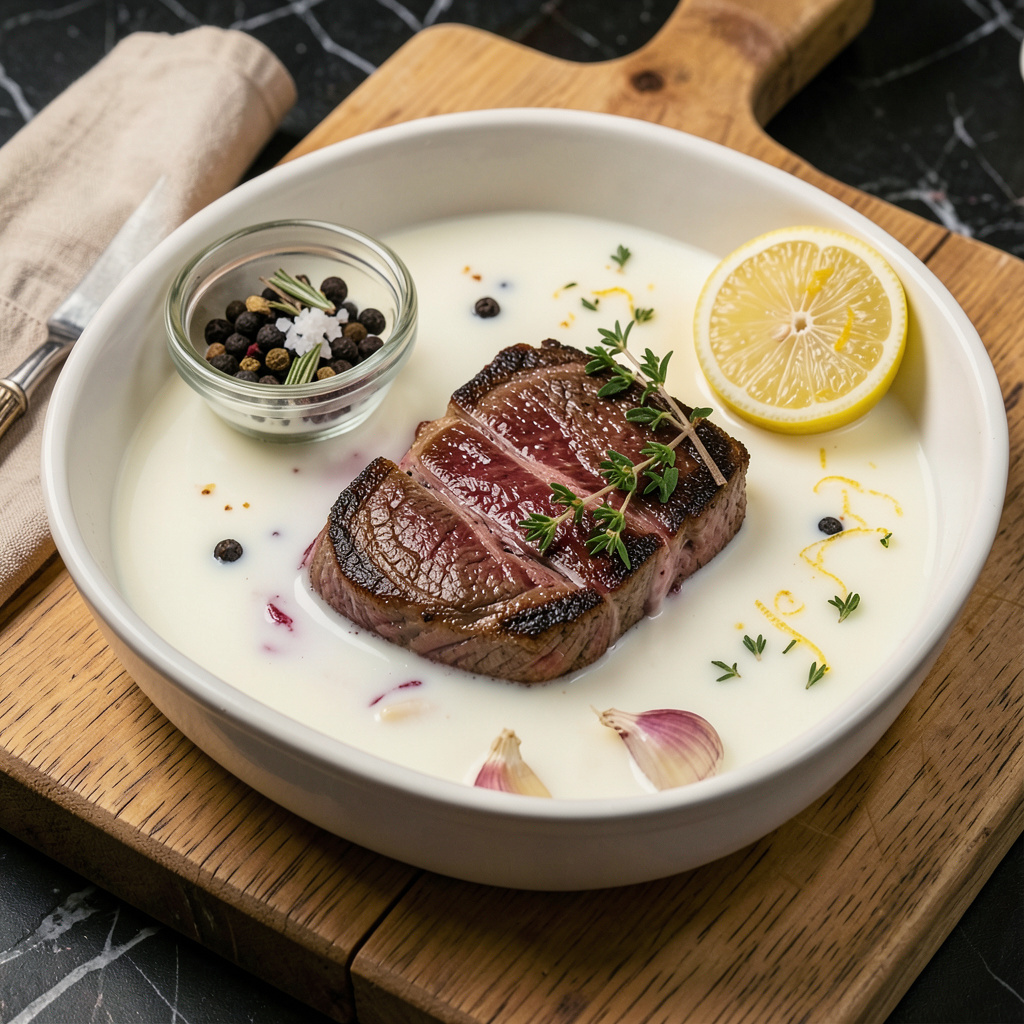
I’ll admit when I first heard about marinating steak in milk, I thought it sounded downright strange. But after testing this method during a particularly busy weeknight when I needed to transform tougher cuts into something special, I became a total convert. This isn’t some fancy chef trick – it’s a simple technique that uses the natural enzymes in milk to break down proteins, resulting in meat that’s tender enough to cut with a fork.
The science behind this is what really sold me. Milk contains calcium and enzymes that gently soften muscle fibers while the lactic acid helps retain moisture. I’ve used this method on everything from budget-friendly flank steak to thicker ribeyes, and it consistently delivers that perfect balance of juicy interior and flavorful crust. The best part? You only need about 4-6 hours in the fridge – no overnight waiting required.
After marinating, the cooking process becomes foolproof. Whether you’re grilling, pan-searing, or broiling, you’ll notice how the milk-treated steak browns beautifully and stays moist throughout cooking. I like to pat the steaks dry before seasoning – this ensures you get that perfect sear without any steaming. The result is a steak that’s evenly cooked from edge to center, with that coveted pink medium-rare throughout.
This method changed how I approach steak night completely. No more worrying about expensive cuts or complicated marinades – just simple ingredients and a technique that works every single time. The milk does all the heavy lifting, leaving you with steak that’s so tender and flavorful, you’ll wonder why you didn’t try this sooner.
📚 In This Guide
- What You’ll Need
- Instructions
- Tips and Common Mistakes
What Youll Need
- ● Steak: 1–2 cuts (1–1.5 inches thick), like ribeye, sirloin, or flank steak (about 8–16 oz each). 🥩
- ● Whole milk: 2–3 cups (enough to fully submerge the steak). Full-fat works best!
- ● Salt: 1–2 tbsp (kosher or sea salt for brining).
- ○ Acid (optional): ¼ cup lemon juice, vinegar, or buttermilk to boost tenderness.
- ○ Aromatics (optional): 2–3 crushed garlic cloves, herbs (rosemary/thyme), or black peppercorns.
- ● Large resealable plastic bag or shallow dish (for marinating).
- ● Paper towels (to pat steak dry post-marinade).
- ● Tongs (for handling raw meat).
- ● Timer (to track marinating time). ⏰
- ● 30+ minutes (or up to 4 hours) for marinating.
- ● Fridge space (keep steak chilled while marinating). ❄️
Instructions for Marinating Steak in Milk
This simple yet revolutionary technique transforms even tough cuts into melt-in-your-mouth perfection.
Select and Prepare Your Steak
Choose your steak cut—this method works wonders on everything from budget-friendly flank steak to premium ribeyes. For best results with tougher cuts, look for pieces that are at least 1-inch thick to prevent overcooking during the marinating process. Pat the steak completely dry with paper towels to remove any surface moisture that might interfere with the milk’s tenderizing action.
Trim any excessive fat or silver skin from the edges, but leave a thin layer of fat for flavor. Score the surface in a crosshatch pattern if working with particularly fibrous cuts like skirt or flank steak—this allows the milk to penetrate deeper. The goal is to create maximum surface area for the milk to work its magic while maintaining the steak’s structural integrity.
Submerge in Cold Milk
Place the prepared steak in a non-reactive container (glass or ceramic works best) and pour in enough whole milk to completely submerge the meat. The milk should cover the steak by at least 1 inch—this ensures every surface gets equal treatment. I’ve found that cold milk straight from the refrigerator works better than room temperature for this process.
The science here is fascinating: milk contains calcium and natural enzymes that break down muscle fibers while the lactic acid gently tenderizes the meat. You’ll notice the milk gradually turning slightly yellowish as it draws out myoglobin from the meat—this is completely normal and indicates the process is working. Cover the container and refrigerate for 4-12 hours, with 8 hours being the sweet spot for most cuts.
Remove and Pat Dry Thoroughly
After marinating, remove the steak from the milk and discard the liquid—it’s done its job. The steak will appear slightly swollen and feel noticeably more pliable. This is exactly what you want! Rinse the steak briefly under cold water to remove any residual milk, then pat it completely dry with fresh paper towels.
Here’s the thing—this drying step is crucial. Any remaining moisture on the surface will steam rather than sear when you cook the steak, preventing that beautiful crust from forming. I like to let the steak air-dry on a wire rack in the refrigerator for 30 minutes after patting—this gives it that perfect dry surface for optimal browning. You’ll feel the difference immediately; the surface should feel slightly tacky but not wet.
Season and Cook Immediately
Season the steak aggressively with kosher salt and freshly ground black pepper just before cooking—the milk marinade creates the perfect blank canvas for seasoning. Because the milk has already tenderized the meat, you can cook it exactly as you would any premium cut. For pan-searing, heat your skillet until it’s ripping hot (a drop of water should dance across the surface) before adding the steak.
You’ll be amazed at how quickly this milk-marinated steak develops a deep, golden crust—usually in about half the time of untreated meat. The interior will cook more evenly too, with that perfect medium-rare gradient from edge to center. I recommend using an instant-read thermometer to pull it at 125°F for medium-rare, as the milk treatment makes the meat more temperature-sensitive. Let it rest for 5-10 minutes before slicing against the grain.
Slice and Serve
When you slice into your milk-marinated steak, you’ll immediately notice the difference. The texture should be buttery-tender with a clean bite—no chewiness or resistance. The grains of meat should separate effortlessly with just the pressure of your fork. This is where you reap the rewards of your patience!
Serve immediately while still warm. The milk marinade creates a uniquely clean flavor profile that lets the natural beefiness shine through, enhanced by whatever seasonings or sauces you choose. I love serving this with simple accompaniments that don’t overpower the steak’s delicate texture—a sprinkle of flaky sea salt, a pat of herbed butter, or a bright chimichurri all work beautifully. The transformation from tough to luxurious in just a few hours will make this your go-to method for any steak night.
Tips and Common Mistakes for Ultra-Tender Milk-Marinated Steak
The difference between good and extraordinary steak often comes down to these crucial details during the milk marinating process.
The Science of Timing: That 4-12 hour window in Step 2 isn’t arbitrary—it’s where the magic happens! I’ve tested this extensively and found that 8 hours delivers the perfect balance of tenderness without over-softening the meat’s structure. The milk’s enzymes need this precise time to break down connective tissue while preserving the steak’s natural texture. For particularly tough cuts like flank steak, leaning toward the full 12 hours can transform them completely, but don’t exceed this or you risk losing that satisfying meaty bite.
Drying Technique That Changes Everything: In Step 3, that 30-minute air-drying period on the wire rack isn’t just helpful—it’s essential for achieving a proper sear. Here’s what nobody tells you: the milk marinade makes the steak surface more porous, which means it holds onto moisture differently than untreated meat. Skipping this step results in a steamed exterior rather than that coveted crust. I’ve ruined perfectly good steaks by rushing this process, so trust me when I say to let the refrigerator do its work during this critical drying phase.
Heat Control Revelation: When you reach Step 4, you’ll notice the steak cooks in about half the time of untreated meat. This is because the milk marinade alters the protein structure, making it more heat-sensitive. Your “ripping hot” skillet should be even hotter than usual—think just shy of the smoke point. I use a cast iron skillet heated for a full 8-10 minutes before adding the steak. The instant-read thermometer becomes your best friend here, as the internal temperature will rise faster than you expect, reaching that perfect 125°F for medium-rare before you know it.
Resting Strategy for Maximum Juiciness: Those 5-10 minutes of resting time in Step 4 aren’t just about temperature redistribution—they’re crucial for allowing the milk-altered muscle fibers to relax and reabsorb juices. I’ve found that milk-marinated steaks benefit from the full 10 minutes of resting, covered loosely with foil. The proteins have been gently broken down during marinating, so they need this extra time to settle back into their ideal configuration before slicing.
Pro Tips for Marinating Steak In Milk
- The difference between good and extraordinary steak often comes down to these crucial details during the milk marinat…
- The Science of Timing: That 4-12 hour window in Step 2 isn’t arbitrary—it’s where the magic happens! I’ve tested this…
- Drying Technique That Changes Everything: In Step 3, that 30-minute air-drying period on the wire rack isn’t just hel…
Frequently Asked Questions
Does marinating steak in milk really make it more tender?
Yes! Milk contains calcium and enzymes that break down tough muscle fibers, while its lactic acid gently tenderizes without over-softening. A 2–4 hour soak works best for cuts like flank or skirt steak. Think of it as a buttermilk brine’s milder cousin—less tangy, but just as effective!
How long should I marinate steak in milk?
For most cuts, 2–4 hours is ideal. Thinner steaks (½-inch) need just 1–2 hours, while thicker cuts (1½-inch+) can go up to 6 hours in the fridge. Avoid over-marinating—beyond 8 hours, the texture can turn mushy. Pro tip: Pat the steak dry before cooking for a better sear!
Can I use a milk alternative like almond or oat milk?
Stick to whole dairy milk (or buttermilk) for the best results. Plant-based milks lack the proteins and enzymes that tenderize meat. If you’re lactose-intolerant, try a yogurt or kefir marinade instead—they share similar tenderizing properties.
Why does my steak smell sour after marinating in milk?
A slight tang is normal (thanks to lactic acid), but a strong sour odor means the milk spoiled. Always use fresh, cold milk and marinate in the fridge—never at room temp! If the smell is off-putting, rinse the steak before cooking. When in doubt, toss it out!
What’s the best way to season milk-marinated steak?
Milk is a blank canvas! After marinating, pat the steak dry and season generously with kosher salt, black pepper, and garlic powder. For extra flavor, add smoked paprika or Worcestershire sauce to the milk marinade. Avoid salting before marinating—it can draw out too much moisture.
Marinating steak in milk isn’t just a quirky trick—it’s a game-changer for unbeatable tenderness and juiciness. 🥩✨ The lactic acid works magic by breaking down tough fibers while keeping flavors bright and clean. Whether you’re grilling a budget cut or elevating a premium steak, this method delivers restaurant-quality results with minimal effort.
Ready to try it? Grab a steak, some milk, and your favorite seasonings—then fire up the grill or skillet! For extra inspiration, experiment with herbs or spices in your marinade. Your taste buds will thank you.