
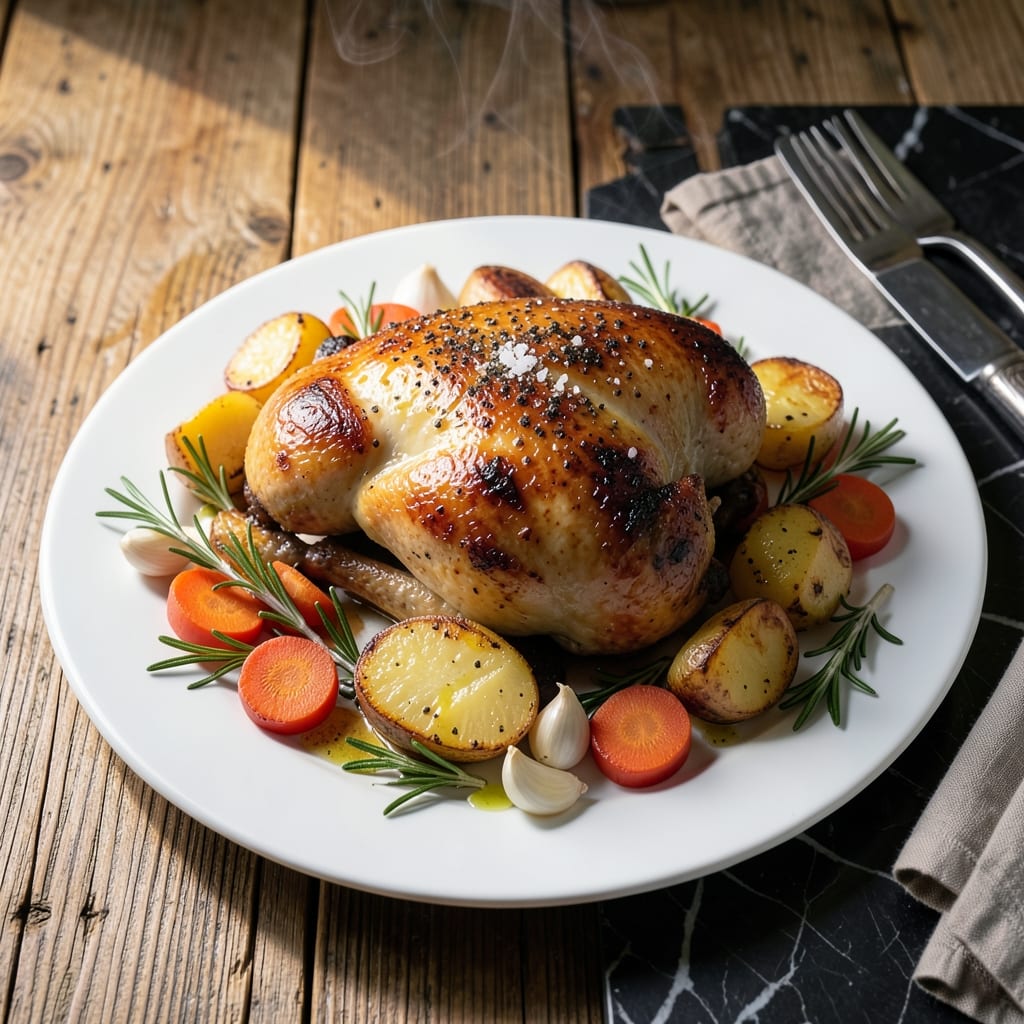
This one-pan method delivers restaurant-quality results with minimal effort and cleanup. The secret lies in proper spacing and high heat to achieve golden skin and tender meat.
I’ve refined this technique over years of cooking for crowds, ensuring the chicken stays juicy while the vegetables caramelize beautifully. The herb infusion adds depth without overwhelming the natural flavors.
You’ll end up with a complete meal that’s as impressive as it is simple. The chicken cooks evenly, the vegetables soak up the drippings, and everything finishes together in one hour.
Perfect for weeknight dinners or Sunday suppers. Here’s how to make it.
Ingredients for Oven Roasted Chicken with Vegetables
Restaurant-quality results start with these quality ingredients for a complete one-pan meal.
| Ingredient | Amount | Notes |
|---|---|---|
| Chicken Thighs 🍗 | 2 lb | Bone-in, skin-on preferred |
| Extra-Virgin Olive Oil 🫒 | 3 tbsp | Divided for chicken and vegetables |
| Kosher Salt 🧂 | 1 ½ tsp | Diamond Crystal preferred |
| Freshly Ground Black Pepper 🌶️ | 1 tsp | Coarsely ground |
| Garlic Cloves 🧄 | 6 cloves | Smashed, unpeeled |
| Fresh Rosemary 🌿 | 2 tbsp | Chopped, stems removed |
| Fresh Thyme 🌿 | 2 tbsp | Leaves stripped from stems |
| Yukon Gold Potatoes 🥔 | 1 ½ lb | Cut into 1-inch chunks |
| Carrots 🥕 | 4 whole | Peeled, cut into sticks |
| Red Onion 🧅 | 1 whole | Cut into 8 wedges |
| Brussels Sprouts 🥬 | ½ lb | Trimmed, halved |
| Lemon 🍋 | 1 whole | Zested and juiced |
| Dijon Mustard 🟡 | 1 tbsp | For herb marinade |
The chicken is non-negotiable—bone-in, skin-on thighs stay juicier than breasts during roasting. Source from Whole Foods or a trusted butcher for consistent sizing, which ensures even cooking. For the herbs, fresh rosemary and thyme (not dried) are essential for that vibrant, aromatic infusion. Look for bright green, fragrant sprigs at the market, and avoid any with wilting or black spots.
Short on time? Pre-cut vegetables from Trader Joe’s work fine, though whole ones you chop yourself will caramelize better. No fresh herbs? Use dried at one-third the amount, but toast them in a dry pan first to wake up the flavors. Swap Brussels sprouts for broccoli or cauliflower if preferred—just cut them into even, bite-sized pieces.
Store the chicken in its original packaging on the bottom shelf of the fridge for up to 2 days before cooking. The roasted leftovers keep well for 4 days refrigerated or 3 months frozen. Reheat in the oven to maintain that crispy skin (microwaving makes it soggy).
Why You’ll Love This Recipe
- One Pan Wonder: I toss everything on a sheet pan—chicken, garlic, a drizzle of olive oil—and let the oven do the work.
- Garlic Infused: The roasted garlic cloves turn sweet and mellow, coating the chicken in rich, savory depth.
- Feeds the Week: I make a double batch on Sunday and we’re set for lunches, salads, or quick tacos.
- Budget Friendly: Chicken thighs stay juicy and flavorful without breaking the bank, and a little olive oil goes a long way.
Step-by-Step Instructions for Oven Roasted Chicken With Vegetables
Here is the method for achieving perfectly crispy skin and tender vegetables in one pan.
Step 1: Prepare and Season the Chicken Thighs
Pat the 2 lb Chicken Thighs completely dry with paper towels to ensure maximum crispiness. Generously season all sides with 1.5 tsp Kosher Salt and 1 tsp Freshly Ground Black Pepper—this creates a well-seasoned crust.
In a small bowl, combine 2 tbsp Fresh Rosemary, 2 tbsp Fresh Thyme, the zest of 1 whole Lemon, and 1 tbsp Dijon Mustard with 2 tbsp Extra-Virgin Olive Oil. Rub this herb mixture all over the chicken thighs, ensuring full coverage. Let them sit at room temperature for 15-20 minutes while you prepare the vegetables.
Step 2: Prep the Vegetables for Roasting
Cut the 1.5 lb Yukon Gold Potatoes into 1-inch chunks, peel and cut the 4 whole Carrots into sticks, and trim and halve the 0.5 lb Brussels Sprouts. Cut the 1 whole Red Onion into 8 wedges.
Toss the Yukon Gold Potatoes, Carrots, Red Onion, and Brussels Sprouts with the remaining 1 tbsp Extra-Virgin Olive Oil and ½ tsp Kosher Salt. Add the 6 cloves Garlic Cloves (smashed, unpeeled) to the mix. Spread them in a single layer on a large baking sheet, leaving space in the center for the chicken.
Step 3: Arrange and Roast in the Oven
Preheat your oven to 425°F. Place the seasoned Chicken Thighs skin-side up in the center of the baking sheet, surrounded by the vegetables. This arrangement allows the chicken fat to baste the vegetables as it renders.
Roast for 35-40 minutes until the chicken skin is deep golden brown and crispy and the internal temperature reaches 165°F. The vegetables should be tender and caramelized at the edges, with the Brussels Sprouts slightly charred. Halfway through, squeeze the juice of 1 whole Lemon over the entire pan for a bright, citrusy finish.
Step 4: Rest and Serve
Remove the pan from the oven and let the chicken rest for 5-10 minutes. This allows the juices to redistribute, ensuring moist, flavorful meat. The vegetables will continue to cook slightly in the residual heat.
Serve the chicken and vegetables directly from the pan, spooning any accumulated juices over the top. The chicken skin should remain crisp, while the Yukon Gold Potatoes and Carrots are fork-tender. Garnish with any remaining Fresh Rosemary or Fresh Thyme for a fresh herbal note.
Pro Tips For Making Oven Roasted Chicken With Vegetables
- Preheat the Pan: Start with a screaming hot oven—425°F minimum—to get that skin crispy before the chicken finishes cooking.
- Pat Dry First: I learned this the hard way: blot the thighs with a paper towel before seasoning, or they’ll steam instead of brown.
- Skip the Crowding: Give each thigh and vegetable chunk space on the sheet pan, or they’ll boil in their own juices instead of roast.
- Smash the Garlic: Lightly crush the cloves with the flat of your knife before scattering them in—no peeling needed, and the flavor spreads better.
Serving Suggestions for This Recipe
Family-Style Plating
I love serving this directly from the roasting pan at the table—it’s rustic and impressive. Arrange the Chicken Thighs in the center, surrounded by the roasted Yukon Gold Potatoes, Carrots, and Brussels Sprouts. The sizzling presentation lets everyone dig in. 💛
Elegant Individual Servings
For a more refined look, plate each Chicken Thigh on a warm dinner plate with a scoop of vegetables alongside. Drizzle the pan juices in a zigzag pattern for a restaurant-worthy touch. Garnish with Fresh Rosemary sprigs.
Bread for Soaking
Always serve with crusty bread to soak up those flavorful pan drippings. A baguette or sourdough from a local bakery works perfectly. I keep a few slices warm in the oven while the chicken rests.
Fresh Herb Finish
Just before serving, sprinkle with extra Fresh Thyme or Fresh Rosemary. The bright green herbs add a pop of color and fresh aroma that complements the caramelized vegetables and golden chicken skin.
Lemon Wedges
Offer Lemon wedges on the side for a bright, citrusy finish. The acidity cuts through the richness of the chicken and enhances the herbal notes. Squeeze a little over each serving right before eating. 🍋
Wine Pairing
A crisp Sauvignon Blanc or a light Pinot Noir pairs beautifully with this dish. The wine’s acidity balances the savory flavors, and its body won’t overpower the meal. I always have a bottle chilled and ready.
Nutrition Facts
Frequently Asked Questions
Can I use chicken breasts instead of thighs?
You can, but thighs stay juicier during roasting. If using breasts, reduce cooking time to 25-30 minutes and check internal temperature reaches 165°F. Brining breasts first helps prevent dryness.
What if my vegetables aren’t tender after roasting?
Cut them into smaller, even pieces next time. For this batch, return the pan to the oven for 5-10 minutes at 400°F while the chicken rests. Cover with foil if they start to over-brown.
Should I flip the chicken while cooking?
No need! Roasting skin-side up the entire time ensures maximum crispiness. The fat renders down naturally, basting the vegetables below. Flipping can make the skin soggy and disrupt the caramelization.