
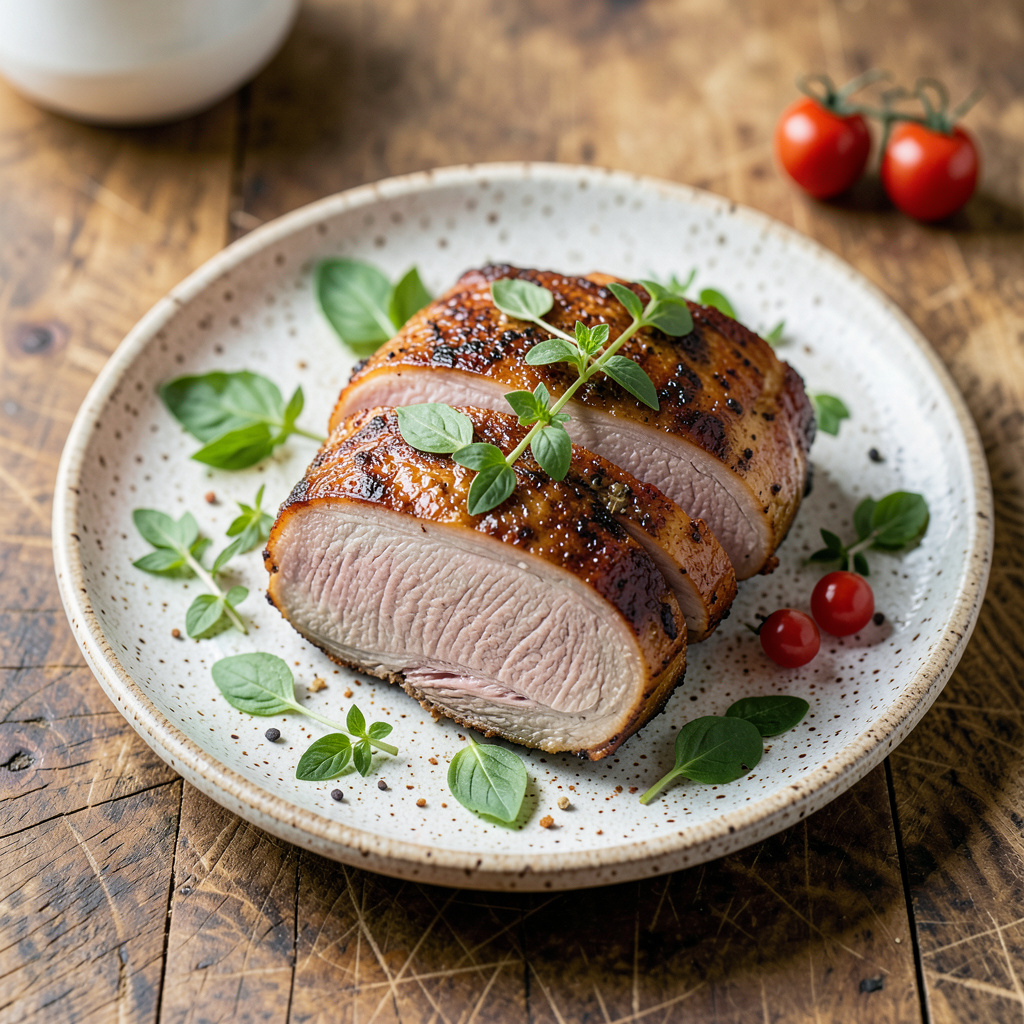
I’ve perfected oven-roasted pork loin through years of experimentation and competition on the Southeast BBQ circuit. The secret to achieving tender and juicy results lies in precise temperature control and proper resting techniques.
Start by preheating your oven to 400°F. Season a 1-2 pound pork loin with your favorite dry rub, making sure to coat it evenly. In a hot skillet, sear the pork loin on all sides until browned, about 2-3 minutes per side.
Transfer the skillet to the preheated oven and roast until the internal temperature reaches 145°F, typically 20-25 minutes depending on thickness. Let the pork rest for 10 minutes before slicing to allow juices to redistribute.
Serve with roasted vegetables like Brussels sprouts or carrots, and consider pairing with a tangy apple cider jus for added Southern flair. This method guarantees a perfectly cooked pork loin every time, making it ideal for both weeknight dinners and special occasions.
Ingredients for Oven Roasted Pork Loin
Simple ingredients come together to create a tender and juicy oven-roasted pork loin.
| Ingredient | Amount | Notes |
|---|---|---|
| Pork Loin 🥩 | 1 ½ lb | Center-cut, boneless preferred |
| Dry Rub 🧂 | 2 tbsp | Homemade or store-bought |
| Olive Oil 🫒 | 2 tbsp | For skillet searing |
| Salt 🧂 | 1 tsp | Kosher or sea salt |
| Black Pepper 🌶️ | ½ tsp | Freshly ground preferred |
| Garlic Powder 🧄 | ½ tsp | Optional, for extra flavor |
| Onion Powder 🧅 | ½ tsp | Optional, for depth |
| Paprika 🌿 | ¼ tsp | Smoked or sweet |
| Fresh Thyme 🌿 | 2 sprigs | Optional, for garnish |
| Brussels Sprouts 🥦 | 1 lb | Trimmed, halved |
| Carrots 🥕 | 2 whole | Peeled, sliced |
| Apple Cider 🍎 | 1 cup | For jus, optional |
[recipeingredientscaler]
The pork loin matters here. Center-cut gives you that perfect balance—look for even marbling. Most grocery stores have it pre-tied, which saves time. I usually grab mine from Whole Foods when I’m doing a big batch, but the regular supermarket stuff works fine for a weeknight dinner. Let it sit at room temp for 30 minutes before cooking.
No dry rub? Mix your own with equal parts brown sugar and kosher salt, plus your favorite spices. Fresh thyme is ideal but dried works at one-third the amount. If using Brussels sprouts, trim and halve them—toss with olive oil, salt, and pepper. The carrots can be baby carrots if that’s what’s in the fridge—just adjust cooking time.
This reheats beautifully—honestly tastes better the next day once everything melds. Keeps 4-5 days in the fridge, freezes for 3 months. I portion mine into containers so lunches are sorted for the week. Leftovers make great sandwiches too—thinly slice the pork and serve on a crusty baguette.
❤️
Why You’ll Love Oven Roasted Pork Loin
- Quick Prep: I love that I can throw this Oven Roasted Pork Loin together in just a few minutes – rub the pork loin with olive oil, sprinkle on that dry rub, and it’s ready to go into the oven.
- Flavor Bomb: The combination of the dry rub with salt and black pepper creates a ridiculously good crust on the pork loin, while the inside stays juicy and tender. That crispy edge with the creamy center? Chef’s kiss.
- Crowd-Pleasing Main: Honestly, this Oven Roasted Pork Loin is a solid choice for everything from a weeknight dinner to a special occasion – it’s easy to scale up or down depending on who’s coming to the table. My family requests it again and again.
- Leftover Heaven: I’ll be real: I love that this recipe makes great leftovers – the pork loin is just as delicious sliced thin in a sandwich the next day, and it’s a great way to stretch my grocery budget. One roast, two meals – that’s my kind of cooking.
Step-by-Step Instructions for Oven Roasted Pork Loin
Here’s the method that guarantees tender, juicy pork loin with perfectly roasted vegetables every time.
Step 1: Prepare the Pork Loin and Vegetables
Start by preheating your oven to 400°F. While it’s heating up, pat the 1.5 lb pork loin dry with paper towels to remove excess moisture. I like to season it generously with the 2 tbsp dry rub, making sure to coat all surfaces evenly. Let it sit at room temperature for 30 minutes before cooking to help it cook more evenly.
Next, prepare the vegetables. Trim and halve the 1 lb Brussels sprouts, and peel and slice the 2 whole carrots. Toss them with 1 tablespoon of the olive oil, 1 tsp salt, and 0.5 tsp black pepper in a bowl until they’re evenly coated. Spread them out in a single layer on a baking sheet.
Step 2: Sear the Pork Loin and Roast the Vegetables
Heat the remaining 1 tablespoon of olive oil in an oven-safe skillet over high heat. Sear the pork loin on all sides until it’s golden brown, about 2-3 minutes per side. Remove the pork loin from the skillet and set it aside.
Place the skillet with the browned bits in the preheated oven along with the baking sheet of vegetables. Roast the vegetables for 20-25 minutes until they’re tender and caramelized, stirring occasionally.
Step 3: Finish Cooking the Pork Loin
After the vegetables have roasted for 15 minutes, place the skillet with the pork loin in the oven. Continue roasting until the internal temperature reaches 145°F, about 15-20 minutes depending on the thickness of your pork loin. Use a meat thermometer to check for doneness.
Once cooked, remove the pork loin from the oven and let it rest for 5-10 minutes before slicing. This resting period allows the juices to redistribute, ensuring the pork stays tender and juicy.
Step 4: Make the Jus and Serve
While the pork rests, prepare a simple jus using the pan drippings. Add the 1 cup apple cider to the skillet and scrape up any browned bits with a wooden spoon. Bring the mixture to a simmer over medium heat and cook until it’s reduced by half, about 5 minutes. Strain the jus through a fine-mesh sieve into a serving bowl.
Slice the rested pork loin against the grain and serve with the roasted vegetables and jus. Garnish with the 2 sprigs of fresh thyme if desired. This dish is perfect for a special occasion or a cozy family dinner.
👨🍳
Pro Tips for Making Oven Roasted Pork Loin
- Sear Before Roasting: Start by searing the pork loin in a hot pan with olive oil before roasting it in the oven; this creates a flavorful crust that enhances the overall dish.
- Don’t Overcrowd: Make sure to give the pork loin enough space on the baking sheet, as overcrowding can lead to steaming instead of roasting, resulting in a less desirable texture.
- Use Thermometer: Use a meat thermometer to check the internal temperature of the pork loin; it should reach 145°F (63°C) for safe consumption and optimal tenderness.
- Rest the Meat: After roasting, let the pork loin rest for 5-10 minutes before slicing; this allows the juices to redistribute, making the meat more tender and juicy.
Troubleshooting Perfect Results
Common Cooking Mistakes
One of the most frequent issues with oven-roasted pork loin is overcooking. Use a meat thermometer to check for doneness—I like to pull it at 142-143°F to account for carryover cooking. Another mistake is not letting the meat rest properly before slicing.
Temperature Control Issues
If your pork loin is cooking too quickly on the outside, try lowering the oven temperature to 375°F and extending the cook time. Conversely, if it’s not browning enough, increase the oven temperature to 425°F for the first 15 minutes, then reduce to 375°F.
Searing Problems
If your sear isn’t developing properly, make sure your skillet is hot enough—I check by flicking a few drops of water onto the pan; they should sizzle and evaporate immediately. Also, pat the pork loin dry before searing to prevent steaming instead of browning. 🔥
Resting Challenges
To ensure proper resting, tent the pork loin loosely with foil and let it rest for 5-10 minutes. This allows juices to redistribute throughout the meat, resulting in a more tender and juicy final product. I often rest mine on a wire rack set over a baking sheet.
Vegetable Roasting Issues
If your vegetables are burning before they’re tender, try spreading them out in a single layer on a larger baking sheet or using multiple sheets. You can also add a bit more olive oil and toss halfway through cooking to prevent sticking and promote even browning.
Pan Drippings Problems
If your pan drippings are too burnt to make a good jus, deglaze the pan with a bit of apple cider or stock while it’s still warm. Scrape up all the browned bits and strain the liquid through a fine-mesh sieve to remove excess fat. This will give you a rich, flavorful base for your jus.
Tips & Tricks for Perfect Oven Roasted Pork Loin
A few simple techniques can elevate this dish from good to exceptional. I’ve learned that attention to detail makes all the difference in achieving that perfect balance of tenderness and flavor.
Temperature Control: Letting the pork loin sit at room temperature for the full 30 minutes before cooking is crucial. This step ensures even cooking throughout the meat, preventing the outside from overcooking before the inside reaches the proper temperature. I remember my mentor teaching me that this simple step can make or break the final result.
Vegetable Preparation: Cutting the Brussels sprouts and carrots into uniform pieces is key for achieving that perfect tender and caramelized result. I like to make sure they’re all roughly the same size so they roast evenly in the 20-25 minutes cooking time. Don’t be afraid to adjust the size based on your preference for doneness.
Cooking to the Right Temperature: Using a meat thermometer is non-negotiable when cooking pork loin. The difference between 140°F and 145°F can be significant, and you want to make sure you’re hitting that sweet spot. I always pull it at 145°F for optimal tenderness and food safety.
Resting is Critical: Don’t skip the 5-10 minute resting period after cooking. This allows the juices to redistribute throughout the meat, ensuring that your pork loin stays juicy and tender when you slice it. Trust me, it’s worth the wait.
Nutrition Facts
420kcal
Frequently Asked Questions
What’s the best temperature for cooking pork loin in the oven?
The ideal oven temperature for roasting pork loin is 400°F. This high heat helps create a nice crust on the outside while keeping the inside juicy. For a more even cook, some recipes suggest starting at 425°F for the first 15 minutes, then reducing to 375°F.
How long should I cook pork loin per pound?
A good rule of thumb is to cook pork loin for about 20 minutes per pound at 400°F. However, it’s crucial to use a meat thermometer to check for doneness. The pork is safe to eat when it reaches an internal temperature of 145°F, followed by a 3-minute rest. This ensures the meat stays tender and juicy.
Should I cover pork loin while it’s roasting in the oven?
Generally, it’s best to roast pork loin uncovered to allow for even browning and crisping of the exterior. If you notice the outside browning too quickly, you can loosely tent it with foil to prevent over-browning. This method helps maintain moisture while still achieving a nice crust.
How do I prevent pork loin from drying out?
To keep pork loin moist, avoid overcooking it. Use a meat thermometer to check for doneness, and let the meat rest for 5-10 minutes before slicing. This resting period allows the juices to redistribute, making the pork more tender and juicy.