
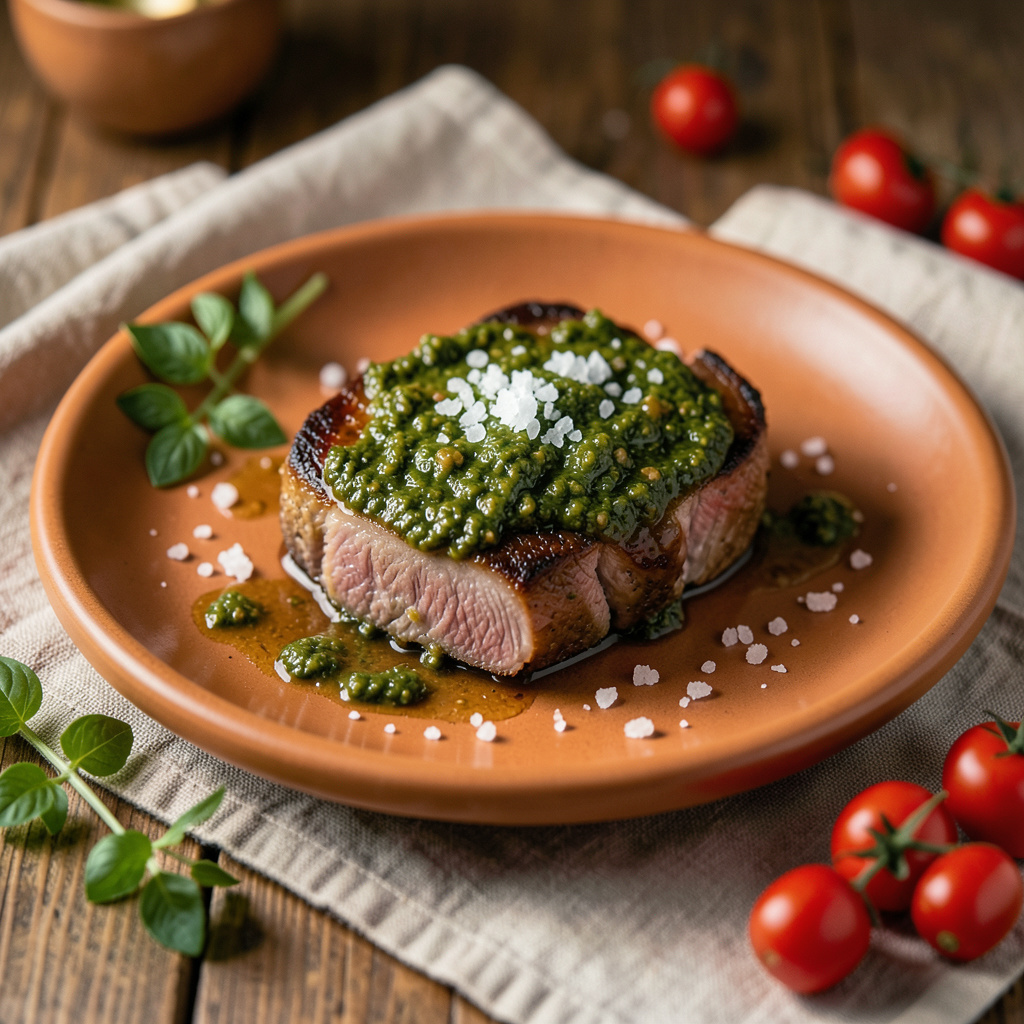
I’ve perfected this pesto-crusted pork tenderloin recipe through years of experimenting with different herb combinations. The result is a dish that’s both elegant and easy to prepare, making it perfect for special occasions or weeknight dinners.
The secret to this recipe lies in the quality of the ingredients and the simplicity of the preparation. By using a high-quality pork tenderloin and freshly made pesto, you can achieve a dish that’s full of flavor and tender to the bite.
Cooking this tenderloin to perfectly medium-rare is crucial, and I’ve found that a hot oven and a quick sear on the stovetop yield the best results. The pesto crust adds a crispy exterior that complements the tender interior.
With a total cooking time of under 30 minutes, this recipe is a great option for those looking for a quick yet impressive meal. Serve with roasted vegetables or a fresh salad for a well-rounded dinner that will leave everyone asking for seconds.
Ingredients for Pesto Pork Tenderloin
Quality ingredients make all the difference in this elegant yet easy pesto-crusted pork tenderloin.
| Ingredient | Amount | Notes |
|---|---|---|
| Pork Tenderloin 🥩 | 1 lb | Center-cut, trimmed |
| Fresh Basil Leaves 🌿 | 2 cups | Packed, stems removed |
| Pine Nuts 🥜 | ½ cup | Toasted for richness |
| Garlic Cloves 🧄 | 3 cloves | Peeled, rough chopped |
| Parmesan Cheese 🧀 | ¾ cup | Freshly grated preferred |
| Extra-Virgin Olive Oil 🫒 | ¾ cup | High quality, fruity |
| Lemon Juice 🍋 | 2 tbsp | Freshly squeezed |
| Salt 🧂 | 1 tsp | Kosher salt preferred |
| Black Pepper 🌶️ | ½ tsp | Freshly ground |
| Olive Oil 🫒 | 2 tbsp | For searing tenderloin |
The pork tenderloin matters here. Center-cut is best—more even cooking. Look for 1-1.25 lb range at Whole Foods or good butcher shops. Fresh basil should be vibrant, not wilted. Farmers markets often have the best bunches. For Parmesan, Parmigiano-Reggiano is worth the splurge—real deal, not pre-shredded.
No pine nuts? Walnuts or almonds make great substitutes. For a dairy-free pesto, swap Parmesan for nutritional yeast. The lemon juice keeps pesto bright—don’t skip it. If you don’t have fresh lemons, bottled juice works in a pinch (though fresh is better). Garlic amount is flexible—2 cloves if you prefer milder flavor.
This dish is best fresh, but leftovers keep for 3-4 days in the fridge. Reheat gently in a 300°F oven to maintain tenderness. Pesto stores well too—cover with plastic wrap, refrigerate for up to 1 week, or freeze for 6 months.
Why You’ll Love Pesto Pork Tenderloin
- Quick Prep: I love that I can have this Pesto Pork Tenderloin on the table in under 30 minutes – the pesto crust is ridiculously easy to make with just fresh basil, pine nuts, and parmesan.
- Flavor Bomb: The combination of the herby pesto with the rich pork tenderloin is absolutely crave-worthy. When that crispy pesto crust gives way to the juicy pork inside, it’s pure satisfaction.
- Versatile Main: This dish is my go-to for both weeknight dinners and special occasions – it feels fancy with the pesto and parmesan, but is actually pretty low-effort to make. Honestly, it’s a solid choice whether I’m feeding just my partner or a whole crowd.
- Great Leftovers: One of the best things about this recipe is that it makes great leftovers – I can slice the cooled pork tenderloin thin and use it for sandwiches or salads throughout the week, which saves me time and money.
Step-by-Step Instructions for Pesto Pork Tenderloin
Mastering this dish is straightforward with these detailed steps. Let’s create a perfectly herb-crusted tenderloin.
Step 1: Prepare the Pesto Sauce
Start by making the pesto sauce that will become the flavorful crust for your pork tenderloin. In a food processor, combine the 2 cups Fresh Basil Leaves, 0.5 cup Pine Nuts, and 3 cloves Garlic Cloves. Process until the mixture is well chopped and forms a coarse paste. This should take about 30 seconds of processing time.
With the processor running, slowly pour in the 0.75 cup Extra-Virgin Olive Oil through the feed tube. Continue processing until the pesto reaches your desired consistency, typically 1-2 minutes. Transfer the pesto to a bowl and stir in the 0.75 cup Parmesan Cheese, 2 tbsp Lemon Juice, 1 tsp Salt, and 0.5 tsp Black Pepper. Taste and adjust the seasoning as needed.
Step 2: Sear the Pork Tenderloin
Preheat your skillet over high heat and add the 2 tbsp Olive Oil. While the oil is heating, pat the 1 lb Pork Tenderloin dry with paper towels to ensure even searing. Once the oil shimmers, add the tenderloin and sear on all sides until brown, about 2-3 minutes per side. Remove the tenderloin from the skillet and set it aside to cool slightly.
This initial sear creates a flavorful crust on the pork while locking in the juices. Be careful not to overcook the tenderloin at this stage, as it will continue to cook in the oven.
Step 3: Apply the Pesto Crust and Roast
Spread the prepared pesto evenly over the surface of the seared pork tenderloin, ensuring it’s fully coated. The pesto will create a delicious herb crust during roasting. Place the coated tenderloin on a rimmed baking sheet or roasting pan.
Roast the tenderloin in a preheated oven at 400°F for 15-20 minutes, or until it reaches an internal temperature of 145°F. The exact cooking time will depend on the thickness of your tenderloin, so use a meat thermometer to check for doneness. The pesto crust should be fragrant and slightly browned.
Step 4: Rest and Slice
Once the tenderloin is cooked to the correct temperature, remove it from the oven and let it rest on a cutting board for 5-10 minutes. This resting period allows the juices to redistribute throughout the meat, ensuring it remains tender and juicy.
After resting, slice the tenderloin into 1-inch thick medallions. The pesto crust should have formed a delicious, aromatic coating on the pork. Serve immediately, garnished with additional fresh basil if desired.
Pro Tips for Making Pesto Pork Tenderloin
- SEAR IT HOT: Get a nice crust on your pork tenderloin by searing it in a hot pan with some oil before finishing it in the oven – I learned this the hard way after serving pink, flavorless meat too many times.
- TOAST THOSE PINE NUTS: Don’t skip toasting the pine nuts; it makes a real difference in the depth of flavor in your pesto. Just spread them on a baking sheet and toast in a 350°F oven for about 5 minutes, or until fragrant and lightly browned.
- LET IT REST: Give your pork tenderloin a solid 5-10 minutes to rest under foil before slicing. This lets the juices redistribute, making the meat more tender and juicy – your patience will be rewarded.
Creative Variations of This Recipe
Mediterranean Twist
Transform this dish into a Mediterranean masterpiece by adding 1/4 cup Kalamata olives and 2 tbsp artichoke hearts to the pesto mixture. The briny flavors complement the pork beautifully. I discovered this variation during my time in Charleston, where Mediterranean influences meet Southern cuisine.
Spicy Pesto Variation
Kick the heat up a notch by incorporating 1-2 tsp red pepper flakes into your pesto. This adds a nice contrast to the rich pork. For an even spicier version, use pepper jack cheese instead of Parmesan. My Georgia upbringing taught me that a little heat makes any pork dish sing.
Sun-Dried Tomato Enhancement
Mix 1/4 cup chopped sun-dried tomatoes into the pesto for added depth. The concentrated tomato flavor pairs wonderfully with basil and garlic. I like to use tomatoes packed in olive oil for the best flavor.
Lemon Rosemary Adaptation
Create a brighter, more summery version by adding 2 tbsp fresh rosemary and 1 tbsp extra lemon zest to the pesto. This variation is perfect for outdoor gatherings and pairs beautifully with roasted vegetables. The citrus and herbs remind me of summer nights in Atlanta.
Other Herb Options
While basil is traditional, you can experiment with other herbs like cilantro or parsley. For a more robust flavor, try adding 1 tbsp fresh oregano to the mix. Each herb brings a unique character to the dish, allowing you to customize it to your taste.
Tips & Tricks for Perfect Pesto Pork Tenderloin
A few key techniques will elevate your dish from good to exceptional. I’ve learned that attention to detail makes all the difference in achieving that perfect herb-crusted tenderloin.
Pesto Preparation Tip: When making the pesto in Step 1, don’t overprocess the basil mixture. Stop processing once it forms a coarse paste after about 30 seconds. Overprocessing can lead to a bitter flavor and unappealing dark green color. I like to pulse the processor to maintain control over the texture.
Searing Technique: For the best crust on your pork tenderloin in Step 2, make sure your skillet is hot enough that the oil shimmers immediately. Pat the tenderloin dry with paper towels before searing to prevent steam from forming. Sear for 2-3 minutes per side until browned, creating that flavorful crust that locks in juices.
Temperature Control: When roasting the tenderloin in Step 3, use a meat thermometer to ensure it reaches the correct internal temperature of 145°F. Remove it from the oven at this temperature, as it will continue to cook slightly during the resting period. This prevents overcooking and keeps the meat tender and juicy.
Resting Importance: Don’t skip the 5-10 minute resting period in Step 4. This allows the juices to redistribute throughout the meat, making it more tender and flavorful when sliced. I like to tent the tenderloin loosely with foil during resting to keep it warm.
Nutrition Facts
Frequently Asked Questions
What’s the best way to ensure my pesto pork tenderloin stays moist?
The key to keeping the pork tenderloin moist is not to overcook it. Use a meat thermometer to check for doneness – it should reach an internal temperature of 145°F. Letting it rest for 5-10 minutes before slicing also helps retain juices.
Can I make the pesto ahead of time?
Yes, you can prepare the pesto in advance. Store it in an airtight container in the refrigerator for up to 1 week. You can also freeze it for up to 6 months. Just
What sides pair well with pesto pork tenderloin?
This dish pairs beautifully with roasted vegetables like asparagus or Brussels sprouts, and a fresh green salad. For a heartier meal, serve with garlic mashed potatoes or quinoa. The bright, herby flavor of the pesto complements a variety of sides.
Can I use a different type of nut instead of pine nuts?
Absolutely! While pine nuts are traditional, you can substitute them with other nuts like walnuts or almonds. The flavor will be slightly different, but still delicious. Just be aware that different nuts have different toasting times, so keep an eye on them.