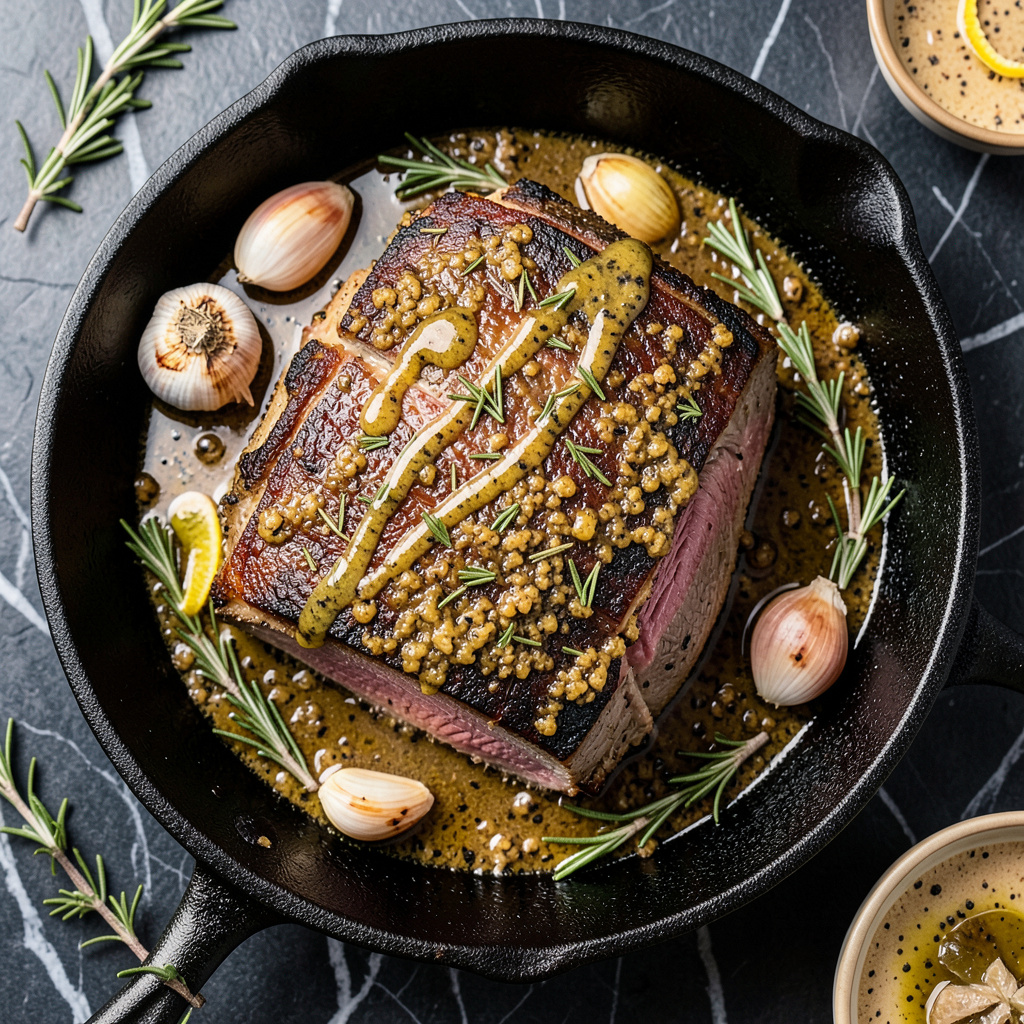
Creating a showstopping beef roast doesn’t require prime rib prices. This slow-roasted beef with garlic-herb crust delivers the same impressive flavor and tender texture using more affordable cuts. I developed this method during my early years at The Smoky Pig when we needed to serve high-quality beef without the premium price tag.
The technique relies on proper seasoning and low-and-slow cooking to transform economical beef cuts into something extraordinary. A thick garlic-herb crust forms during roasting, while the meat becomes fall-apart tender. This approach mimics the luxurious mouthfeel of prime rib at a fraction of the cost.
What emerges from the oven is a beautifully crusty, aromatic roast with perfectly pink interior. The garlic and herbs create a flavorful bark that seals in juices, while the slow cooking ensures even doneness throughout. It’s the kind of centerpiece dish that impresses guests without revealing its budget-friendly nature.
Serve with classic sides like roasted potatoes and horseradish cream for a complete meal. The method works equally well for Sunday suppers or holiday gatherings, proving that exceptional flavor doesn’t require expensive ingredients.
Ingredients for Poor Man’s Prime Rib
Transforming economical chuck roast into prime rib-worthy centerpiece requires these carefully selected ingredients for optimal flavor development and texture.
| Ingredient | Amount | Notes |
|---|---|---|
| Beef Chuck Roast 🥩 | 4 lb | Well-marbled, boneless preferred |
| Kosher Salt 🧂 | 1 ½ tbsp | Diamond Crystal preferred for even seasoning |
| Freshly Ground Black Pepper 🌶️ | 1 tbsp | Coarse grind for crust texture |
| Garlic Cloves 🧄 | 12 cloves | Minced to fine paste consistency |
| Fresh Rosemary 🌿 | 3 tbsp | Finely chopped, stems discarded |
| Fresh Thyme Leaves 🍃 | 2 tbsp | Stripped from stems, loosely packed |
| Dijon Mustard 🟡 | 3 tbsp | High-quality French variety recommended |
| Extra-Virgin Olive Oil 🫒 | 2 tbsp | Cold-pressed for herb infusion |
| Unsalted Butter 🧈 | 4 tbsp | European-style preferred for richer flavor |
| Red Wine 🍷 | ½ cup | Dry variety like Cabernet Sauvignon |
| Low-Sodium Beef Broth 🥘 | 1 cup | Homemade or high-quality boxed |
| Worcestershire Sauce 💧 | 1 tbsp | Lea & Perrins recommended |
| Smoked Paprika 🌶️ | 1 tsp | Spanish variety for authentic depth |
| Yellow Onion 🧅 | 1 whole | Large, roughly chopped for roasting |
| Carrots 🥕 | 3 whole | Peeled, cut into 2-inch chunks |
The beef selection is paramount for this technique. Chuck roast with visible marbling (USDA Choice grade if available) delivers the necessary fat content for self-basting during the extended cooking process. Professional kitchens source from US Foods or Sysco, but well-stocked supermarkets like Kroger or Publix typically carry suitable cuts. The Diamond Crystal kosher salt specification isn’t arbitrary—its unique crystal structure ensures even distribution and proper osmosis for ideal seasoning penetration. For the fresh herbs, organic varieties from specialty produce sections (or local farmers markets during growing season) provide superior aromatic compounds that withstand the long roasting process without bitterness development.
Substitutions require careful consideration to maintain the dish’s integrity. English roast or bottom round may substitute for chuck, though cooking times may require adjustment (increase by 20-25%). For the wine component, dry vermouth offers comparable acidity without alcohol, while additional beef broth with 1 tsp red wine vinegar provides acceptable depth. Herb variations should maintain the 2:1 rosemary-to-thyme ratio—sage or marjoram may replace up to half the thyme quantity. The Dijon mustard cannot be omitted entirely (it’s critical for crust adhesion), but whole-grain mustard may be used for textural variation.
Proper ingredient preparation significantly impacts the final product. The garlic-herb paste should rest at room temperature for 30 minutes before application to allow flavors to meld. Refrigerate the beef (uncovered) for 12-24 hours after applying the dry rub to develop the prized crust. Store unused fresh herbs wrapped in damp paper towels in airtight containers for up to 5 days, though potency diminishes after 48 hours. The completed roast may be held at room temperature for 2 hours before carving—critical for juice redistribution.
Why You’ll Love This Recipe
- Five-Ingredient Magic: Honestly, this is my kind of cooking—just beef chuck, salt, pepper, garlic, and rosemary. No fancy pantry raids or last-minute grocery runs when I’m already hangry.
- Crispy, Herby Crust: That first bite where the black pepper and rosemary crackle against the juicy meat? It’s like a steakhouse experience without the $50 price tag. The garlic cloves turn sweet and spreadable—my kids fight over them.
- Sunday Dinner, Tuesday Leftovers: I’ll make this on a lazy weekend, then slice the extras thin for French dips or chop it into fried rice. Between us, it tastes even better the next day when the flavors really settle in.
- Prime Rib Vibes, Grocery Budget: A chuck roast costs half what prime rib does, but with the right salt crust and slow roast, it’s got that same fall-apart tenderness. I’ve served it to guests who swore I’d splurged—nope, just smart shopping.
Step-by-Step Instructions for Poor Man’s Prime Rib
This method transforms economical chuck roast into tender, flavorful beef with a rich garlic-herb crust.
Step 1: Prepare the Herb-Garlic Paste
In a small bowl, combine the 12 cloves garlic cloves (minced to a fine paste), 3 tbsp fresh rosemary (finely chopped), 2 tbsp fresh thyme leaves, 3 tbsp Dijon mustard, 2 tbsp extra-virgin olive oil, 1.5 tbsp kosher salt, 1 tbsp freshly ground black pepper, and 1 tsp smoked paprika. The paste should be thick enough to cling to the meat without running off. This aromatic blend will form the flavorful crust that mimics prime rib’s exterior.
Set aside 10 minutes to allow the flavors to meld. The acidity in the mustard will help tenderize the meat’s surface while the herbs infuse their essential oils into the paste. This resting period ensures maximum flavor penetration when applied to the roast.
Step 2: Sear and Crust the Beef
Pat the 4 lb beef chuck roast completely dry with paper towels. Heat a large oven-safe skillet or Dutch oven over medium-high heat. Add 2 tbsp extra-virgin olive oil and when it shimmers, sear the roast on all sides until deeply browned, about 3-4 minutes per side. This creates a flavorful fond that will enhance the final sauce.
Remove from heat and brush the seared roast generously with the prepared herb-garlic paste, coating all surfaces completely. The paste should form a thick, even layer that will caramelize during roasting. Place the roughly chopped yellow onion and 3 whole carrots (peeled and cut into 2-inch chunks) around the meat in the pan.
Step 3: Slow-Roast with Aromatic Liquids
Pour the 0.5 cup red wine and 1 cup low-sodium beef broth into the pan, then add the 1 tbsp Worcestershire sauce. The liquid should come about halfway up the vegetables but not submerge the meat. Cut the 4 tbsp unsalted butter into small pieces and scatter over the roast and vegetables.
Cover tightly and transfer to a 325°F oven. Roast for 3-3.5 hours, basting occasionally with the pan juices, until the meat reaches an internal temperature of 195-200°F and becomes fork-tender. The connective tissues will have broken down, creating a prime rib-like texture while the crust develops deep, savory flavors.
Pro Tips For Making Poor Man’S Prime Rib
- Dry the roast overnight: Pat the chuck roast bone-dry with paper towels, then leave it uncovered on a rack in the fridge for at least 12 hours—sounds weird, but it guarantees a crackling crust when you sear it. I skipped this once and ended up with a steamed exterior instead of that prime rib-style browning.
- Sear until it fights back: Get your pan screaming hot—like, oil-shimmering-and-you-can-feel-the-heat-on-your-face hot—before adding the roast. Don’t move it for a full 3-4 minutes per side, even if it sticks. That’s the sound of flavor developing, not failure.
- Skip the pre-minced garlic: Smash 6-8 whole garlic cloves (peels on) with the side of your knife, then toss them into the pan when searing. They’ll caramelize slowly without burning, infusing the oil with sweetness—no bitter, acrid minced garlic taste. My grandmother swore by this, and she never steered me wrong.
- Pull it at 125°F: Use a meat thermometer and yank the roast from the oven when the center hits 125°F—it’ll coast up to a perfect medium-rare while resting. I learned this the hard way after slicing into a 140°F roast and getting well-done edges with a raw center. (Yes, even thick cuts need precision.)
Common Mistakes When Making Great poor mans prime rib
Skipping the Sear
I can’t stress this enough—never skip the searing step! That initial 3-4 minutes per side on medium-high heat creates the Maillard reaction that builds deep, complex flavors. When I first developed this recipe at The Smoky Pig, I experimented with skipping this step during busy service, and the results were noticeably flat. The crust lacked that rich, caramelized depth that makes this dish special. 🔥
Under-Seasoning the Paste
The garlic-herb paste needs bold seasoning to penetrate the meat. I use 1.5 tbsp Diamond Crystal kosher salt and 1 tbsp coarse black pepper for a reason—this isn’t the time for timidity. During my early cooking competitions, judges consistently docked points for under-seasoned crusts. Remember, much of the salt will dissolve into the cooking liquid, so what seems like a lot initially becomes perfectly balanced.
Rushing the Resting
This might be the hardest lesson I learned from Master Chef Chen: patience with resting. After removing from the oven, let the roast rest for at least 30 minutes—I prefer 45 minutes for optimal results. Cutting too soon causes all those beautiful juices to spill onto your cutting board instead of staying in the meat. I once served a rushed roast at a family gathering, and my uncle (a retired butcher) gave me that disappointed look I’ll never forget.
Using Lean Cuts
The recipe specifically calls for well-marbled chuck roast because the fat is what creates that prime rib-like texture. I’ve seen home cooks try this with bottom round or sirloin tip, and while edible, the results are disappointingly dry. The marbling renders during the long cook, basting the meat from within. When selecting your roast, look for visible fat streaks—this is where the magic happens. Trust me, I’ve butchered enough beef to know.
Neglecting the Basting
Every 30-45 minutes during roasting, you should baste the meat with those flavorful pan juices. This isn’t just about moisture—it’s about building layers of flavor. The butter, wine, and beef broth create a self-basting environment that develops the crust. In my competition days, I’d set a timer just for basting. Each time you open that oven, you’re adding another dimension to your final product. The difference between basted and unbasted roasts is like night and day. ✨
Incorrect Internal Temp
This isn’t your typical roast beef—we’re aiming for 195-200°F internal temperature, not the usual 145°F for medium-rare. The higher temp is crucial for breaking down the chuck’s connective tissue into gelatin, which gives that luxurious, prime rib-like mouthfeel. I use a ThermoWorks ChefAlarm to monitor this precisely. Too many home cooks pull it early and wonder why their roast is tough. At these temps, the meat won’t be dry if you’ve followed the other steps properly.
Nutrition Facts
Frequently Asked Questions
Can I use a different cut of beef?
While chuck roast works best, you can substitute English roast or bottom round. Just increase cooking time by 20-25% since these cuts are leaner. The marbling in chuck creates that prime rib-like texture, so expect slightly drier results with alternatives.
What if I don’t have fresh herbs?
Use dried herbs in a pinch, but reduce quantities by half: 1.5 tbsp dried rosemary and 1 tbsp dried thyme. Soak them in 2 tbsp warm water for 10 minutes first to rehydrate. Fresh herbs provide superior flavor, but this works in emergencies.
How do I know when it’s done?
Use a meat thermometer—195-200°F internal temperature is ideal. The meat should pull apart easily with forks. If you don’t have a thermometer, check after 3 hours and look for fork-tender texture. The crust will be dark brown and crisp.
Can I make this ahead?
Prepare through step 2, then refrigerate overnight. Roast the next day as directed, adding 30 minutes to cooking time. The flavors actually improve with this method. Slice only when ready to serve to maintain moisture.