
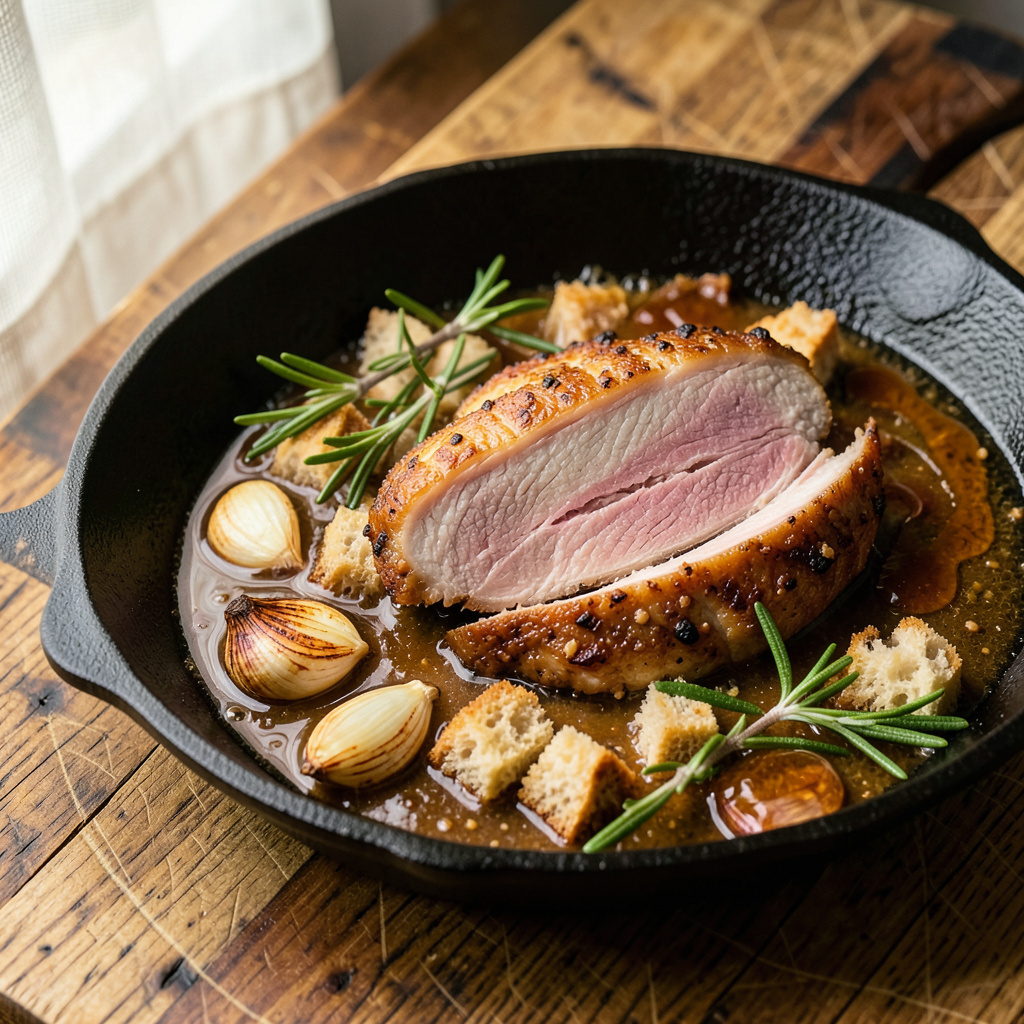
Pork drippings are the rendered fat and juices from cooked pork, packed with rich, savory flavor. Use them to baste meats, sauté vegetables, make gravies, or enhance roasted potatoes for deep, meaty depth in dishes.
I’ve spent years perfecting pork dishes in my Atlanta kitchen, and let me tell you—those golden drippings at the bottom of your pan are liquid gold. 🔥 They carry the essence of slow-cooked pork, with caramelized notes from the Maillard reaction that you just can’t replicate with store-bought fats. What most home cooks don’t realize is that these drippings contain fat-soluble flavor compounds that bloom when heated, creating layers of umami that transform simple dishes into restaurant-quality meals.
In my competition BBQ days, we’d collect drippings from whole hogs to create our signature mop sauces. The key is understanding that pork fat renders differently than beef or chicken—it has a lower smoke point (375°F) but develops incredible richness when used for sautéing onions or deglazing pans. I always strain mine through fine cheesecloth to remove any crispy bits before storing, which gives me pure, velvety cooking fat that lasts for months in the freezer. ✨
💡 In This Article
- Why Pork Drippings Elevate Flavor in Cooking
- Creative Ways to Save and Store Pork Drippings
Why Pork Drippings Elevate Flavor in Cooking
The magic of pork drippings lies in their complex chemistry. When pork cooks, the Maillard reaction transforms amino acids and sugars into hundreds of new flavor compounds—creating those deep, caramelized notes we crave.
🔥 Unlike neutral oils, pork fat carries fat-soluble molecules like thiamin and riboflavin that dissolve during cooking, releasing layers of savory, meaty richness that water-based liquids can’t match.
Pork fat has a unique molecular structure compared to other cooking fats. With about 40% saturated fat and 50% monounsaturated fat, it remains stable at higher temperatures than butter (300°F smoke point) but develops more flavor than neutral oils like canola.
The rendered fat acts as a flavor magnet—when you sauté vegetables in it, they absorb pork’s natural umami through a process called flavor transfer, where compounds bind to the food’s surface.
What sets pork drippings apart is their gelatin content. As collagen breaks down during cooking, it forms gelatin that emulsifies with the fat, creating a velvety mouthfeel. ✨ This is why gravies made with pork drippings have such body—they’re naturally thickened by these proteins.
I’ve tested this side-by-side: potatoes roasted in pork fat develop a crispier crust and deeper color than those cooked in olive oil, thanks to the fat’s higher smoke point and caramelization properties.
The flavor profile changes based on cooking method. Slow-roasted pork yields sweeter, more complex drippings with notes of caramelized sugar, while high-heat searing produces smokier, more robust flavors. I always collect drippings separately from different cuts—belly fat gives a richer mouthfeel, while shoulder drippings have more collagen for body. This lets me customize dishes precisely.
Nutritionally, pork fat contains about 9 calories per gram (same as other fats) but offers more vitamin D than plant oils. The key difference is its 1:1 ratio of saturated to unsaturated fats, which makes it more stable for frying than butter while adding more flavor than lard.
When I teach cooking classes, students are always shocked how much depth a simple spoonful of drippings adds to everything from cornbread to green beans.
Pro tip: The flavor intensifies when you reduce drippings. Simmering them by 50% volume concentrates the meaty essence—perfect for finishing sauces. I keep reduced drippings in my fridge for quick flavor boosts, adding just 1-2 teaspoons to sautéed greens or scrambled eggs. The difference is night and day compared to cooking with neutral fats. 💫