
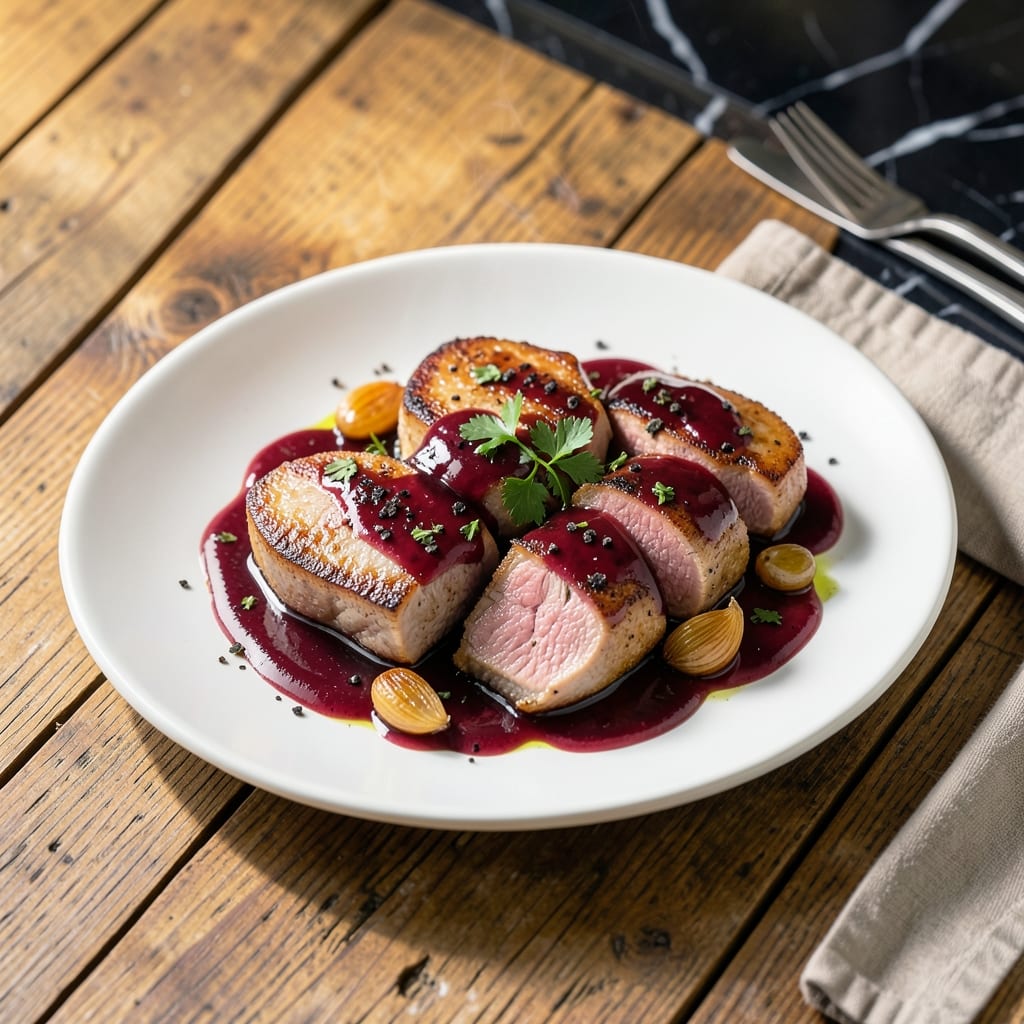
This recipe transforms pork tenderloin into tender medallions with a rich, velvety sauce. I developed this method working at The Smoky Pig, where we served 2,000 pounds weekly.
Pan-searing creates a perfect crust while keeping the meat juicy. The red wine reduction adds depth that pairs beautifully with mashed potatoes or roasted vegetables.
Ingredients for Pork Tenderloin Red Wine Sauce
Elegant ingredients for restaurant-quality medallions with rich red wine sauce.
| Ingredient | Amount | Notes |
|---|---|---|
| Pork Tenderloin 🥩 | 1 ½ lb | Trimmed of silver skin |
| Kosher Salt 🧂 | 1 ½ tsp | Diamond Crystal preferred |
| Black Pepper 🌶️ | 1 tsp | Freshly ground for best flavor |
| Olive Oil 🫒 | 2 tbsp | Divided for searing and sauce |
| Unsalted Butter 🧈 | 2 tbsp | For finishing the sauce |
| Shallots 🧅 | 2 whole | Finely minced for sauce |
| Garlic Cloves 🧄 | 3 cloves | Minced finely |
| Dry Red Wine 🍷 | 1 cup | Bold variety like Cabernet |
| Low-Sodium Beef Broth 🥣 | 1 cup | Or substitute chicken broth |
| Dijon Mustard 🟡 | 1 tbsp | Smooth, not whole grain |
| Fresh Thyme Sprigs 🌿 | 4 sprigs | Leaves stripped from stems |
| Fresh Rosemary Sprig 🍃 | 1 sprig | Finely chopped |
The pork tenderloin is paramount. Whole Foods or Costco carry excellent options—look for uniform thickness to ensure even cooking. At The Smoky Pig, we sourced from local farms, but grocery store tenderloins work beautifully if trimmed properly. Always remove the silver skin (that tough membrane) before slicing into medallions. The wine matters too—Cabernet Sauvignon or Merlot adds the right depth to your reduction.
No red wine? Substitute with additional beef broth and a splash of balsamic vinegar. Fresh herbs can be swapped: dried thyme and rosemary at one-third the amount work in a pinch. For the mustard, whole grain Dijon adds texture if you prefer. The broth can be homemade or store-bought—Better Than Bouillon is a solid choice. Shallots not on hand? Sweet onion works as a substitute, though the flavor will be slightly milder.
Prepared medallions keep in the fridge for up to 3 days—reheat gently to preserve tenderness. The sauce can be made 1 day ahead and reheated before serving. For longer storage, freeze the cooked pork (without sauce) for up to 3 months. Always bring to room temperature before reheating for best results.
Why You’ll Love This Recipe
- One Pan Wonder: I brown the tenderloin in olive oil, deglaze with red wine, and finish with butter—all in the same skillet. Minimal cleanup, maximum flavor.
- Rich & Luxurious: The red wine reduces into this deep, velvety sauce that pairs with the pork so well. Honestly, it tastes like a restaurant dish.
- Weeknight Fancy: It feels special enough for company but takes less than an hour start to finish. Here’s what sold me—my picky nephew even asked for seconds.
- Leftovers Magic: The flavors taste even better the next day, and it reheats like a dream. Between us, I sometimes make extra just to have for lunch.
Step-by-Step Instructions for Pork Tenderloin with Red Wine Sauce
Master the technique for tender medallions with a rich, velvety sauce every time.
Step 1: Prep and Season the Pork Tenderloin
Pat the 1.5 lb pork tenderloin thoroughly dry with paper towels—this is non-negotiable for a proper sear. Trim any remaining silver skin if your butcher hasn’t already done so. Cut the tenderloin into 1-inch thick medallions for even cooking.
Season both sides of each medallion aggressively with the 1.5 tsp kosher salt and 1 tsp black pepper. I divide this evenly among all pieces, pressing the seasoning gently into the meat. Let the seasoned pork sit at room temperature for 15 minutes while you prep the remaining ingredients.
Step 2: Sear the Medallions to Golden Perfection
Heat 1 tbsp olive oil in a large, heavy skillet over medium-high heat until it shimmers but doesn’t smoke. Add half the pork medallions, being careful not to crowd the pan. Sear undisturbed for 3-4 minutes per side until each piece develops a deep golden-brown crust.
Transfer the seared medallions to a plate and tent loosely with foil. Add the remaining 1 tbsp olive oil to the skillet and repeat with the second batch. The pork doesn’t need to be fully cooked through at this stage—it will finish in the sauce later. This two-batch approach prevents steaming and ensures each piece sears properly.
Step 3: Build the Aromatic Sauce Base
Reduce heat to medium and add the 2 tbsp unsalted butter to the same skillet. Once melted, add the 2 whole shallots (finely minced) and cook for 2-3 minutes until softened and translucent. Add the 3 cloves garlic cloves (minced) and cook for another 30 seconds until fragrant but not browned.
Stir in the 1 tbsp Dijon mustard, 4 sprigs fresh thyme sprigs (leaves stripped), and 1 sprig fresh rosemary sprig (finely chopped). Cook for 1 minute, stirring constantly, to toast the herbs slightly and deepen their flavors. This creates the aromatic foundation for your sauce.
Step 4: Deglaze and Reduce the Wine Sauce
Carefully pour in the 1 cup dry red wine and scrape up all the browned bits from the bottom of the pan with a wooden spoon. These fond bits are packed with flavor. Bring to a simmer and let reduce by half, about 5-6 minutes.
Add the 1 cup low-sodium beef broth and return to a simmer. Return all the pork medallions (and any accumulated juices) to the skillet. Reduce heat to medium-low, cover, and let cook for 5-7 minutes until the pork reaches an internal temperature of 145°F.
Step 5: Finish and Serve
Transfer the pork to a serving platter and tent with foil to keep warm. Increase heat to medium-high and let the sauce simmer uncovered for 3-4 minutes until it thickens slightly and coats the back of a spoon. Remove the skillet from heat and discard the herb stems.
Pour the sauce over the pork medallions. The sauce should be rich and glossy, with a deep red hue. Serve immediately while hot—the pork will be at its most tender. Each bite should deliver juicy pork with a complex, wine-infused sauce clinging to every piece.
Pro Tips For Making Pork Tenderloin Red Wine Sauce
- Sear It Hot: Get your pan screaming hot before adding the pork—about 2 tablespoons of olive oil should shimmer but not smoke. I learned this the hard way after too many pale, sad tenderloins.
- Salt Before Searing: Pat the pork dry, then salt it at least 10 minutes before cooking. Sounds weird, but it works: the salt draws out moisture, then reabsorbs it for juicier meat.
- Don’t Overcrowd: If your pan isn’t big enough for all the pork in one layer, cook it in batches. Skip the crowding or you’ll steam it instead of searing—my first few attempts were basically boiled pork.
- Rest Under Foil: Pull the pork at 140°F and let it rest 5-10 minutes under foil. It’ll climb to 145°F while you finish the wine sauce, and the juices won’t all end up on the cutting board.
Regional Styles of pork tenderloin red wine sauce
Texas Style 🔥
In Texas, pork tenderloin often gets a bold treatment with a salt-and-pepper rub or a blend of chili powder and cumin for a smoky kick. Cooks here prefer pecan or mesquite wood for grilling, infusing the meat with deep, earthy flavors. The tenderloin is typically seared at high heat (around 400°F) for a crispy crust, then finished low and slow to lock in juices. A red wine sauce in Texas might include a touch of chipotle or adobo for extra heat.
Carolina Style 🍳
Carolina’s take on pork tenderloin leans toward vinegar-based marinades or a tangy mustard rub, reflecting its barbecue roots. The meat is often slow-roasted or smoked over hickory wood, giving it a distinct, sweet aroma. The red wine sauce here may incorporate apple cider vinegar or a splash of local honey for balance. Historically, this style draws from the region’s love for pulled pork, adapting the flavors for a more refined cut.
Kansas City Style 👨🍳
Kansas City’s version is all about the sauce—a rich, tomato-based red wine reduction sweetened with molasses or brown sugar. The pork tenderloin is usually grilled or roasted, then glazed with this sticky, savory-sweet sauce. Cherry or oak wood is popular for adding depth. This style nods to the city’s famous barbecue tradition, where sauces are king and meat is generously coated.
Memphis Style 🥘
Memphis brings a dry-rub approach to pork tenderloin, using a mix of paprika, garlic powder, and brown sugar for a crusty exterior. The meat is often slow-cooked or smoked, then served with a bold red wine sauce that might include Worcestershire or a hint of coffee for complexity. Historically, Memphis barbecue emphasizes rubs over sauces, but the red wine addition elevates it for a gourmet twist.