
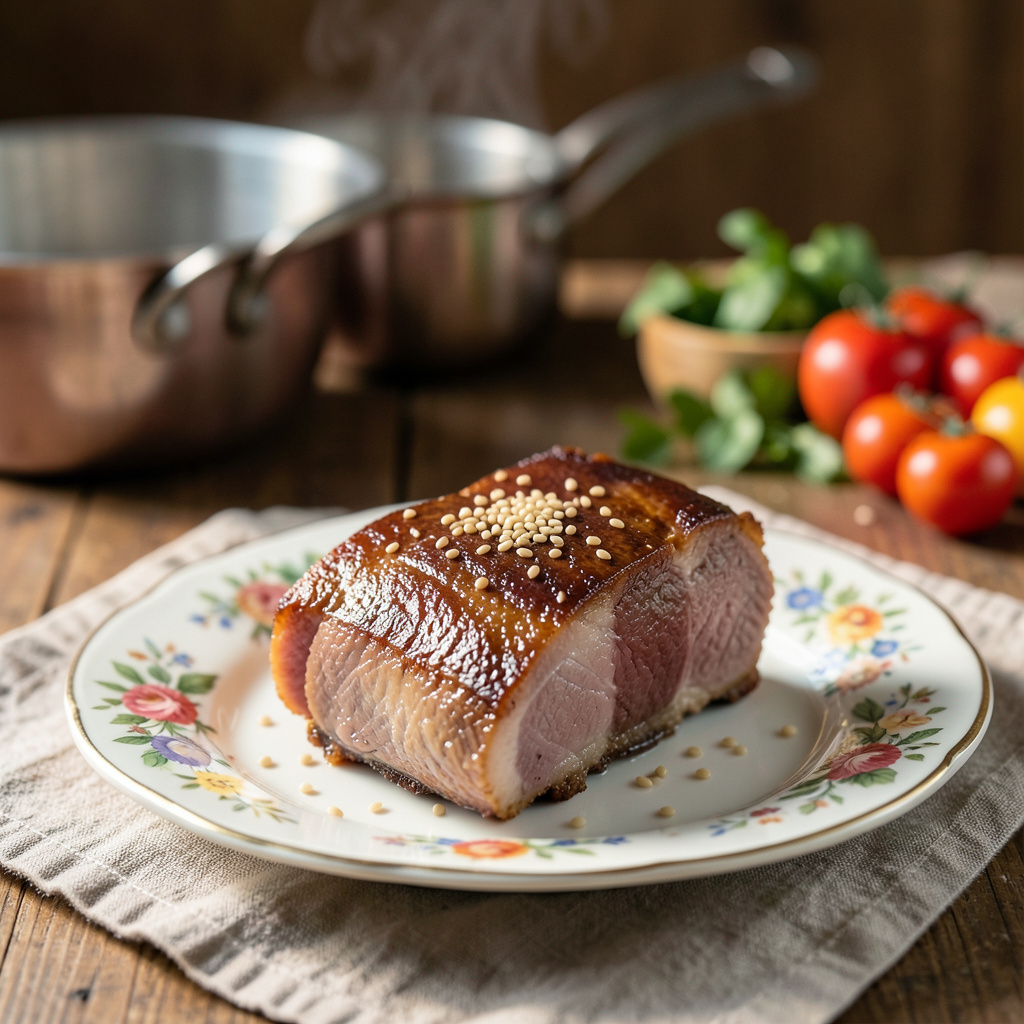
I’ve spent years perfecting my Taiwanese pork belly recipe, and I’m excited to share it with you. 🔥 This dish is a staple in Taiwanese cuisine, and for good reason – the combination of tender pork belly and rich, savory sauce is absolute perfection.
The key to this recipe is the slow braising process, which breaks down the pork belly’s fat and connective tissue, resulting in silky tender meat that simply melts in your mouth. I use a mixture of soy sauce, rice wine, and spices to create a deep, complex flavor profile.
To achieve the perfect texture, I recommend cooking the pork belly at 300°F for at least 2 1/2 hours. This allows the meat to become tender and the skin to crisp up beautifully. Serve with steamed bok choy and a sprinkle of green onions for a delicious and well-rounded meal.
Whether you’re a seasoned cook or just looking to try something new, this Taiwanese pork belly recipe is sure to impress. The combination of flavors and textures is truly special, and I promise you’ll love it. Let’s get cooking!
Ingredients for Taiwanese Pork Belly
Simple ingredients, big flavor. Braising magic happens with these pantry staples.
| Ingredient | Amount | Notes |
|---|---|---|
| Pork Belly 🥩 | 2 lb | Skin on, cut into large pieces |
| Soy Sauce 🧂 | ½ cup | Use low-sodium variety |
| Rice Wine 🍶 | ¼ cup | Or dry sherry as substitute |
| Brown Sugar 🍮 | 2 tbsp | Packed firmly in measure |
| Garlic Cloves 🧄 | 4 cloves | Peeled and smashed |
| Ginger 🌿 | 2 whole | Sliced thinly |
| Star Anise 🌶️ | 2 whole | Or 1 tsp ground |
| Cinnamon Stick 🌿 | 1 piece | About 3 inches long |
| Black Peppercorns 🌶️ | 1 tsp | Whole, not ground |
| Green Onions 🌿 | ¼ cup | Chopped, for garnish |
| Bok Choy 🥦 | 1 lb | Baby bok choy preferred |
| Sesame Oil 🫒 | 2 tbsp | For finishing dish |
Pork belly is the star – look for skin-on at Asian markets or well-stocked supermarkets. The slow braising process is key to achieving that silky tender texture. I usually grab mine from Costco when I’m doing a big batch.
No rice wine? Dry sherry or Chinese cooking wine works too. Star anise is worth finding whole – it adds depth. Can’t find it? 1 tsp ground is better than nothing. For the aromatics, don’t skip the ginger – it balances the richness.
This dish improves with time – make a day ahead if you can. Keeps 4-5 days in the fridge, reheats beautifully. Freeze portions for up to 3 months.
Why You’ll Love Taiwanese Pork Belly
- Minimal Prep Required: I love that this Taiwanese Pork Belly Recipe requires minimal chopping – just some garlic cloves and you’re good to go. The rest is basically hands-off, letting the oven do all the work.
- Crave-Worthy Caramelization: The combination of brown sugar, soy sauce, and rice wine creates this ridiculously good caramelized crust on the pork belly that’s just irresistible. When that crispy edge meets the creamy center, it’s pure magic.
- Versatile Meal Prep: Honestly, this recipe is a meal prep dream – I make a big batch on Sunday and use it for lunches and dinners throughout the week. It’s amazing in rice bowls, noodle dishes, or just on its own with some steamed veggies.
- Budget-Friendly Feasting: Pork belly is often seen as a luxury, but when cooked this way, it’s actually quite budget-friendly – a big slab of it goes a long way. Plus, the leftovers are just as delicious the next day, making it a great value for the price.
Step-by-Step Instructions for Taiwanese Braised Pork Belly
Here’s the method that delivers silky tender pork belly every time.
🔥 Step 1: Sear the Pork Belly to Create Rich Flavor
Heat a large Dutch oven over medium-high heat. Add the 2 lb Pork Belly pieces and sear until they’re golden brown on all sides, about 5-7 minutes per side. This step creates a rich, caramelized crust that adds depth to the dish.
Once browned, remove the pork belly from the pot and set it aside. The pieces should be nicely browned but not fully cooked – that’s okay. We’ll finish cooking them in the braising liquid.
👨🍳 Step 2: Prepare the Braising Liquid and Aromatics
In the same pot, add the 4 cloves Garlic Cloves, 2 whole Ginger slices, 2 whole Star Anise, 1 piece Cinnamon Stick, and 1 tsp Black Peppercorns. Cook over medium heat for 2-3 minutes until fragrant. Be careful not to burn the aromatics – stir occasionally.
Pour in the 0.5 cup Soy Sauce, 0.25 cup Rice Wine, and 2 tbsp Brown Sugar. Scrape up any browned bits from the bottom of the pot with a wooden spoon. This deglazing step captures all that concentrated flavor from the seared pork.
🥘 Step 3: Braise the Pork Belly Until Tender
Return the pork belly to the pot and add enough water to cover the meat by about 1 inch. Bring the liquid to a simmer, then cover the pot with a lid. Transfer it to a preheated oven at 300°F and braise for 2 ½ to 3 hours until the meat is tender and easily shreds with a fork.
Check the pork periodically to ensure the liquid doesn’t drop below the meat level. If needed, add a bit more water to keep it covered. The slow cooking process breaks down the collagen, making the pork belly silky tender.
🍳 Step 4: Finish with Bok Choy and Green Onions
About 10 minutes before serving, add the 1 lb Bok Choy to the pot. Let it cook in the hot braising liquid until it’s tender but still crisp. Stir in the 0.25 cup Green Onions and cook for another minute.
To serve, drizzle the dish with 2 tbsp Sesame Oil. The sesame oil adds a nutty flavor that complements the rich pork belly perfectly. Serve hot, garnished with additional green onions if desired.
Pro Tips for Making Taiwanese Pork Belly
- Sear Before Braising: Get a good sear on the pork belly before braising by heating your pan until it’s almost smoking, then add about 2 tablespoons of oil to get that perfect crust. I learned this the hard way—skipping this step leaves the dish lacking that rich, caramelized flavor.
- Don’t Overcook Garlic: Add garlic cloves towards the end of the braising time to prevent them from becoming bitter and overpowering the dish. My grandmother swore by this, and she was right: it makes a real difference in the overall flavor.
- Use Quality Soy Sauce: Invest in a good-quality soy sauce for this recipe, as it forms the backbone of the braising liquid’s flavor. I was skeptical until I tried it, but the depth of flavor it adds is worth the extra cost.
- Rest Before Slicing: Let the pork belly rest for at least 10-15 minutes before slicing to allow the meat to redistribute its juices and become tender. This isn’t the prettiest method, but it’s the tastiest—your patience will be rewarded with a more tender, flavorful dish.
Troubleshooting This Recipe
Braising Liquid Issues
If your braising liquid isn’t rich and flavorful, check your aromatics – 4 cloves garlic and 2 slices ginger make a big difference. I also
Pork Belly Too Tough
When pork belly remains tough after braising, it’s usually due to insufficient cooking time. I recommend checking tenderness after 2 ½ hours and continuing to cook in 30-minute increments until it shreds easily.
Liquid Evaporation Problems
If you’re losing too much liquid during braising, check your pot’s lid seal. I use a heavy-duty Dutch oven with a tight-fitting lid to prevent excessive evaporation. If needed, add more liquid in ¼ cup increments.
Flavor Too Salty
When the dish tastes too salty, it’s often because of the soy sauce. I use low-sodium soy sauce and adjust seasoning at the end. You can also add a 1:1 mixture of water and rice wine to balance the flavors.
Crisping the Skin
For crispy skin, broil the pork belly for 5-7 minutes after braising. Watch closely to prevent burning – I keep it about 6 inches from the heat source. This step adds wonderful texture contrast.
Reheating Challenges
When reheating, use gentle heat to maintain the tender texture. I reheat in a covered pot over low heat with a splash of additional braising liquid. This keeps the meat moist and flavorful. 🔥
Tips & Tricks for Perfect Taiwanese Braised Pork Belly
A few key techniques can elevate this dish from great to exceptional. I’ve learned that attention to detail makes all the difference in achieving that silky, tender texture.
The Searing Technique: In Step 1, make sure your Dutch oven is hot enough before adding the pork belly. You’ll know it’s ready when the oil shimmers. Sear the pork for 5-7 minutes per side until it’s golden brown – this creates that deep, rich flavor we love.
Braising Liquid Tips: When preparing the braising liquid in Step 2, be careful not to burn the aromatics. Cook them over medium heat for 2-3 minutes, stirring occasionally, until they’re fragrant. This prevents any bitter flavors from developing.
Low and Slow Cooking: The key to tender pork belly is the low and slow cooking process in Step 3. Braising at 300°F for 2 ½ to 3 hours breaks down the collagen, making the meat silky tender. Check the liquid level periodically to ensure it doesn’t drop below the meat.
Finishing Touches: When adding the bok choy in Step 4, make sure to cook it just until it’s tender but still crisp. This preserves its texture and flavor. Stir in the green onions and cook for another minute to add a fresh, oniony flavor.
Nutrition Facts
Frequently Asked Questions
What’s the best way to store leftover Taiwanese pork belly?
Store leftovers in an airtight container in the refrigerator for up to 4-5 days. Reheat gently with additional braising liquid to maintain moisture. You can also freeze portions for up to 3 months.
Can I make this recipe without a Dutch oven?
Yes, you can use a heavy pot with a tight-fitting lid as a substitute. The key is to maintain a consistent 300°F temperature. If using a slow cooker, braise on low for 6-8 hours. The result will be just as tender and flavorful.
How do I achieve crispy pork belly skin?
For crispy skin, broil the braised pork belly for 5-7 minutes after cooking. Keep it about 6 inches from the heat source and watch closely to prevent burning. This step adds a wonderful texture contrast to the dish.
Can I adjust the braising liquid ingredients?
Yes, you can adjust the braising liquid to suit your taste. For a less salty version, use low-sodium soy sauce. You can also add other aromatics like star anise or cinnamon stick to enhance the flavor profile. Experiment with different combinations to find your favorite.