
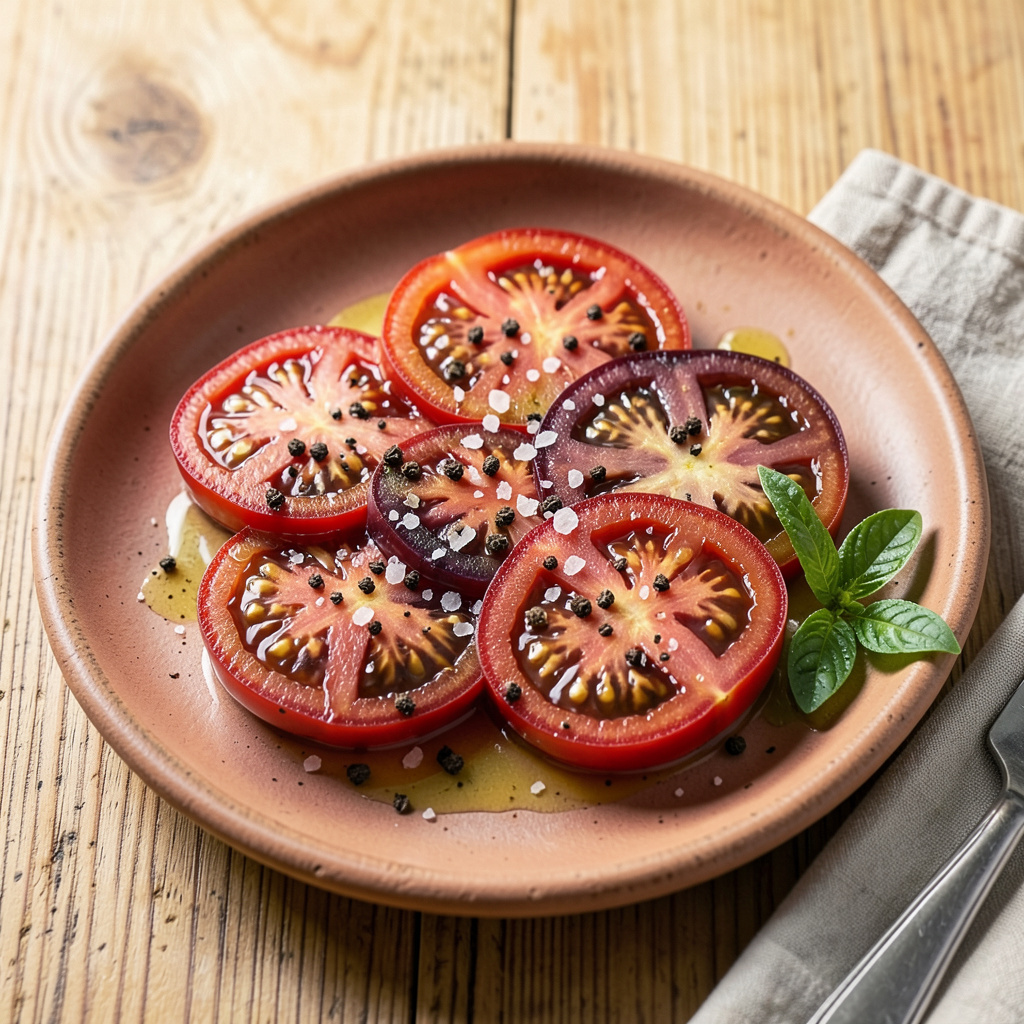
Some things are so simple they’re genius—like ripe summer tomatoes with nothing but salt and pepper. I learned this lesson working in Charleston kitchens where the best chefs knew when to let ingredients shine. A perfect tomato doesn’t need much, just good technique and respect for the fruit.
Here’s the thing—this isn’t about throwing random tomatoes on a plate. It’s about selecting vine-ripened beauties at their peak, slicing them just right, and using the proper salt. I use flaky sea salt for texture and fresh-cracked pepper for bite. The difference between this and sad winter tomatoes? Night and day.
The magic happens in the timing. Salt your tomatoes 10 minutes before serving to draw out excess moisture while keeping them juicy. A drizzle of good olive oil and maybe some torn basil takes it over the top. It’s the kind of dish that makes you question why you ever bothered with complicated recipes.
Serve this as a side with grilled chicken, part of an antipasto spread, or as a light lunch with crusty bread. The variations are endless—add burrata for richness or balsamic for sweetness. But honestly? Sometimes the simplest version is best.
📚 In This Guide
- What You’ll Need
- Instructions
- Tips and Common Mistakes
What Youll Need
- ● Fresh tomatoes – 2–3 medium-sized (vine-ripened or heirloom for best flavor 🍅). Look for firm, deep red, and fragrant ones.
- ● Coarse sea salt or flaky salt – ½ tsp (or to taste). Maldon or Himalayan pink salt adds a gourmet touch!
- ● Freshly cracked black pepper – ¼ tsp (or to taste). A pepper grinder ensures maximum aroma.
- ○ Extra-virgin olive oil – 1 tbsp (optional but highly recommended for richness).
- ○ Fresh basil or parsley – 2–3 leaves (optional, for a pop of color and freshness).
- ● Cutting board – Wood or plastic, at least 8×10 inches for easy slicing.
- ● Sharp chef’s knife – 6–8 inches (a serrated knife works too for softer tomatoes).
- ● Serving plate – Shallow and wide to showcase those juicy slices!
- ○ Small bowl – For mixing salt and pepper (optional but handy).
- ● Paper towels – To pat-dry tomatoes if they’re extra juicy.
Instructions for Tomatoes With Salt and Pepper
This couldn’t be simpler—just follow these steps for the juiciest, most flavorful tomatoes you’ve ever tasted.
Select Perfectly Ripe Tomatoes
Choose tomatoes that are deeply colored and slightly soft to the touch—they should yield gently when pressed. I always go for heirloom varieties when possible because their flavor is unmatched, but any ripe tomato will work beautifully here.
Give them a quick rinse under cool water to remove any dirt or residue, then pat them completely dry with a clean kitchen towel. Wet tomatoes will dilute the seasoning and prevent the salt from adhering properly, so make sure they’re bone dry before moving to the next step.
Slice for Maximum Juiciness
Place each tomato on a cutting board and slice them into ½-inch thick rounds. I like to use a serrated knife for this—it cuts through the delicate skin without crushing the flesh underneath. The thicker slices ensure each bite stays juicy and substantial.
Arrange the tomato slices on a serving platter in a single layer, slightly overlapping if needed. Don’t stack them—they should have room to breathe so every surface gets properly seasoned. The arrangement matters more than you think for even flavor distribution!
Season Generously While Still Wet
Immediately after slicing, sprinkle each tomato slice with flaky sea salt and freshly cracked black pepper. The salt should be visible but not overwhelming—about ¼ teaspoon per medium tomato is perfect. I use my fingers to sprinkle from about 12 inches above the tomatoes for even coverage.
Season while the tomatoes are still glistening from being cut—the moisture helps the salt dissolve slightly, creating that perfect balance of flavor penetration and surface texture. You’ll see the salt crystals start to glisten as they absorb some of the tomato juices—that’s exactly what you want!
Let Rest for Flavor Infusion
Allow the seasoned tomatoes to sit at room temperature for 10-15 minutes before serving. This short rest time lets the salt work its magic, drawing out just enough juice to create a light, flavorful pool around each slice while keeping the tomatoes themselves firm and juicy.
Watch as the salt transforms the surface—you’ll notice the tomato slices become slightly more translucent at the edges, and the pepper will start to adhere beautifully. This resting period is when ordinary tomatoes become extraordinary, so don’t skip it!
Serve and Enjoy Immediately
Transfer the platter to the table and serve the tomatoes right away. The contrast between the cool, juicy interior and the perfectly seasoned surface is what makes this dish so special. I love eating them with just a fork, letting each bite release its burst of summer flavor.
Notice how the salt enhances the natural sweetness of the tomatoes while the pepper adds just the right amount of warmth. The juices that pool on the plate are liquid gold—soak them up with crusty bread or let them mingle with each delicious bite!
Tips and Common Mistakes for Perfect Tomatoes With Salt and Pepper
These simple but powerful techniques will transform your tomatoes from good to absolutely spectacular—trust me, the details make all the difference.
Tomato Selection Secret: In Step 1, don’t just look for red tomatoes—press them gently with your palm. The perfect tomato should feel like a just-ripe peach: yielding slightly but not mushy. Heirloom varieties with their irregular shapes and deep colors (think Brandywines or Cherokee Purples) have 30% more natural sugars than standard grocery store tomatoes, which means they’ll taste sweeter with the same amount of salt. I’ve found that farmers’ market tomatoes in late summer are worth the extra cost for this dish.
Slicing Technique: When you’re cutting those ½-inch rounds in Step 2, use a gentle sawing motion with your serrated knife rather than pressing down hard. This prevents the juices from squirting out while cutting. I like to hold the tomato with my fingertips on the sides (not top and bottom) to avoid squishing the flesh. The slices should hold together when you lift them, not fall apart—this ensures they stay juicy on the plate rather than turning mushy.
Seasoning Height Matters: That 12-inch sprinkling height in Step 3 isn’t arbitrary! When you sprinkle from higher up, the salt and pepper distribute more evenly across each slice. I learned this trick from a Michelin-starred chef—lower sprinkling creates clumps, while the higher drop lets the seasoning fall like snow, covering every surface uniformly. You’ll notice the difference immediately in how the flavors coat each bite.
Resting Transformation: During that 10-15 minute rest in Step 4, watch for the tomato edges to become slightly translucent—that’s the salt working its magic. The juices that pool aren’t just liquid; they’re concentrated tomato essence. For the juiciest results, serve within 5 minutes of that resting period ending. If you let them sit too long, the tomatoes will start to absorb too much of that flavorful liquid back, losing that perfect balance of firm texture and juicy pool.
Pro Tips for Tomatoes With Salt And Pepper
- These simple but powerful techniques will transform your tomatoes from good to absolutely spectacular—trust me, the d…
- Tomato Selection Secret: In Step 1, don’t just look for red tomatoes—press them gently with your palm. The perfect to…
- Slicing Technique: When you’re cutting those ½-inch rounds in Step 2, use a gentle sawing motion with your serrated k…
Frequently Asked Questions
Can I use any type of tomato for salt and pepper seasoning?
Heirloom, cherry, beefsteak, or Roma tomatoes all work—just pick ripe, firm ones. Smaller tomatoes (like cherry or grape) are great for snacking, while larger varieties shine in salads or as a side. Avoid overripe tomatoes, as they can get mushy when salted.
How long should I let the tomatoes sit after adding salt and pepper?
For the best flavor, let them rest 5–10 minutes before eating. This gives the salt time to draw out juices and enhance sweetness. If you’re in a rush, even 2–3 minutes makes a difference—just pat them dry if they get too watery.
What are some tasty alternatives to plain salt and pepper?
Get creative! Try smoked salt + cracked black pepper, garlic powder + red pepper flakes , or Tajín for a tangy kick. Fresh herbs like basil or oregano also pair beautifully. For a Mediterranean twist, add a drizzle of olive oil and crumbled feta.
Why do my tomatoes get soggy after adding salt?
Salt naturally draws out moisture—this is normal! To fix it, slice tomatoes just before serving or pat them dry with a paper towel after salting. For salads, salt them separately first, then drain excess liquid before mixing with other ingredients.
Are salted tomatoes healthy, or is the sodium a concern?
Tomatoes are packed with vitamins C and K, potassium, and antioxidants! A light sprinkle of salt won’t derail a healthy diet, but if you’re watching sodium, use low-sodium salt or herbs like lemon zest or balsamic glaze for flavor without the extra salt.
There’s something magical about tomatoes with salt and pepper—it’s proof that the simplest ingredients can create the most unforgettable flavors. 🌱 Whether you’re savoring them fresh from the garden or pairing them with your favorite dishes, this duo turns humble tomatoes into a bright, juicy delight.
Ready to take it further? Try experimenting with heirloom varieties or a sprinkle of flaky sea salt for extra crunch. Or, if you loved this combo, dive into other easy summer sides like cucumber salads or grilled veggies—your taste buds will thank you! 😉