
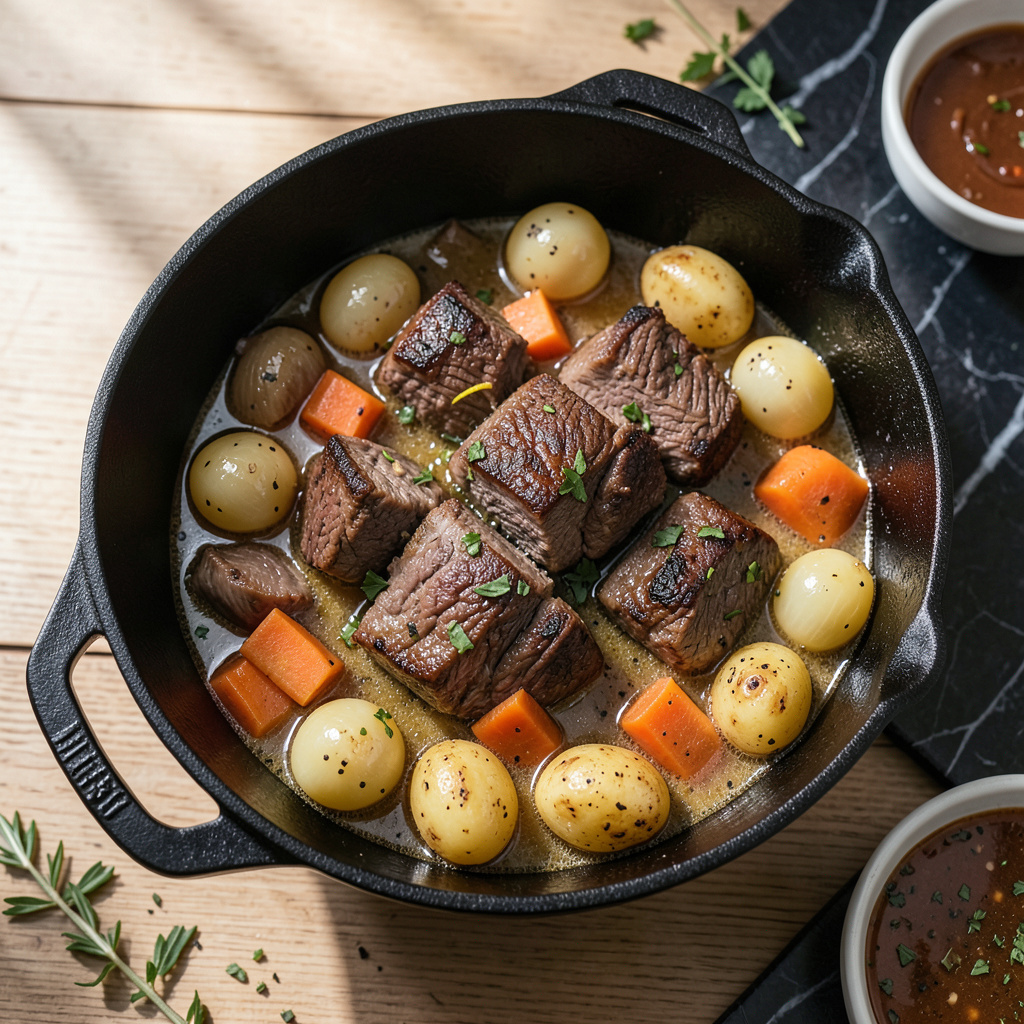
Let me tell you about the first time I swapped red wine for white in beef stew—it changed everything. After years of making stew the traditional way, I took a chance on a dry white wine during a particularly cold Charleston winter. The result was a lighter yet deeper flavor profile that let the beef shine in ways I hadn’t expected.
Here’s the thing—white wine doesn’t just add acidity, it transforms the entire dish. It tenderizes the meat more gently than red wine while creating a sauce that’s rich but not overpowering. I use a full cup during deglazing, then let it reduce by half before adding broth. This simple step builds layers of flavor that’ll have people asking for your recipe.
By the time this stew finishes its slow simmer, you’ll have fall-apart tender beef in a velvety sauce that’s complex without being heavy. The white wine adds brightness that cuts through the richness, making each bite feel balanced. I serve it with crusty bread for soaking up every drop—because you won’t want to waste a single spoonful.
Don’t worry if you’re not a wine expert—any dry white works, though I prefer Sauvignon Blanc for its crisp acidity. The key is letting it cook down properly, which takes about 10 minutes of patient simmering. Trust me, your taste buds will notice the difference.
📚 In This Guide
- What You’ll Need
- Instructions
- Tips and Common Mistakes
What Youll Need
- ● Beef: 2 lbs (900g) chuck roast, cut into 1.5-inch cubes (marbling = flavor! 🥩)
- ● White wine: 1.5 cups (360ml) dry variety (Sauvignon Blanc or Chardonnay work best)
- ● Vegetables: 2 medium carrots, chopped (peeled or unpeeled—your call!)
- ● 1 large yellow onion, diced
- ● 3 garlic cloves, minced
- ● 8 oz (225g) mushrooms, sliced (cremini or white)
- ● Broth: 2 cups (480ml) beef stock (low-sodium preferred)
- ● Herbs & spices: 2 tbsp tomato paste
- ● 1 tsp dried thyme (or 1 tbsp fresh)
- ● 2 bay leaves
- ● Salt & black pepper to taste
- ● Fat: 2 tbsp olive oil or butter (for searing)
- ● Dutch oven (5-6 quart) or heavy pot with lid
- ● Wooden spoon (for stirring without scratching)
- ● Sharp knife & cutting board
- ● Measuring cups/spoons (precision matters!)
- ● 1 tbsp Dijon mustard (adds tangy depth)
- ● 1 sprig fresh rosemary (for aromatic flair)
- ● 1 tbsp flour (to thicken the stew if needed)
- ● Crusty bread or mashed potatoes (for serving!)
Instructions
Let me walk you through making this rich, flavorful stew—simple steps, incredible results.
Sear the Beef for Maximum Flavor
Start by patting the beef dry with paper towels—this is crucial for getting a good sear. Heat a large Dutch oven over medium-high heat and add 2 tablespoons of oil. When the oil shimmers, add the beef in a single layer, being careful not to overcrowd the pot.
Let the beef sear undisturbed for 3-4 minutes per side until you develop a deep, golden-brown crust. This crust is packed with flavor and will form the foundation of your stew. Work in batches if needed—don’t rush this step, as proper browning makes all the difference in the final dish.
Once all the beef is browned, transfer it to a plate and set aside. The pot should have a nice layer of browned bits stuck to the bottom—this is called fond, and it’s pure flavor waiting to be unlocked.
Build the Flavor Base with Aromatics
In the same pot, add diced onions, carrots, and celery. Cook over medium heat for 6-8 minutes, stirring occasionally, until the vegetables soften and begin to caramelize. You’ll know they’re ready when the onions turn translucent and the kitchen smells amazing.
Add minced garlic and cook for 1 minute until fragrant, but don’t let it brown. Then stir in tomato paste and cook for another 2 minutes. This step deepens the tomato flavor and helps create a rich, complex base for your stew.
Pour in 1 cup of white wine and use a wooden spoon to scrape up all those browned bits from the bottom of the pot. Let the wine simmer for 3-4 minutes until it reduces by about half. This process deglazes the pot and incorporates all that flavor into your stew.
Simmer to Tender Perfection
Return the beef to the pot along with any accumulated juices. Add beef broth, bay leaves, thyme, and rosemary. Bring the mixture to a gentle boil, then reduce the heat to low so the stew maintains a slow, steady simmer.
Cover the pot and let it cook for 1.5-2 hours, stirring occasionally. You’ll know it’s ready when the beef becomes fork-tender and easily pulls apart. The stew should have thickened slightly, with the flavors melding together beautifully.
About 30 minutes before the stew is done, add potatoes and mushrooms. This timing ensures they cook through without turning mushy. The potatoes should be tender when pierced with a fork, and the mushrooms should have softened and absorbed the rich flavors of the stew.
Finish and Adjust Seasoning
Once the beef and vegetables are tender, remove the bay leaves and any herb stems. Taste the stew and adjust the seasoning with salt and pepper as needed. Remember, flavors concentrate as the stew cooks, so go easy at first.
If you’d like a thicker stew, you can mix 1 tablespoon of cornstarch with 2 tablespoons of cold water and stir it into the pot. Let it simmer for another 5 minutes to thicken. For a brighter finish, stir in a splash of white wine or a squeeze of lemon juice just before serving.
Let the stew rest for 10 minutes off the heat before serving. This allows the flavors to settle and the meat to reabsorb some of the juices. Serve hot with crusty bread to soak up every delicious drop.
Tips and Common Mistakes
Here’s what I’ve learned from making this stew countless times—small details that make a big difference.
Heat Control: When searing the beef in Step 1, make sure your Dutch oven is properly heated to medium-high before adding the oil. The oil should shimmer but not smoke. If it smokes, your heat is too high and you risk burning the fond (those flavorful browned bits) instead of creating it. Work in batches if needed—overcrowding lowers the pan temperature and prevents proper browning.
Wine Reduction: In Step 2, when you add the 1 cup of white wine, let it simmer for the full 3-4 minutes until it reduces by half. This step is crucial for building depth of flavor and deglazing the pot properly. If you rush it, you’ll miss out on the concentrated wine flavor that balances the richness of the beef. I like to use a dry white wine like Sauvignon Blanc for its crisp acidity.
Simmering Technique: During the 1.5-2 hour simmer in Step 3, maintain a gentle simmer—not a rolling boil. You should see small bubbles breaking the surface occasionally. Too high heat can make the beef tough, while too low heat won’t break down the collagen properly. Stir occasionally and check the liquid level, adding a splash of broth if needed to keep everything submerged.
Potato Timing: Adding the potatoes exactly 30 minutes before the stew is done ensures they cook through without turning mushy. I prefer Yukon Gold potatoes for their creamy texture that holds up well. Cut them into uniform 1-inch chunks so they cook evenly. If you’re using larger potatoes, you might need to increase this time slightly to ensure they’re tender.
Pro Tips for White Wine In Beef Stew
- Here’s what I’ve learned from making this stew countless times—small details that make a big difference.
- Heat Control: When searing the beef in Step 1, make sure your Dutch oven is properly heated to medium-high before add…
- Wine Reduction: In Step 2, when you add the 1 cup of white wine, let it simmer for the full 3-4 minutes until it redu…
Frequently Asked Questions
Can I use any white wine for beef stew, or are some better than others?
Opt for dry white wines like Sauvignon Blanc, Pinot Grigio, or Chardonnay—they add acidity and depth without overpowering the beef. Avoid sweet wines (like Moscato) or “cooking wine” (high in salt). A $10–$15 bottle works perfectly—no need for expensive vintages!
How much white wine should I add, and when?
Use ½ to ¾ cup per pound of beef. Deglaze the pot with wine after browning the meat (but before adding broth) to lift flavorful browned bits. Simmer 3–5 minutes to cook off the alcohol before proceeding. Pro tip: Never add wine at the end—it’ll taste raw!
What if I don’t want to use alcohol? What’s the best substitute?
Swap wine for equal parts:
- White grape juice + 1 tbsp vinegar (apple cider or white wine vinegar) for tang
- Beef or chicken broth + a splash of lemon juice
My stew tastes too “wine-y”—how do I fix it?
Balance the flavor by:
- Simmering uncovered for 10–15 extra minutes to reduce the wine
- Adding a teaspoon of sugar or honey to mellow acidity
- Stirring in a pat of butter at the end for richness
Does white wine actually tenderize the beef, or is it just for flavor?
Both! The wine’s acidity breaks down tough muscle fibers, while its flavors infuse the meat. For maximum tenderness, marinate the beef in wine for 1–2 hours before cooking, or ensure a long simmer (2+ hours). Bonus: Alcohol also helps extract flavor from herbs and spices!
Adding white wine to beef stew isn’t just a fancy twist—it’s a game-changer for depth and brightness in every bite! 🍷✨ Whether you’re using a crisp Sauvignon Blanc or a buttery Chardonnay, the acidity and aromatics elevate the dish without overpowering it. Now that you’ve got the know-how, why not grab a bottle and give it a try?
Ready to simmer up something extraordinary? Bookmark this recipe, gather your ingredients, and let your slow cooker (or Dutch oven) work its magic. Your taste buds—and dinner guests—will thank you! 😉