
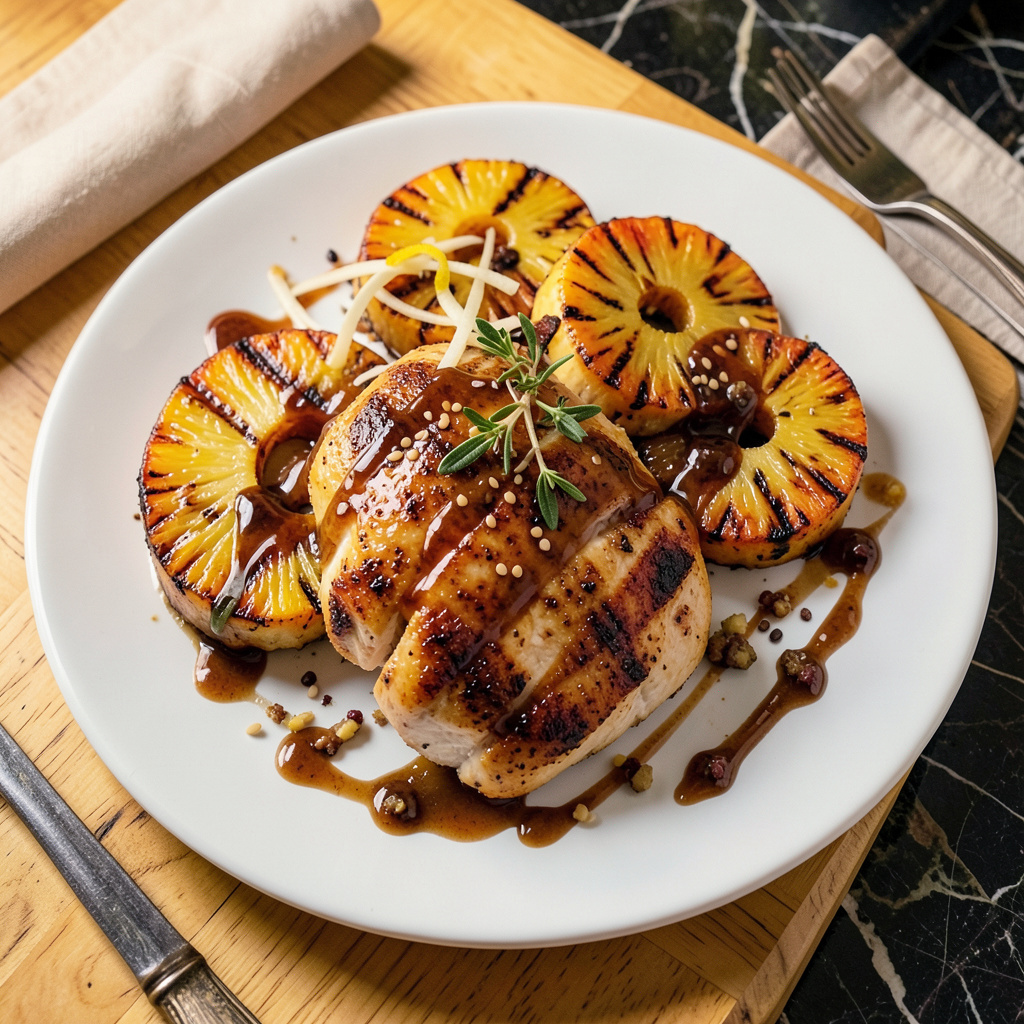
Recreating restaurant-quality dishes at home often comes down to mastering the balance between sweet and savory flavors. This Maui pineapple chicken delivers that perfect harmony, combining caramelized pineapple glaze with smoky grill marks for a dish that rivals Yard House’s signature version. The key lies in the marinade—a carefully calibrated blend of tropical fruit, brown sugar, and umami-rich soy sauce that transforms ordinary chicken into something extraordinary.
After years of perfecting grill techniques at The Smoky Pig, I’ve adapted this recipe for home cooks using standard equipment. The chicken develops a deep mahogany crust when cooked over medium-high heat, while the pineapple glaze reduces to a sticky, glossy finish. What makes this dish special is how the sweetness of the pineapple plays against the charred edges of the chicken, creating layers of flavor in every bite.
The restaurant version pairs this with coconut rice and grilled vegetables, but I’ve found that simple steamed jasmine rice works equally well to soak up the extra glaze. For those watching their sugar intake, the recipe includes a lower-sugar variation that maintains all the tropical flavor without the guilt. The technique ensures the chicken stays juicy while achieving that coveted caramelized exterior.
Whether you’re hosting a summer cookout or simply craving restaurant-quality flavors, this recipe delivers consistent results. The marinade does double duty as both a tenderizer and flavor base, while the cooking method guarantees perfectly cooked chicken with those distinctive grill marks. All that’s left is to plate it with confidence and enjoy the compliments.
Ingredients for Yard House Maui Pineapple Chicken
This professional-grade ingredient list balances tropical sweetness with savory depth, replicating Yard House’s signature Maui pineapple chicken at home.
| Ingredient | Amount | Notes |
|---|---|---|
| Boneless, Skinless Chicken Breasts 🍗 | 1 ½ lb | Pounded to even ½-inch thickness |
| Fresh Pineapple 🍍 | 2 cups | Diced, plus ½ cup puréed for glaze |
| Dark Brown Sugar 🧂 | ½ cup | Packed, for caramelization |
| Low-Sodium Soy Sauce 🫙 | ⅓ cup | Tamari for gluten-free option |
| Fresh Garlic Cloves 🧄 | 6 cloves | Minced, for marinade depth |
| Fresh Ginger Root 🌿 | 1 tbsp | Peeled, finely grated |
| Rice Vinegar 🍶 | 2 tbsp | Unseasoned, for acid balance |
| Toasted Sesame Oil 🫒 | 1 tbsp | Pure, not blended |
| Cornstarch 🌾 | 2 tbsp | For glaze thickening |
| Kosher Salt 🧂 | 1 ½ tsp | Diamond Crystal preferred |
| Freshly Ground Black Pepper 🌶️ | 1 tsp | Coarse grind for texture |
| Vegetable Oil 🫒 | 2 tbsp | High smoke point for grilling |
| Green Onions 🧅 | 3 whole | Thinly sliced for garnish |
| Sesame Seeds 🌾 | 1 tbsp | Toasted, for finishing |
| Red Pepper Flakes 🔥 | ½ tsp | Optional, for heat |
The chicken quality is paramount for achieving restaurant-style results. Boneless, skinless breasts from reputable suppliers like Whole Foods or Costco ensure consistent texture and moisture retention. Pounding to an even ½-inch thickness guarantees uniform cooking and optimal grill marks. For the pineapple, fresh is non-negotiable—canned lacks the necessary acidity and enzymatic properties for proper caramelization. The brown sugar should be dark variety for its deeper molasses notes, which balance the pineapple’s brightness.
Substitutions require careful consideration to maintain flavor equilibrium. Honey or coconut sugar can replace brown sugar at a 1:1 ratio, though the glaze texture will vary slightly. For soy sauce alternatives, coconut aminos provide similar umami without sodium overload. Fresh ginger is critical—ground ginger at half the quantity lacks the necessary aromatic complexity. The rice vinegar can be substituted with apple cider vinegar, but reduce by 25% to avoid overpowering the marinade. Cornstarch alternatives like arrowroot powder require different handling—mix with cold water before adding to glaze.
Proper ingredient preparation ensures optimal results. Store fresh pineapple in an airtight container for up to 3 days, though it’s best used immediately for maximum enzyme activity. The marinade components can be prepped 24 hours ahead—store refrigerated in a glass container to prevent flavor absorption. Toasted sesame seeds maintain their crunch for 1 week in a cool, dark pantry. For food safety, marinate chicken no longer than 12 hours to prevent texture degradation from the pineapple’s bromelain enzyme.
Why You’ll Love This Recipe
- One-Pan Magic: I love that this comes together in a single skillet—sear the chicken, caramelize the pineapple and garlic, then let the brown sugar and soy sauce reduce into a glossy glaze. One pan, minimal cleanup, maximum flavor.
- Sweet-Savory Obsession: That first bite where the sticky brown sugar glaze meets the tangy pineapple and salty soy? Ridiculously good. The fresh garlic adds this deep, aromatic punch that makes it taste like a restaurant dish.
- Meal Prep MVP: This reheats beautifully—chicken stays juicy, pineapple keeps its brightness. I’ll make a double batch on Sunday and portion it over rice or greens for lunches that actually feel exciting.
- Budget-Friendly Crowd Pleaser: Boneless chicken breasts stretch far, and pineapple’s in season half the year. Between us, I’ve served this to picky eaters and foodie friends—everyone goes back for seconds.
Step-by-Step Instructions for Maui Pineapple Chicken
This professional method balances caramelized sweetness with savory depth for restaurant-quality results.
Step 1: Prepare the Chicken and Pineapple Components
Begin by pounding the 1.5 lb boneless, skinless chicken breasts to an even ½-inch thickness using a meat mallet. This ensures uniform cooking and optimal texture. Place the pounded chicken on a clean work surface and season both sides with 1.5 tsp kosher salt and 1 tsp freshly ground black pepper, pressing the seasoning into the meat for better adhesion.
Next, prepare the pineapple by dicing 2 cups fresh pineapple into ½-inch pieces, reserving ½ cup to purée for the glaze. The uniform dice size guarantees even caramelization during cooking, while the puréed portion will create a smooth, glossy finishing sauce.
Step 2: Create the Marinade and Glaze Base
In a medium bowl, combine the 0.33 cup low-sodium soy sauce, 0.5 cup packed dark brown sugar, 6 cloves minced fresh garlic, 1 tbsp finely grated fresh ginger root, 2 tbsp rice vinegar, and 1 tbsp toasted sesame oil. Whisk vigorously until the sugar fully dissolves and the mixture becomes homogeneous. This balance of sweet, umami, and aromatic elements forms the flavor foundation.
Divide the mixture equally: use half to marinate the chicken for 20 minutes at room temperature, and reserve the remaining half for the glaze. The marinating time allows the flavors to penetrate without over-softening the chicken’s texture. Meanwhile, purée the reserved pineapple until smooth and whisk it into the glaze portion.
Step 3: Cook the Chicken and Develop the Glaze
Heat 2 tbsp vegetable oil in a large skillet over medium-high heat until shimmering. Add the marinated chicken and cook for 4-5 minutes per side until deeply browned and the internal temperature reaches 160°F. Transfer the chicken to a clean plate and tent with foil to maintain warmth.
In the same skillet, add the diced pineapple and cook for 3-4 minutes until caramelized at the edges. Pour in the reserved glaze mixture and bring to a simmer. Whisk in 2 tbsp cornstarch slurry (mixed with 2 tbsp water) and cook for 2-3 minutes until the glaze thickens to a syrup consistency that coats the back of a spoon.
Step 4: Finish and Present
Return the cooked chicken to the skillet and spoon the thickened glaze over each piece, turning to coat evenly. Cook for an additional 1-2 minutes to allow the flavors to meld. The glaze should adhere to the chicken in a glossy layer without sliding off.
Transfer the chicken to a serving platter and garnish with thinly sliced green onions, 1 tbsp toasted sesame seeds, and 0.5 tsp red pepper flakes for visual contrast and added texture. Serve immediately while the glaze remains vibrant and the chicken retains its juiciness.
Pro Tips For Making Yard House Maui Pineapple Chicken
- Pound the chicken first: Use a meat mallet or rolling pin to even out the chicken breasts to ½-inch thickness—this guarantees they cook through in the same 4-5 minutes without drying out. I learned this the hard way after serving rubbery edges to dinner guests while the centers were still pink. —
- Char the pineapple hard: Don’t just warm the pineapple—let it sit in a screaming-hot skillet (or under the broiler) until the edges blacken slightly, about 2-3 minutes per side. That caramelized bitterness cuts through the brown sugar’s sweetness and mimics the smoky char from a real grill. —
- Bloom the garlic properly: Cook the minced garlic in the soy sauce mixture for exactly 30 seconds over medium-low heat—just until fragrant but not browned. Burnt garlic turns bitter fast, and since this sauce is the backbone of the dish, that acrid taste will ruin every bite. —
- Reduce the sauce separately: After simmering the chicken in the soy-brown sugar sauce, pull the meat out and let the sauce reduce alone for 3-4 minutes on high heat. This thickens it into a glossy glaze that clings to the chicken instead of pooling sadly on the plate—no cornstarch slurry needed.
Best Sauces and Condiments for This yard house maui pineapple chicken
Sweet Chili Glaze
This glaze amplifies the pineapple’s tropical notes while adding subtle heat. Combine ¼ cup pineapple purée with 2 tbsp sweet chili sauce (I prefer Mae Ploy brand), 1 tbsp rice vinegar, and 1 tsp sriracha. Simmer until reduced by half, then brush over grilled chicken during the last 2 minutes of cooking. 🌶️
Coconut Lime Drizzle
For a creamy contrast, whisk together ½ cup coconut milk, 1 tbsp lime juice, and 1 tsp honey. Drizzle lightly over plated chicken—just enough to add brightness without overwhelming the glaze. I learned this trick from a Charleston chef who swore by its ability to cut through rich flavors.
Spicy Garlic Aioli
Blend ½ cup mayo with 2 roasted garlic cloves, 1 tbsp lime zest, and ½ tsp smoked paprika. This adds a smoky depth that complements the caramelized pineapple. Serve on the side for dipping—it’s especially good with the charred edges of the chicken.
Pineapple Salsa
Dice 1 cup fresh pineapple with ¼ red onion, 1 jalapeño (seeded), and 2 tbsp cilantro. Toss with 1 tbsp lime juice and ½ tsp salt. The fresh acidity balances the glaze’s sweetness perfectly. I always make extra—it disappears fast!
Sesame Ginger Sauce
Whisk 3 tbsp soy sauce, 1 tbsp grated ginger, 1 tbsp sesame oil, and 1 tsp brown sugar. This thinner sauce lets you control the intensity—drizzle lightly for subtle flavor or pool it under the chicken for bold impact. My Georgia family fights over who gets the extra sauce.
Mango Habanero Jam
Mix ¼ cup mango jam with ½ tsp habanero powder and 1 tsp apple cider vinegar. Warm gently until just melted, then spoon over the chicken. The fruity heat mirrors what I tasted at a Maui food truck—unexpected but addictive. Start with less habanero if you’re heat-sensitive. 🔥
Nutrition Facts
Frequently Asked Questions
Can I use canned pineapple instead of fresh?
Fresh pineapple is strongly recommended for its natural enzymes and brighter flavor. Canned pineapple lacks the acidity needed for proper caramelization. If you must substitute, use unsweetened canned pineapple and reduce the brown sugar by 2 tablespoons to compensate.
How do I prevent the chicken from drying out?
Pounding the chicken to an even ½-inch thickness ensures uniform cooking. Don’t overcook—remove from heat when the internal temperature hits 160°F. Letting it rest for 5 minutes before slicing keeps it juicy.
What’s the best way to adjust the sweetness level?
For less sweetness, reduce the brown sugar to ¼ cup and add 1 tablespoon lime juice to balance. For more sweetness, increase brown sugar to ⅔ cup and monitor the glaze closely to prevent burning.
Can I make this recipe ahead of time?
The marinade can be prepared 24 hours in advance and stored refrigerated. Marinate the chicken for no longer than 12 hours to avoid texture breakdown. The glaze can be made 2 days ahead and reheated gently before serving.