
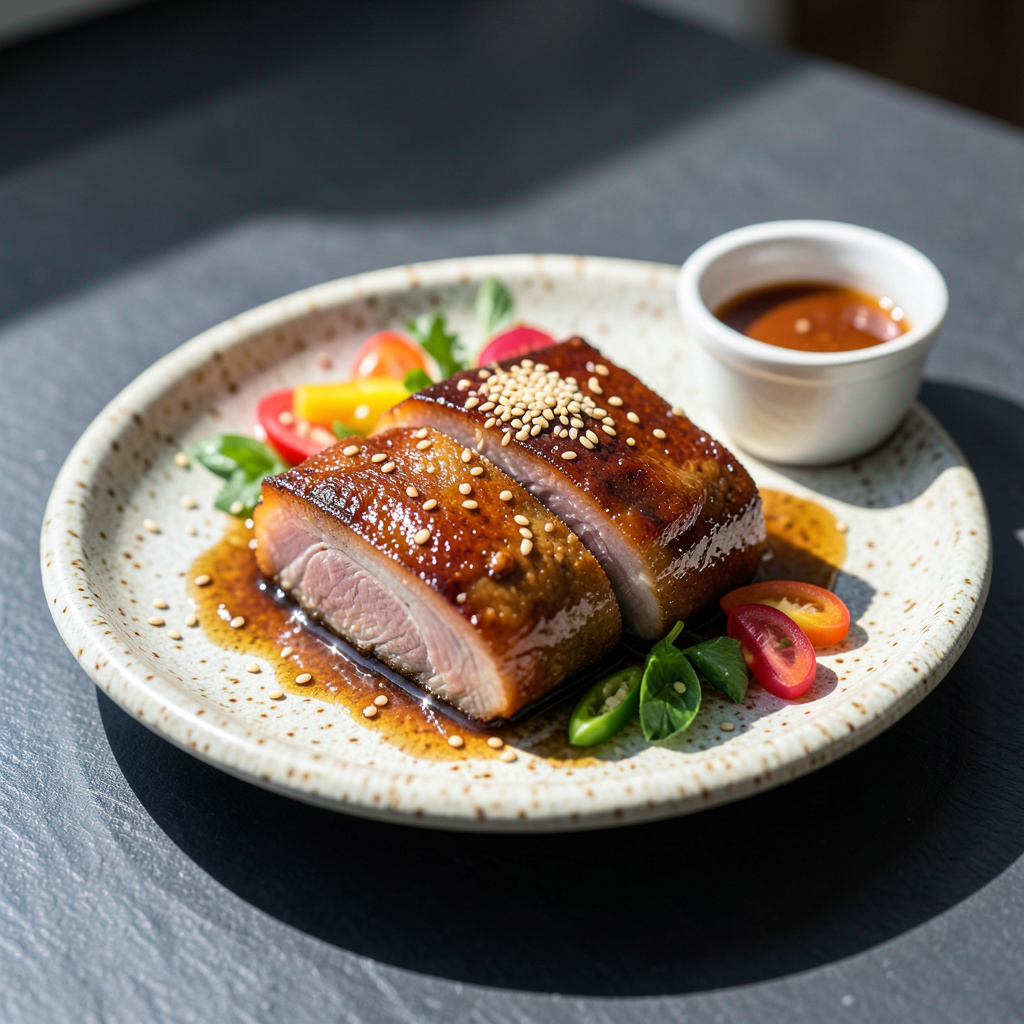
As a chef who’s spent years perfecting pork dishes, I’m excited to share my Korean pork belly recipe that’s become a signature at The Smoky Pig. 🔥 This braised perfection combines the unctuous texture of slow-cooked pork belly with bold Korean flavors.
The secret lies in a careful balance of sweet and savory elements. A 24-hour marinade in a mixture of soy sauce, brown sugar, garlic, and ginger creates deep flavor penetration, while a slow braise at 300°F ensures tender, fall-apart meat.
What sets this dish apart is the harmony between the rich pork and the bright, spicy sauce. The caramelized exterior gives way to tender, juicy layers that simply melt in your mouth. It’s a true showstopper for any dinner gathering.
With perfectly balanced flavors and a straightforward cooking process, this Korean pork belly recipe is sure to become a favorite. Serve with steamed rice and kimchi for an authentic Korean-inspired meal that’s both comforting and sophisticated.
Ingredients for Korean Pork Belly
Gather these premium ingredients for a show-stopping Korean pork belly experience that’s both comforting and sophisticated.
| Ingredient | Amount | Notes |
|---|---|---|
| Pork Belly 🥩 | 2 lb | Skin removed, cut into 2-inch pieces |
| Soy Sauce 🧂 | 1 cup | Use low-sodium for better control |
| Brown Sugar 🍮 | ½ cup | Dark brown for richer flavor |
| Garlic Cloves 🧄 | 6 cloves | Peeled and smashed |
| Fresh Ginger 🌿 | 2 whole | Sliced thinly |
| Korean Chili Flakes 🌶️ | 2 tbsp | Gochugaru for authentic heat |
| Black Pepper 🌶️ | 1 tsp | Freshly ground preferred |
| Rice Vinegar 🍋 | ¼ cup | Unseasoned, for balancing flavors |
| Sesame Oil 🫒 | 2 tbsp | Toasted for nuttier flavor |
| Onions 🧅 | 2 whole | Sliced, for braising liquid |
| Green Onions 🌿 | 4 whole | Chopped, for garnish |
| Beef Broth 🍜 | 2 cups | Low-sodium, for braising |
The pork belly is the star here. Look for thick, even slabs at Asian markets or high-end grocery stores. I prefer Costco for consistent quality. The Korean chili flakes (gochugaru) matter too—get them from a reputable spice store or Penzeys for the best heat.
No Korean chili flakes? Cayenne pepper is a decent substitute, but use half the amount. For the soy sauce, low-sodium Kikkoman works well. If you can’t find fresh ginger, ground ginger at one-third the amount is better than nothing. The sesame oil should be toasted—it makes all the difference in the flavor.
This dish improves with time. Make it ahead and refrigerate for up to 3 days or freeze for 3 months. Reheat gently at 300°F. The leftovers are just as good—if not better—than the first serving.
Why You’ll Love Korean Pork Belly
- Quick Prep: I love that this Korean Pork Belly Recipe comes together quickly – just marinate the pork belly in a mixture of soy sauce, brown sugar, garlic, and ginger, and you’re good to go.
- Flavor Bomb: The combination of soy sauce, brown sugar, and ginger creates a ridiculously good sweet and savory glaze that caramelizes on the pork belly during cooking. That crispy edge with the creamy center? Chef’s kiss.
- Meal Prep Master: Honestly, this recipe is a lifesaver for meal prep – I cook a big batch on Sunday and use it for lunches and dinners throughout the week. It’s just as delicious served over rice as it is in a sandwich.
- Leftover Luxury: I’ll be real: this Korean Pork Belly Recipe makes amazing leftovers – the flavors meld together even more overnight, making it perfect for a Tuesday night dinner that’s actually better than the night before.
Step-by-Step Instructions for Korean Pork Belly
Here’s the method that yields perfectly braised pork belly every time.
🔥 Step 1: Sear the Pork Belly
Heat 2 tablespoons of sesame oil in a large Dutch oven over medium-high heat. Add the 2 lb pork belly pieces in batches, being careful not to overcrowd the pan. Sear for 2-3 minutes per side until they develop a deep golden brown crust. The rendered fat should start to shimmer and slightly smoke.
Transfer the seared pork belly to a plate and set aside. Don’t worry if some pieces stick slightly—the browned bits will add depth to your braising liquid. If your pan gets too dark, deglaze with a splash of soy sauce to loosen the fond.
👨🍳 Step 2: Prepare the Braising Liquid
In the same pot (no need to clean it), add the 2 sliced onions. Cook over medium heat for 8-10 minutes, stirring occasionally, until they’re softened and caramelized. The onions should develop a deep golden color and release their natural sweetness, which will balance the savory and spicy elements.
Add the 6 cloves smashed garlic and 2 sliced fresh ginger to the pot. Cook for another 2 minutes, stirring constantly to prevent burning. You’ll know it’s working when the aroma fills the kitchen and the garlic turns slightly golden.
🥘 Step 3: Combine and Braise
Add the 1 cup soy sauce, 0.5 cup brown sugar, 2 tablespoons Korean chili flakes, 1 teaspoon black pepper, and 0.25 cup rice vinegar to the pot. Stir to combine, scraping up any browned bits from the bottom. The mixture should be fragrant and slightly bubbly.
Return the seared pork belly to the pot and pour in the 2 cups beef broth. Bring the liquid to a simmer, then cover the pot with a lid. Transfer it to a preheated oven at 300°F and braise for 2 ½ to 3 hours, or until the meat is tender and easily shreds with a fork.
⏰ Step 4: Rest and Serve
Once the pork belly is done, remove the pot from the oven and let it cool slightly. Using a slotted spoon, transfer the meat to a serving dish. Strain the braising liquid through a fine-mesh sieve into a clean pot, discarding the solids. Skim off any excess fat from the surface.
Simmer the strained liquid over medium heat until it’s reduced and slightly thickened. Pour the sauce over the pork belly and garnish with 4 chopped green onions. Serve hot, accompanied by steamed rice or kimchi for a complete meal.
Pro Tips for Making Korean Pork Belly
- Sear at High Heat: Get your pan scorching hot before adding the pork belly – I mean, smoking hot. This initial blast of heat is what creates that beautiful caramelized crust that makes Korean pork belly so irresistible.
- Don’t Overprocess Ginger: When prepping the fresh ginger, just give it a rough chop – don’t turn it into mush. You want some texture left to provide that nice contrast in the finished dish.
- Avoid Overcrowding Pan: Cook the pork belly in batches if you have to – it’s better than steaming instead of searing. When you overcrowd the pan, you end up with pale, soggy pieces instead of that gorgeous caramelized exterior.
- Rest Before Slicing: After cooking, let the pork belly rest for at least 5 minutes before slicing. This lets the juices redistribute, making each bite more tender and flavorful – and it’s worth the wait.
Troubleshooting This Recipe
Braising Liquid Issues
If your braising liquid isn’t thickening properly, check your reduction time. Simmering it over medium heat for 10-15 minutes should do the trick. If it’s still too thin, whisk in a slurry made from 1 tablespoon cornstarch and 2 tablespoons water. I learned this trick from my days at The Smoky Pig.
Pork Belly Too Tough
Tough pork belly usually means it wasn’t cooked long enough. Make sure you’re braising at 300°F for the full 2 ½ to 3 hours. If it’s still tough after that, continue cooking in 30-minute increments until it shreds easily. Using a meat thermometer helps here—target 205°F internal temperature for perfect tenderness. 🔥
Excessive Fat
Pork belly naturally has a lot of fat, but you can manage it. After cooking, let the dish cool slightly, then refrigerate for 2-3 hours. The fat will solidify on top, making it easy to remove. For an extra-rich experience, serve with some of that delicious fat intact—I often do this for special guests.
Flavor Too Mild
If the dish lacks punch, boost the Korean chili flakes (gochugaru) in your braising liquid. Start with an additional 1 teaspoon and adjust to taste. You can also add a splash of fish sauce or extra soy sauce for depth. Be cautious with fish sauce, as it’s potent—start with 1 tablespoon and taste before adding more.
Searing Challenges
If your pork belly isn’t searing properly, ensure your pan is hot enough. You should see a shimmer in the oil before adding the meat. If it’s still not browning, try patting the pieces dry with paper towels before searing. Don’t overcrowd the pan—work in batches if necessary. A cast-iron skillet works wonders here due to its heat retention. 🔪
Serving Suggestions
To elevate your dish, serve with a variety of accompaniments. Steamed rice helps balance the richness, while kimchi adds a refreshing contrast. Pickled radishes or a simple cucumber salad can also cut through the fatty texture. I like to garnish with chopped green onions and a sprinkle of toasted sesame seeds for added crunch and flavor.
Tips & Tricks for Perfect Korean Pork Belly
A few key techniques make all the difference in achieving that tender, fall-apart texture and rich flavor.
The Searing Technique: In Step 1, make sure to pat the 2 lb pork belly pieces dry before searing. This helps create that beautiful deep golden brown crust. I like to use medium-high heat to get a good sear in 2-3 minutes per side. Don’t overcrowd the pan – work in batches if needed.
Braising Liquid Magic: When preparing the braising liquid in Step 2, be patient with those 2 sliced onions. Cooking them for 8-10 minutes over medium heat until they’re softened and caramelized makes a huge difference in the depth of flavor. Stir occasionally to prevent burning.
Temperature Control: For the best results, make sure your oven is at the correct temperature – 300°F is crucial for that slow, gentle braise. I recommend using an oven thermometer to double-check. The 2 ½ to 3 hours braising time allows the meat to become tender and easily shred with a fork.
Finishing Touches: After straining the braising liquid in Step 4, don’t skip skimming off excess fat. This helps create a rich, velvety sauce that coats the pork belly beautifully. Simmering it over medium heat until it’s reduced and slightly thickened adds to the dish’s luxurious texture.
Nutrition Facts
Frequently Asked Questions
What’s the best way to store leftover Korean pork belly?
Store leftovers in an airtight container in the refrigerator for up to 3 days. Reheat gently in the oven at 300°F until warmed through. You can also freeze it for up to 3 months – just thaw overnight in the refrigerator before reheating.
Can I make this recipe without a Dutch oven?
Yes, you can use a heavy-bottomed pot with a lid or even a slow cooker. If using a slow cooker, sear the pork belly on the stovetop first, then transfer everything to the slow cooker and cook on low for 6-8 hours. The key is maintaining a consistent low temperature.
How spicy is this Korean pork belly recipe?
The dish has a moderate level of heat from the Korean chili flakes. You can adjust the spice level to your liking by adding more or less gochugaru. Start with 1 tablespoon if you prefer milder flavor, or add an extra 1 teaspoon for more heat.
What sides go well with Korean pork belly?
Traditional Korean sides like steamed rice, kimchi, and pickled radishes pair perfectly. You can also serve it with a simple cucumber salad or roasted vegetables to cut through the richness. For an authentic touch, garnish with chopped green onions and toasted sesame seeds.