
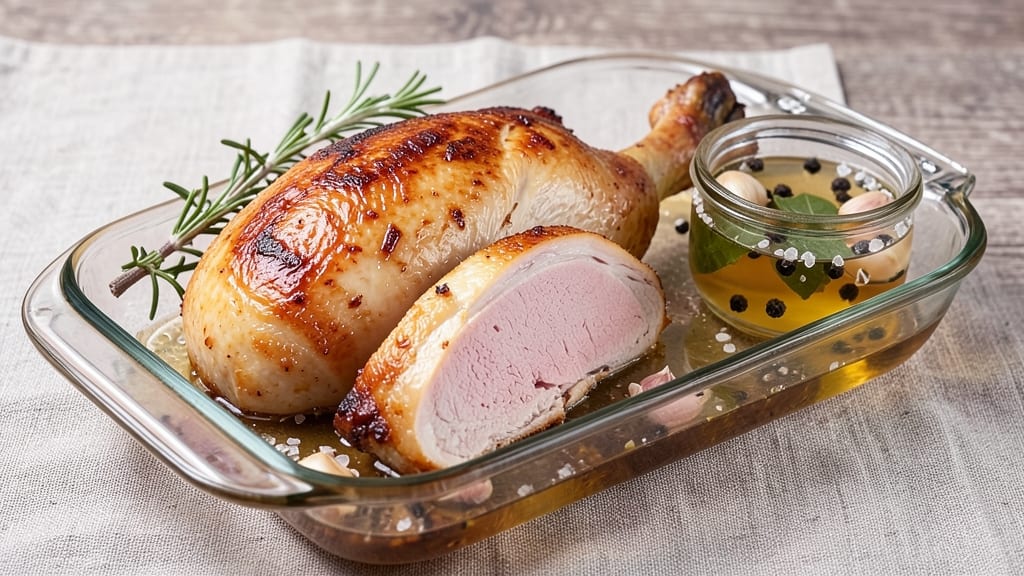
A basic chicken brine recipe transforms ordinary chicken into restaurant-quality perfection with just a few simple ingredients and a little patience. The magic happens through a precise balance of salt, sugar, and aromatics that infuse the meat at a cellular level, guaranteeing crispy skin and moist, juicy results every time.
This method is the secret weapon behind professional chefs’ ability to elevate even the simplest chicken cuts.
The foundation of an effective brine is a simple liquid mixture of water, salt, and sugar, which works to break down muscle fibers while retaining moisture.
For optimal results, I recommend a 1-quart brine per pound of chicken, with a ratio of ¼ cup salt and 2 tablespoons sugar per quart. Optional aromatics like garlic, peppercorns, or herbs can be added for extra depth, though the core brine itself delivers exceptional results.
The key is letting the chicken soak for at least 4 hours—or overnight for maximum tenderness.
When you remove the chicken from the brine, you’ll notice an immediate transformation: the skin tightens and develops a golden sheen, while the meat remains impossibly tender. This isn’t just about flavor—it’s about texture.
The salt draws moisture into the meat, which then gets locked in during cooking, resulting in that coveted crispy exterior and juicy interior that disappears too quickly when using dry brines or no brine at all. The best part?
This method works equally well for whole chickens, breasts, thighs, or drumsticks.
For best results, use the brine immediately after mixing, though you can store it in the refrigerator for up to 3 days. The beauty of this recipe lies in its versatility—whether you’re preparing chicken for roasting, grilling, or frying, this simple brine sets the stage for perfect results.
The technique is foolproof, requiring no special equipment beyond a large container and a bit of time. Let’s get started on creating chicken that’s impossible to resist.
Ingredients for basic chicken brine
Four cups of water, a quarter cup of salt, and two tablespoons of sugar—just the start of restaurant-quality chicken magic.
| Ingredient | Amount | Notes |
|---|---|---|
| Water 💧 | 4 cups | Room temperature preferred |
| Diamond Crystal Kosher Salt 🧂 | ¼ cup | Fine grain for even dissolution |
| Granulated Sugar 🍚 | 2 tbsp | White or brown preferred |
| Garlic Cloves 🧄 | 4 cloves | Peeled, lightly smashed |
| Black Peppercorns 🌶️ | 1 tbsp | Crushed for aromatic release |
| Fresh Bay Leaves 🍃 | 2 whole | Optional aromatic depth |
| Fresh Thyme Sprigs 🌿 | 2 sprigs | Stems removed for infusion |
| Lemon Peel 🍋 | 1 whole | Organic preferred, no pith |
The salt is non-negotiable here—Diamond Crystal kosher salt dissolves perfectly and gives you that clean, professional taste. Trader Joe’s or Whole Foods carry it in bulk, and it’s worth the investment for this recipe. Sugar isn’t just for sweetness; it helps retain moisture while balancing the salt’s intensity. For the aromatics, fresh is always better, but dried thyme at half the amount works in a pinch. The lemon peel adds a subtle brightness that makes all the difference—organic lemons have thicker, more fragrant peels, so grab those if you can. Store your spices in airtight containers away from light to preserve their potency.
No fresh bay leaves? Dried bay leaves at one-third the amount will work, though fresh infuses more beautifully. Running low on peppercorns? Crushed red pepper flakes at half the amount add heat without the same depth. The garlic can be roasted for a sweeter flavor—just toss peeled cloves in a 400°F oven for 15 minutes before adding to the brine. For a citrus-free version, swap lemon peel for orange peel or a splash of apple cider vinegar. The sugar can be omitted if you’re watching carbs, though it does help tenderize the meat. Always use room-temperature water—cold water can shock the chicken when it’s added later.
This brine keeps for 3 days in the fridge, but it’s best used fresh. If you’re prepping ahead, store the dry ingredients separately and mix the brine just before using. The aromatics can be removed after 24 hours if you prefer a cleaner flavor. For large batches, scale the ratio 1 quart brine per pound of chicken—just keep the proportions consistent. The brine can be reused once for a second batch of chicken, though flavor will be slightly muted. Always discard any unused brine after the second use to prevent bacterial growth.
Why You’ll Love This Recipe
- Five-Ingredient Magic: I swear by this—just water, salt, sugar, garlic, and peppercorns. That’s it. No fancy gadgets, no last-minute grocery runs. The salt breaks down into the meat while you sleep, and honestly? The sugar’s not just for sweetness—it helps the crust lock in juices like nothing else.
- Crispy-Juicy Promise: The garlic and peppercorns infuse the chicken so deeply, every bite tastes like it’s been kissed by a campfire. Not too salty, not too sweet—just that perfect balance where the skin cracks with flavor and the inside stays so tender it falls apart.
- Weeknight Superhero: Between us, this is my secret for stress-free dinners. Brine a whole chicken Sunday night, roast it Monday, and still have leftovers for Wednesday. (Yes, even on a Tuesday night.) It’s the kind of prep that makes you look like a culinary genius without trying.
- Budget Stretch: A single brine batch stretches to feed four for two meals—no wasted ingredients, no takeout guilt. The kosher salt and sugar are cheap staples, and garlic? You already have it. This is how I feed my family well without breaking the bank.
Step-by-step instructions for perfectly brined chicken
Here’s how to transform ordinary chicken into restaurant-quality masterpieces with crispy skin and irresistible juiciness.
Combine Brine Ingredients in a Large Container
In a large, non-reactive container (I prefer glass or food-grade plastic), combine the 4 cups water, 0.25 cup Diamond Crystal kosher salt, and 2 tbsp granulated sugar. Stir until the salt and sugar completely dissolve—this ensures even flavor distribution throughout the brine. The sugar helps balance the saltiness while adding subtle sweetness that pairs beautifully with the chicken.
Here’s the thing—room temperature water works best, but if you’re using cold water straight from the fridge, let it sit for 10-15 minutes to prevent shocking the chicken later. The brine should taste strongly salty, like the ocean, but not overwhelmingly so. If it’s too intense, add a splash more water to adjust.
Add Aromatics and Infuse the Brine
Add the 4 cloves garlic (lightly smashed to release their oils), 1 tbsp black peppercorns (crushed between your palm and a cutting board for maximum aromatic release), 2 whole bay leaves, 2 sprigs fresh thyme (stems removed), and 1 whole lemon peel (no pith—just the vibrant yellow zest). Give everything a gentle stir to ensure all components are submerged.
Cover the container and let the aromatics infuse for 15-20 minutes at room temperature. This step develops deep, complex flavors that will penetrate the chicken. I like to place the container in the fridge during infusion if my kitchen gets warm—it helps concentrate the aromas. The brine should smell like a Mediterranean summer: bright, herbal, and slightly citrusy.
Submerge Chicken and Brine Overnight
Place your chicken pieces (whole bird, breasts, thighs, or legs) into the infused brine, ensuring they’re completely submerged. If using a whole chicken, you might need to weigh it down with a small plate. Cover the container and refrigerate for 12-24 hours—this is where the magic happens. The salt breaks down muscle proteins, allowing them to retain moisture during cooking, while the aromatics infuse deeply.
Don’t skip the overnight soak! Chicken brined for at least 12 hours stays juicy even after high-heat cooking. For maximum flavor, I prefer 24 hours, but never exceed 48 hours—longer brining can make the meat mushy. After brining, rinse the chicken under cold water for 30 seconds and pat it completely dry before cooking to ensure that crispy skin we’re all chasing.
Cook Immediately for Best Results
Remove the chicken from the brine and let it sit at room temperature for 15-30 minutes before cooking. This ensures even cooking from edge to center. Whether you’re roasting, grilling, or pan-searing, the brined chicken will deliver crispy, golden skin and moist, tender meat that falls apart with the slightest pressure. The flavors will be vibrant, with notes of garlic, thyme, and citrus cutting through the richness of the chicken.
Pro tip: If you’re making a whole chicken, roast it at 425°F until the internal temperature reaches 165°F in the thickest part of the thigh. The skin should be deep golden brown and crispy enough to stand up to a fork. For pieces, aim for 175°F internal temperature—brined chicken stays juicy at higher temps than unbrined.
Pro Tips For Making Basic Chicken Brine
- CRUSH THE GARLIC: DESCRIPTION: Smash those cloves with the flat side of your knife before tossing them in—no need to peel them. The broken cells release more flavor, and you won’t spend 10 minutes fishing for skins later. (Yes, even if you’re impatient like me.)
- WEIGH YOUR SALT: DESCRIPTION: Diamond Crystal is less dense than table salt—use 1 cup per gallon of water, not the ½ cup you’d grab for Morton’s. I learned this the hard way when my brine tasted bland and my chicken stayed dry. Trust the math.
- COOL IT FAST: DESCRIPTION: After brining, transfer the chicken to a colander and rinse under cold water for 30 seconds. Then, pat it thoroughly dry with paper towels—wet chicken won’t crisp up, no matter how hot your pan gets. (Your future self will thank you.)
- BRINE COLD, NOT ROOM TEMP: DESCRIPTION: Keep that brine in the fridge, even if you’re eager to start. Room-temperature water won’t penetrate the chicken evenly, and you’ll end up with a soggy mess. Patience here means juicy, tender results—no shortcuts.
Regional styles of these flavors
Southern-Style Brine
In the American South, brining chicken is an art form tied to traditions of slow-cooked comfort food. Here, I add 1 tbsp hot sauce (like Crystal or Tabasco) and 1 tsp smoked paprika to the brine for a subtle heat and smoky depth.
This works especially well for fried chicken—after brining, the skin becomes extra crispy with a touch of spice. I’ve found that buttermilk (replacing 1 cup of water) creates a tenderizing effect that Southern cooks swear by. 🌶️
Italian Lemon-Herb Brine
For an Italian-inspired twist, I swap the thyme for 2 sprigs fresh rosemary and add 1 tbsp dried oregano. The lemon peel gets doubled (2 whole peels), and I include 1 tsp red pepper flakes for a gentle kick.
This brine shines with grilled chicken, especially when finished with lemon zest and fresh basil. The herbs infuse beautifully, creating a bright, herbaceous profile that pairs perfectly with Mediterranean dishes.
Asian-Inspired Five-Spice Brine
This variation draws from Chinese and Vietnamese traditions, where brining is essential for dishes like char siu (Chinese BBQ pork) but works wonderfully with chicken.
I replace the bay leaves and thyme with 1 tsp five-spice powder, 1 tbsp grated fresh ginger, and 1 tbsp fish sauce (like Red Boat). The sugar is increased to 3 tbsp to balance the umami.
This brine is perfect for stir-fries or quick pan-seared chicken, delivering a complex, aromatic depth. 🌿
German-Style Beer Brine
In Germany, brining often incorporates beer for a malty richness. I use 2 cups dark lager or stout (like Guinness or Samuel Adams Black Lager) instead of plain water, keeping the ¼ cup salt and 2 tbsp sugar the same.
Add 1 tbsp caraway seeds and 1 tsp coriander seeds for a classic German flavor. This brine is ideal for roasted or smoked chicken, adding a deep, slightly bitter note that complements hearty sides like sauerkraut or potato dumplings.
Mexican Citrus-Chile Brine
For a bold, vibrant Mexican twist, I add 1 tbsp lime zest, 1 tbsp chopped fresh cilantro stems, and 1-2 dried arbol chiles (seeds removed) to the brine. The sugar is reduced to 1 tbsp to balance the acidity.
This brine elevates grilled chicken perfectly for tacos or fajitas, offering a bright, spicy-sweet contrast. The chiles infuse just enough heat to make the chicken unforgettable. 🌶️
French Herbs de Provence Brine
For a refined French approach, I use 1 tbsp Herbs de Provence (a blend of lavender, thyme, rosemary, and savory) instead of individual herbs. The lemon peel is doubled, and 1 tsp fennel seeds are added for a subtle anise note.
This brine is ideal for roasted or poached chicken, delivering an elegant, aromatic profile that pairs beautifully with white wine sauces or ratatouille. The herbs infuse deeply, creating a sophisticated flavor that feels restaurant-worthy. ✨
Nutrition facts
Frequently asked questions about chicken brining
Can I use table salt instead of kosher salt in the brine?
You can, but you’ll need to adjust the amount. Since table salt is finer and more concentrated, use only 2 tablespoons instead of the ¼ cup kosher salt called for. The key is achieving the same salinity level—too much salt can make the brine overly harsh and potentially damage the chicken’s texture over time.
How do I know when my chicken is properly brined?
Properly brined chicken will have a tight, slightly translucent skin that’s no longer slimy. The meat should feel firm to the touch and smell fresh, without any fishy or ammonia-like odors. If the skin looks dull or the meat feels mushy, the brine may have been too weak or the chicken left in too long. The 12-24 hour window is ideal for perfect results.
Can I reuse the brine for another batch of chicken?
Yes, but only once! After brining the first batch, you can reuse the liquid for a second batch of chicken, though the flavor will be slightly milder. The salt concentration will be lower, so you may want to add a bit more salt to the reused brine. Never reuse it a third time as the risk of bacterial growth increases significantly. Always store unused brine in the fridge.
What’s the best way to store brined chicken before cooking?
After brining, rinse the chicken under cold water for 30 seconds and pat it completely dry with paper towels. Store it uncovered in the fridge for up to 2 days if you’re not cooking it immediately. The drying step is crucial—it helps create that perfect crispy skin when you cook it. For longer storage, you can freeze brined chicken for up to 3 months, but thaw it in the fridge overnight before cooking.
Can I brine chicken for too long?
While brining for 12-24 hours is ideal, going beyond 48 hours can make the meat mushy and overly salty. The salt breaks down proteins over time, and extended brining can lead to an unpleasantly soft texture. For tougher cuts like drumsticks, 24-48 hours works well, but for delicate breasts, stick to the 12-24 hour range. Always taste the meat before cooking if you’re unsure.