
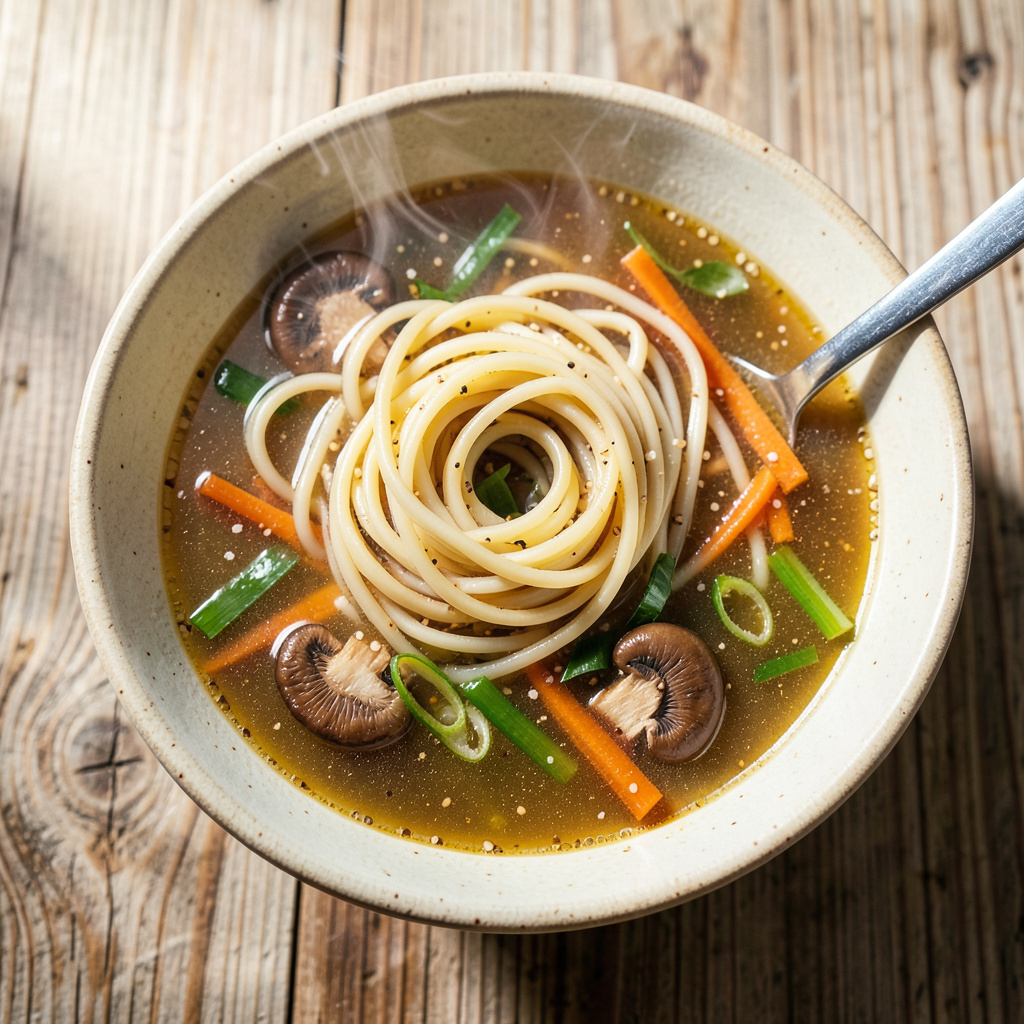
I’ll be real with you—those delicate egg ribbons floating in soup aren’t just for fancy restaurants. This technique is simpler than it looks, and it transforms even basic broth into something special. I first learned this trick during my Charleston apprenticeship, where we’d finish every bowl of congee with fresh egg strands for that perfect textural contrast.
The magic happens in the swirl. You don’t need any special equipment—just a fork, a hot bowl of broth, and eggs beaten until completely smooth. The key is pouring slowly while stirring in one direction, creating those signature silky strands. I’ve done this with everything from delicate consommé to hearty chicken noodle, and it works every time.
What you end up with is a bowl where every spoonful delivers tender egg ribbons suspended in flavorful broth. The eggs add richness without heaviness, and visually, they make even simple soup look restaurant-worthy. My kids actually ask for “the swirly egg soup” now—proof that fancy techniques can be family-friendly too.
Once you master the basic method, the variations are endless. Try it in miso soup for a Japanese twist, or stir in herbs for an Italian stracciatella-style bowl. The technique stays the same, but the flavors can go anywhere your taste buds want.
📚 In This Guide
- What You’ll Need
- Instructions
- Tips and Common Mistakes
What Youll Need
- ● Eggs: 2–3 large, fresh and room-temperature (cold eggs may shock in hot broth 🥚).
- ● Soup base: 4 cups hot (not boiling) chicken, vegetable, or miso broth—your choice!
- ● Mixing bowl: Medium-sized, wide and shallow for easy whisking.
- ● Whisk or fork: To beat eggs until smooth and frothy (no lumps!).
- ● Ladle or small bowl: For slow, controlled egg pouring.
- ○ Chopsticks or skewer (optional): To gently swirl eggs into ribbons mid-cook.
- ● Slotted spoon: For removing ribbons if pre-cooking separately.
- ○ Toppings (optional): Thinly sliced green onions, sesame oil, or chili flakes for extra flair! 🌿
Instructions
This simple technique transforms ordinary soup into something special—let me show you how it’s done.
Prepare Your Soup Base
Start by bringing your soup to a gentle simmer over medium heat. You want to see small bubbles breaking the surface, but not a rolling boil—this creates the perfect environment for the eggs to cook gently without becoming tough.
I like to use a wide, shallow pot for this if possible. The broader surface area gives you more room to swirl the eggs and creates longer, more elegant ribbons. Stir your soup occasionally to maintain even heat distribution.
Whisk the Eggs Until Smooth
In a small bowl, crack your eggs and whisk them until completely smooth. I use about 2 eggs per quart of soup as a good starting ratio, but you can adjust based on how many ribbons you want. The key is to whisk thoroughly until no streaks of white remain.
For extra-rich ribbons, you can add a splash of water or broth to the eggs—about 1 tablespoon per egg. This creates a slightly thinner mixture that spreads more easily in the soup. Don’t add salt at this stage; the soup will season the eggs perfectly as they cook.
Create the Ribbon Effect
Here’s where the magic happens. Hold a fork or chopstick just above the simmering soup surface. Slowly pour the whisked eggs in a thin, steady stream while simultaneously stirring the soup in a circular motion with your other hand.
The moving liquid will catch the egg stream and create beautiful, wispy ribbons. I like to work in sections—pour about a quarter of the egg mixture at a time, creating ribbons in one area before moving to another section of the pot. This gives you more control over the ribbon formation.
Let the Ribbons Set
Once all the egg mixture is in the soup, let it cook undisturbed for about 30-45 seconds. You’ll see the ribbons transform from translucent to opaque as they cook through. They should look delicate but hold their shape when gently stirred.
Don’t overcook them—they should remain tender and silky. The ribbons are done when they float to the surface and have a soft, slightly wobbly texture. At this point, you can gently stir the soup to distribute the ribbons evenly throughout.
Serve Immediately
Egg ribbons are best enjoyed right away while they’re at their most tender. Ladle the soup into warm bowls, making sure each serving gets plenty of those beautiful golden strands. The ribbons will continue to cook slightly from the residual heat of the soup.
For the perfect presentation, I like to garnish with a sprinkle of fresh herbs or a drizzle of chili oil. The contrast of the vibrant yellow ribbons against the soup base makes for an impressive visual that’s surprisingly simple to achieve. Each spoonful should deliver a perfect balance of broth and silky egg ribbons.
Tips and Common Mistakes
Mastering egg ribbons is all about technique—here’s what I’ve learned from years of perfecting this simple but impressive garnish.
Heat Control: The gentle simmer mentioned in Step 1 is absolutely crucial. You want to see those small bubbles breaking the surface, but never let it reach a rolling boil. Too much heat will cause the eggs to cook too quickly and become rubbery instead of forming delicate ribbons. I’ve found that maintaining medium heat and stirring occasionally helps keep the temperature just right throughout the process.
Egg Mixture Technique: When whisking your eggs in Step 2, take your time to get them completely smooth. Any streaks of white will create uneven ribbons. I like to whisk for at least 30 seconds until the mixture is perfectly homogeneous. The ratio of 2 eggs per quart of soup gives you plenty of ribbons without overwhelming the broth, but you can adjust slightly based on your preference.
Ribbon Formation: In Step 3, the key is working slowly and deliberately. Hold your fork or chopstick just above the surface and pour the eggs in the thinnest stream you can manage. The circular motion of the soup is what creates those beautiful strands, so keep the liquid moving gently but consistently. I find it helpful to work in sections as mentioned, creating ribbons in one area before moving to another part of the pot.
Timing Precision: Those 30-45 seconds in Step 4 are critical. Watch closely as the ribbons transform from translucent to opaque. They should float to the surface and have just a slight wobble when done. Overcooking is the most common mistake here—once they’re opaque, they’re ready. The ribbons will continue to cook slightly from the residual heat, so it’s better to err on the side of underdone.
Pro Tips for Make Egg Ribbons In Soup
- Mastering egg ribbons is all about technique—here’s what I’ve learned from years of perfecting this simple but impres…
- Heat Control: The gentle simmer mentioned in Step 1 is absolutely crucial. You want to see those small bubbles breaki…
- Egg Mixture Technique: When whisking your eggs in Step 2, take your time to get them completely smooth. Any streaks o…
Frequently Asked Questions
Can I use any type of soup for egg ribbons?
Egg ribbons work best in clear broths like chicken noodle, miso, or pho, but you can add them to creamy soups too. Just stir gently to avoid breaking them. For heartier soups (like minestrone), add ribbons at the end to keep them tender.
How do I prevent the eggs from turning rubbery?
Low and slow is key! Swirl eggs into simmering (not boiling) broth—high heat cooks them too fast. Remove the pot from heat while stirring for extra control. Overcooking is the #1 culprit for tough ribbons.
What’s the best egg-to-soup ratio?
Use 1 large egg per 2 cups of broth for light ribbons. For thicker strands, add an extra egg white. If making a big batch, whisk eggs in a separate bowl first for even distribution.
Can I make egg ribbons ahead of time?
Not ideal—they’re best fresh! But if prepping ahead, cook ribbons separately in water, rinse with cold water, and store in the fridge for up to 2 hours. Reheat gently in broth to avoid overcooking.
What’s a vegan alternative to egg ribbons?
Try silken tofu! Thinly slice or crumble it into hot broth for a similar texture. For a plant-based “ribbon,” blend chickpea flour with water, then drizzle into soup like eggs. Works great in miso or ramen!
With just a few simple steps, you’ve unlocked the secret to elegant, silky egg ribbons that turn any soup into a restaurant-worthy dish! 🎉 Whether you’re whipping up a quick weeknight meal or impressing guests, this technique adds texture, flavor, and a touch of sophistication—without the fuss.
Now that you’ve mastered the basics, why not experiment? Try swirling in herbs, spices, or even a splash of sesame oil for extra flair. Grab a spoon and dive into your upgraded bowl of comfort—your taste buds will thank you! 🥄✨