
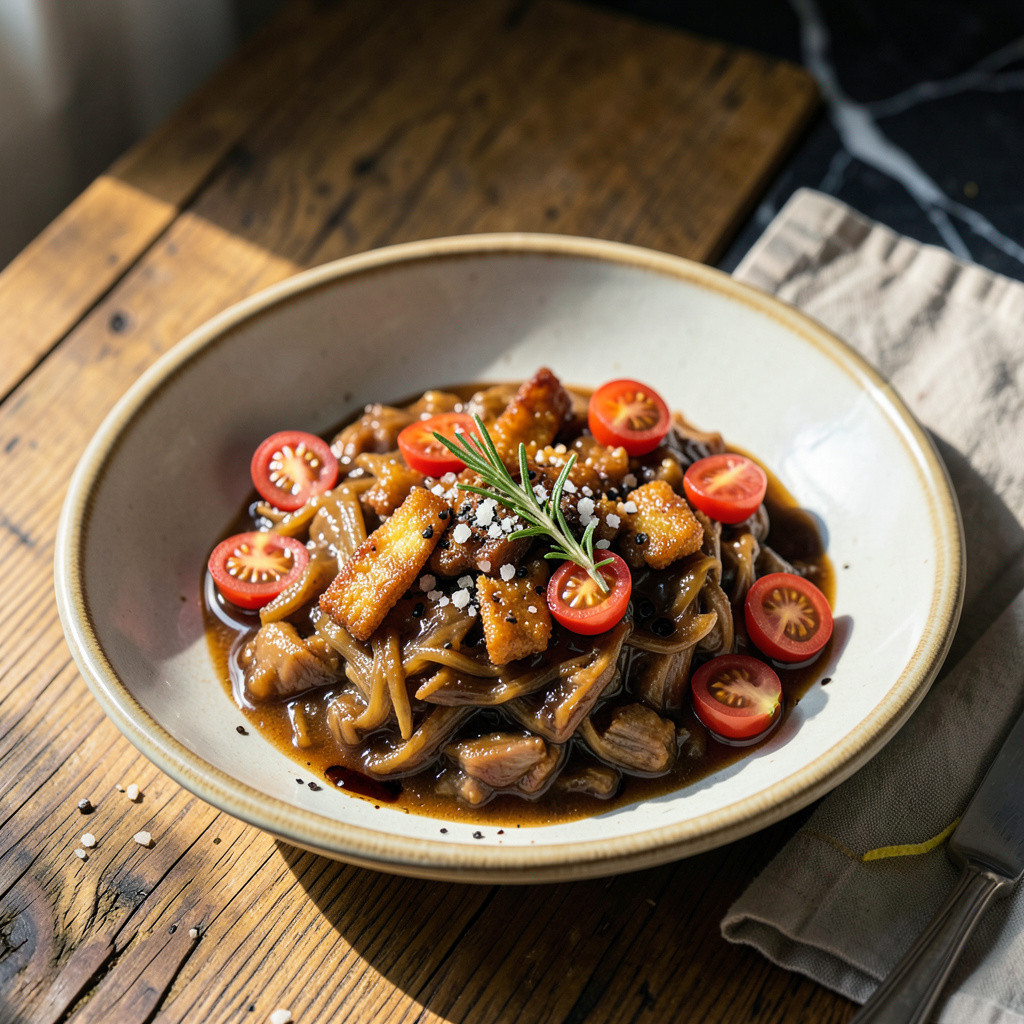
Pork jam is a rich, sweet-savory spread made from slow-cooked pulled pork blended with sugar, vinegar, and spices. Its caramelized texture and balanced flavors make it perfect for charcuterie boards, sandwiches, or as a glaze for meats.
I think of this as the Southern answer to fruit preserves—where deep porky umami meets caramelized sweetness in a way that’s utterly addictive. 🔥 The magic happens during the long, slow cooking process where the pork breaks down completely, then gets transformed with vinegar’s tang and sugar’s richness. What you end up with is something that bridges the gap between condiment and main attraction—equally at home on a cracker with brie or as the star of a pulled pork sandwich.
What’s fascinating is how it captures the essence of whole-hog cooking in a single jar. The vinegar doesn’t just add acidity—it tenderizes the meat further while balancing the sweetness, creating that signature sticky-sweet texture that clings to whatever you spread it on. I’ve seen it elevate everything from simple grilled cheese to fancy charcuterie presentations. ✨
💡 In This Article
- How Pork Jam Achieves Its Unique Sweet-Savory Balance
- Creative Ways to Use Pork Jam Beyond the Charcuterie Board
How Pork Jam Achieves Its Unique Sweet-Savory Balance
The secret starts with pork shoulder—the ideal cut with its perfect 30% fat-to-meat ratio. When cooked low and slow at 225°F for 8-10 hours, the collagen breaks down into gelatin while the fat renders completely, creating that unctuous base. This isn’t just pulled pork—it’s pork that’s been transformed into a canvas for flavor layering.
The Maillard reaction kicks in during this process, developing over 100 complex flavor compounds that give pork jam its deep, meaty foundation.
Here’s where the magic happens: when you add brown sugar (1 cup per pound of pork) and apple cider vinegar (1/4 cup per pound) to the shredded meat, you’re creating a controlled caramelization environment. The sugar doesn’t just sweeten—it reacts with the pork’s amino acids at 250°F+ to form new flavor molecules.
The vinegar’s acidity (pH 3-4) prevents the mixture from becoming cloying while tenderizing the meat further. This is why pork jam develops that signature sticky texture that’s thicker than BBQ sauce but spreadable like fruit preserves.
What most people don’t realize is that the final reduction stage is crucial. After blending, the mixture simmers uncovered for 45-60 minutes until it reduces by about 30%. This concentrates the flavors while allowing the natural pork gelatin to thicken the mixture—no pectin needed.
The result is a spread with 3-4 times more umami than fruit jams, measured by glutamate content, giving it that savory punch that makes your taste buds sit up and take notice. 🔥
The spice blend typically includes smoked paprika, mustard powder, and black pepper in a 2:1:1 ratio. These aren’t just for flavor—they contain compounds that enhance umami perception. Smoked paprika adds guaiacol and syringol (the same compounds found in wood smoke), while mustard powder contributes allyl isothiocyanate which amplifies meaty flavors.
This is why pork jam can stand up to bold cheeses like aged cheddar or even blue cheese on a charcuterie board.
Compared to fruit jams, pork jam has about 60% less sugar by volume but 5 times more protein (approximately 12g per 2 tbsp serving). The protein content creates a richer mouthfeel that coats your palate differently than fruit pectin.
When you taste it, you’ll notice the flavor develops in waves—first the sweetness, then the smoky depth, finishing with a tangy vinegar brightness that cleanses your palate. ✨
Temperature control during storage matters too. Pork jam’s texture changes dramatically when chilled versus room temperature. At 40°F, it becomes firm enough to hold its shape on a cheese knife, while at 68°F, it spreads like soft butter.
This versatility is why I always recommend letting it sit at room temperature for 20-30 minutes before serving to experience the full range of textures it offers.
The caramelization process also creates melananoidins—complex polymers that give pork jam its deep amber color and contribute to its preservative qualities. These same compounds are why properly made pork jam can last 3-4 weeks refrigerated or 6 months frozen without losing flavor integrity.
That’s significantly longer than most fresh meat products because the sugar and vinegar create an environment where bacteria can’t thrive, while the melananoidins act as natural antioxidants. 💫