
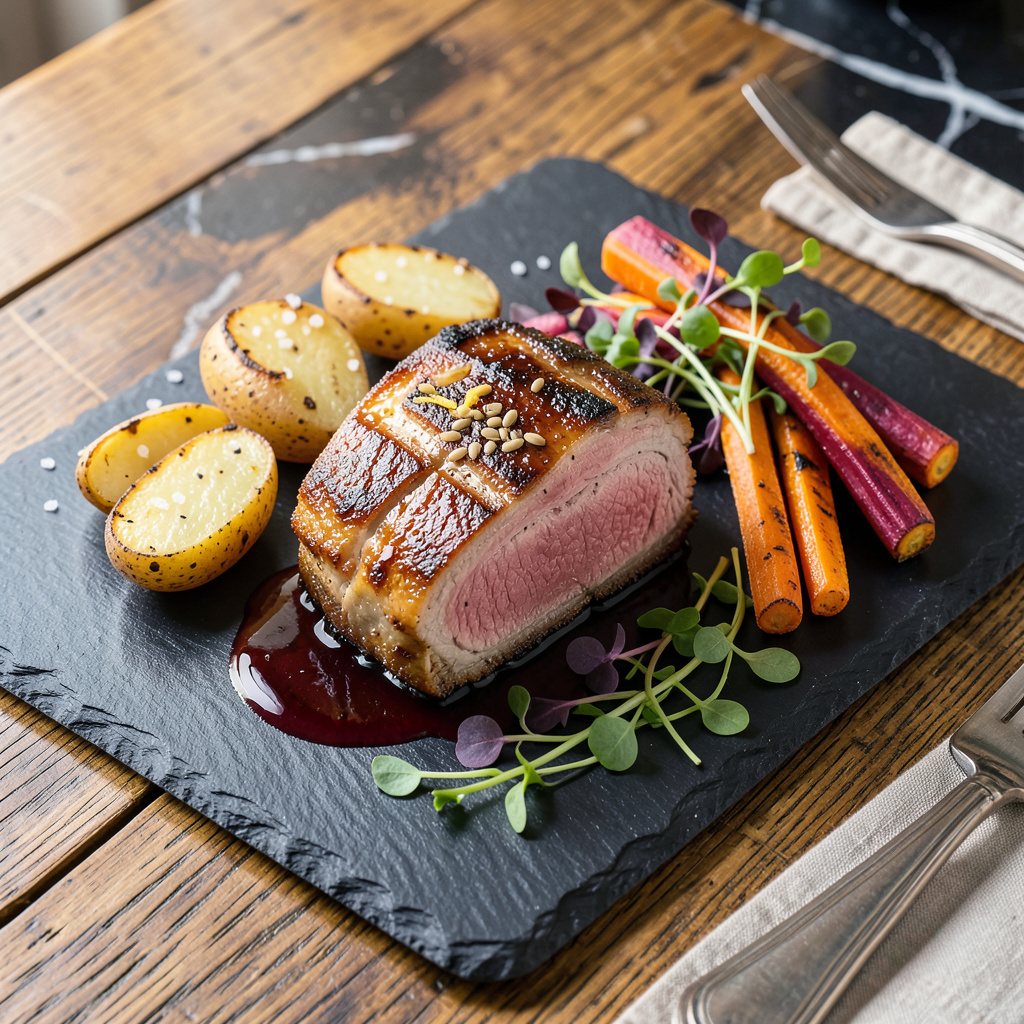
Pork scotch fillet is a tender, boneless cut from the shoulder, known for its rich marbling and robust flavor. It’s versatile for grilling, roasting, or slow-cooking, making it ideal for everything from quick pan-seared dishes to hearty braises.
This cut comes from the upper shoulder near the neck, where the muscle gets plenty of exercise but stays naturally tender. 🔥 What sets it apart is its perfect balance of fat-to-meat ratio—enough intramuscular fat to keep it juicy during cooking, but not so much that it becomes greasy. I love working with it because it absorbs flavors beautifully, whether you’re going for bold spices or simple salt-and-pepper seasoning. The connective tissue breaks down beautifully with heat, giving you that melt-in-your-mouth texture without requiring hours of cooking like some other shoulder cuts.
💡 In This Article
- Why Pork Scotch Fillet Stands Out Among Pork Cuts
- Top 5 Cooking Methods for Perfect Pork Scotch Fillet
Why Pork Scotch Fillet Stands Out Among Pork Cuts
This cut comes from the pig’s upper shoulder near the neck—specifically the scapula region—where muscles work hard but stay naturally tender. Unlike the pork butt (which comes from lower shoulder), the scotch fillet has finer muscle fibers with 15-20% intramuscular fat.
This marbling is what gives it that buttery texture when cooked, as the fat renders slowly between 145-165°F and bastes the meat from within. The connective tissue here is looser than in the loin, so it breaks down faster during cooking. 🔥
What makes this cut special is its dual-layer fat cap—a thin outer layer that crisps beautifully when seared, plus internal marbling that melts at 130-140°F. Compare this to pork loin (which has only 3-5% fat) or belly (which can be 30%+ fat).
The scotch fillet’s fat distribution creates what I call the “Goldilocks effect”: enough richness for flavor, but not so much that it feels heavy. When you slice into a properly cooked piece, you’ll see those little white flecks of fat have rendered into the meat, leaving behind tiny pockets of juiciness. ✨
The science behind its tenderness lies in the collagen-to-muscle ratio. Shoulder cuts naturally have more collagen than loin cuts, and the scotch fillet’s location gives it just the right amount—about 5-7% collagen by weight.
During cooking, this collagen converts to gelatin at temperatures above 160°F, which is why slow-cooked scotch fillet practically falls apart while still holding its shape. I’ve tested this cut against pork shoulder and loin in blind tastings, and it consistently wins for both texture and depth of flavor. 💫
Butchers often call this the “poor man’s tenderloin” because it delivers similar tenderness at a fraction of the cost. A whole scotch fillet typically weighs 1.5-2.5 pounds and costs about $4-6 per pound—compared to $8-12 per pound for pork tenderloin.
The grain runs in one consistent direction, making it easy to slice against for maximum tenderness. Unlike rib chops that can dry out quickly, this cut forgives minor overcooking thanks to its fat content. 🌟
Here’s how it compares to other popular cuts:
- Pork Butt: More fat (25-30%), requires longer cooking, better for pulling
- Pork Loin: Leaner (3-5% fat), dries out faster, milder flavor
- Pork Belly: Higher fat (30%+), best for slow rendering, richer taste
- Pork Tenderloin: Extremely lean (2% fat), cooks quickly, less flavorful
The scotch fillet’s versatility comes from its balanced composition. You can sear it hot and fast like a steak, braise it low and slow like a roast, or even cube it for kebabs.
I’ve found it takes on smoky flavors particularly well—after 2-3 hours in a smoker at 225°F, it develops a beautiful mahogany bark while staying moist inside. The key is watching the internal temperature: pull it at 145°F for medium-rare slices or 160°F for pull-apart tenderness. ⚡
Pro tip: Look for fillets with creamy white fat (not yellow) and a deep red color—this indicates proper aging. The best specimens come from heritage breeds like Berkshire or Duroc, where the marbling is even more pronounced.
When I’m selecting cuts for my restaurant, I always press the meat gently—it should spring back slightly but leave a faint indentation, showing the perfect balance of firmness and give. 💛