
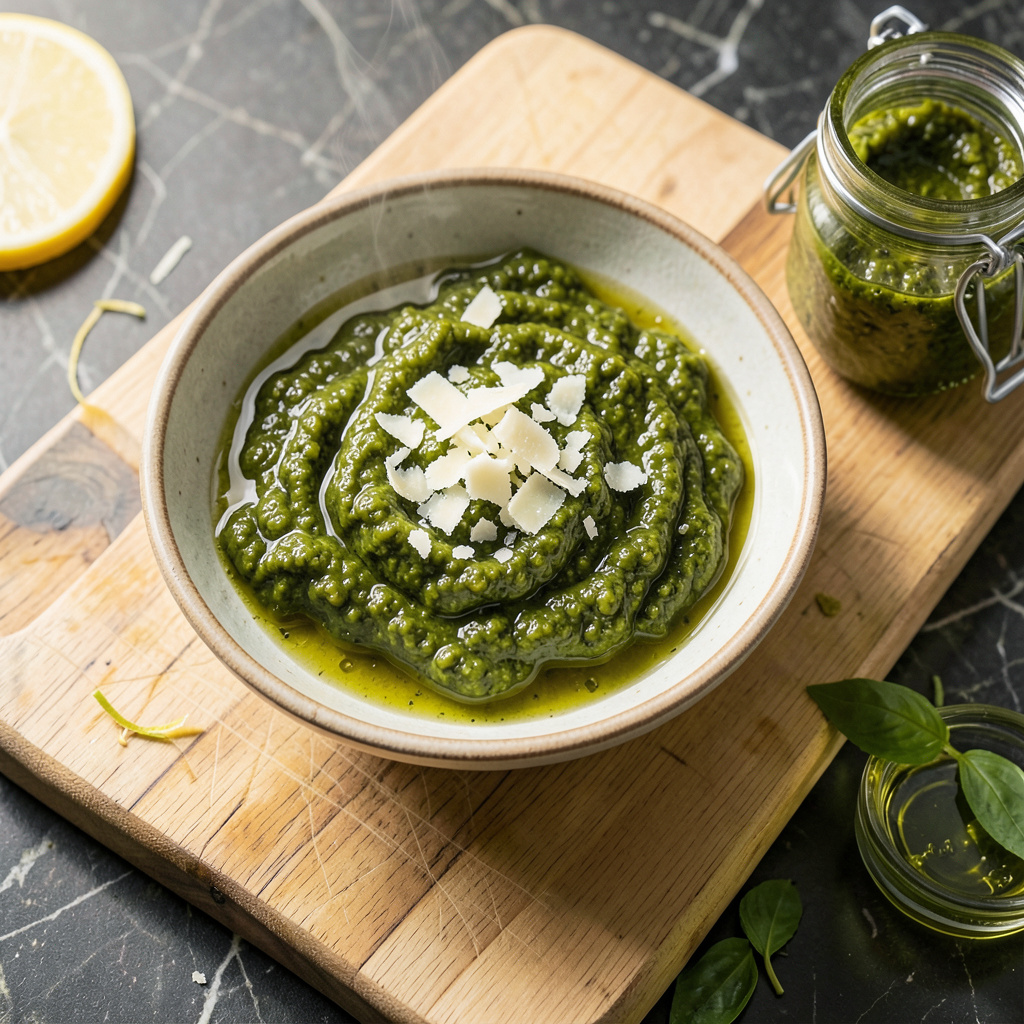
I’ll be real with you—nothing beats the flavor of homemade pesto, but keeping it fresh and vibrant is where most people mess up. After years of testing (and wasting more than a few batches), I’ve cracked the code for storing pesto so it stays as bright and flavorful as the day you made it. The secret starts with how you make it in the first place.
This isn’t about fancy equipment or complicated techniques. With just 5 simple ingredients and a blender, you can create pesto that tastes better than anything store-bought. But here’s where it gets interesting—the real magic happens after blending. One little trick (that takes 10 seconds) will keep your pesto from turning brown in the fridge or freezer.
You’ll end up with a versatile condiment that maintains its fresh basil flavor, garlicky punch, and vibrant green color for weeks. No more tossing out oxidized pesto or dealing with freezer-burned cubes. Whether you’re making a big batch to use all season or just want to save leftovers, this method actually works.
Fair warning: once you try properly stored homemade pesto, you’ll never go back to the jarred stuff. The difference is that dramatic. Here’s exactly how to do it right—from blending to long-term storage.
📚 In This Guide
- What You’ll Need
- Instructions
- Tips and Common Mistakes
What Youll Need
- ● Freshly made pesto – 1 to 4 cups (adjust based on storage needs).
- ● Air-tight glass jars (with lids) – 4-oz to 16-oz sizes, sterilized.
- ● Plastic wrap – for extra protection against air exposure.
- ● Olive oil – 1-2 tbsp per jar (to create a protective layer).
- ○ Lemon juice or vinegar (optional) – ½ tsp per cup of pesto (helps preserve color).
- ○ Ice cube trays (optional) – for freezing small portions.
- ○ Freezer-safe bags (optional) – for long-term storage.
- ● Labels & markers – to date and identify batches.
- ● Spoon or spatula – for scooping and smoothing.
- ○ Kitchen scale (optional) – for precise measurements.
Instructions for Storing Homemade Pesto
Here’s how to preserve that fresh basil flavor for weeks with minimal effort.
Prepare the Pesto for Storage
Start by letting your freshly made pesto cool completely to room temperature. I always spread it out in a shallow bowl to speed up this process, which typically takes about 20-30 minutes. This prevents condensation from forming inside your storage container, which could lead to spoilage.
Once cooled, give it a quick stir to redistribute any oils that may have separated. You’ll notice the vibrant green color is most intense at this stage—that’s what we want to preserve. If your recipe includes cheese, this is your last chance to adjust the seasoning before storage.
Choose the Right Storage Container
For short-term storage (up to 5 days), I prefer using small glass jars with airtight lids. The glass helps maintain the pesto’s fresh flavor and doesn’t absorb odors like some plastics can. Fill each jar almost to the top, leaving just ½ inch of headspace.
For longer storage, ice cube trays work beautifully. Portion the pesto into the tray compartments, filling each about ¾ full to allow for expansion when frozen. This method lets you use just what you need later without thawing the entire batch.
Create a Protective Oil Layer
Here’s the secret to keeping your pesto vibrant: pour a thin layer of olive oil (about ¼ inch) over the top before sealing. This creates an airtight barrier that prevents oxidation—the process that turns pesto brown. I use the same high-quality olive oil that went into making the pesto.
For ice cube trays, simply drizzle a few drops of oil over each pesto portion. You’ll see the oil form a protective seal almost immediately. This step makes a noticeable difference in both color and flavor preservation over time.
Store Properly Based on Your Timeline
For refrigerator storage, your oil-topped pesto will stay fresh for 4-5 days. Keep it toward the back of the fridge where temperatures are most consistent. I always write the date on the lid with masking tape so I can track freshness.
For freezer storage, cover your ice cube tray with plastic wrap, then place it in a freezer bag. Once frozen solid (about 4 hours), transfer the pesto cubes to the bag for compact storage. They’ll keep their peak flavor for 3-4 months. When ready to use, simply pop out the needed cubes and thaw in the refrigerator overnight.
Thaw and Use with Care
When you’re ready to use your stored pesto, thaw frozen portions in the refrigerator for 6-8 hours. You’ll notice the texture separates slightly—that’s normal. Just give it a good stir to recombine the ingredients.
Use thawed pesto within 3 days for best quality. I’ve found it works beautifully in pasta dishes, as a pizza base, or stirred into soups. The flavor remains remarkably close to fresh, especially if you’ve used that protective oil layer. For refrigerator-stored pesto, simply stir before using and enjoy the same vibrant taste you worked so hard to create.
Tips and Common Mistakes for Storing Homemade Pesto
After years of making and storing pesto, I’ve learned these key details that make all the difference in preserving that fresh-from-the-garden flavor.
Cooling Technique: In Step 1, spreading the pesto in a shallow bowl isn’t just about speed—it’s about even cooling. I’ve found that using a metal bowl placed over an ice bath reduces the 20-30 minute cooling time by nearly half while maintaining perfect texture. This prevents any condensation from forming when you transfer it to storage containers.
Oil Layer Precision: When creating that protective olive oil layer in Step 3, warm the oil slightly before pouring. Just 10 seconds in the microwave makes it flow more evenly over the pesto surface, creating a perfect seal. The ¼ inch measurement is critical—too little won’t protect, too much dilutes the flavor. I use a small measuring spoon to ensure consistency across multiple containers.
Freezing Strategy: For Step 4’s freezer method, here’s what nobody tells you—silicon ice cube trays release frozen pesto cubes much easier than plastic ones. After the initial 4 hours of freezing, run the bottom of the tray under warm water for 5 seconds to pop out perfect cubes without damaging them. This small trick saves so much frustration when you’re trying to use just what you need.
Thawing Wisdom: The 6-8 hour refrigerator thaw in Step 5 is non-negotiable for texture preservation. I’ve experimented with quicker methods, but only this slow thaw maintains the pesto’s creamy consistency. If you’re in a hurry, you can place the sealed container in a bowl of cold water for about 2 hours, changing the water every 30 minutes—but the fridge method always yields better results.
Pro Tips for Storing Homemade Pesto
- After years of making and storing pesto, I’ve learned these key details that make all the difference in preserving th…
- Cooling Technique: In Step 1, spreading the pesto in a shallow bowl isn’t just about speed—it’s about even cooling. I…
- Oil Layer Precision: When creating that protective olive oil layer in Step 3, warm the oil slightly before pouring. J…
Frequently Asked Questions
How long does homemade pesto last in the fridge?
Fresh pesto stays vibrant for 5–7 days in the fridge when stored in an airtight container with a thin layer of olive oil on top. For longer shelf life, freeze it in ice cube trays (up to 6 months)! Always check for off smells or discoloration before using.
Can I freeze pesto without losing flavor?
Freezing locks in flavor, but skip the cheese if you plan to freeze—add it fresh later. Portion into ice cube trays, cover with oil, and transfer to a freezer bag. Thaw in the fridge overnight for best texture. Pro tip: Use within 4–6 months for peak taste.
Why does my pesto turn brown in the fridge?
Browning happens when basil oxidizes (like an avocado!). To slow it down, press plastic wrap directly on the pesto’s surface to limit air exposure, or add a splash of lemon juice. If it’s just the top layer, scrape it off—the rest is likely fine!
What’s the best oil-to-pesto ratio for storage?
A ¼-inch layer of olive oil on top of pesto in the jar or container creates a protective seal. For freezing, drizzle just enough to cover each portion (about 1 tsp per ice cube). Too much oil dilutes flavor; too little won’t prevent browning.
Can I store pesto in a mason jar?
Yes! Mason jars are perfect—just ensure the lid is airtight. Fill to the top to minimize air, add the oil layer, and refrigerate. For freezing, leave 1-inch headspace to prevent cracks. Glass is safer than plastic for avoiding stains and odors.
With the right storage tricks, your homemade pesto can stay fresh, flavorful, and vibrant for weeks—no more wasted batches or dull flavors! 🌿 Whether you choose the fridge, freezer, or even oil-topping, a little prep goes a long way in preserving that garden-fresh taste.
Now that you’re equipped with the know-how, why not whip up a double batch this weekend? Share your pesto successes (or creative uses!) in the comments—we’d love to hear how you make it last! Happy storing!